
Every escape artist owes a debt to a piece of furniture nobody remembers by name. Not a trunk, not a milk can, not the water torture cell that made Houdini’s name synonymous with impossible restraint. I’m talking about a plain wooden box with three doors, usually painted black, that toured churches and lecture halls a full generation before Houdini was even born.
The spirit cabinet wasn’t built to escape from. It was built to prove you couldn’t have escaped at all.
That distinction matters more than it sounds like it should, and understanding it will change how you think about every piece of restraint you’ve ever used in a show.
The Cabinet Before the Escape Artist
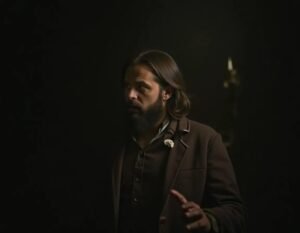
In the 1850s, Ira and William Davenport built a cabinet act that filled halls across America and, eventually, Europe. The premise was simple and, for its time, devastating. The brothers sat inside a wooden cabinet, tied at the wrists with rope by volunteers pulled straight from the audience. Musical instruments, a tambourine, a guitar, sometimes a small bell, sat on a shelf between them. The doors closed. Within seconds, the instruments were ringing, strumming, flying against the cabinet walls. The doors opened. The brothers sat exactly as they’d been tied.
The audience wasn’t watching an escape. They were watching the absence of one.
That’s the whole trick, and it’s also the whole point. A séance cabinet had to produce the appearance of impossible restraint holding firm while impossible things happened around it. An escape act, by contrast, needed the restraint to visibly fail. Different goals, but nearly identical mechanics underneath. Same knots, same shadow work, same understanding of where a volunteer’s attention actually goes when they’re asked to tie a stranger’s hands in front of a crowd.
Spiritualism needed the cabinet to hide the method. Escapology, when it came along decades later, needed the cabinet’s cousin to reveal the method as spectacle. The mechanical lineage runs in a straight line between them, even though the two forms were, on the surface, enemies.
Rope, Cabinet, and the Architecture of Doubt
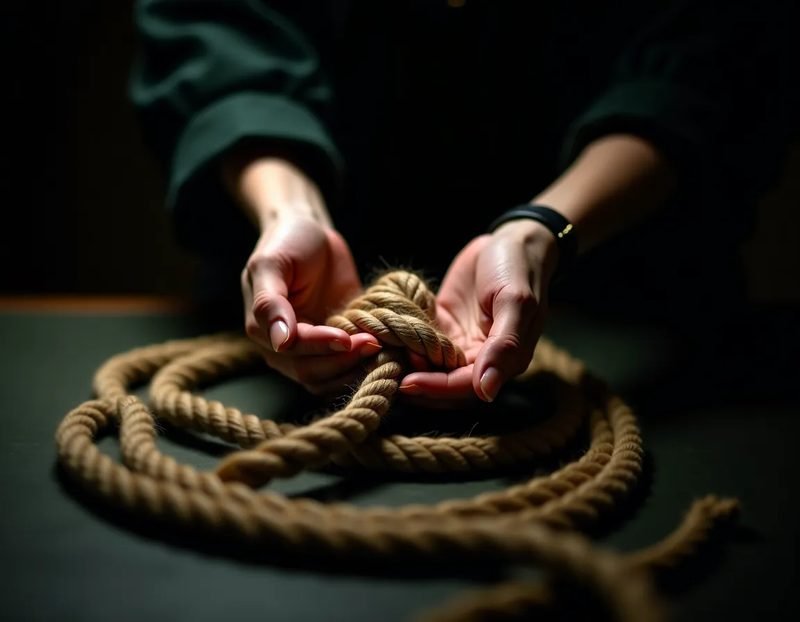
Here’s what most people get wrong about the Davenport cabinet, and it’s worth sitting with because it’s the same mistake modern escape performers make when they lean too hard on mechanism.
The rope tie wasn’t the secret. The cabinet was.
Mediums of the period were students of a specific kind of physical geometry, how a wrist compresses under tension, how a knot that looks locked from three feet away has slack built into it at an angle nobody in the front row can see. But that geometry only worked inside a controlled space. Take the same tie into open light with no enclosure and it falls apart under scrutiny. Put it behind a curtained cabinet, dim the hall, and give the mind forty seconds of darkness to fill in with dread, and the same physical mechanism becomes unaccountable.
The furniture did the psychological work. The rope did the physical work. Neither one succeeds alone.
This is the part that gets lost when people write escape history as a story about knots and locks. It was never really about the knots. It was about who controls the moment the audience can’t see, and for how long, and what they’re primed to imagine is happening inside that gap.
Why the Enclosure Outperformed the Restraint
A skilled volunteer tying hands in full view will, more often than not, tie a genuinely secure knot. Mediums accounted for this by shifting the real work from the tie itself to the environment around it. Cabinets were built with false backs, hidden panels, and just enough interior darkness that a practiced performer could work a hand free using leverage and timing rather than a flawed knot.
That’s a lesson escape artists relearned independently, sometimes decades later, sometimes the hard way.
What the Mediums Understood That Performers Forgot
I don’t put much stock in spirit communication. I’ve read enough journals and case files, some of them genuinely troubled, to know that most so-called manifestations trace back to a human being with excellent hands and a working knowledge of a dark room. But I have a strong conviction that the Davenport brothers, and the dozens of imitators who followed them, understood something about restraint and belief that a lot of modern escape acts have quietly lost.
They understood that an audience doesn’t need to see the escape to believe in the impossibility of the restraint.
That’s backwards from how most contemporary escape performers build a routine. Today’s instinct is to show as much as possible, cutaway angles, transparent cases, a countdown clock the whole room can watch. All of that has its place. But the cabinet era proves something else works just as well, sometimes better. Controlled concealment, held for exactly the right number of seconds, does more to convince a crowd of impossibility than full visibility ever will.
Full visibility invites analysis. Concealment invites imagination. Imagination, in a room primed correctly, always outperforms analysis.
From Séance Room to Vaudeville Stage
By the time Harry Houdini was building his early reputation with the Metamorphosis trunk substitution in the 1890s, spiritualist cabinet work had already been touring for forty years. Houdini knew the form intimately, not as an admirer but eventually as its most public enemy. He spent much of his later career, and a fair amount of the book A Magician Among the Spirits, dismantling mediums in print and on stage, exposing the exact cabinet mechanics that had fooled paying audiences for generations.
There’s a well-documented account of Houdini meeting Ira Erastus Davenport around 1910, well after William had died, where the two men discussed rope work directly. Accounts of exactly what passed between them vary by biographer, and I won’t pretend the details are settled history. But the meeting itself tells you something true regardless of what was said in the room. The man who built his legend on defeating restraint sought out, specifically, the survivor of the act that had built restraint’s most famous illusion of failure sixty years earlier.
He didn’t seek out a lock expert. He sought out a cabinet man.
Metamorphosis, the milk can, the water torture cell, all of it descends from a lineage that starts with a curtained box and a tambourine nobody could explain. Houdini escaped from restraint. The Davenports escaped from restraint too, they just had the sense not to let anyone see them do it.
The Furniture Talks Louder Than the Escape
If you perform escape or restraint work now, here’s the counterintuitive part worth sitting with. Your audience isn’t primarily judging the quality of your tie, your lock, or your cuffs. They’re reading the container you’ve put yourself inside. The furniture sets the terms before the escape even starts.
A modern escape performed in bright light with no enclosure reads as athletic. Impressive, sure, but athletic, the same category as a strongman lifting a car. An escape staged behind even a minimal curtain, timed against real darkness, reads as something closer to what the Davenports were selling. Not a feat of the body. A violation of a rule the room assumed was fixed.
That’s the trick worth stealing from 1850s spiritualism, and it costs nothing beyond staging discipline. Build the enclosure with the same care you’d build the knot. Most performers don’t. Most performers are wrong not to.
I’ve built pieces around this principle for private clients, small rooms where a single curtained cabinet did more work than any lock could have. The reaction is consistent. People don’t ask how you got out. They ask what was in there with you.
Building Your Own Lineage
The Victorian cabinet trade eventually collapsed under its own exposure. Too many mediums got caught, too many rope experts published the mechanics, and by the early twentieth century the form had migrated almost entirely out of the séance room and into vaudeville, where Houdini and his imitators turned the same bones into honest theater. Honest in the sense that nobody in the audience believed they were witnessing an actual spirit. They knew it was a stunt. And they paid for the ticket anyway, because the stunt still worked on the same nervous system the Davenports had been working on decades earlier.
That’s the real inheritance here, not the specific rope tie, not the exact cabinet dimensions, but the working knowledge that restraint is a story told partly with hardware and mostly with staging. A performer who understands that has access to a tool that predates modern escapology by half a century and still hasn’t been fully mined.
Build your enclosure with the same seriousness you build your knot. The room will remember the container long after it forgets the mechanism.
If you’re ready to bring some of that lineage into your own work, take a look through the full Arcane Relics collection.