Protected: Tipping Point Timber
Sealed Before You Arrived: Why a Prediction Hits Differently Than a Reading

Most mentalists treat prediction and reading as the same effect with different packaging. They’re not. A reading pulls something that exists inside a mind. A prediction claims something was inevitable before anyone made a choice. The audience feels the difference in their gut, and once you understand it, you can choose which one serves your piece. You can also choose the physical object that carries the frame. For me, that object is now InkSight, a pocket-sized thermal printer that puts the result on a slip in handwriting instead of a cold receipt font.
The Frame Changes Everything
Consider what happens when you show a sealed prediction at the end of your effect. The volunteer reads it aloud. Their jaw tightens. You weren’t inside their head pulling information out. You were outside reality, ahead of time, knowing what they would do before they had the freedom to do anything else. That’s a different sensation than a reading produces.
A reading hits as mind-reading. Intimate, invasive, clever. A prediction hits as fate. Unnerving in a way that lingers after the applause dies.
I tested this at a private event in Fern Creek. Same card force. Same reveal. First time through, I framed it as a reading: “I’m going to tell you which card is in your hand before you turn it over.” Applause. Second time, same script with a volunteer at another table, different angle: “I wrote down your card before you stepped into the room.” Different room energy. The second volunteer’s hands trembled when she opened the envelope. Not the first one. The reading got appreciation. The prediction got something closer to dread.
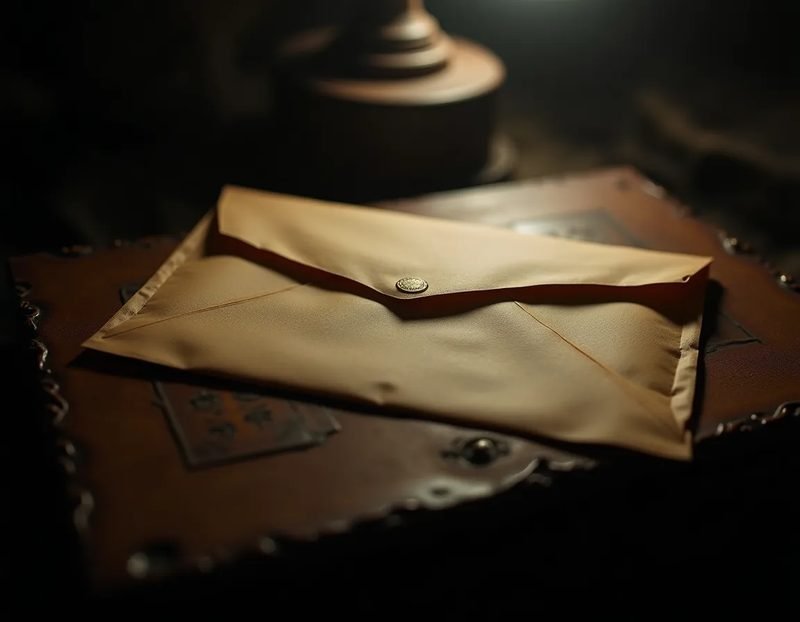
Notice what carried that second reaction. It wasn’t the script alone. It was the envelope, the paper, the sense that a written thing was waiting. The object does half the framing for you, and that’s why I care so much about what ends up inside it.
Why Prediction Feels More Powerful
The human mind is wired to believe in agency. You made a choice. You were free. Even when that’s demonstrably false, we cling to it. A reading doesn’t challenge that illusion directly. It says: “I observed your choice and extracted the information.” The choice still feels like yours.
A prediction says something different. It says the outcome was written before you had a say. That your sense of freedom is an afterthought, a story you tell yourself about decisions that were already made. That hits a nerve the reading doesn’t touch.
This is why prediction effects sit with people longer. A reading is impressive. A prediction is troubling, which is far more memorable.
Here is where the paper itself matters. A typed receipt says “machine.” A line of handwriting says “someone.” InkSight prints names and messages in a real handwritten hand, sized to fit the slip, and the store’s own line for it is that your spectator “finds a message that should not exist.” That is the feeling a prediction is supposed to leave behind, and a receipt font works against it.
The Volunteer’s Sense of Free Will

I’ve watched how volunteers respond in the moment of reveal. With a reading, they process it as cleverness: “How did you know?” The question is analytical. With a prediction, they process it as inevitability: “When did you write this?” The question is existential. They’re not asking how you did it, they’re asking when fate was locked in.
The best way to intensify this is to emphasize the timeline. “This envelope has been sealed since before you arrived.” “I wrote this down three days ago.” Let them sit with the gap between when you committed and when they chose. That gap is where the effect lives.
The handwriting changes what they do next, too. People turn a handwritten slip over. They look at the letters. They ask whose hand that is. With drawings, InkSight gives you something stranger. Your spectator draws on Scribe, and the printer returns the same picture redrawn by what the store calls a “spirit copy,” an unsteady hand that isn’t quite yours. You choose one of four styles: Exact, Duplicate, Spirit (a trembling copy) or Upset (a violently shaking one). For a bizarrist, that tremble is the whole point. The spirits put it in writing.
Which Frame Serves Your Piece
Not every effect should be framed as prediction. A reading works better when the mentalism is the point. When you want to show your insight, your ability to extract information, your presence. You’re demonstrating a skill.
A prediction works better when the mystery is the point. When you want the audience to wonder about coincidence, timing, fate. When the effect should haunt them for days. You’re demonstrating something impossible.
If your piece depends on the volunteer feeling trapped, use prediction. If it depends on them feeling known, use reading. Most pieces are stronger with one than the other, and most performers default to reading without ever considering the alternative.
InkSight doesn’t pick for you, and I’d be suspicious of any prop that claimed to. What it does is carry either frame. The store lists what it can print: the tarot card, zodiac sign, rune or number a spectator chose from ArcaneHub’s Free Effects (Tarot, Horoscope, Chinese Zodiac, Runes, Numerology) plus a line of your own text, or a name or word in handwriting. Mentalists get their thought written in a stranger’s hand. Magicians get a prediction that prints itself. The frame is still yours to choose.
Building the Frame Into Your Patter
The frame isn’t something you bolt on at the end. It lives in your words from the start. “I’m going to hand you this envelope, and I want you to keep it for the rest of the show” is already setting expectation toward prediction. “I’m going to read something from your mind right now” is setting toward reading.
With prediction, use language that emphasizes prior commitment. “This was written before.” “This was sealed when.” The specificity matters. The volunteer needs to understand there was a moment in time when your choice locked in.
With reading, use language that emphasizes present-moment observation. “I’m sensing.” “Right now, I’m feeling.” “This is coming through as we speak.” Present tense keeps the focus on your insight happening in real time.
Your patter also has to survive your own hands, and this is where a prop earns its place or doesn’t. InkSight is built to disappear. You can hide it in a box, a book, a cabinet or your performance bag, and the slip feeds into an envelope, a hidden pocket or the box itself. Then there is the cue. From a Galaxy Watch in Performance Mode, you tap 1 to 5 times to choose what prints and get a short buzz to confirm. From an AR Remote, a press or tap pattern in your pocket fires it. Or you can set your props to auto-print and let it run on its own.
If you already own Talos, De-Constructed or Caged Voodoo, they can each print their result by themselves, with your own “spirit answer” for every outcome. You can add a delay of up to 30 seconds, so the print never lines up with a move. For a routine built on a single cue, you can also load your own preset slips and pick which one prints.
Most mentalists switch between frames without intention. Choose deliberately. Your piece will be stronger for it.
What It Is and What It Isn’t
A few plain notes, since I’d rather you buy this knowing what you’re getting.
It connects over Bluetooth, with a range of up to 20 m. The 1000 mAh battery gives about 150 to 200 prints per charge, or 30 to 60 hours on stand. It runs through ArcaneHub, my free app for iPhone, Android and Wear OS watches (Galaxy Watch and similar), so it sits on the same screen as every other Arcane Relics prop you own.
There is also an AR Pro Remote listed as coming soon. It’s a 15-button pocket remote, with up to 72 preset slips in banks, a keypad mode for entering a number or a card, and a silent buzz and light to confirm every press. It isn’t out yet, so I won’t tell you how it handles in the field. Today, the watch and the AR Remote are what you have.
And InkSight won’t save a weak frame. It will not make a reading feel like fate if your patter says “I’m sensing.” It gives your frame a physical form that doesn’t look like technology.
The Truth That Matters
A reading is a performance of perception. A prediction is a performance of inevitability. One proves you can read minds. The other proves you can predict the future. Neither is true, but the audience doesn’t need them to be. They need the frame to feel real.
The volunteer who walked out of Fern Creek didn’t believe in psychic powers. But they did walk out wondering about timing. About whether their choice was really theirs. That’s what prediction buys you: not belief in the supernatural, but doubt about free will. And doubt is far more disturbing than belief.
Your next mentalism piece doesn’t need to choose between reading and prediction. But it should choose deliberately, and it should end on something your volunteer can hold in their hand. A slip of paper in a hand that isn’t quite yours does that better than most things I’ve tried.
The Silent Retrieval: Pocket Indexes, Organization, and the Discipline Behind a Clean Produce

I used to think the pocket index was a crutch. I was wrong. A man in Lyndon stood eighteen inches from my right side for most of a forty-minute private show, and he never once looked at my jacket. He watched my face and my left hand. By the end he was certain I’d done it all with nothing on me but a pen.
I carried nineteen items that night.
This isn’t a beginner’s primer. It’s about what separates a working index from a jacket full of paper you’re afraid to touch, and about why Pathfinder Billet Index is the first design I’ve looked at that treats that problem seriously.
Why the Crutch Label Sticks
Performers call the pocket index a crutch because most of them use it like one. They learn the information first, panic, and then paw through their jacket hoping their fingers remember what their brain didn’t rehearse. The audience reads that hunt as effort. Effort kills the effect.
The pocket index also has a long history of doing one small job. One playing card. One zodiac sign. One choice. Plenty of fine routines were built on that single piece of information, but the limit shaped the way we think. If you wanted to predict more than one thing, you carried more gear and took more risk.
Pathfinder is built to break that limit. Christopher Taylor designed it so you can predict up to four pieces of information on a single billet, in real time, in any setting, even completely surrounded. Neal Scryer calls it the most advanced billet index system in the world today. I’m cautious about superlatives, but the idea behind it is the right answer to the crutch problem: carry less, and ask each item to do more.
Build the system like an engineer. Perform it like you’ve never heard of it.
Index Architecture: Decide Before You Sew
Most bad indexes grow by accident. A performer adds a pocket here, a slot there, a new billet whenever a routine calls for one, and eighteen months later nobody, including the performer, can say what lives where. Start with a map instead.
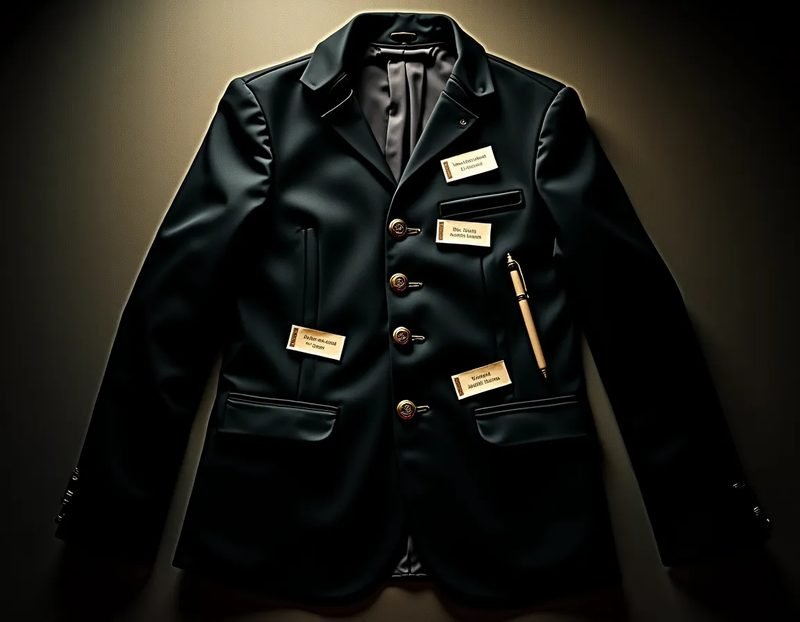
Your jacket gives you a fixed number of usable locations. Pick the ones you can reach without a visible shoulder shift. Reject the rest, even if they look convenient on paper. Then assign by logic, not by whim, and write the map down. If you can’t recite it from memory in the dark, it isn’t finished.
This is where a purpose-built index earns its place. Pathfinder is a custom-made index, built for one job, so you aren’t improvising a filing system out of whatever your tailor happened to sew in. The store describes it as giving you the ease and confidence to deliver your best performance every time. I’d phrase it more modestly: it takes a whole layer of guesswork off your plate before you ever walk on.
The size is adjustable, too. The author’s direction is that it runs from two to 52 outs if you’re using two. As one example, one can hold all the black cards while the other holds all the red. That kind of flexibility matters at the planning stage, because you decide how big the system needs to be for the show in front of you, not for every show you might ever do.
Fewer Doors, Cleaner Reach
Here’s the counterintuitive part. A bigger index makes you look less impressive, not more. Every additional billet means more sorting, more fumbling risk, and more time your hand spends in a pocket while the room is watching you think.
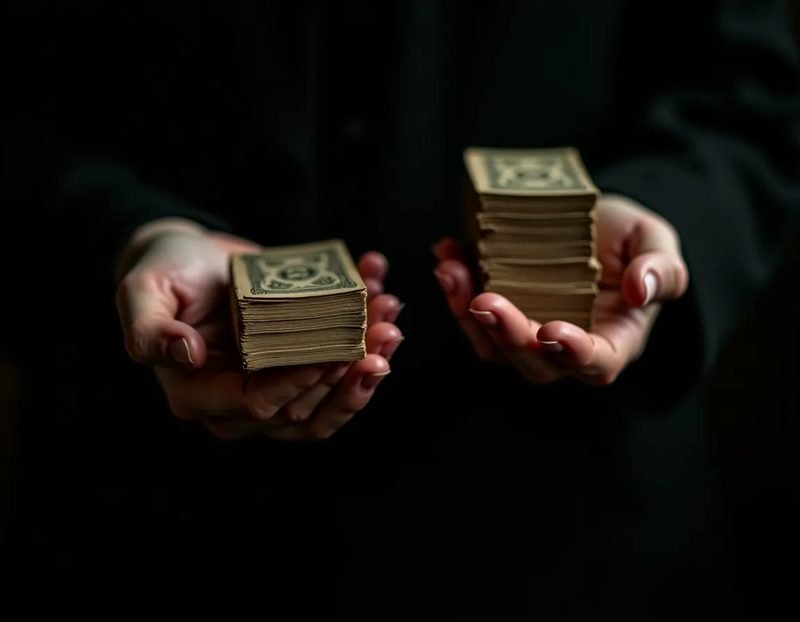
That’s the strongest argument for the Pathfinder approach. Four separate choices used to mean four separate billets, four separate retrievals, and four chances to hesitate. One billet that carries up to four predictions cuts the number of doors you have to open. The store’s examples show the range: the time of death assigned to each of four victims, how a spectator colours a simple drawing, which pockets four borrowed items end up in.
Ask what the effect requires, then carry exactly that. Nothing decorative.
I once carried a “just in case” billet for eight months. I used it twice. It cost me a clean reach at least a dozen times, because my fingers kept finding it first.
Delete the just-in-case items.
Build It Into Your Fingers
You can’t look down. That’s the whole discipline. Your hands have to know the index without your eyes, and that means the thing you’re holding has to be pleasant and predictable to handle.
This is the area where the newer Pathfinder Clear version looks most useful on paper. It uses an easier to use and more durable material, sturdier construction, and clear pages so you can count billets at a glance. Counting is a small job, but it’s the sort of small job that eats confidence. If you’ve ever stood on a stage wondering whether you reloaded everything, you know the feeling.
Rehearse the reach with your eyes closed. Then rehearse it while you’re talking, because that’s where it breaks. Your hand goes soft and slow when your mouth is busy, so drill both together. Read a paragraph aloud and finish the handling on the last word, ten times in a row, with no misses.
My hand goes still the instant I’m unsure. That stillness is the tell, and it’s the thing I train hardest against.
Muscle memory isn’t glamorous. It’s repetition. The store says Pathfinder Clear ships with new handlings that grew out of years of practice with the original, so you aren’t starting from a blank page. You’re starting from someone else’s hours.
Choosing Your Moment
The reach is never the problem. The moment is. Beginners act at the peak of tension, right after the volunteer speaks, because that feels dramatic. It’s exactly when every eye in the room is locked on you, waiting.
Move your action to the valleys. Attention falls the second an audience believes the important thing has already happened. The laughter settles, you look away as if you’re thinking, and that’s your window. It belongs in the exhale, not the held breath.
Give your hand a reason to move. A performer who sweeps into a pocket for no reason is announcing something. A performer who checks a pen pocket, adjusts a lapel, or pats down for a lost marker is simply a person. Motivate the action with something the audience already accepts.
And plant the innocent dips early. Go into that same pocket twice before the effect, once for a pen, once for a handkerchief, and leave with something ordinary both times. By the time the real moment arrives, the pocket has a history of boring behavior. Nobody reads a habit as a secret.
The store also mentions a new use I find interesting: using an index proactively to force a choice from a list, and using new handlings for multi-stage reveals. A multi-stage reveal gives you more than one valley to work with, which is a real timing gift. A simple paper list is all it takes to force a word or object, with no apps or phones needed.
The Volunteer at Your Elbow
Close-up work puts a stranger inches from your jacket, and everything above gets tested by that proximity. I’ve had volunteers lean in, glance down, and make small talk about my sleeve. They aren’t suspicious, they’re just human, and humans look at whatever moves.
Manage the geometry first. Stand so the pocket you’re using sits on the far side from your volunteer, and let your body make a soft angle so your torso shields your hand without looking blocked. Turn slightly to the audience, gesture with your free hand, and let the near-side hand drop naturally.
Then give the volunteer something to do. A small task, a signature, a sealed envelope to hold, a pen to cap. A person with a job doesn’t watch your jacket.
The best routines hand the job over entirely. One idea in the store copy has the spectator choose the only clue from a list that applies to an unseen object, so the spectator becomes the performer. Another takes them on a journey to a movie, concert or event, only for their matching ticket to appear. Both keep the volunteer busy and curious, and a busy, curious volunteer is the best cover you can have.
Keep your eyes off the pocket, always. Look at the volunteer, or at the object you’re about to reveal. Your gaze tells the room where the action is, so send it somewhere harmless.
The best moment I ever had happened while a man stared at my face and asked me a question about my grandmother. I answered him warmly, and by the time he finished listening, the work was already done.
He never knew a thing had moved.
Practice Like the Room Is Watching
I don’t claim the pocket index is glamorous. I claim it works, and it works best in the hands of a performer who treats it as a discipline instead of a shortcut.
Run the full sequence in front of a mirror, then in front of a camera, then in front of one patient friend who’s been told to watch your jacket and nothing else. If they catch something, you have your answer, and it’s a useful one. Fix the angle, fix the timing. Then run it again.
Keep a log for the first month. Note every miss, every hesitation, every time your fingers found the wrong thing. You’ll see patterns quickly, and most of them trace back to assignments that made sense on paper and felt wrong in motion. Change the map. The map serves you, not the reverse.
Pathfinder also comes with online downloadable templates to customize its routines to fit you, and the store frames the whole thing as a tool for building a routine as unique as you are. That’s the right attitude. Use the supplied routines to learn the system, then make something that sounds like you.
And when it finally goes quiet, when the reach becomes something you forget you’re doing, you’ll understand why the serious performers never talk about it. Silence is the proof.
If you want to see what the system offers, the full details are on the Pathfinder Billet Index page, and the rest of the shelf is at Arcane Relics.
Part 2: Deposits, Riders, and Contracts, the Paperwork That Protects a Private Bizarre Magic Booking

If you read Part 1: Pricing the Impossible: What a Private Bizarre Magic Booking Should Actually Cost, you have a number. A fee you can say out loud without flinching. That number is worth nothing until it’s written down, signed, and attached to terms that survive a bad night.
I don’t believe a contract makes a performer professional. I do have a firm conviction that the absence of one makes a performer vulnerable, and I’ve watched good people learn that lesson at eleven o’clock on a Saturday, standing in a stranger’s dining room with a dead phone and a client who “thought it would be different.”
I’m not a lawyer. Have one read your template once. Then let’s talk about what belongs in it.
The Agreement Is the First Effect
Your client meets your paperwork before they meet your patter. It tells them whether you’re a hobbyist who shows up or a working performer who arrives with a process. That impression carries into the room, and it changes how they treat you once you’re there.
Keep it short. One to two pages, plain language, no Latin. A contract nobody reads protects nobody, and the host who skims a wall of clauses signs without understanding any of them. Then a dispute arrives and you’re both surprised.
Write it the way you’d speak to a guest at a table. Direct. Warm. Unmovable on the parts that matter.
Send it with your confirmation, not after. Sending terms after a verbal yes feels like a second negotiation, and hosts resent it.
Deposits and the Cancellation Clause
The deposit isn’t a down payment on the show. It’s the price of the date. Once you’ve held an evening, you’ve turned away every other booking that could have filled it, and that’s the loss the deposit covers. Say so in the agreement, in exactly those terms.
Most working performers I know take somewhere between a quarter and half of the fee up front, and they make it non-refundable. Fifty percent is easy to defend for a high-fee evening with travel. A quarter suits a smaller parlor booking. Pick one, and don’t apologize for it.
Then build your cancellation tiers around the calendar, not your mood:
- Far out: the deposit is kept, the balance is never owed.
- Inside two weeks: a larger share of the fee comes due, because you can’t refill the date.
- Inside forty-eight hours: the full fee. No exceptions written in, none offered aloud.
Offer one free reschedule, subject to your availability. It costs you little and it turns a cancellation into a retained client. That’s a better outcome than winning an argument.
Add an overtime line while you’re there. If the host wants another forty minutes, they should know the rate before the clock runs, not after.
The Rider: Room, Light, and Silence
A rider sounds like something a rock band sends. It’s not. It’s a list of conditions under which your work functions, and for bizarre magic those conditions are a good part of the act.
Think about what the piece needs. A candle-lit reading dies under a ceiling fan. A quiet, slow effect gets murdered by a television murmuring in the next room. A guest who can’t see your hands can’t be fooled by them, and a guest who can see everything from the wrong angle will find your method for you.
Here’s what I’d put in yours:
- A clear playing area, and a sturdy table of a stated size.
- Dimmable lighting, plus a named person who controls the switches.
- All music, televisions and background audio off during the performance.
- Seating arranged so no guest sits behind you or at a sharp side angle.
- Thirty minutes of private access before the guests arrive.
- Open flame only with the host’s written consent, and never left unattended.
That last one matters more than it looks. Candles and old paper are a natural pairing for our kind of work, and a smoke alarm at the wrong moment ends a mood faster than any heckler.
Add a filming clause too. Ask that guests not record the performance without your permission. A phone held up during a reveal doesn’t just protect nobody, it hands your method to whoever scrubs the footage frame by frame.
Guest Counts and Who Gets Picked
Intimate work has a ceiling. Every performer finds it eventually. Past a certain crowd, a whispered piece turns into a shouted one and the atmosphere you spent an hour building goes flat in the back rows.
Put a guest cap in the contract, written next to the fee. If the host adds twelve people after signing, the price moves or the format does. I’d rather hold that line in writing than argue it at the door with a caterer standing behind me.
Consider a volunteers clause as well. Tell the client up front that you’ll invite guests to participate, that nobody is forced, and that you’ll choose based on the piece. It sounds minor. It heads off the awkward moment where the host’s mother-in-law was “promised” she’d be the one.
And one more, for evenings with alcohol. You reserve the right to shorten or end a performance if the room can no longer give it attention. Nobody enjoys enforcing that. Everybody’s grateful it was written down.
The Séance Request, and the Guest Who Just Lost Someone
This is the clause nobody teaches. You learn it once, and you don’t forget it.
A host books a séance-style evening for a small gathering in Anchorage. Lovely. Atmospheric. Exactly your material. Then, two days before the date, she mentions in passing that one guest lost her husband last month, and wouldn’t it be moving if he “came through”?
My hands go still when I read that kind of message. I feel it low in my stomach before I’ve finished the sentence.
Because I can build a piece that sounds like a message from the beyond. Any capable mentalist can. What I can’t control is what it does to a person in the first weeks of grief, who may not hear theater at all. She may hear a real voice. Then she leaves believing it.
That’s not a moral panic, it’s a professional risk, and it belongs in your paperwork:
- State plainly that the performance is entertainment and makes no claim to contact the actual dead.
- Require the host to tell you, before the date, about any guest recently bereaved.
- Reserve the right to adjust, soften or remove any segment involving named deceased persons.
- Reserve the right to speak privately with the host about the format beforehand.
Most hosts respond well. They hadn’t thought about it, and they’re relieved you did. In my experience the conversation makes the evening better, because the host starts protecting the mood rather than chasing a stunt.
I don’t necessarily believe the dead speak through a table. I do believe the living are listening.
Send It Like You Mean It
A clause you’re embarrassed to enforce isn’t a clause. It’s decoration. Write only what you’ll hold to, and then hold to it, kindly and without drama. The tone you use the first time a host pushes back sets the terms for every booking after.
Read your agreement aloud once. If a sentence sounds cold, warm it up. If it sounds like you’re begging, tighten it. It should sound like the person who’ll walk into their home, fill it with quiet, and leave with the room still holding its breath.
Keep a copy in your case, printed. The one time a phone is dead and a question comes up, you’ll be glad!
Part 1 gave you the number. This gave you the paper. Between them, you can stop negotiating in the doorway and start performing.
And the props themselves? You’ll find them in the Arcane Relics shop, where the pieces are chosen for people who take the work, and the evening, seriously.
Margery and the Scientific American Prize: The Séance Investigation That Split the Committee

I don’t claim Mina Crandon spoke with the dead. I don’t claim she didn’t. What I’m certain of is that her case did something to a committee of intelligent, hardened men that no ordinary fraud manages, and that it’s the best-documented lesson in how a test turns into a show.
The Prize and the Committee
Scientific American put up $2,500 for a physical psychic manifestation that survived a committee’s scrutiny. A second $2,500 was offered for a spirit photograph. It was a publicity stunt with real money attached, and the magazine staffed it accordingly.
The committee was Hereward Carrington, Walter Franklin Prince, Daniel Comstock, William McDougall and Harry Houdini, with associate editor J. Malcolm Bird serving as secretary and the man who actually ran the sittings. Read that roster slowly. Carrington was sympathetic to the phenomena, Prince was a researcher who had already exposed mediums, McDougall was a Harvard psychologist, Comstock a physicist, and Houdini a professional who knew every trick in the room.
It was a stacked deck, and nobody agreed which way it was stacked.
Margery of Lime Street

Mina Crandon was the wife of Le Roi Goddard Crandon, a respected Boston surgeon. She was young, quick, socially at ease, and nothing like the shrouded widow of the Victorian parlor. Sittings happened in the Crandon home on Lime Street, and she was publicly known as “Margery” to shield the family name.
Her control was Walter, her brother, a railroad man killed in an accident in 1911. Walter wasn’t a wispy voice. He whistled, cursed, teased the sitters, and gave orders. He ran the room like a stage manager, which matters for everything that follows.
The phenomena were physical. Tables tilted, a megaphone traveled, a bell box rang, and a cold breeze moved through the circle. Later came “teleplasm,” the ectoplasmic hand that Walter said he’d grown for the purpose. Sittings were held in darkness or under a red light, and Margery’s hands and feet were controlled by her neighbors in the circle.
Controlled by her neighbors. Keep that phrase in your head.
The Sittings That Nearly Won
Bird sat with Margery repeatedly through 1924 and grew convinced. In the pages of the magazine itself, he suggested that the committee was close to something it couldn’t easily dismiss. Carrington was inclined the same way. Prince stayed uneasy.
The bell box was the centerpiece. It was a lidded wooden box with a contact that rang a bell when pressed from above. It sat on the floor within reach of Margery’s feet, yet the sitters controlling her hands swore she hadn’t touched it. Walter would announce that he’d rung it, and it rang.
Then there were Walter’s thumbprints. Impressions in dental wax, produced during sittings, were presented as the spirit’s own. Reportedly, they matched not a dead brakeman but the prints of a living man, a dentist. I can’t verify every thread of that story, and I won’t pretend to. But the trajectory is instructive: the more physical the evidence, the more it could be checked, and the more it slipped.
My hands go still just thinking about what that does to a room. A prize committee watches a bell ring in the dark, then argues over it for the rest of its life.
Houdini Builds a Box
Houdini arrived in Boston in July 1924 and sat with Margery. He came away saying he had felt her manipulating the bell box with her ankle. Before the next round, he did what a working performer does when a method is suspected: he built a control.
His cabinet was a wooden box with a hinged lid and openings for her head and arms. Sitting inside, locked in, she couldn’t reach the bell box on the floor beside her. If the phenomena were genuine, the box was no obstacle. If they weren’t, it was a wall.
At the box sitting, the bell didn’t ring. Walter, speaking through Margery, didn’t take it well, and by most accounts his language toward Houdini was unfit for print. Afterward, a folding ruler was found inside the cabinet. Houdini said it had been planted, that the Crandon side had tried to arm her in advance. The Crandons said the box itself was hostile, that it cramped her and blocked Walter’s work.
Both stories explain the ruler. Neither explains the committee’s next move…
The Committee Cracks
Houdini published a pamphlet denouncing Margery as a fraud, and he did it while the committee’s verdict was still open. Bird had already written in the magazine that Houdini’s box sitting was a failure of the control, not of the medium. Carrington defended her. Prince, while never fully convinced, resented the way the case had become a spectacle. McDougall held to the academic line that the evidence wasn’t sufficient. The prize never went to Margery.
She never lost the prize, and she never won it either. That’s the strangest part.
The fight wasn’t only over her. It was over who owned the definition of a valid test. Bird treated the sittings as a cooperative collaboration with the medium. Houdini treated them as an adversarial exam. Both positions are defensible, and both got in each other’s way. Houdini died in October 1926, still arguing the case.
Bird, for his part, left the magazine. His judgment and his closeness to the Crandons were called into question, and that alone is worth a chapter in any performer’s education.
Where the Test Became the Show
Here’s the counterintuitive point most retellings miss. Margery’s strongest asset wasn’t a method. It was the committee’s own process.
Every control the committee added became a story. The bell box became “the bell box sitting.” Houdini’s cabinet became “the box.” The red light, the hand-holding, the wax, the questions of who sat on which side, all of it produced narrative, and narrative is what an audience carries home. The test itself was the most reliable presentation she had, and she didn’t have to invent a word of it.
Think about that if you’re building a show around a challenge. A skeptic in your front row isn’t only an obstacle. Give him a control and you’ve handed him a role, and everyone watching now remembers his role better than your effect. That’s a gift, if you know how to use it.
It’s also a danger. A control you can’t make interesting is a control that quietly disappears from the story. Nobody retells the procedure that worked without incident.
What a Working Performer Should Steal
Some years ago I ran a table sitting for a small private gathering in Highview. I’d worked out beforehand that whoever held my wrists would tell the room’s story afterward, so I chose that person carefully and had him state aloud what he felt. I noticed the room’s breathing change. It wasn’t my effect they remembered, it was his account of my pulse.
Here’s what the Margery case teaches, stripped of period costume:
- Controls are characters. Whoever performs the control becomes a witness, and witnesses shape memory more than effects do.
- An adversary and a collaborator can’t share a test. Decide which one you’re staging before the lights go down. Mixing them is how a committee splits.
- A confident spirit voice needs an outlet. Walter’s insults toward Houdini were dramatic gold. Give your presentation a personality that can push back, and the room will side with it or against it. Either way they’re engaged.
- Physical evidence can be checked, so plan for the check. Anything left behind, a print, an object, a mark, will be examined by someone who wants to be difficult.
- Leave a thread unresolved. Ninety years on, nobody has cleanly explained every sitting, and that gap is why we still talk about her!
And that’s the whole game, honestly. The committee wanted a verdict. The audience wanted a story. Only one of them got what they came for.
If you want the tools to build a sitting worth remembering, the kind with real weight and a real atmosphere, come see what’s on the shelf. You, my friend, are home: https://arcanerelics.com/shop/
The Story Grows in the Telling: How Audience Memory Rewrites Your Effect After the Show

A man once told me, with total sincerity, that I’d made a borrowed watch stop ticking. I hadn’t touched a watch that night. I’d never met him before the show. But three weeks later, over a table in New Albany, Indiana, he described the evening to his wife and I could hear the effect had grown a second, stranger act that never happened.
You Performed It Once. They Perform It Forever.
I don’t claim audiences lie. I don’t think they do. But I’ve come to hold a firm conviction that the effect you perform and the effect they remember are two different pieces of theater, and only one of them was under your control.
The applause ends, the lights come up, and the real performance begins. It runs in kitchens, in cars, at the office on Monday morning. Your spectator is now the performer, the script is their memory, and that script is being rewritten every time they open their mouth.
Most magicians spend a career polishing the forty minutes on stage. Almost none of them spend a minute on the forty seconds that will actually travel.
What the Research Says About Remembering
Elizabeth Loftus built a career on a simple, unsettling finding. In her 1974 experiments with Palmer, changing a single verb in a question about a filmed car crash changed the speed estimates people gave. “Smashed” produced higher numbers than “hit.” A week later, people who’d heard “smashed” were more likely to report broken glass that wasn’t in the film.
Memory isn’t a recording. It’s a reconstruction, and the building materials include whatever language was nearby when the memory was fetched. That’s the misinformation effect, and it’s among the best replicated results in the field.
Then there’s reconsolidation. When a memory is recalled, it becomes briefly unstable and is stored again, sometimes altered. Each retelling is a small edit, saved over the original. The trace you left in that room isn’t sitting in a vault. It’s being handled.
Your effect is being handled.
Two Things the Retelling Does Every Time
Here’s the part that matters to us. Magicians have known for a long time that spectators forget method. Research on this, and decades of anecdote, points to the same two drifts, and they run in opposite directions.
The method-revealing details fall away. The moment you shuffled, the second you asked for the pen, the pause where you reset your hands. These were never dramatically important to the spectator, so they don’t survive compression. A retelling is a summary, and summaries cut whatever doesn’t serve the story.
The impossible details swell. “I picked a card” becomes “I picked any card I wanted.” “He glanced at it” becomes “he never looked.” “Somewhere in the middle of the deck” becomes “I shuffled it myself.” Nobody’s cheating. They’re building the strongest version of the story their memory can support, because a story with a hole in it doesn’t feel worth telling.
This is Jay Jastrow’s old observation, reworked. You want the spectator to leave with a stronger effect than the one you performed. The good news is that they will, almost automatically. The better news is that you can steer it.
Framing: What You Say Before the Effect Ends
Loftus showed that the words around an event colonize the memory of it. So choose them.
Watch what you say during the effect about the conditions. If you say “you could have named anything,” you’ve just handed them a sentence that will show up in their retelling almost verbatim. If you say “you could have changed your mind right up until the last second,” they’ll remember a decision that was never in doubt as a decision that was constantly in play.
This is the real reason to script your conditions instead of improvising them. Every declarative line about freedom, distance, or absence of contact is a potential quote. Write each one as if it’ll be repeated to a stranger by someone who wasn’t paying full attention. Because it will.
Avoid the hedged line. “It’s sort of like a cold read, but not really” gives them nothing to carry home. Give them a clean sentence they can steal.
The Summary Line
Late in the routine, before the final reveal lands or right after it, I use what I think of as a summary line. One sentence that recaps the effect in the exact shape I want it retold.
Not a flourish. A compression. “You chose freely, you never told me, and it was written before you walked in.” Twelve words or so, with the impossible parts stacked in order and the method parts absent.
Listen to spectators afterward and you’ll hear my sentence come back out of their mouths, slightly worn at the edges. That’s the goal. You’re not manipulating their memory so much as saving them the labor of composing the summary, and offering yours.
Keep it short enough to survive the drive home. If it takes two breaths, it won’t.
Test it. Ask a friend to describe your routine the next day, unprompted, and count how many of your words return.
What You Leave Unspoken
Silence is the other instrument, and the harder one. Anything you never say can’t be repeated, and anything you never resolve stays open for the spectator’s imagination to complete.
I’ve stopped explaining. When a prediction lands, I don’t walk through how unlikely it was. I don’t recap the conditions a third time. I don’t tell them what they felt. The spectators who leave with the strongest memory are usually the ones I gave the least to, because the gap gets filled, and it gets filled by them, with their own sense of what would’ve been necessary to produce such a thing.
That’s the unnerving part. The version they build is more impossible than anything I’d have dared to script.
There’s a cost, and I won’t pretend otherwise. You lose control of the exact wording. Some retellings drift somewhere you’d never have chosen. But an unexplained ending drifts toward mystery, and an over-explained one drifts toward “he was really good at reading people.” Pick your risk.
Build for the Second Telling
Here’s a working checklist for your next script revision.
- Find the three conditions a spectator is most likely to repeat, and reword each into a clean, quotable sentence.
- Cut any line that hedges or qualifies. Hedges don’t travel.
- Write a single summary line that compresses the effect. Say it once, near the end, in the same rhythm every performance.
- Cut your post-reveal explanation by half. Then cut it again.
- Follow up with one or two spectators a week later, and write down exactly what they say. Their words are your real script.
That last step changed how I work more than any book did. The retelling is the review, the only one that counts, and it’s free.
The show ends when the room empties. The effect ends much later, in a stranger’s kitchen, told by someone who doesn’t remember you shuffled.
If you’re building work meant to be remembered wrong in exactly the right way, start with props built for it: https://arcanerelics.com/shop/
The Unseen Hand: A History and Working Theory of the PK Touch

I don’t believe the dead have hands. I’ve never had a reason to. But I’ve stood in a dim room and watched a grown man flinch at something that touched his shoulder when nobody was near him, and I can tell you the flinch was real. Whatever you believe about spirits, that reaction belongs to the body, and the body doesn’t take instruction.
That’s the whole reason the PK touch has outlasted almost every other effect in the bizarre canon.
The Hand in the Dark
The Victorian séance did not invent the unseen touch, but it gave the touch a stage, a vocabulary and a paying audience. After the Fox sisters made their rapping famous in 1848, sitters expected more than sounds. They wanted contact. Mediums delivered it in the dark, with hands linked around the table and the gas turned down to a bruise-colored glow.
Daniel Dunglas Home built a reputation on it. Sitters reported hands that appeared, shook theirs, tugged at coats, and once in a while handed over a flower. Eusapia Palladino, the Neapolitan medium, was famous for touches that came from behind her cabinet curtain, pinches, pats and grips on the wrists of the people sitting closest to her.
Her investigators were serious people. Several of them went home convinced. Others caught her cheating, and she was caught more than once. Both things can be true, and the truth of it is what makes her worth studying.
Notice what those sittings had in common. Nobody was watching a hand. Everyone was feeling one.
Why It Lands Harder Than Anything You Can See
A card trick happens on a table. A levitation happens across a stage. A touch happens inside the boundary of a person, on skin they’ve defended since childhood, and that boundary has rules older than any magic theory. We don’t let strangers cross it. When something does, the mind has to file the event somewhere, and it reaches for the nearest explanation.
Here’s the counterintuitive part, and it’s the point most performers get backwards. The stronger the touch, the weaker the effect. A firm shove gets explained away in a second, someone bumped me, my chair moved. A touch that’s barely there, a weight on a sleeve or a brush at the back of the hand, is the one that stays unresolved, because the spectator can’t decide whether it happened.
Doubt is your ally here. Certainty is a gift you can hand your audience later, in the retelling, when they’ve done the work themselves.
The Method Families
Strip away the period costume and every touch method falls into one of a few families. Knowing them matters because it tells you what your audience is already suspecting.
- The confederate. Someone else does the touching. It’s the oldest method and still the cleanest, since a real hand feels exactly like a real hand. The cost is trust and rehearsal, and one exposed accomplice ruins the memory of everything before it.
- The freed limb. The classic séance control. The medium slips a hand or a foot loose while the sitters believe both are held, and the touch comes from the performer’s own body. It’s cheap and it’s silent. It also puts you close to the spectator and it dies under a decent set of controls.
- The reaching aid. A rod, a thread, a pulled lightweight object. Mediums used them, and so did every skeptic who ever wrote up their exposure. Effective in a dark room, but it’s a method that lives or dies on lighting.
- The gimmicked device. A small mechanism delivers the touch without a performer’s limb or an accomplice’s hand. Modern versions run on a motor or a solenoid and fire on a remote signal.
Every one of these has a tell. The confederate needs an alibi, the freed limb needs proximity, the reaching aid needs shadow. The device needs a moment where the spectator would notice something on their body, so you have to manage that moment instead of ignoring it.
What Separates Ghostly From Prankish
I’ve watched good performers turn an eerie moment into a joke in about four seconds. The method was fine. The presentation gave the audience permission to laugh, and once they laugh, it’s over.
Four rules, and I’d tape them inside your case if I could.
- Give the touch a reason. A touch with no story is a poke. A touch after a quiet minute of attention, a line about someone standing behind the chair, a request that the spectator hold still, is a moment. The story doesn’t have to be supernatural. It just has to be a frame.
- Never announce it. Don’t say “you’ll feel something on your arm.” Let them report it. When the spectator says “did anyone just touch me?” your job is to look as surprised as they do, or a shade less, if you can hold it.
- Use the one who doesn’t want it. The volunteer who’s smiling and ready for a trick is the hardest audience for a touch. Pick the quiet one, the arms-crossed skeptic, the person who looked away when you started. Their surprise is the honest kind.
- Stop after one. Two touches make a pattern, and patterns look like methods. One touch, then silence, is a memory. Do it once and let the room decide what it saw.
Pace matters more than any prop. Let three or four seconds go by after the touch before you say anything. It will feel like too long. It isn’t.
A Room in Springhurst
I worked a small private event in Springhurst where the host had warned me, cheerfully, that her brother would ruin everything. He did his best. He heckled the first two pieces and offered running commentary on the third. I put him in the chair anyway.
Quiet, then. Dimmed lamp. I asked him to close his eyes for ten seconds and said nothing else. When the touch came, my hands were in plain view of the room, and he didn’t say a word. His jaw tightened and he opened his eyes and looked at his own forearm as if it had lied to him.
Nobody laughed. The host, who had been grinning all night, put her hand over her mouth.
I don’t tell that story to brag. I tell it because the silence afterward was worth more than any applause I’ve had, and it came from a man who’d spent an hour trying to break the room.
Where Contact Fits
I built Contact because I wanted the fourth family done properly. Not a rod, not a friend in the wings, not a foot under a table. A device that delivers a small, real touch on your signal, with no performer’s hand anywhere near the spectator when it lands.
The hard part of any touch device is not the mechanism. It’s the feeling. Too sharp and it reads as a tool. Too heavy and the spectator knows it’s mechanical the moment it lands. Getting it to feel like a fingertip and not a machine took more iteration than I’d like to admit, and it’s the reason I don’t let anything out of the shop that I haven’t tried on a skeptical friend first.
What it gives you is separation. You can stand across the room with empty hands, and the touch still arrives. That separation is what makes the effect impossible to reverse-engineer from the spectator’s memory, because the memory has no hand in it.
It doesn’t do the work for you, though. Nothing does. The four rules above still apply, and a device in the wrong hands is only a very expensive prank. In the right hands, with a frame and a quiet room, it does what Palladino’s curtain did for her sitters. It gives them something to be unsure about.
The Unseen Hand Is a Test of You
The Victorians understood something we keep forgetting. The touch was never the trick. The trick was the dark, the held breath, the twenty minutes of expectation before anything happened. The hand was just the punctuation.
If you build the room properly, almost any method will carry the effect. If you don’t, the best device ever made will get you a nervous laugh and a story about the time you tried something weird.
So build the room first. Choose your volunteer with care, keep your controls quiet, and give the audience nothing to point at afterward. Then let one small touch do what a hundred years of séance tables were reaching for all along…a person, alone in a crowd, unsure of their own skin.
You’ll know it worked when the room doesn’t clap. It just waits.
If that’s the kind of effect you want in your working repertoire, step into the shop and see what’s waiting for you.
Protected: Gavel-directions
Provenance as Performance: Writing the Backstory for a Haunted Object Without Lying Your Way Into Trouble

I don’t tell audiences an object is haunted. I don’t tell them it isn’t. That gap is where the work happens, and most performers I’ve watched handle it badly.
They build a story, hang it on a doll or a trumpet or a cracked hand mirror, and then get cornered by one plain question from a person holding a drink. “Is that real?” The good ones pause and the bad ones panic. The worst ones lie, and a lie told to a stranger at a card table has a way of surviving longer than the prop does.
The Question That Ends Most Stories
At a private event in Clarksville, Indiana, a man in his fifties picked up a battered tin trumpet from my table, turned it over, and asked where I’d gotten it. Not what it did. Where it came from. My hands went still.
He wasn’t hostile. He was a person who sold used equipment for a living and knew that every object has a chain of custody, or claims to. A story without a chain is just decoration.
That’s the whole problem, and it’s why provenance deserves the same rehearsal time as your patter.
Your audience doesn’t grade the prop first. They grade the person holding it. If your history wobbles under one calm question, they’ll quietly discount everything else you’ve said, including the parts that were true.
Provenance Is a Script With a Paper Trail
Real provenance is boring. It’s a bill of sale, an estate inventory, a name scratched inside a lid, a dealer’s handwriting on a hangtag. The dramatic part usually arrives later, after somebody tells the story enough times that it hardens into fact. Think of the doll that circulated for decades under a famous paranormal banner. The object in the case was a Raggedy Ann, not the porcelain horror that Hollywood put on posters. The story grew and the object stayed exactly what it was.
That tells you something useful. Audiences forgive a story that’s dressed up. They don’t forgive one that’s been swapped.
So build your backstory in three layers, and keep them separate in your head.
- What is physically true. Age of the materials, repairs, wear patterns, maker’s marks. This layer never changes and you never embellish it.
- What is documented. Where you bought it, from whom, what they told you. If a seller gave you a tale, say it was the seller’s tale.
- What is performed. The invented narrative, the fictional owner, the séance that never happened. This layer is theater and should feel like theater.
The trouble starts when layer three quietly borrows the authority of layer one. You know the moment. A made-up widow gets a made-up date and suddenly the tin trumpet has a death certificate.
Build It to Survive the Second Question
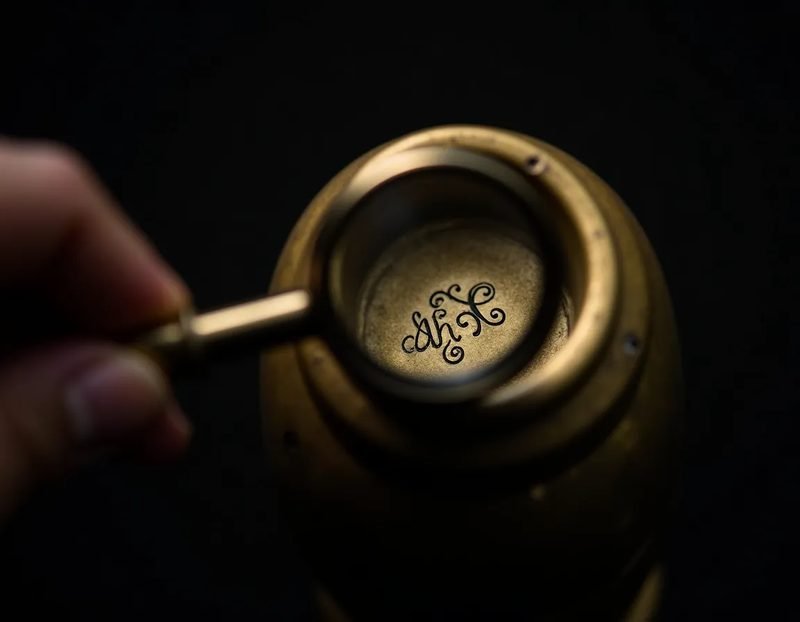
The first question is easy. Anyone can rehearse an answer to “where did it come from.” The second question is the test, and it’s usually small. “What year?” “Who cleaned it?” “Why’s there a burn on the base?”
Here’s what I’ve learned about stories that hold. They carry mundane detail, they admit gaps, and they contain one thing that doesn’t fit.
Mundane detail is the ballast. A story with a tragic séance and no mention of how the object was stored, shipped, or insured feels like a poster. A story that mentions the object sat in a damp garage for six years feels like a life.
Gaps are the honest part. “I don’t know who owned it between the forties and the seventies” is more convincing than a tidy line of succession, and it costs you nothing. Unfinished history is how real objects behave.
And the one thing that doesn’t fit? Keep it. A wrong-era screw, a repair no one can explain, initials that match nobody in the tale. Performers tend to sand that off. Don’t. Your audience will spend the rest of the evening working on it, and that’s the kind of attention money can’t buy.
I don’t say the object is cursed. I say what happened around it, in order, and I stop before the conclusion. The silence after the last fact does more than any adjective could.
Where the Story Becomes a Claim
This is the section performers skip, so read it slowly.
On stage, everyone in the room understands they’re inside a frame. You say the widow lost three children in one winter, and nobody calls a lawyer. The theater of it is the contract. But the frame ends at the door of the sale. The moment you write a description on a listing, or say a sentence to a buyer who’s holding cash, you’ve stopped performing and started making statements about goods.
The internet gave us one loud lesson. A famous online listing for a so-called dybbuk box, back in the early 2000s, showed how fast a story can outrun an object, and how much money and misery can attach itself to a tale once strangers treat it as fact. The listing wasn’t the danger. The belief was.
So draw a hard line between two kinds of sentences.
- Attribution: “The estate seller told me the trumpet came from a family in Ohio.” That’s a report of what you were told.
- Assertion: “This trumpet belonged to a medium who died in 1931.” That’s a claim, and you’d better be able to back it.
When you’re selling, use attribution, or use language that plainly signals fiction. “Presented with the legend of…” works. “Sold as a performance piece with an invented history” works even better.
To be honest: a buyer who feels tricked doesn’t just leave. They tell the room. Bizarre magic runs on trust between people who buy odd things from each other for decades, and one bad sale poisons a small pond.
A Collector’s Field Guide to Story Versus Claim
If you’re on the buying side, you have more power than you think. You don’t need to be cynical. You need to be exact.
Ask what the seller knows versus what the seller was told. A good dealer will separate those without being asked. A weak one will blur them and get warm and chatty when you push.
Watch for these patterns:
- Specific dates with no documents. A precise year and no paper is a story wearing a suit.
- Named tragedies you can’t search. If a death was that dramatic, somebody wrote it down somewhere.
- Escalating stories. The tale grows every time the price is questioned.
- Refusal to say “I don’t know.” Real provenance has holes. Sellers who have none are usually the ones who’ve filled them.
None of this means you shouldn’t buy the object. Some of the best pieces in my own collection came with stories I can’t verify, and I bought them anyway. I know what I paid for, and that’s the difference between collecting and being had.
A story is a fine thing to own. Just don’t mistake it for a title deed.
The Line I Keep
I was skeptical of haunted objects for a long time. I still am, in the way a person is skeptical of a stranger who insists on telling you everything about himself in the first five minutes. But I’ve stood in rooms where a quiet, well-built history made grown adults lower their voices without being asked!
That reaction is earned, not stolen. It comes from craft: an object with honest physical facts, a documented trail where one exists, and a performed layer that never pretends to be anything else. The audience feels the difference even when they can’t name it.
So write your provenance the way you’d write your best routine. Rehearse the second question. Leave one loose thread. Know the exact moment your story turns from theater into a statement you’d have to defend at a counter.
Then keep the line where you put it.
If you are like me and you care as much about how a relic arrives as what it does once it’s here, then you my friend, are home. Browse what’s on the shelves at arcanerelics.com/shop.