
Margery and the Scientific American Prize: The Séance Investigation That Split the Committee

I don’t claim Mina Crandon spoke with the dead. I don’t claim she didn’t. What I’m certain of is that her case did something to a committee of intelligent, hardened men that no ordinary fraud manages, and that it’s the best-documented lesson in how a test turns into a show.
The Prize and the Committee
Scientific American put up $2,500 for a physical psychic manifestation that survived a committee’s scrutiny. A second $2,500 was offered for a spirit photograph. It was a publicity stunt with real money attached, and the magazine staffed it accordingly.
The committee was Hereward Carrington, Walter Franklin Prince, Daniel Comstock, William McDougall and Harry Houdini, with associate editor J. Malcolm Bird serving as secretary and the man who actually ran the sittings. Read that roster slowly. Carrington was sympathetic to the phenomena, Prince was a researcher who had already exposed mediums, McDougall was a Harvard psychologist, Comstock a physicist, and Houdini a professional who knew every trick in the room.
It was a stacked deck, and nobody agreed which way it was stacked.
Margery of Lime Street

Mina Crandon was the wife of Le Roi Goddard Crandon, a respected Boston surgeon. She was young, quick, socially at ease, and nothing like the shrouded widow of the Victorian parlor. Sittings happened in the Crandon home on Lime Street, and she was publicly known as “Margery” to shield the family name.
Her control was Walter, her brother, a railroad man killed in an accident in 1911. Walter wasn’t a wispy voice. He whistled, cursed, teased the sitters, and gave orders. He ran the room like a stage manager, which matters for everything that follows.
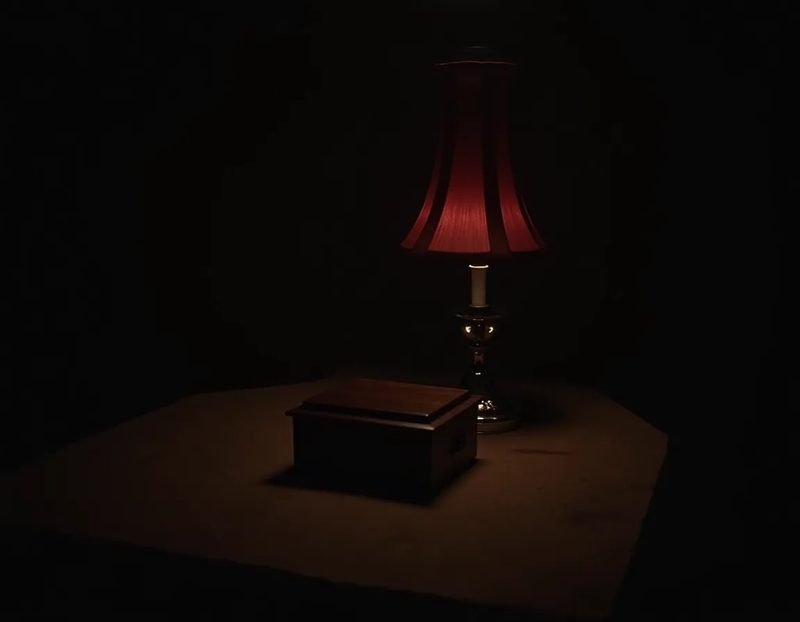
The phenomena were physical. Tables tilted, a megaphone traveled, a bell box rang, and a cold breeze moved through the circle. Later came “teleplasm,” the ectoplasmic hand that Walter said he’d grown for the purpose. Sittings were held in darkness or under a red light, and Margery’s hands and feet were controlled by her neighbors in the circle.
Controlled by her neighbors. Keep that phrase in your head.
The Sittings That Nearly Won
Bird sat with Margery repeatedly through 1924 and grew convinced. In the pages of the magazine itself, he suggested that the committee was close to something it couldn’t easily dismiss. Carrington was inclined the same way. Prince stayed uneasy.
The bell box was the centerpiece. It was a lidded wooden box with a contact that rang a bell when pressed from above. It sat on the floor within reach of Margery’s feet, yet the sitters controlling her hands swore she hadn’t touched it. Walter would announce that he’d rung it, and it rang.
Then there were Walter’s thumbprints. Impressions in dental wax, produced during sittings, were presented as the spirit’s own. Reportedly, they matched not a dead brakeman but the prints of a living man, a dentist. I can’t verify every thread of that story, and I won’t pretend to. But the trajectory is instructive: the more physical the evidence, the more it could be checked, and the more it slipped.
My hands go still just thinking about what that does to a room. A prize committee watches a bell ring in the dark, then argues over it for the rest of its life.
Houdini Builds a Box
Houdini arrived in Boston in July 1924 and sat with Margery. He came away saying he had felt her manipulating the bell box with her ankle. Before the next round, he did what a working performer does when a method is suspected: he built a control.
His cabinet was a wooden box with a hinged lid and openings for her head and arms. Sitting inside, locked in, she couldn’t reach the bell box on the floor beside her. If the phenomena were genuine, the box was no obstacle. If they weren’t, it was a wall.
At the box sitting, the bell didn’t ring. Walter, speaking through Margery, didn’t take it well, and by most accounts his language toward Houdini was unfit for print. Afterward, a folding ruler was found inside the cabinet. Houdini said it had been planted, that the Crandon side had tried to arm her in advance. The Crandons said the box itself was hostile, that it cramped her and blocked Walter’s work.
Both stories explain the ruler. Neither explains the committee’s next move…
The Committee Cracks
Houdini published a pamphlet denouncing Margery as a fraud, and he did it while the committee’s verdict was still open. Bird had already written in the magazine that Houdini’s box sitting was a failure of the control, not of the medium. Carrington defended her. Prince, while never fully convinced, resented the way the case had become a spectacle. McDougall held to the academic line that the evidence wasn’t sufficient. The prize never went to Margery.
She never lost the prize, and she never won it either. That’s the strangest part.
The fight wasn’t only over her. It was over who owned the definition of a valid test. Bird treated the sittings as a cooperative collaboration with the medium. Houdini treated them as an adversarial exam. Both positions are defensible, and both got in each other’s way. Houdini died in October 1926, still arguing the case.
Bird, for his part, left the magazine. His judgment and his closeness to the Crandons were called into question, and that alone is worth a chapter in any performer’s education.
Where the Test Became the Show
Here’s the counterintuitive point most retellings miss. Margery’s strongest asset wasn’t a method. It was the committee’s own process.
Every control the committee added became a story. The bell box became “the bell box sitting.” Houdini’s cabinet became “the box.” The red light, the hand-holding, the wax, the questions of who sat on which side, all of it produced narrative, and narrative is what an audience carries home. The test itself was the most reliable presentation she had, and she didn’t have to invent a word of it.
Think about that if you’re building a show around a challenge. A skeptic in your front row isn’t only an obstacle. Give him a control and you’ve handed him a role, and everyone watching now remembers his role better than your effect. That’s a gift, if you know how to use it.
It’s also a danger. A control you can’t make interesting is a control that quietly disappears from the story. Nobody retells the procedure that worked without incident.
What a Working Performer Should Steal
Some years ago I ran a table sitting for a small private gathering in Highview. I’d worked out beforehand that whoever held my wrists would tell the room’s story afterward, so I chose that person carefully and had him state aloud what he felt. I noticed the room’s breathing change. It wasn’t my effect they remembered, it was his account of my pulse.
Here’s what the Margery case teaches, stripped of period costume:
- Controls are characters. Whoever performs the control becomes a witness, and witnesses shape memory more than effects do.
- An adversary and a collaborator can’t share a test. Decide which one you’re staging before the lights go down. Mixing them is how a committee splits.
- A confident spirit voice needs an outlet. Walter’s insults toward Houdini were dramatic gold. Give your presentation a personality that can push back, and the room will side with it or against it. Either way they’re engaged.
- Physical evidence can be checked, so plan for the check. Anything left behind, a print, an object, a mark, will be examined by someone who wants to be difficult.
- Leave a thread unresolved. Ninety years on, nobody has cleanly explained every sitting, and that gap is why we still talk about her!
And that’s the whole game, honestly. The committee wanted a verdict. The audience wanted a story. Only one of them got what they came for.
If you want the tools to build a sitting worth remembering, the kind with real weight and a real atmosphere, come see what’s on the shelf. You, my friend, are home: https://arcanerelics.com/shop/