
Someone once told me, totally convinced, that I’d gotten “everything right” during a private event reading. I hadn’t. I made six statements. Two hit, two were vague, and two missed. One missed so badly I remember wincing inside. She remembered none of the misses, though. Not because I hid them well. Her mind had already tossed them before dessert.
That’s not charm. Not entirely skill, either. That’s confirmation bias, doing its thing quietly, without asking. It’s actually the biggest underused resource for a working mentalist.
The Miss That Never Happened
Here’s the part most performers get backwards. They think a good cold reading is a high hit rate, they think the goal is accuracy. It isn’t, not primarily. The goal is a reading the sitter remembers as accurate, and those are two different engineering problems with two different solutions.
Psychologists call the underlying mechanism selective recall, sometimes bundled under the umbrella of confirmation bias more broadly. The sitter enters the reading already wanting it to work, that’s not cynicism on my part, it’s just how people show up to this kind of experience. Every statement that confirms what they hoped or suspected gets tagged, encoded, filed as evidence. Every statement that doesn’t gets treated as noise, and noise is forgettable by definition.
I’ve watched this happen in real time. A man in his fifties, southern Indiana, sitting across from me with his arms crossed the way skeptics do when they’ve decided ahead of time not to be impressed. I mentioned a health concern involving the chest. Wrong region entirely, it was actually a knee. He corrected me Instantly. Twenty minutes later, describing the reading to his wife, he said I’d “nailed the injury.” My hands went still. He wasn’t lying. He’d genuinely rewritten the memory to fit the outcome he wanted the story to have.
How Memory Edits the Room
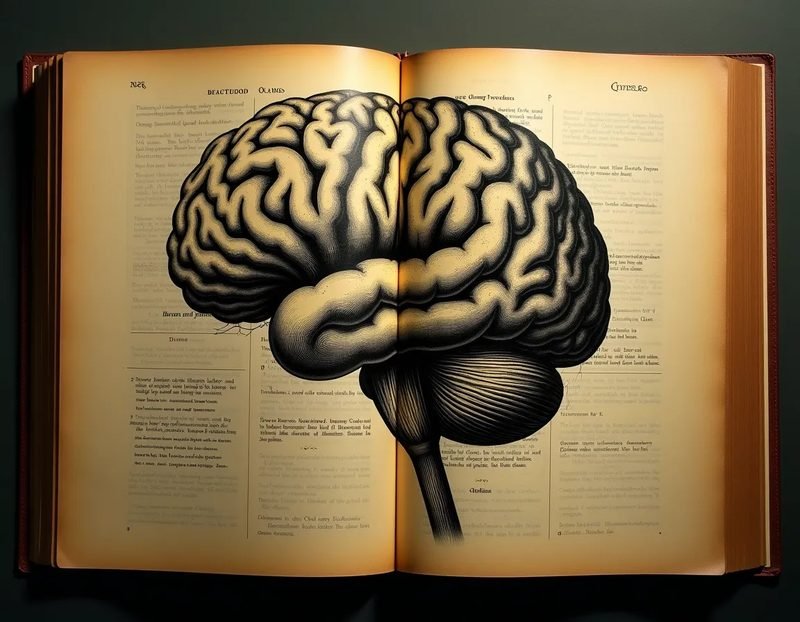
It gets called illusory correlation, studied by Chapman and Chapman back in the 60s with Rorschach tests. People see a link between two things even when there’s no data, because the pairing just feels right. A mentalist reading something live? It’s that same trap. The person isn’t lying, not even to themselves. The self-editing happens too fast to catch.
Three mechanics do the heavy lifting.
- Selective encoding. A hit gets stored with emotional weight attached, a miss gets stored, if at all, as a flat and forgettable data point.
- Retrieval bias. When the sitter later tries to recall the reading, they search for evidence that supports their existing belief that it worked. They find it. They stop looking.
- Narrative smoothing. Humans tell stories, not transcripts. A story needs a clean arc, so the misses get quietly trimmed out the same way a bad take gets cut from a film.
None of this requires deception on your part. It requires you to understand it’s happening, and to stop fighting it by chasing a perfect hit rate you were never going to hit anyway.
Statements Built to Survive Editing

The strongest cold readers I’ve studied, going back through Ray Hyman’s writing on the subject, build statements with built-in escape routes. Not lies, escape routes. A statement phrased with enough real texture that it lands as specific, but enough interpretive room that the sitter’s own mind does the narrowing for you.
Take a statement like “there’s someone connected to you who had trouble finishing things, a project, a plan, maybe a relationship that never got resolved the way it should have.” That’s not one guess. That’s four or five guesses stacked inside a single sentence, and the sitter will latch onto whichever one is true for them, then remember the whole sentence as having been about that thing specifically.
If it misses entirely, and sometimes it will, the miss doesn’t stay in memory long enough to matter. It gets absorbed into the next hit, which is usually only seconds away if your pacing is right.
I don’t write my statements to be vague for the sake of being vague. I write them to be true across more than one life, because most people’s lives, structurally, aren’t as different from each other as they’d like to believe.
Letting the Sitter Do the Narrowing
Here’s where the craft actually lives. You never narrow a statement yourself. You let the sitter narrow it, out loud, in their own words, and then you agree with their narrowing as if it had been your intention all along.
“There’s a J name, I keep seeing a J.” If they say “my brother Jim,” you don’t just nod, you build on Jim. You say something that could apply to any brother anywhere, but now it’s Jim’s statement, forever, in their memory. They did the specific work. You get the credit for the specificity.
This is the same principle good writers use in a first draft, you don’t need every word to be perfect, you need the reader’s imagination to fill the gaps you left open on purpose. A reading is co-authored in real time, whether the sitter realizes it or not.
So yes, some of what looks like your accuracy is really their memory doing your job for you.
The Skeptic’s Bias Works Too
Performers sometimes assume confirmation bias only helps you with believers, and that skeptics are somehow immune. They’re not. A skeptic walks in expecting to catch you, so their memory selectively encodes for failure the same way a believer’s encodes for success. Give a skeptic one clean, undeniable moment and they will often remember the entire reading as unsettling, glossing right past the parts where you were fishing and missing.
I don’t necessarily believe this makes the work dishonest. I do think it means the ethical performer’s job is to understand exactly how much of the effect belongs to the technique and how much belongs to the sitter’s own mind finishing the trick after you’ve left the room.
That distinction matters more than most working mentalists admit, out loud or even to themselves.
Building for What They’ll Remember Tomorrow
Design your reading for the version of it that survives in someone’s memory a week later, not for the transcript. That means front-loading emotional weight onto your strongest material, because emotionally weighted moments get encoded harder and recalled more vividly, the psychology on this is well established going back to research on flashbulb memory. It means never apologizing for a miss in the room, an apology draws attention to the miss and gives it the emotional charge it needs to actually stick. Let it pass quietly and it usually will.
It also means trusting the process enough not to over-explain. The performers who talk too much after a strong hit are the ones who accidentally remind the sitter how the sentence was built. Silence, right after the moment lands, does more work than another ten seconds of your voice.
I’ve built entire evenings around this principle, not just single readings, and the pattern holds at scale the same way it holds in a single sentence. What people carry out of a room isn’t what happened. It’s what their mind decided was worth keeping.
Understand that, and you’re not tricking anyone into believing something false. You’re working with the grain of how memory has always worked, long before you walked into the room.
If you’re building a reading around this kind of psychology and want tools built for the work, not the gimmick, browse the full collection at Arcane Relics.