
Henry Seybert died wealthy and disappointed. In his will, he left twenty thousand dollars to the University of Pennsylvania for one specific task: investigate Spiritualism. He believed what he’d seen in the seance rooms. He expected the faculty to believe it too, to legitimize what he’d already decided was true. By 1884, when the commission the university assembled finally published their findings, Seybert was long dead, and the investigators had turned against him.
The Money That Backfired
Wealthy patrons fund investigations hoping for vindication. This one did not get it. Seybert’s bequest was enormous for 1884, money with teeth. The university could not ignore it, could not quietly table the results. They had to publish. They had to take the stand.
What Seybert had witnessed were the standard exhibits of the day. Slate writing. Rappings. Materials manifesting in locked cabinets. A medium’s hand producing signatures from dead relatives, all of it unfolding in rooms he rented, under conditions he permitted. He was convinced. Conviction is contagious, especially when it arrives with money.
The commission began in 1876, eight years before Seybert died. Five men from the university, mostly skeptics, mostly uninterested in being proven wrong but willing to be thorough. They approached the work like investigators should approach anything: they wanted to know what was actually happening when the lights went down.
What They Looked For
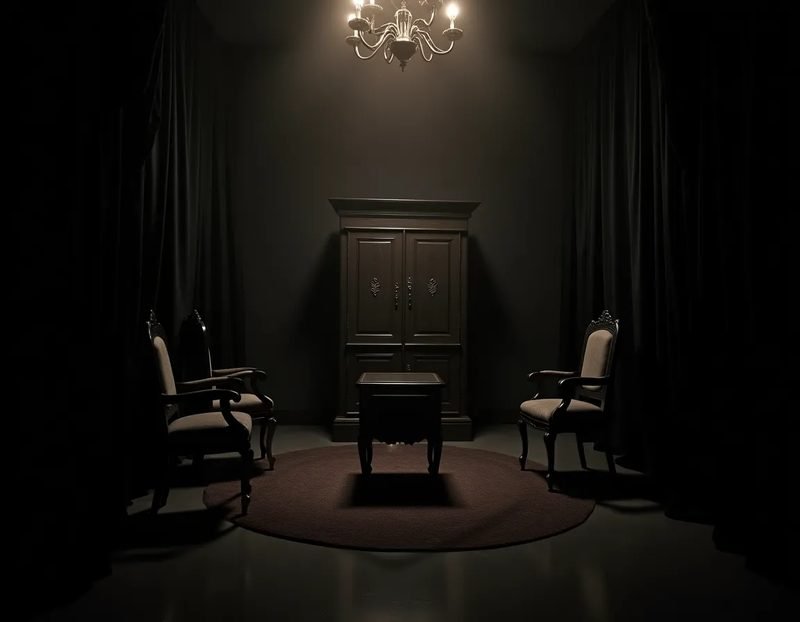
The commission attended dozens of sittings. They sat across tables from the most celebrated mediums of the era. They watched hands. They felt for trickery with the kind of attention a performer recognizes as dangerous, the kind that doesn’t miss a thing because it’s looking for everything.
Slate writing was their first serious target. A medium places a small school slate on a table, traces fingers across it, and messages appear. The dead have something to say. The writing is always clear, it was always flattering to the person who paid for the sitting.
What actually happened was simpler. The medium would grip the slate, hide it under the table or drape a cloth over it, and write on the back with chalk held between the fingers, using the hidden surface as a workspace. When the slate emerged, there was a message. The sitter saw proof. The university saw a sleight hand practice old enough to predate modern Spiritualism by centuries.
They tested it. They painted the slate surfaces. They sealed edges. They watched for the moment when the medium’s grip shifted, when the angle changed. What’s remarkable is how little changed. The mediums persisted. They insisted the messages came through. They could not admit the mechanics because admission meant the entire performance collapsed.
The Materializing Mediums
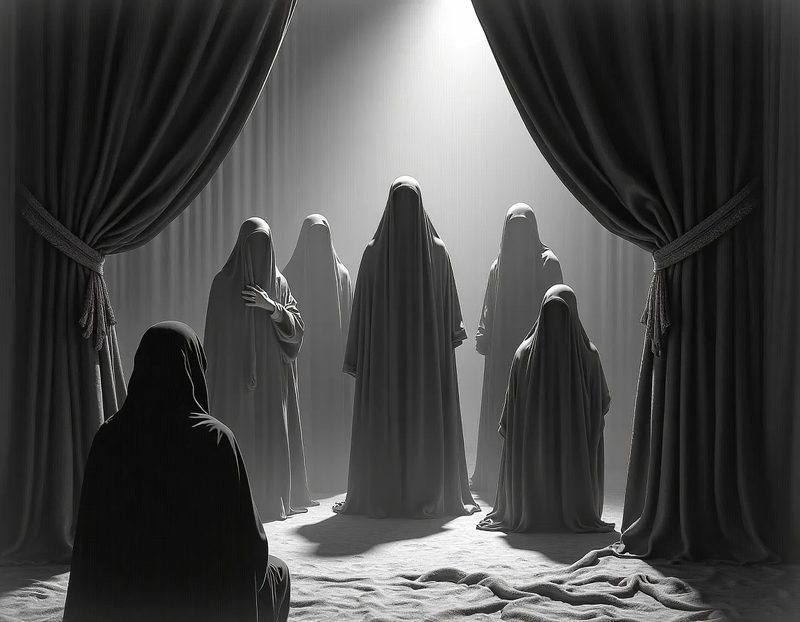
More troubling than the slate writers were the mediums who produced physical manifestations. A cabinet stood on stage, draped heavy, locked. The medium sat outside or entered alone. Then figures began to emerge. Full-form spirits of the deceased. Relatives. Loved ones. They moved. They spoke. They took hold of mourners’ hands with what felt like genuine flesh, real weight, real presence.
This is where the commission’s work became darker. Because physical manifestations are harder to dismiss than chalk on slate. When a grieving woman feels what she believes is her dead husband’s hand in her own, skepticism becomes cruelty. The commission knew this. They investigated anyway.
They brought in outside observers. They examined the cabinets before and after. They checked the mediums for hidden compartments in their clothing, for the stored props and costuming that would make the illusion work. What they found was systematic, methodical, repeatable. The drapery. The accomplices. The timing. The mediums had help, often paid help, standing off-stage ready to emerge in the darkness when called.
One medium in particular drew their attention. What mattered was that she had a reputation for power, for genuine communication, for things that science could not explain. The commission attended her sitting and watched her carefully. When she emerged from the cabinet, one investigator moved quickly. Before the “spirit” could retreat into darkness, he grabbed hold of whatever it was. It was cloth and a living person, neither ghost nor miracle, neither materialization nor mystery. It was theater failing when the lights came up.
The Resistance to Truth
Publishing the findings was an act of institutional courage that the university would spend decades downplaying. The commission concluded that Spiritualism, as practiced by the mediums they examined, was fraud. Conscious fraud. Sophisticated fraud. Fraud defended by accomplices and belief.
But here is what interests performers: the reaction was not gratitude for exposure. It was rage. The Spiritualist community attacked. They claimed the commission was biased, closed-minded, unwilling to accept genuine phenomena because it would upend their materialist worldview. Some of this was fair. Some of this was the familiar cry of anyone caught.
Within the university itself, there was discomfort. Seybert was dead but his money was not. The finding had become public. The university’s reputation was now entangled with debunking. And debunking, in the 1880s, felt hostile to the very people who had funded the investigation in hopes it would go their way. Spiritualism still had defenders in high places. Wealthy believers. People with influence. Skepticism, the commission learned, can be expensive.
What Mediums Learned
The mediums did not stop. This is the crucial detail. They continued, adapted, and in some cases moved markets. Some fled. Others doubled down, insisted that the commission’s findings proved nothing about the truth of Spiritualism generally, only about the specific fraud of the specific mediums they’d caught. And they were partly right. Exposure of one medium does not prove all mediums are frauds, though it does suggest the pattern.
What the mediums understood, and what the commission’s report makes clear, is that the performance endures because people want it to endure. Someone in that audience in 1880 or 1885 knew, on some level, that what they were seeing was theater. Somewhere in the back of their mind lived the awareness that the hand they were holding might be someone else’s, that the voice might be an actor’s, that the cabinet held no spirits. They went anyway. They suspended what they knew because the alternative, a world where the dead stayed dead and never returned, felt unbearable.
For performers, this is instruction.
The Currency of Authority
The commission published its report. It was thorough. It was damning. And it changed almost nothing. The spiritualist communities that wanted to believe continued to believe. The skeptics who wanted proof got what they wanted, but proof of fraud is a harder sell than mysteries that comfort.
What did change was the relationship between investigation and performance. Once an institution has examined your work in public and found it false, that finding becomes part of your story. You cannot unsay it. The mediums of the 1880s faced sitters who knew about the commission. They faced skeptics who’d read the report. They had to move their practice into private rooms, away from institutional scrutiny, where they could reset the terms of belief.
This is what the commission teaches. Not that fraud can be exposed, though it can. Not that skepticism wins, though sometimes it does. But that skepticism itself becomes currency in the room. Once someone has authority, once they have stood up in front of an audience and said “I examined this and it is false,” they have changed the game. The performance goes underground or transforms. It cannot continue unchanged.
For the mediums of the 1880s, it meant smaller rooms, more intimate settings, greater control over who witnessed and what they witnessed. For anyone working in the boundaries between belief and illusion, it meant learning to read the room for skepticism, for the person who knows and is watching to see if you know that they know.
Why This Still Matters
I do not necessarily believe that the dead speak through the voices of performers in darkened rooms. I do believe that the Seybert Commission’s work reveals something true about how belief operates, how much we need stories to be real even when we suspect they are told. The commission’s investigators did serious work. They were fair. They published findings that cost them socially. And they changed nothing about the fundamental desire in an audience to be moved, to be surprised, to witness something that feels impossible.
This is the hard lesson. Exposure does not destroy the magic. It transforms it.
What you do with that knowledge, how you use the space between belief and performance, is up to you. But know that the ground beneath your work has been tested. The commission walked through the seance rooms of 1880s Philadelphia and found slates and costumes and hidden accomplices. They published it. The mediums survived anyway, because the people who came wanted, on some level, to be convinced. And they were.
That wanting is real. If you’re drawn to work that hovers in that space, that trades on mystery or claims to touch the inexplicable, visit Arcane Relics. We collect pieces that carry the weight of that history. We sell to performers who understand that the commission proved the fraud without proving the feeling was false.