
Every mentalist eventually gets asked the same question after a billet reading: “How did you do that without looking?” The honest answer, most of the time, involves a piece of paper that was never as blank as it seemed. I don’t consider the impression peek a trick so much as a discipline, a quiet mechanical secret that has outlived nearly every flashier gimmick built around it. It’s older than most performers realize, and it works for a reason that has nothing to do with sleight of hand.
A Slate, a Stylus, and a Problem Worth Solving
Go back to the séance parlors of the late 1800s and you’ll find mediums working with slates, coated boards meant to hold chalk writing that could be produced “spirit written” under cover of darkness. The trick wasn’t the writing itself. It was getting information onto that slate, or off a spectator’s own note, without anyone catching the moment it happened.
Carbon paper solved a problem the slate performers hadn’t fully cracked. Somewhere in the early twentieth century, working mentalists realized that a spectator pressing a pencil onto ordinary paper left more behind than ink, it left a groove, an impression carried straight through to whatever sat underneath. Slip a sheet of carbon, or later a specially coated surface, beneath that paper and you had a second, hidden copy of the message. No switch, no dye, no chemical reveal required.
That’s the whole principle, and it’s stayed remarkably intact for over a hundred years.
Why the Impression Peek Never Went Out of Style
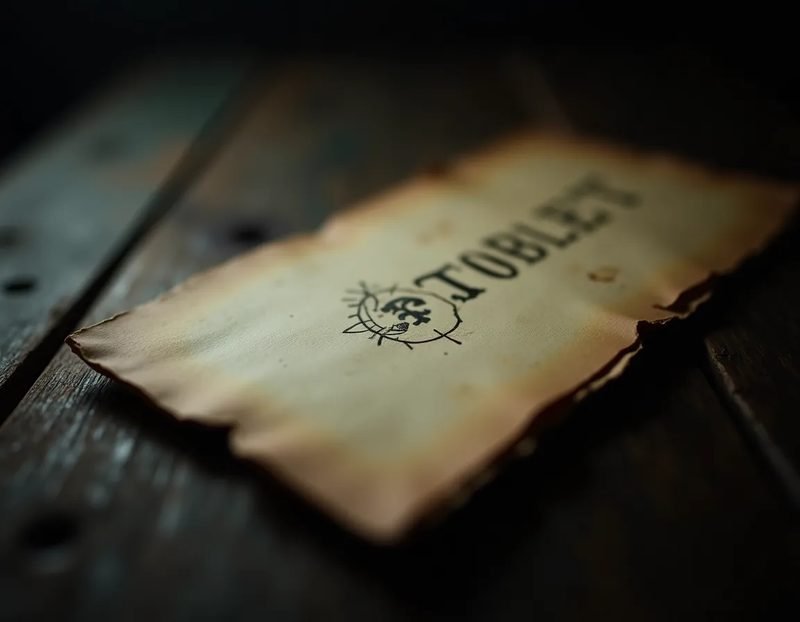
Most secret writing methods age badly. Thumb writers get bulkier gimmicks and clunkier reveals bolted on every decade, center tears get “improved” until they’re harder to perform than the original. The impression peek didn’t need improving because the physics never changed. A spectator presses a pen or pencil onto paper, your billet pad or wallet holds a coated leaf underneath, and the impression transfers. That’s it.
What changed was the packaging. Performers stopped hiding a bulky slate board and started hiding a wallet the size of a checkbook. The mechanism shrank, the misdirection got smarter, but the core secret is identical to what a working medium used a century ago.
I find that continuity reassuring, honestly. In a field full of props that need batteries or apps, there’s something to be said for a device that has worked the same way since before electricity was reliable in most American homes.
What Actually Separates a Good Peek From a Bad One
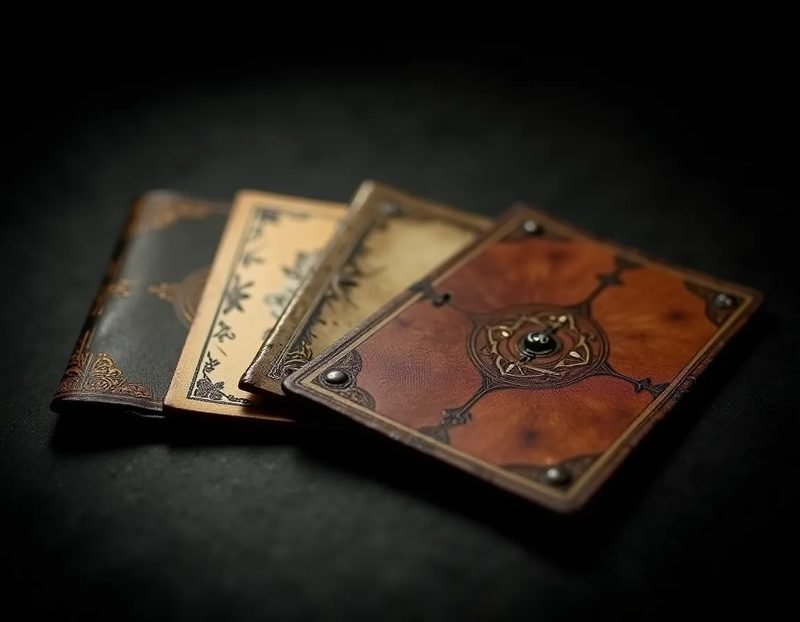
Most performers assume all impression devices are roughly equal. They aren’t, and the differences show up exactly when you can least afford them, mid-performance, under bad lighting, with a spectator’s pen pressing too lightly to leave a usable mark.
Three things separate a peek you can trust from one that will embarrass you:
- Coating quality. Cheap carbon coatings smear, transfer unevenly, or fade within a few uses. A good impression surface stays consistent for dozens of readings before it needs replacing.
- Legibility under pressure variance. Not every spectator writes the same way. Some press hard, some barely touch the page. A well-made pad captures both without you having to coach anyone on how to write.
- The peek window itself. This is the part performers underrate. A wallet with a poorly angled or oversized window gets caught. A properly proportioned one lets you glance and read in under a second, which is all the time you actually have in a real reading.
I’ve tested pads that looked identical in a catalog photo and performed nothing alike in my hands. The coating on one had gone chalky within three uses, it left smudges instead of clean strokes.
Billet Reading Is Where This Device Actually Proves Itself
A peek pad is only as good as the reading built around it. This is the part most guides skip, because they’re selling a device and not a method. The impression peek gives you information. What you do with that half-second of reading determines whether the moment feels like magic or feels like you got lucky guessing.
I ran a version of this at a private event in Fairdale a while back, a straightforward name and question billet routine. The peek itself worked exactly as it should, but the moment that landed hardest wasn’t the reveal. It was the pause right before it, the two or three seconds where I appeared to be concentrating on nothing at all.
My hands go still during that pause. Every time. It’s not performance, it’s just what happens when you’re actually reading and not stalling.
That’s the part a catalog description can’t teach you. The device buys you the information. The pause sells the impossibility.
Carbon Versus Coated Film: An Underrated Choice
Here’s a distinction most working performers never think through, and it’s worth stopping on. Traditional carbon transfer and modern coated-film impression systems are not interchangeable, even though they get lumped together in casual conversation.
Carbon paper leaves a literal duplicate, dark and immediate, but it can bleed through onto whatever is beneath your pad if you’re not careful with your setup. Coated film impression systems, the kind found in most current peek wallets, use a chemical reaction between the coating and the pressure of the stroke. The result is cleaner, it resists smudging, and it survives being folded and unfolded during a routine without losing legibility.
For close-up billet work, I lean toward coated film every time. For larger board or platform work, where a spectator might write from six feet away and you need a bolder mark, carbon still earns its keep.
What to Actually Look For When You Buy One
Don’t buy an impression device because it looks clever in a demo video. Buy it because the coating holds up, the window reads clean, and the construction survives being carried in a pocket for a year of gigs, not a weekend.
A few questions worth asking before you commit to one:
- How many impressions does the pad reliably produce before the coating degrades?
- Does the wallet’s construction hold its shape after repeated folding, or does it go soft and telegraph the gimmick?
- Is the peek window sized for a genuine glance, or does it require an obvious head tilt to use?
- Can you replace the coated leaf yourself, or does the whole unit need replacing?
Most performers dismiss this level of scrutiny as overkill for what looks like a simple prop. They shouldn’t. A peek device sits closer to your method than almost anything else you own, it’s not a flourish, it’s the engine.
How Performers Use Impression Devices Today
I don’t trust electronics completely. I never have. I do, however, use them constantly, because a well built impression device solves problems no amount of classic misdirection can touch on its own.
An impression device, for anyone newer to the term, is any tool that lets a performer secretly read information, a name written on paper, a word spoken into a phone, a number circled on a card. The old guard did this with carbon paper, wax slates, and center tears worked by hand under a table. Those methods still work. Most performers assume newer replaces older.
It doesn’t.
The Scribe is where I point performers who want a modern impression tool that holds up under real scrutiny, close up, in bright light, with a suspicious spectator leaning in. It’s clean, it’s fast, and it gives certainty the old paper methods can’t touch on their best day. I use mine often, it has earned its place in my case.
But here’s my opinion, stated plainly: a seasoned professional never carries one solution.
Electronics fail. Batteries die at the worst moment, a signal drops, a device ends up in the wrong pocket. When that happens, your classic center tear or your old carbon technique becomes the thing that saves the show, not a backup you’re embarrassed to reach for.
There’s a deeper reason to run multiple methods, and it has nothing to do with failure. When a spectator tries to work out how you knew, they assume one method, used over and over. They’re wrong. You ran an electronic read early, a classic force later, a genuine ditch somewhere else, and none of their guesses account for the mix. The effect compounds, their explanation collapses under its own weight.
Learn the old impression devices first, your center tears, your slates, your billet switches. Then build the Scribe on top of that foundation, not in place of it.
So yes, know the old ways before you trust the new ones.
The Quiet Confidence of a Method That Just Works
I don’t romanticize gimmicks. Most of them are tools, nothing more. But there’s something genuinely satisfying about handling a device that traces back through a century of working performers, all solving the same small problem the same reliable way. The impression peek doesn’t need reinventing. It needs to be built well, carried carefully, and paired with a reading that earns the moment it creates.
If you’re building or rebuilding a billet routine and want a peek system that’s actually held up in real performance conditions, not just demo footage, take a look at what we carry.
Take a look at Scribe and what it can do for you
Browse the current impression and peek devices at Arcane Relics