

I don’t tell audiences an object is haunted. I don’t tell them it isn’t. That gap is where the work happens, and most performers I’ve watched handle it badly.
They build a story, hang it on a doll or a trumpet or a cracked hand mirror, and then get cornered by one plain question from a person holding a drink. “Is that real?” The good ones pause and the bad ones panic. The worst ones lie, and a lie told to a stranger at a card table has a way of surviving longer than the prop does.
The Question That Ends Most Stories
At a private event in Clarksville, Indiana, a man in his fifties picked up a battered tin trumpet from my table, turned it over, and asked where I’d gotten it. Not what it did. Where it came from. My hands went still.
He wasn’t hostile. He was a person who sold used equipment for a living and knew that every object has a chain of custody, or claims to. A story without a chain is just decoration.
That’s the whole problem, and it’s why provenance deserves the same rehearsal time as your patter.
Your audience doesn’t grade the prop first. They grade the person holding it. If your history wobbles under one calm question, they’ll quietly discount everything else you’ve said, including the parts that were true.
Provenance Is a Script With a Paper Trail
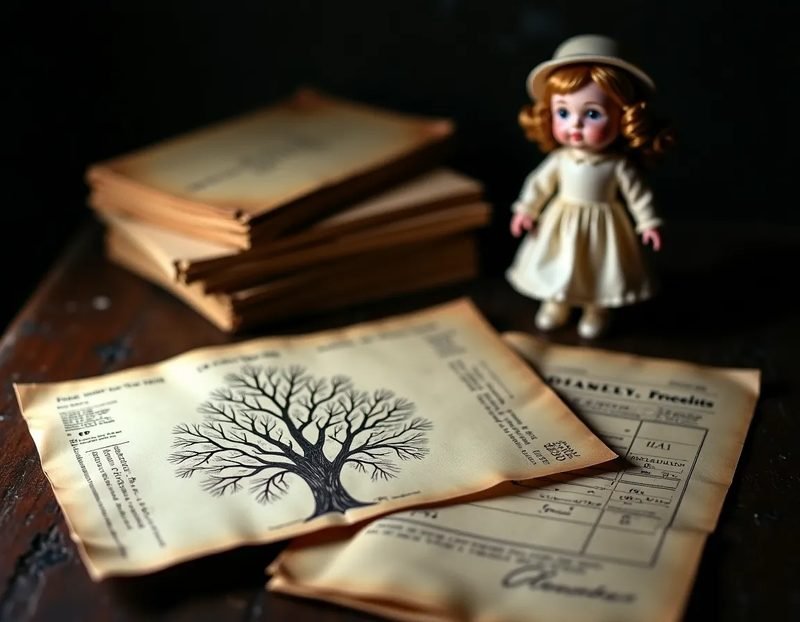
Real provenance is boring. It’s a bill of sale, an estate inventory, a name scratched inside a lid, a dealer’s handwriting on a hangtag. The dramatic part usually arrives later, after somebody tells the story enough times that it hardens into fact. Think of the doll that circulated for decades under a famous paranormal banner. The object in the case was a Raggedy Ann, not the porcelain horror that Hollywood put on posters. The story grew and the object stayed exactly what it was.
That tells you something useful. Audiences forgive a story that’s dressed up. They don’t forgive one that’s been swapped.
So build your backstory in three layers, and keep them separate in your head.
- What is physically true. Age of the materials, repairs, wear patterns, maker’s marks. This layer never changes and you never embellish it.
- What is documented. Where you bought it, from whom, what they told you. If a seller gave you a tale, say it was the seller’s tale.
- What is performed. The invented narrative, the fictional owner, the séance that never happened. This layer is theater and should feel like theater.
The trouble starts when layer three quietly borrows the authority of layer one. You know the moment. A made-up widow gets a made-up date and suddenly the tin trumpet has a death certificate.
Build It to Survive the Second Question
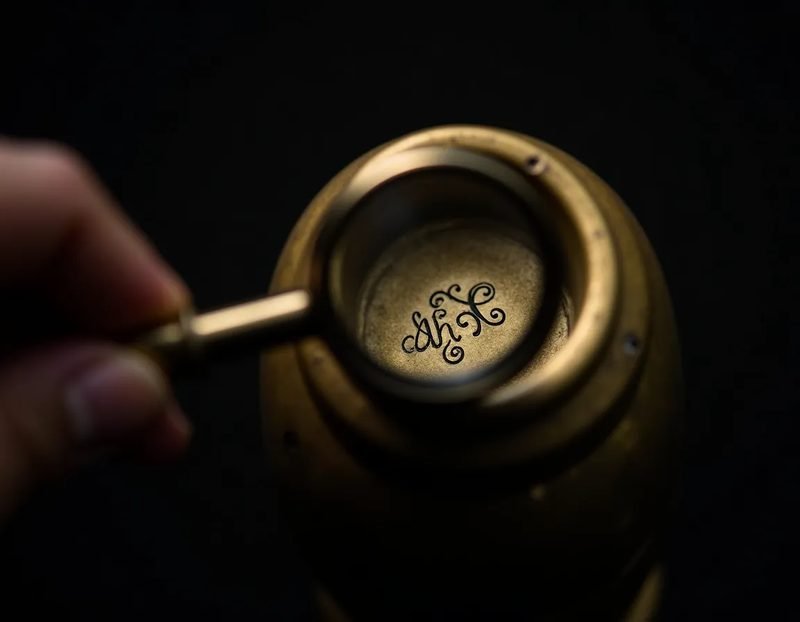
The first question is easy. Anyone can rehearse an answer to “where did it come from.” The second question is the test, and it’s usually small. “What year?” “Who cleaned it?” “Why’s there a burn on the base?”
Here’s what I’ve learned about stories that hold. They carry mundane detail, they admit gaps, and they contain one thing that doesn’t fit.
Mundane detail is the ballast. A story with a tragic séance and no mention of how the object was stored, shipped, or insured feels like a poster. A story that mentions the object sat in a damp garage for six years feels like a life.
Gaps are the honest part. “I don’t know who owned it between the forties and the seventies” is more convincing than a tidy line of succession, and it costs you nothing. Unfinished history is how real objects behave.
And the one thing that doesn’t fit? Keep it. A wrong-era screw, a repair no one can explain, initials that match nobody in the tale. Performers tend to sand that off. Don’t. Your audience will spend the rest of the evening working on it, and that’s the kind of attention money can’t buy.
I don’t say the object is cursed. I say what happened around it, in order, and I stop before the conclusion. The silence after the last fact does more than any adjective could.
Where the Story Becomes a Claim
This is the section performers skip, so read it slowly.
On stage, everyone in the room understands they’re inside a frame. You say the widow lost three children in one winter, and nobody calls a lawyer. The theater of it is the contract. But the frame ends at the door of the sale. The moment you write a description on a listing, or say a sentence to a buyer who’s holding cash, you’ve stopped performing and started making statements about goods.
The internet gave us one loud lesson. A famous online listing for a so-called dybbuk box, back in the early 2000s, showed how fast a story can outrun an object, and how much money and misery can attach itself to a tale once strangers treat it as fact. The listing wasn’t the danger. The belief was.
So draw a hard line between two kinds of sentences.
- Attribution: “The estate seller told me the trumpet came from a family in Ohio.” That’s a report of what you were told.
- Assertion: “This trumpet belonged to a medium who died in 1931.” That’s a claim, and you’d better be able to back it.
When you’re selling, use attribution, or use language that plainly signals fiction. “Presented with the legend of…” works. “Sold as a performance piece with an invented history” works even better.
To be honest: a buyer who feels tricked doesn’t just leave. They tell the room. Bizarre magic runs on trust between people who buy odd things from each other for decades, and one bad sale poisons a small pond.
A Collector’s Field Guide to Story Versus Claim
If you’re on the buying side, you have more power than you think. You don’t need to be cynical. You need to be exact.
Ask what the seller knows versus what the seller was told. A good dealer will separate those without being asked. A weak one will blur them and get warm and chatty when you push.
Watch for these patterns:
- Specific dates with no documents. A precise year and no paper is a story wearing a suit.
- Named tragedies you can’t search. If a death was that dramatic, somebody wrote it down somewhere.
- Escalating stories. The tale grows every time the price is questioned.
- Refusal to say “I don’t know.” Real provenance has holes. Sellers who have none are usually the ones who’ve filled them.
None of this means you shouldn’t buy the object. Some of the best pieces in my own collection came with stories I can’t verify, and I bought them anyway. I know what I paid for, and that’s the difference between collecting and being had.
A story is a fine thing to own. Just don’t mistake it for a title deed.
The Line I Keep
I was skeptical of haunted objects for a long time. I still am, in the way a person is skeptical of a stranger who insists on telling you everything about himself in the first five minutes. But I’ve stood in rooms where a quiet, well-built history made grown adults lower their voices without being asked!
That reaction is earned, not stolen. It comes from craft: an object with honest physical facts, a documented trail where one exists, and a performed layer that never pretends to be anything else. The audience feels the difference even when they can’t name it.
So write your provenance the way you’d write your best routine. Rehearse the second question. Leave one loose thread. Know the exact moment your story turns from theater into a statement you’d have to defend at a counter.
Then keep the line where you put it.
If you are like me and you care as much about how a relic arrives as what it does once it’s here, then you my friend, are home. Browse what’s on the shelves at arcanerelics.com/shop.





No comment yet, add your voice below!