
Most mentalists treat prediction and reading as the same effect with different packaging. They’re not. A reading pulls something that exists inside a mind. A prediction claims something was inevitable before anyone made a choice. The audience feels the difference in their gut, and once you understand it, you can choose which one serves your piece. You can also choose the physical object that carries the frame. For me, that object is now InkSight, a pocket-sized thermal printer that puts the result on a slip in handwriting instead of a cold receipt font.
The Frame Changes Everything
Consider what happens when you show a sealed prediction at the end of your effect. The volunteer reads it aloud. Their jaw tightens. You weren’t inside their head pulling information out. You were outside reality, ahead of time, knowing what they would do before they had the freedom to do anything else. That’s a different sensation than a reading produces.
A reading hits as mind-reading. Intimate, invasive, clever. A prediction hits as fate. Unnerving in a way that lingers after the applause dies.
I tested this at a private event in Fern Creek. Same card force. Same reveal. First time through, I framed it as a reading: “I’m going to tell you which card is in your hand before you turn it over.” Applause. Second time, same script with a volunteer at another table, different angle: “I wrote down your card before you stepped into the room.” Different room energy. The second volunteer’s hands trembled when she opened the envelope. Not the first one. The reading got appreciation. The prediction got something closer to dread.
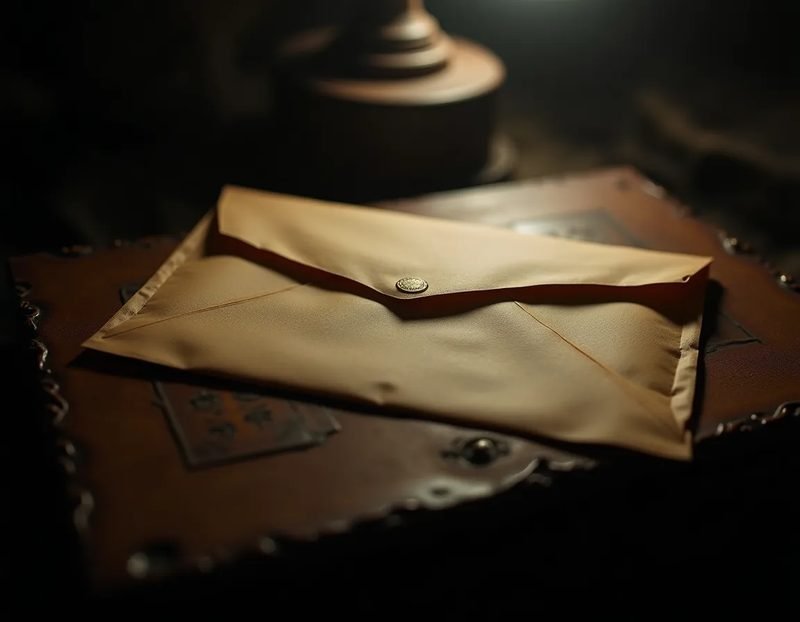
Notice what carried that second reaction. It wasn’t the script alone. It was the envelope, the paper, the sense that a written thing was waiting. The object does half the framing for you, and that’s why I care so much about what ends up inside it.
Why Prediction Feels More Powerful
The human mind is wired to believe in agency. You made a choice. You were free. Even when that’s demonstrably false, we cling to it. A reading doesn’t challenge that illusion directly. It says: “I observed your choice and extracted the information.” The choice still feels like yours.
A prediction says something different. It says the outcome was written before you had a say. That your sense of freedom is an afterthought, a story you tell yourself about decisions that were already made. That hits a nerve the reading doesn’t touch.
This is why prediction effects sit with people longer. A reading is impressive. A prediction is troubling, which is far more memorable.
Here is where the paper itself matters. A typed receipt says “machine.” A line of handwriting says “someone.” InkSight prints names and messages in a real handwritten hand, sized to fit the slip, and the store’s own line for it is that your spectator “finds a message that should not exist.” That is the feeling a prediction is supposed to leave behind, and a receipt font works against it.
The Volunteer’s Sense of Free Will
I’ve watched how volunteers respond in the moment of reveal. With a reading, they process it as cleverness: “How did you know?” The question is analytical. With a prediction, they process it as inevitability: “When did you write this?” The question is existential. They’re not asking how you did it, they’re asking when fate was locked in.
The best way to intensify this is to emphasize the timeline. “This envelope has been sealed since before you arrived.” “I wrote this down three days ago.” Let them sit with the gap between when you committed and when they chose. That gap is where the effect lives.
The handwriting changes what they do next, too. People turn a handwritten slip over. They look at the letters. They ask whose hand that is. With drawings, InkSight gives you something stranger. Your spectator draws on Scribe, and the printer returns the same picture redrawn by what the store calls a “spirit copy,” an unsteady hand that isn’t quite yours. You choose one of four styles: Exact, Duplicate, Spirit (a trembling copy) or Upset (a violently shaking one). For a bizarrist, that tremble is the whole point. The spirits put it in writing.
Which Frame Serves Your Piece
Not every effect should be framed as prediction. A reading works better when the mentalism is the point. When you want to show your insight, your ability to extract information, your presence. You’re demonstrating a skill.
A prediction works better when the mystery is the point. When you want the audience to wonder about coincidence, timing, fate. When the effect should haunt them for days. You’re demonstrating something impossible.
If your piece depends on the volunteer feeling trapped, use prediction. If it depends on them feeling known, use reading. Most pieces are stronger with one than the other, and most performers default to reading without ever considering the alternative.
InkSight doesn’t pick for you, and I’d be suspicious of any prop that claimed to. What it does is carry either frame. The store lists what it can print: the tarot card, zodiac sign, rune or number a spectator chose from ArcaneHub’s Free Effects (Tarot, Horoscope, Chinese Zodiac, Runes, Numerology) plus a line of your own text, or a name or word in handwriting. Mentalists get their thought written in a stranger’s hand. Magicians get a prediction that prints itself. The frame is still yours to choose.
Building the Frame Into Your Patter
The frame isn’t something you bolt on at the end. It lives in your words from the start. “I’m going to hand you this envelope, and I want you to keep it for the rest of the show” is already setting expectation toward prediction. “I’m going to read something from your mind right now” is setting toward reading.
With prediction, use language that emphasizes prior commitment. “This was written before.” “This was sealed when.” The specificity matters. The volunteer needs to understand there was a moment in time when your choice locked in.
With reading, use language that emphasizes present-moment observation. “I’m sensing.” “Right now, I’m feeling.” “This is coming through as we speak.” Present tense keeps the focus on your insight happening in real time.
Your patter also has to survive your own hands, and this is where a prop earns its place or doesn’t. InkSight is built to disappear. You can hide it in a box, a book, a cabinet or your performance bag, and the slip feeds into an envelope, a hidden pocket or the box itself. Then there is the cue. From a Galaxy Watch in Performance Mode, you tap 1 to 5 times to choose what prints and get a short buzz to confirm. From an AR Remote, a press or tap pattern in your pocket fires it. Or you can set your props to auto-print and let it run on its own.
If you already own Talos, De-Constructed or Caged Voodoo, they can each print their result by themselves, with your own “spirit answer” for every outcome. You can add a delay of up to 30 seconds, so the print never lines up with a move. For a routine built on a single cue, you can also load your own preset slips and pick which one prints.
Most mentalists switch between frames without intention. Choose deliberately. Your piece will be stronger for it.
What It Is and What It Isn’t
A few plain notes, since I’d rather you buy this knowing what you’re getting.
It connects over Bluetooth, with a range of up to 20 m. The 1000 mAh battery gives about 150 to 200 prints per charge, or 30 to 60 hours on stand. It runs through ArcaneHub, my free app for iPhone, Android and Wear OS watches (Galaxy Watch and similar), so it sits on the same screen as every other Arcane Relics prop you own.
There is also an AR Pro Remote listed as coming soon. It’s a 15-button pocket remote, with up to 72 preset slips in banks, a keypad mode for entering a number or a card, and a silent buzz and light to confirm every press. It isn’t out yet, so I won’t tell you how it handles in the field. Today, the watch and the AR Remote are what you have.
And InkSight won’t save a weak frame. It will not make a reading feel like fate if your patter says “I’m sensing.” It gives your frame a physical form that doesn’t look like technology.
The Truth That Matters
A reading is a performance of perception. A prediction is a performance of inevitability. One proves you can read minds. The other proves you can predict the future. Neither is true, but the audience doesn’t need them to be. They need the frame to feel real.
The volunteer who walked out of Fern Creek didn’t believe in psychic powers. But they did walk out wondering about timing. About whether their choice was really theirs. That’s what prediction buys you: not belief in the supernatural, but doubt about free will. And doubt is far more disturbing than belief.
Your next mentalism piece doesn’t need to choose between reading and prediction. But it should choose deliberately, and it should end on something your volunteer can hold in their hand. A slip of paper in a hand that isn’t quite yours does that better than most things I’ve tried.





No comment yet, add your voice below!