The Major Arcana on Stage: Building Tarot Mentalism Without Becoming a Fortune Teller

I don’t think tarot works. I’ve never felt a card do anything a deck of paper couldn’t. But I’ve sat across from a man in his sixties who turned over The Tower at the exact moment his voice cracked on his brother’s name, and I’m not going to pretend the room didn’t change. Cards don’t carry power. Audiences do. And the Major Arcana is the most efficient device ever invented for handing that power to a performer.
That’s the trap, too.
Why Twenty-Two Cards Beat Fifty-Two
A playing card is a number and a suit. Nobody has ever gasped at the seven of clubs. The Major Arcana gives you twenty-two images that carry meaning before you say a word, Death, The Lovers, The Devil, The Hanged Man, and even a spectator who has never touched a tarot deck knows roughly what they’re looking at.
That pre-loaded weight is your advantage. A selection of The Star feels different from a selection of the queen of hearts, even when the method is identical. The audience supplies the drama. You only have to stay out of its way.
There’s a practical bonus most performers miss. Twenty-two is a small, clean field. A spectator can hold the whole deck in their head, which means a free choice feels vast while remaining tightly manageable for you. Fifty-two cards makes people suspicious. Twenty-two makes them feel like they’re choosing among characters.
The Force Problem, and Why Majors Help
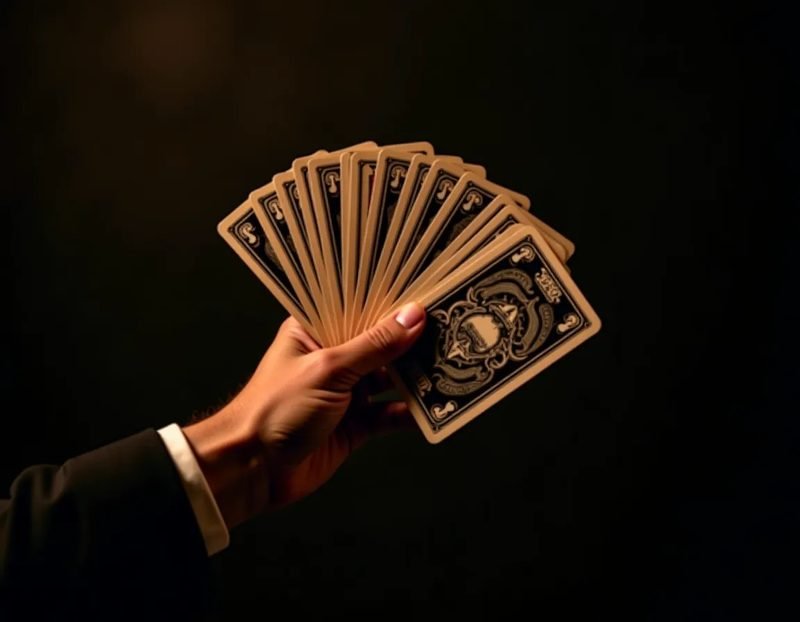
Tarot forces get better treatment when you stop thinking of them as card tricks. The classic riffle force, the cross-cut force, and the simple equivoque all work with an oversized deck, but the oversized deck changes the handling. Tarot cards are around 4.75 by 2.75 inches, so a dribble force that feels casual with poker cards looks clumsy and slow.
Equivoque is where tarot shines. Lay out the Majors, ask for two to be pushed aside, and you can steer toward your target through the language of “keep” and “discard” with almost no mechanical work. The images help you here. It’s easy to justify why The Fool goes to one side and Justice to the other. Every card has a story you can lean on to make the elimination feel like philosophy rather than procedure.
Here’s a point that will save you months. Force one card, then let the audience believe they’ve chosen among all twenty-two. Don’t announce a number. If you say “any of the twenty-two cards,” you’ve committed to a claim you can’t back up with a bare table. Say “a card from the Major Arcana” and let them count if they want to.
Choose the Card Before You Choose the Method
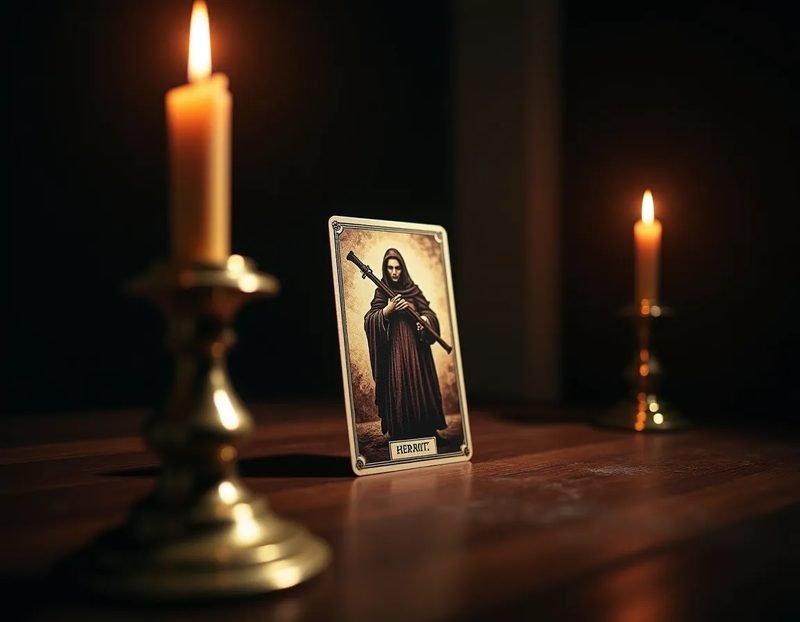
Most performers pick a force and then find out what card they ended up with. Reverse that. Decide which card you want to be the centerpiece of your effect, then pick the method that lands there.
- The Hermit suits a quiet, one-on-one piece. It reads as introspection, and spectators tend to lean in.
- Death is the crowd favorite and the most dangerous. It gets a laugh or a flinch, and you don’t control which one.
- The Moon pairs beautifully with impressions, dreams, and anything with a lunar or nocturnal theme.
- The Wheel of Fortune is underrated for predictions, since the imagery already suggests fate and chance colliding.
- The Fool is a great closer for a skeptical audience, because it lets you finish with a smile instead of a shiver.
I’ve watched a perfectly good prediction die because the forced card was Judgement, and the performer had nothing to say about it. Dead air on a loaded image is worse than dead air on a plain one. Know what your card will make the room think.
The Fortune Teller Line
Here’s where it gets slippery. Put a tarot card in front of a spectator and they’ll ask what it means. Answer, and you’ve crossed into reading. Refuse, and you’ve broken the spell you just cast.
I’ve been asked at private events in Anchorage to tell someone about their marriage, their job, a pregnancy that hasn’t been announced yet. I don’t do it. Not because I’m squeamish, but because a mentalist who gives sincere readings has quietly changed jobs. Now you’re responsible for what you say, and people remember advice far longer than they remember effects.
The move that works for me is to keep the interpretation in the historical or symbolic register. “Traditionally, this card speaks of sudden upheaval, the collapse of something built on false footing.” That’s true. It’s about the card, not about them. Let the spectator do the personal translation. They will, every time, and they’ll credit you with an insight you never claimed.
My hands go still when someone leans across the table and says, “No, but really, what do you see?” That’s the moment. Smile. Say the card only tells you what it has always told people. Then move on.
Three Structures That Hold Up
The prediction structure. A card is sealed in an envelope or a small wooden box before the show starts. A spectator selects, the envelope is opened, the images match. Simple, old, and it works because tarot art is distinctive enough that the match feels undeniable. Nobody wonders whether a card “counts” as close. It’s either The Empress or it isn’t.
The divination structure. The spectator shuffles the Majors privately, chooses one, and you name it. The trick is in the build. Don’t jump to the name. Start with the mood of the card, the color, a single object in the illustration, then arrive at the title. Three or four beats of narrowing feel like a mind at work. A single flat announcement feels like a stunt.
The imagery structure. The spectator thinks of a card and you draw or describe its dominant symbol, the tower struck by lightning, the figure hung by one foot, the lantern held aloft. This one demands the most from you as a storyteller and rewards you the most. It’s also the closest to reading, so guard the frame carefully.
All three structures gain from a physical anchor. A linen bag, a tarnished spoon used as a pointer, a single stub of candle. Give the spectator’s eye something to rest on besides your face.
Presentation That Keeps You on Your Side of the Line
Your persona decides whether tarot elevates you or trips you. Three habits keep me steady.
- Frame yourself as a collector, not a channel. “This deck has been through a lot of hands” carries mystery without claiming access to anything.
- Talk about the cards, never about the future. Symbolism and history are safe ground. Prophecy is not.
- Let the effect end on the effect. Once the impossible thing has happened, stop. Every extra sentence is a chance to drift into a reading.
The prop itself matters more than performers admit. A cheap, glossy deck signals a party trick. An aged, matte-finish deck with soft corners tells the room you take this seriously, and they’ll respond by taking it seriously too! Cards that look handled and old give you credibility before you speak.
I don’t claim the cards know anything. I do have a firm conviction that a room full of adults will treat an old tarot deck as if it might, and that’s a gift you can use honestly.
Where to Start
Pick one card. Just one. Build a three-minute piece around The Magician, or The High Priestess, or The Hanged Man, and learn everything about its imagery, its history, and how a room reacts when it appears. Then build a second. Twenty-two cards is a lot of ground, and the performers who try to cover it all end up with a show that sounds like a lecture.
Depth beats breadth here. Always has.
If you’re building a tarot routine and want props with real character, decks, boxes, and pieces that look like they’ve earned their age, you my friend, are home. Browse the current collection at https://arcanerelics.com/shop/.