The Intonation Effect: What Sound Reactive Mentalism Reveals About Audience Belief

Most props that claim to contact the other side rely on suggestion and interpretation. The audience brings meaning to ambiguity. Intonation works the opposite way: it produces a voice that answers specific questions in real time, and the spectator hears it themselves. No interpretation needed. No room for skepticism to slip in. Here is how it works and why it matters.
The Problem With Mediumship at a Distance
A planchette spells out initials. A pendulum swings toward yes or no. A glass moves across letters. These are classic spirit communication beats, and they all share the same weakness: the audience watches meaning emerge from objects, with the performer narrating what the spirits are supposedly saying. The spectator has to take your word for it. They have no direct evidence.
Skepticism breeds in that gap. A spectator’s brain, denied a sensory link to the spirit itself, quietly manufactures one: clever questioning, subtle steering, a technique you’ve perfected. You never hear these theories out loud. You see them in the eyes, in the way a spectator’s gaze shifts from the object to your hands.
Give the spirit a voice, though, and that gap closes.
Why a Voice Changes Everything
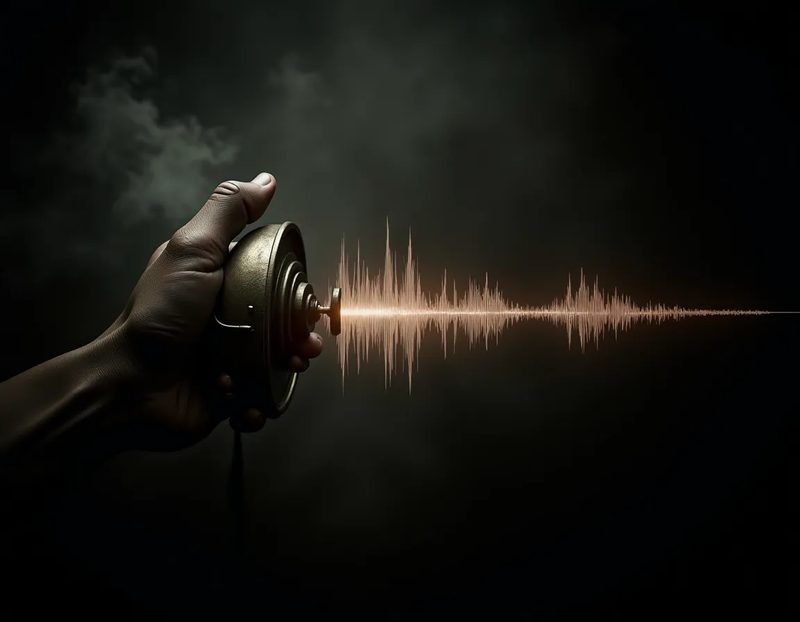
A voice is direct evidence in a way that object movement is not. Vision is easy to fool, performers have known this for centuries, and audiences half expect to be fooled by their eyes. But a voice answering a question, in the spectator’s own phone, played back for only them to hear, that’s something else entirely. It activates a much older piece of the brain. It’s the same wiring that makes human speech cut through noise and doubt.
This is how Intonation works. A spectator speaks a name, a question, a message meant for a specific person on the other side. The device records it, and when played back moments later, a voice answers. Not the spectator’s voice. Not a generic response. An answer that lands so perfectly, so specifically, that the room goes quiet. They heard it themselves. No middleman. No storytelling required.
I’ve watched skeptics hand the phone back with shaking hands, not because they believe in spirits, but because they have no rational explanation for what their own ears just heard.
Two Ways to Use It
The primary method is the one I just described: the spectator’s phone becomes the medium. They ask, the device responds, they hear the answer alone. The power is in the privacy of it, the fact that only they have access to what was said.
There’s another way to work it. You place Intonation under or inside an object, a table, a box, a piece of furniture. Through induction, the object itself produces sound. When the spectators lay their heads down on the table, as you instruct them, they hear a voice coming from beneath their own ears. Intimate. Undeniable. There’s no device visible, nothing to distract from the fact that the object is speaking to them directly.
All the setters “the spectators laying their heads down” hear the same voice at the same time. Everyone in the room gets the same evidence. That’s the moment skepticism becomes harder to hold onto.
What Makes This Different
Building Intonation properly took longer than I care to admit, because a recorded voice that doesn’t land right is worse than no voice at all. The voice itself had to sound like it was answering, not reciting. It had to carry weight, intention, knowledge it shouldn’t have. A device that plays back generic spirit messages is a novelty. A device where the spirit seems to know details only the spectator would know, reads as real contact. That’s the difference between a gimmick and a piece a serious mentalist can build an entire performance around.
The technical side matters, but the performance side matters more:
- The response feels specific, not templated, so it can’t be dismissed as a parlor trick
- The spectator hears the voice through their own phone or from directly beneath them, no external speaker to rationalize away
- The timing is immediate enough that the spectator can’t construct a logical explanation for the delay
None of that is flashy on a spec sheet. All of it is the whole trick.
A Night It Worked
I tested an early version of this concept at a private event in Jeffersonville, small room, maybe twenty people. I asked a woman to hold the phone and ask for a message from someone she’d lost. She asked quietly, nervous. The voice on the recording answered with a name. Her mother’s name. Then it said something specific, a detail about a song, something only she would know.
She went pale. Not dramatic, just quiet, her hand drifting up near her collarbone the way people touch themselves when something lands somewhere it shouldn’t. I asked what the message meant. She couldn’t quite answer. She just kept listening to the playback.
I don’t know what she heard in that voice. I know what I saw happen to her face, and I know it wasn’t performance.
To create that effect does requre the performer to do a lot of research prior to the event, but if you’re not lazy and you do the work The result and reactions are worth it.
Building a Performance Around It
If you’re considering adding this to your act, resist the urge to over explain how it works. The temptation is to describe the technology “EVP”, to frame it as a EVP experience. That undersells what’s actually happening in the room.
Instead, stay focused on the narrative. You’re not demonstrating EVP persay. You’re facilitating contact. The phone becomes a receiver. The table becomes a portal. Your job is framing, not explaining. Set up why the spirit might be willing to speak, what connection the spectator shares with the person on the other side, what message they’re hoping to receive.
Three things I’d tell any performer picking this up:
- Never explain the mechanism. The moment you gesture toward recording or playback, you’ve handed the room a rational escape route.
- Let the spectator speak first, unprompted. The response works hardest when it feels like it’s answering them, not you. Then Continue the effect with the rest of your pre-prompted questions.
- Watch the spectator’s body, not the device. Whether the moment landed comes from them, every time.
- In the directions you will find a Alternate Reality performance, take the time to understand this method and dont just Dismiss it because it is Difficult.
Who This Is Actually For
This isn’t a prop for the performer who wants one more sound effect in their set. It’s for the performer already working in the space between skepticism and belief, the one who understands that genuine-sounding contact means more than flashy effects. A spectator will applaud a levitation. A spectator who hears a spirit answer to questions will carry that moment for years.
I built Intonation because I wanted a piece that didn’t just claim connection to the other side, it provided direct evidence of it. So yes, this one’s worth adding to a serious set.
You can find Intonation and the rest of the collection at Arcane Relics.