Words That Hold: The Craft of Mentalism Scripting and Why It Differs From Stage Patter

Words That Hold: The Craft of Mentalism Scripting and Why It Differs From Stage Patter

A magician can flub a line and the crowd laughs with him. A mentalist flubs the same kind of line and the whole room quietly stops believing him. That is not a small difference. It is the difference between two entirely different jobs that happen to share a stage.

I have spent years listening to my own recordings after shows, cringing at the parts that sounded too smooth. Smooth is not always good in this work. If you have ever wondered why a script that reads beautifully on paper dies in the room, this is why.

Two Different Contracts With the Audience

A conjuror’s patter supports a trick. The audience knows, going in, that they are watching a constructed piece of theater, and the words exist to entertain them while something clever happens underneath. If the patter sounds a little canned, a little “showbiz,” nobody minds. It fits the frame. Canned is expected. Canned is even charming, in the right hands.

Mentalism asks for something else entirely, it asks the audience to believe, at least while it’s happening, that what they are watching is real. Not real in a mystical sense necessarily, but real in the sense that this isn’t a bit, that the mentalist actually is reading something in the room, in a face, in a folded piece of paper. That belief is fragile. It survives on a diet of specificity and spontaneity.

The moment your language sounds written, the frame cracks. A performer who sounds rehearsed while claiming to sense something in real time is telling the audience, without meaning to, that the sensing was never the point. The script was the point. And once they know that, everything downstream of it reads as performance rather than event.

The Trap of the Beautiful Script

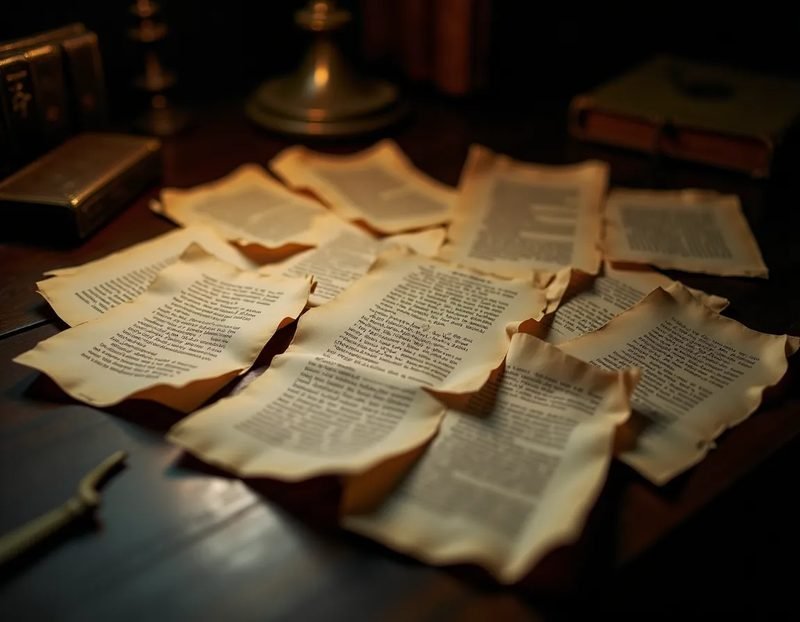
crumpled and rewritten script pages scattered on a desk, several lines crossed out

Here is what trips up smart performers, the ones who write well. You draft a script, you polish it, you find a turn of phrase you’re proud of, and you keep it because it’s good writing. That’s the trap. Good writing and good mentalism language are not the same skill, and sometimes they actively work against each other.

Written language has rhythm because a writer had time to consider it. Spoken language, the kind that convinces someone something unplanned is happening, has hesitations, false starts, small course corrections. “Wait. No. Actually, hold on.” Those aren’t flaws to edit out. They’re the texture that sells the premise. Strip them for elegance and you’ve built something that reads well in your notebook and dies in front of actual people.

I’ve watched performers memorize a mentalism routine word for word, the way you’d memorize a monologue, and then wonder why audiences felt cold toward it. The audience can’t always articulate what went wrong. They just sense, correctly, that they’re watching a recitation instead of a discovery.

This is the part most guides get wrong. They tell you to write a tight script and rehearse it until it’s smooth. For stage magic, fine. For mentalism, that instruction will actively sabotage you.

Strategic Vagueness Versus the Damaging Kind

Cold readers have known for a long time that vague language, used correctly, invites the audience to fill in specifics themselves, and that this feels more accurate to them than anything precise you could have said. “I’m seeing a connection to someone older, someone protective” lands harder than a guessed name ever would, because the listener does the work of finding their own grandmother, their own uncle, in the gap you left open.

That’s useful vagueness. It’s a tool, deployed on purpose, aimed at a specific psychological effect.

Damaging vagueness is different, and it’s the kind that leaks into scripts by accident. It’s the performer who hedges everything because they’re nervous about being wrong, who wraps every statement in so much qualification that nothing lands at all. “I feel like maybe there could be something around, possibly, a number, or a letter.” That isn’t mystery. That’s a person covering themselves, and audiences read cover-your-bases language instantly, even if they can’t name what they’re hearing.

The test I use is simple, if the vagueness is doing a job, a specific psychological job, keep it. If the vagueness exists because you were afraid to commit, cut it and commit.

How Rehearsal Actually Works Here

The mistake isn’t rehearsing. It’s rehearsing the wrong layer.

Rehearse your structure, not your sentences. Know exactly where the routine needs to go, what beat comes before the reveal, what you need to have planted by minute three. Know your outs cold, know your timing, know what you’ll do if the volunteer answers in a direction you didn’t expect. That’s the skeleton, and it should be locked down tight.

The words that go over that skeleton need to stay loose enough to sound like they’re arriving in the moment, because in a very real sense they are. You’re not reciting a paragraph, you’re navigating toward a destination you already know, using whatever words show up when you get there. That’s a different kind of preparation than memorization. It’s closer to how a jazz musician rehearses, knowing the changes cold so the notes over them can feel unplanned.

I tested an early version of a reading routine at a private event around Louisville a few years back, scripted almost word for word, and it played fine. Fine is the wrong result for this kind of material. The second time I ran it, I threw out half the memorized language and worked from the structure alone, reacting to whatever the person in front of me actually gave me.

The difference in the room was immediate. People leaned forward instead of just watching.

Where the Failure Actually Shows Up

Overwritten mentalism language tends to fail in three specific spots, and once you know to watch for them, you’ll catch it in your own material immediately.

  • The opening frame. If your introduction to a piece sounds like ad copy, the audience files the whole routine under “performance” before anything has even happened.
  • The reaction to what the volunteer says. A scripted-sounding response to something unscripted is the single fastest way to break belief. This is where hesitation and imperfection matter most.
  • The close. A pat, tidy wrap-up sentence undoes the ambiguity you spent the whole routine building. Sometimes the strongest close is the one that trails off without fully resolving.

Notice that none of these are about content. They’re about texture, about whether the language feels like it’s arriving or like it’s being delivered. Content can be identical in a routine that works and one that doesn’t. Texture is what separates them.

Writing for the Room, Not the Page

If you write your material the way you’d write an essay, complete sentences, tidy transitions, a satisfying rhythm, you are writing something that will read as false the second it leaves your mouth in front of strangers. Write it instead the way people actually talk when they’re figuring something out as they go. Broken clauses. Redirection. The occasional dead end you have to talk your way out of.

This is uncomfortable for anyone who takes pride in their writing, myself included. I still catch myself falling in love with a line and having to admit it belongs in a book, not in a live reading.

Good mentalism scripting isn’t really writing at all, in the traditional sense. It’s closer to building a map you can improvise your way across.

By the way, I do believe some of the best material in this genre was never fully written down at all, just carried, rehearsed in structure, and let loose in the room a thousand times until it found its own shape.

Building the Habit

Start treating your scripts as scaffolding instead of scripture. Write the structure down in full, every beat, every out, every contingency. Then write the language in fragments, not full sentences, just enough to remind you what’s supposed to happen at each point, and let the actual words get discovered fresh each time you perform.

Record yourself running the same routine three times in a row without repeating the same phrasing twice. If you can’t do that, your material is too rigid, and the audience will feel the rigidity before they understand why.

This is the part most performers skip, because it’s slower than memorizing a clean script and calling it done. It’s worth the extra work.

If you’re building routines that need to survive contact with a real, unpredictable room, and not just a rehearsal mirror, we keep a working collection of props and material at Arcane Relics built with exactly this kind of use in mind. Take a look: https://arcanerelics.com/shop/

The Words Are the Work: Scripting Mentalism for Emotional Precision Without Killing Spontaneity

The Words Are the Work: Scripting Mentalism for Emotional Precision Without Killing Spontaneity

Watch a mentalist blow a moment and you’ll usually see the same failure. Not a fumbled prop, not a technical miss. A word choice that landed a half-beat too late, or a line that sounded read instead of felt. The audience doesn’t consciously register any of that. They just feel the air go out of the room.

Most performers think the fix is more spontaneity. Fewer prepared words, more “in the moment” talk. They’re wrong. The mentalists whose work feels most alive on stage are, almost without exception, the ones who scripted it hardest. Every syllable rehearsed until it stopped sounding rehearsed. That’s not a contradiction. That’s the craft.

Why “Just Wing It” Fails Mentalism Specifically

Card magic can survive loose patter. The method carries the effect, and the words are decoration. Mentalism doesn’t get that luxury. In mentalism, the words often are the method, or close enough to it that sloppy language creates real logical gaps a sharp spectator will walk straight through.

Say a phrase like “just think of any card” when your force actually depends on a narrower field, and you’ve handed a thinking spectator an exit. Say “concentrate on the first name that comes to mind” when you need a name of a specific length, and you’ve built your own trap door.

Here’s the part most guides get wrong: they treat scripting as a memorization problem. It isn’t. It’s an engineering problem. Every line has to do a job, plant a seed, close a door, misdirect an inference, and it has to do that job while sounding like it was invented on the spot, for this room, for this person.

That’s two different skills wearing one costume. Most performers only develop one of them.

The Difference Between Scripting a Trick and Scripting a Revelation

Close-up of hands holding a sealed envelope during a mentalism performance

A card trick script manages information. A mentalism script manages belief.

When you script a card trick, you’re mostly solving logistics: what to say while you’re secretly doing something else, how to time a reveal, how to keep the audience’s eyes where you need them. The stakes are mechanical. Get the timing wrong and you expose a move.

When you script a psychological revelation, you’re solving something closer to persuasion. You’re not managing what the audience sees, you’re managing what they conclude, and worse, what they feel while they’re concluding it. A billet reading, a “hot reading” style character piece, a name divination, these live or die on whether the spectator experiences the reveal as discovery rather than performance.

That changes what your script has to carry. A card script needs precision of action. A mentalism script needs precision of implication. Every sentence has to plant exactly one assumption in the spectator’s mind, no more, and let them think they arrived at it themselves.

I’ve watched performers deliver a technically flawless revelation and still lose the room, because their script told the audience what to feel instead of letting the structure produce the feeling. “This is going to shock you” kills the shock. The words announced the effect instead of causing it.

State that as a rule if you like: never script the emotion directly. Script the conditions that produce it.

Building “Structured Spontaneity”

The term I use for the actual skill here is structured spontaneity, a script with enough fixed architecture to survive contact with a live audience, and enough open joints to bend around whatever that audience actually does.

Think of it less like a monologue and more like branching dialogue in a well-built game. You know your load-bearing lines, the sentences that have to land in a specific order because the logic of the effect depends on them. Around those, you build modular connective tissue, phrases you can swap, compress, or stretch depending on what the room gives you.

  • Anchor lines: the handful of sentences that carry actual structural weight. These get scripted word for word and rehearsed until they’re reflexive.
  • Bridge language: the connective material between anchors. Scripted in concept, loose in exact wording, so it can absorb a laugh, a heckle, or a slow spectator without breaking rhythm.
  • Reactive branches: pre-built responses for the two or three ways a spectator commonly derails you. If someone blurts the wrong word, if someone answers too fast, if someone gets nervous and goes quiet. You should never be improvising your recovery from zero.

Most performers only build the anchor lines and hope the rest fills itself in. It doesn’t. What fills the gap instead is filler, “um,” hedging, apologetic little laughs, and every one of those is a tell that you’re not fully inside the character of someone who already knows.

Rehearsing Language Until It Stops Sounding Rehearsed

This is where most performers quit too early. They write a script, read it a few times, and call it rehearsed. That’s not rehearsal, that’s familiarity. There’s a difference, and the audience can tell.

Real script rehearsal for mentalism goes through stages. First you get the words right on paper, tight, no wasted syllables, no hedging qualifiers cluttering the logic. Then you say it out loud, over and over, until the sentence structure stops feeling like sentence structure and starts feeling like thought.

Then, and this is the step almost everyone skips, you deliberately break it. Say your anchor lines while someone interrupts you. Say them while distracted. Say them in a different order. If a scripted line can only survive in the exact sequence you first wrote it, it isn’t ready. It’s fragile, and fragile scripts snap the first time a spectator does something unexpected.

I test material the way most working performers do, on real people, in real rooms, where you don’t get a second take. Around the Louisville area I’ve had the chance to run new material at small private events, and there’s no substitute for that. A line that killed in rehearsal can go flat in front of an actual audience, and you only find out which lines are load-bearing by watching one buckle in real time.

My hands go still the moment I feel a scripted line land wrong. Not because the trick failed, the trick usually still works, but because I know, instantly, that the words didn’t do their job. That feedback is worth more than a dozen mirror rehearsals.

Where Tight Scripting Actively Hurts an Effect

Not every moment wants precision. Over-scripting is a real failure mode, and it’s more common among serious, technically minded performers than the loose ones, because discipline becomes a habit that doesn’t know when to stop.

Tight scripting suffocates an effect in a few specific places.

  1. Moments that need to look unrehearsed by design. If your premise is “I’m figuring this out as we go,” and your language is metronomic and polished, the mismatch reads as false, even if the audience can’t name why.
  2. Genuine audience interaction points. If you script a spectator’s likely response too specifically, you’ll fight the actual human in front of you instead of working with them. That fight shows on your face before it shows in your words.
  3. Emotional beats that depend on your real read of the room. A grief-adjacent reading, a piece that touches something personal for a specific spectator, needs room to slow down, speed up, or change entirely based on what you’re seeing in their face. A locked script here isn’t discipline, it’s cowardice dressed up as professionalism.

The tell that you’ve over-scripted a section is simple: you can say the words correctly while distracted, on autopilot, without any real attention on the person in front of you. If that’s true, the section has become a recitation, and recitations don’t move people. Presence does.

A Working Method for Scripting Your Own Material

Here’s the process I’d actually recommend, not theory, a method you can run against a routine you already perform.

Start by writing your full script, every word, even the parts you suspect will end up loose. You can’t know what to loosen until you’ve seen the whole thing rigid on the page.

Mark every line by function. Does it plant information, close a logical exit, manage misdirection, or produce emotion? A line that isn’t doing one of those jobs is probably just noise, and noise is where audiences start checking their phones.

Identify your anchors, the two or three sentences per phase of the effect that must land precisely. Everything else becomes bridge language, and you rehearse the bridges loosely, on purpose, so your mouth learns to generate them fresh each time rather than retrieve them from memory.

Then perform it for real people. Not friends who’ll be kind, actual audiences, or at minimum, people willing to react honestly. Watch where they lean in and where they check out. The gap between where you expected impact and where it actually landed is your revision list.

Revise, rehearse the revision until it breaks cleanly under interruption, and perform it again.

Most performers write a script once and perform it a hundred times. The performers whose work reads as effortless do the opposite, they perform a hundred drafts and land on a script that finally feels like it was never written at all.

If you’re building out mentalism material and want tools worth scripting around, pieces with enough structural honesty to reward this kind of work, take a look at what’s in stock. Browse the shop at Arcane Relics.