The Unseen Hand: A History and Working Theory of the PK Touch

I don’t believe the dead have hands. I’ve never had a reason to. But I’ve stood in a dim room and watched a grown man flinch at something that touched his shoulder when nobody was near him, and I can tell you the flinch was real. Whatever you believe about spirits, that reaction belongs to the body, and the body doesn’t take instruction.
That’s the whole reason the PK touch has outlasted almost every other effect in the bizarre canon.
The Hand in the Dark
The Victorian séance did not invent the unseen touch, but it gave the touch a stage, a vocabulary and a paying audience. After the Fox sisters made their rapping famous in 1848, sitters expected more than sounds. They wanted contact. Mediums delivered it in the dark, with hands linked around the table and the gas turned down to a bruise-colored glow.
Daniel Dunglas Home built a reputation on it. Sitters reported hands that appeared, shook theirs, tugged at coats, and once in a while handed over a flower. Eusapia Palladino, the Neapolitan medium, was famous for touches that came from behind her cabinet curtain, pinches, pats and grips on the wrists of the people sitting closest to her.
Her investigators were serious people. Several of them went home convinced. Others caught her cheating, and she was caught more than once. Both things can be true, and the truth of it is what makes her worth studying.
Notice what those sittings had in common. Nobody was watching a hand. Everyone was feeling one.
Why It Lands Harder Than Anything You Can See
A card trick happens on a table. A levitation happens across a stage. A touch happens inside the boundary of a person, on skin they’ve defended since childhood, and that boundary has rules older than any magic theory. We don’t let strangers cross it. When something does, the mind has to file the event somewhere, and it reaches for the nearest explanation.
Here’s the counterintuitive part, and it’s the point most performers get backwards. The stronger the touch, the weaker the effect. A firm shove gets explained away in a second, someone bumped me, my chair moved. A touch that’s barely there, a weight on a sleeve or a brush at the back of the hand, is the one that stays unresolved, because the spectator can’t decide whether it happened.
Doubt is your ally here. Certainty is a gift you can hand your audience later, in the retelling, when they’ve done the work themselves.
The Method Families
Strip away the period costume and every touch method falls into one of a few families. Knowing them matters because it tells you what your audience is already suspecting.
- The confederate. Someone else does the touching. It’s the oldest method and still the cleanest, since a real hand feels exactly like a real hand. The cost is trust and rehearsal, and one exposed accomplice ruins the memory of everything before it.
- The freed limb. The classic séance control. The medium slips a hand or a foot loose while the sitters believe both are held, and the touch comes from the performer’s own body. It’s cheap and it’s silent. It also puts you close to the spectator and it dies under a decent set of controls.
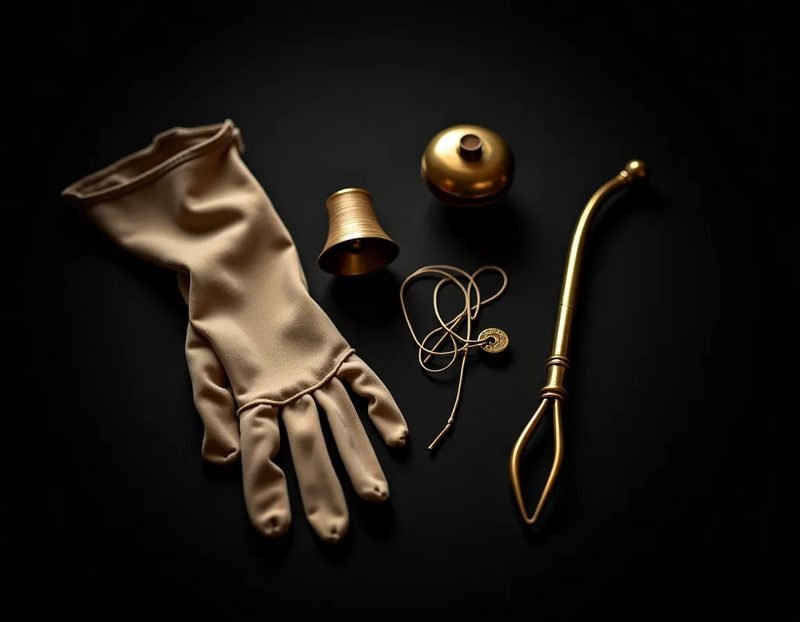
- The reaching aid. A rod, a thread, a pulled lightweight object. Mediums used them, and so did every skeptic who ever wrote up their exposure. Effective in a dark room, but it’s a method that lives or dies on lighting.
- The gimmicked device. A small mechanism delivers the touch without a performer’s limb or an accomplice’s hand. Modern versions run on a motor or a solenoid and fire on a remote signal.
Every one of these has a tell. The confederate needs an alibi, the freed limb needs proximity, the reaching aid needs shadow. The device needs a moment where the spectator would notice something on their body, so you have to manage that moment instead of ignoring it.
What Separates Ghostly From Prankish
I’ve watched good performers turn an eerie moment into a joke in about four seconds. The method was fine. The presentation gave the audience permission to laugh, and once they laugh, it’s over.
Four rules, and I’d tape them inside your case if I could.
- Give the touch a reason. A touch with no story is a poke. A touch after a quiet minute of attention, a line about someone standing behind the chair, a request that the spectator hold still, is a moment. The story doesn’t have to be supernatural. It just has to be a frame.
- Never announce it. Don’t say “you’ll feel something on your arm.” Let them report it. When the spectator says “did anyone just touch me?” your job is to look as surprised as they do, or a shade less, if you can hold it.
- Use the one who doesn’t want it. The volunteer who’s smiling and ready for a trick is the hardest audience for a touch. Pick the quiet one, the arms-crossed skeptic, the person who looked away when you started. Their surprise is the honest kind.
- Stop after one. Two touches make a pattern, and patterns look like methods. One touch, then silence, is a memory. Do it once and let the room decide what it saw.
Pace matters more than any prop. Let three or four seconds go by after the touch before you say anything. It will feel like too long. It isn’t.
A Room in Springhurst
I worked a small private event in Springhurst where the host had warned me, cheerfully, that her brother would ruin everything. He did his best. He heckled the first two pieces and offered running commentary on the third. I put him in the chair anyway.
Quiet, then. Dimmed lamp. I asked him to close his eyes for ten seconds and said nothing else. When the touch came, my hands were in plain view of the room, and he didn’t say a word. His jaw tightened and he opened his eyes and looked at his own forearm as if it had lied to him.
Nobody laughed. The host, who had been grinning all night, put her hand over her mouth.
I don’t tell that story to brag. I tell it because the silence afterward was worth more than any applause I’ve had, and it came from a man who’d spent an hour trying to break the room.
Where Contact Fits
I built Contact because I wanted the fourth family done properly. Not a rod, not a friend in the wings, not a foot under a table. A device that delivers a small, real touch on your signal, with no performer’s hand anywhere near the spectator when it lands.
The hard part of any touch device is not the mechanism. It’s the feeling. Too sharp and it reads as a tool. Too heavy and the spectator knows it’s mechanical the moment it lands. Getting it to feel like a fingertip and not a machine took more iteration than I’d like to admit, and it’s the reason I don’t let anything out of the shop that I haven’t tried on a skeptical friend first.
What it gives you is separation. You can stand across the room with empty hands, and the touch still arrives. That separation is what makes the effect impossible to reverse-engineer from the spectator’s memory, because the memory has no hand in it.
It doesn’t do the work for you, though. Nothing does. The four rules above still apply, and a device in the wrong hands is only a very expensive prank. In the right hands, with a frame and a quiet room, it does what Palladino’s curtain did for her sitters. It gives them something to be unsure about.
The Unseen Hand Is a Test of You
The Victorians understood something we keep forgetting. The touch was never the trick. The trick was the dark, the held breath, the twenty minutes of expectation before anything happened. The hand was just the punctuation.
If you build the room properly, almost any method will carry the effect. If you don’t, the best device ever made will get you a nervous laugh and a story about the time you tried something weird.
So build the room first. Choose your volunteer with care, keep your controls quiet, and give the audience nothing to point at afterward. Then let one small touch do what a hundred years of séance tables were reaching for all along…a person, alone in a crowd, unsure of their own skin.
You’ll know it worked when the room doesn’t clap. It just waits.
If that’s the kind of effect you want in your working repertoire, step into the shop and see what’s waiting for you.