
To Restore or Preserve? The Bizarre Magic Collector’s Dilemma With Damaged Antiques

A dealer once offered me a spirit trumpet with a crushed bell, the kind of damage that happens when a box gets thrown in a moving truck instead of carried. The tarnish told one story. The dent told another, more recent one, and it wasn’t a good one. I turned it over in my hands for a long time before I said no.
I didn’t say no because it was ugly. I said no because I couldn’t tell, anymore, which parts of that object were haunted by its history and which parts were just broken. That’s the whole dilemma in miniature, and it comes up more often than most collectors admit.
The Object Isn’t the Point, the Record Is
Here’s the thing nobody explains to new collectors of seance room material. You are not buying brass, wood, or glass. You are buying a chain of custody, however incomplete, that connects an object to a room where something happened that people believed in enough to write down, argue about, or keep secret for decades.
Strip that chain away and you have a curiosity. Keep it intact, even partially, and you have a relic with weight.
That’s the whole difference in value, right there.
General antique restoration wisdom tells you to bring a piece back to its “original” condition, whatever that means for a chair or a clock. That advice doesn’t transfer cleanly here. A seance trumpet’s original condition included the fingerprints of a medium, the specific pattern of oxidation from being handled in the dark for forty years, maybe a taped-over crack from an event that went sideways in 1911. Sand that down to a bright, symmetrical shine and you’ve made a nicer object and a worthless one, both at the same time.
Most restorers don’t think about this distinction. Most collectors in this niche do.
Structural Stabilization Is Not the Same Thing as Restoration
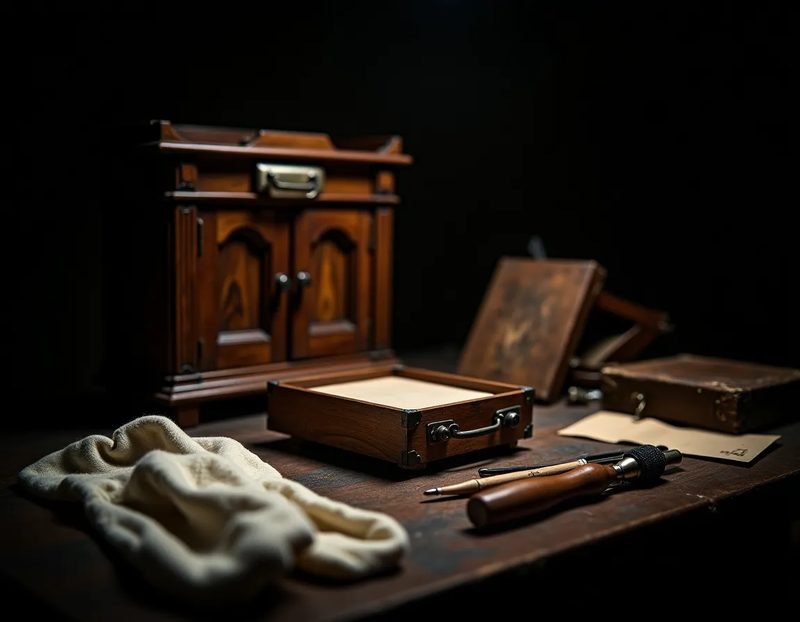
The first mistake I see, over and over, is collectors treating “fix it” as a single decision. It isn’t. There are at least three separate questions buried in that one word, and serious collectors answer them separately, in this order.
Is the object structurally failing in a way that will destroy it further if left alone? Is the damage cosmetic, meaning it affects appearance but not survival? And third, does the piece need to function, as in actually get used in performance, or does it only need to exist?
- Stabilization stops active decay, flaking varnish, loose joints, active rust, without changing the object’s appearance or story. Almost everyone agrees this is fine.
- Cosmetic restoration changes how the piece looks and reads. This is where the real argument lives.
- Functional restoration makes a prop workable again for performance, sometimes at the direct cost of the very wear that made it valuable.
A trembling hand did that taping job on the trumpet, not a careless one. You can tell the difference once you’ve handled enough of these pieces. That’s stabilization work waiting to happen, not restoration.
The Provenance Test Serious Collectors Actually Use
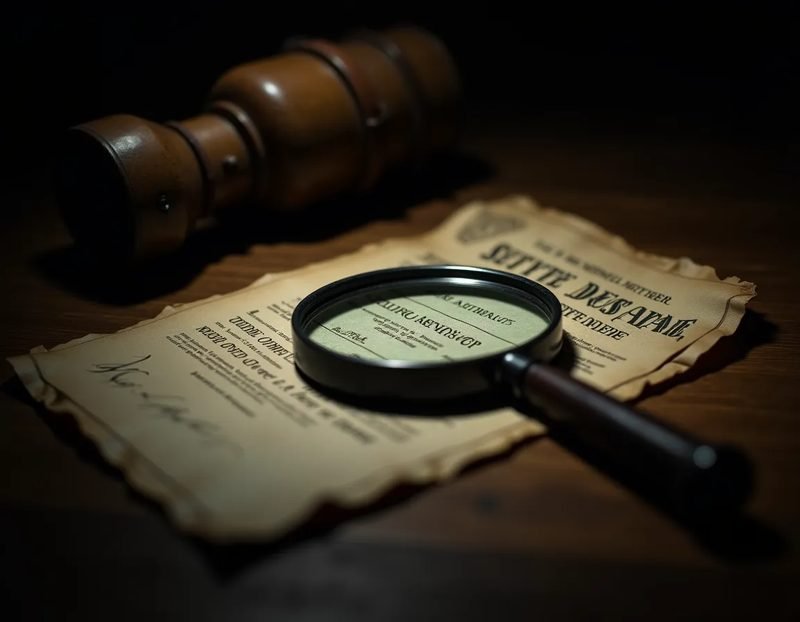
I’ve watched a lot of collectors argue about this over the years, in forums, at estate sales, in private messages that got heated fast. What the good ones actually do, when you strip away the philosophy, comes down to one blunt question.
Does the damage tell you something true, or does it just hurt?
If a scorch mark lines up with a documented fire at a specific sitting, that’s not damage anymore, my friend, that’s evidence. Leave it. If a hinge is simply broken because a previous owner’s kid used the cabinet as a toy box, that’s just damage, and stabilizing or replacing that hinge doesn’t erase anything meaningful. The provenance survives the repair.
Where it gets uncomfortable is the middle ground, and there’s always a middle ground. Water damage on a document you can’t fully attribute to any known event. A crack in a table leg that might be from the original owner’s séances or might be from someone dropping it in 1987. When collectors can’t determine which story the damage belongs to, the responsible move is to preserve it as found and document your uncertainty, not to guess by restoring it away.
I’d rather own an ugly mystery than a beautiful lie.
When the Prop Has to Work, the Math Changes
Not everything in this hobby is a display piece, and I think that’s where a lot of general collecting advice quietly fails bizarre magic people specifically. If you’re a working performer, not a museum, a piece that can’t be handled onstage isn’t serving its purpose. It’s just sitting there being fragile.
I’ve brought pieces into actual working rotation after a full structural rebuild, and I don’t apologize for it.
The rule I use for my own working collection is simple, even if it’s not comfortable for purists. If restoring a piece to functional condition means losing physical evidence that can never be recovered, photograph and document everything first, exhaustively, before you touch it. Once that record exists, the object itself is free to serve its second life. The provenance moves into the documentation. The prop moves into your hands.
I ran a small séance style piece at a private event in Clarksville, Indiana a while back, a talking board with a genuinely rough planchette that had been repaired twice before it ever reached me. It wasn’t pristine. It wobbled slightly under the fingers in a way that felt, honestly, more convincing than a factory-new one would have. Nobody in that room cared that a joint had been reglued in 1994. They cared that the thing moved like it had a mind of its own.
That’s the tell most performers miss. A little honest wear reads as truth. Over-restoration reads as a prop.
The Restorations That Actually Destroy Value
I want to be direct about the mistakes I see collectors make, because I’ve made a version of at least one of them myself early on.
Over-polishing brass and silver is the most common one. That dark patina isn’t grime, most of the time, it’s decades of handling, and it’s chemically distinct from a fresh reproduction in ways a trained eye and sometimes a lab can verify. Strip it and you’ve erased the one piece of physical proof that connects the object to its claimed age.
Replacing period-correct hardware with modern equivalents is the second. A screw is a small thing until someone dates your piece by its fasteners and finds a Phillips head where there should be none.
And repainting or revarnishing wood surfaces, especially on cabinets and boxes used in séance work, tends to seal in exactly the fingerprint patterns and residue that forensic-minded collectors use to authenticate a piece in the first place.
None of these mistakes are made maliciously. They’re made by people who wanted their piece to look nice for a shelf, and didn’t realize the shelf wasn’t the only audience that mattered.
How I Actually Decide
I don’t have a universal answer, and anyone who claims they do is selling you something simpler than the truth. What I have is a sequence I run through every time a damaged piece comes across my bench.
Document first. Photograph, measure, note every mark, before anything else touches the object. Then ask whether the damage is attributable to a known event or person, because attributable damage is provenance, not defect. Then decide whether the piece needs to survive as a record or perform as a tool, since those two futures call for genuinely different levels of intervention. And only then, with all of that settled, do I let a conservator or my own hands near it.
It’s slow. It’s more paperwork than most people expect from a hobby built on mystery and shadow.
But a damaged relic handled carelessly only gets damaged once, and after that the story it could have told is gone for good, replaced by whatever story the restorer accidentally told instead.
If you collect in this space, or you’re building a working show around genuine period material, take the time. The object will forgive a slow decision. It won’t forgive a fast one.
You can browse what’s currently available, damaged, restored, and everything honest in between, at Arcane Relics.