Vertex Reconsidered: Why a Single Point of Contact Still Fools Working Mentalists

Most performers reach for complexity when they want to feel impressive. That’s backwards, and it’s the reason so many “advanced” effects fall apart the moment a sharp spectator starts asking questions. The trick with three components, two possible transitions, and a hidden layer gives a skeptic three components, two possible transitions, and a hidden layer to suspect. Vertex does the opposite. It gives your spectator exactly what they need to see, nothing more, and that’s precisely why it survives contact with people who are actually looking for the trick.
The Problem With Complexity
I don’t necessarily believe more moving parts make an effect stronger. I used to think that way, honestly, back when I assumed a bigger apparatus meant a bigger reaction. It doesn’t work like that in a room full of engineers, doctors, or the one guy who watched a debunking video on his lunch break.
Every additional component in an effect is another surface a skeptic can press on, it’s another seam for their attention to catch. A trick with five suspicious elements only needs one of them to feel wrong, and the whole illusion collapses. A trick with just the essentials has to be examined completely differently, there’s nowhere else for the eye to wander.
This is the part most product descriptions get wrong when they talk about effects. They sell “features.” The performers who actually book return work know that fewer features, executed with total conviction, beat a feature list every time.
What Vertex Actually Does
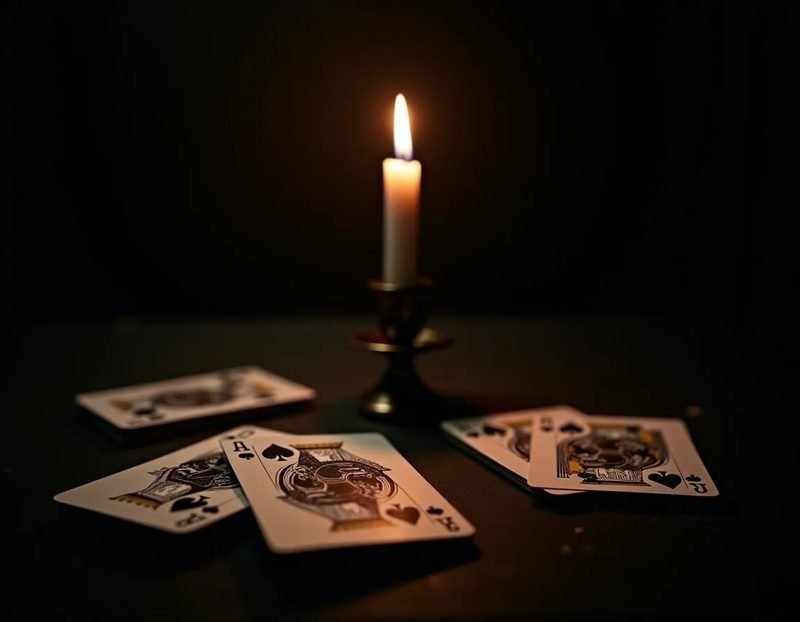
Vertex strips an effect down to its bones. Your spectator makes a choice, something happens visibly and undeniably. The whole thing reads as simple from start to finish, and that simplicity is exactly what makes it work. Most people will tell you they couldn’t explain it, not because there’s some impossible magic involved, but because nothing happened the way they expected it to.
What matters is that the effect stays clean in handling. Performers who work close, where a spectator is standing right there watching, need something that reads as ordinary and direct. Vertex was built for that kind of scrutiny, not around it.
Why Smart Rooms Fall For It
Here’s the counterintuitive part. Most performers assume that giving a spectator more control over a prop makes the moment more convincing. Let them hold it, let them turn it over, let them run through the options. In practice, the opposite is often true.
When the effect is clean and direct, you’re not reducing the spectator’s engagement, you’re focusing it. Their attention knows what to follow. And a mind with something clear to watch is a mind that stops hunting for the seam and starts reacting to the effect itself.
I tested this principle at a private event near Louisville a while back, using a clean, direct effect with a small group standing close enough to watch every inch of my hands. What struck me wasn’t the size of the reaction, it was how fast it landed. There was no lag while people scanned for the trick. The moment the effect registered, the room reacted immediately, because there was nothing confusing competing for their attention.
That’s the real design lesson here, and it applies past this one prop. Simplicity isn’t the absence of sophistication. It’s sophistication with the padding removed.
How Working Performers Are Routining It Beyond the Manual
The included directions get you a clean, reliable effect out of the box. Fine for a first run. But the performers getting the most out of Vertex are the ones who stopped treating it as a standalone trick and started treating it as a beat inside a larger piece.
A few patterns keep showing up in how serious performers are actually using it:
- As a confirmation, not a headliner. Some mentalists use Vertex as the physical proof point at the end of a longer psychological sequence, letting the spectator’s own choice “confirm” something the performer already claimed to know. The effect becomes evidence, not entertainment on its own.
- Layered into a sitters’ reading. In a smaller sitting room format, the effect becomes almost ritualistic, something the sitter returns to more than once during a session, each time reading slightly differently depending on what’s been established.
- As a silent beat. A surprising number of working performers have started using it with no verbal explanation at all, just a gesture and a pause. The less you explain a clean effect, the more your spectator’s own imagination fills in a method, and their imagination is always scarier than the truth.
- The deck switch. A few performers switch the working deck for the actual deck spectators have been handling and shuffling all night. By the time Vertex happens, the deck in play is provably theirs, not a prop that appeared from the performer’s pocket.
- Under a dome. Placing the deck under a glass dome before the reveal takes the performer’s hands out of the picture entirely. Nobody can point to a moment where anything could have been touched, because nothing was touched.
- In another room, on camera. The boldest version: the deck sits in a separate room, and spectators watch it the whole time on a live video feed. No sleeves, no gimmicked table, no proximity to the performer at all. That distance is doing real work.
None of that comes printed in a manual, and it shouldn’t. A manual gives you the mechanism, not the meaning.
Where It Actually Has Limits
I won’t oversell this thing, because a prop this specific isn’t for every format. Vertex works best in close contact, parlor distance and closer. It’s also not a piece you rush. The effect only carries weight if your presentation gives it room to breathe. Performers who treat it as a quick gag lose most of its power. Performers who let the silence sit get the reaction the effect is actually built for.
So no, it’s not a fit for every act. It’s a fit for performers who trust a quiet moment to do real work.
Bringing Vertex Into Your Act
The lesson underneath all of this has nothing to do with any single prop, honestly. It’s about restraint. The more your spectator has to follow, the more chances they have to find the edge of the illusion. Give them one clear thing. Make that one thing count.
Vertex was built around that idea from the ground up, not as a gimmick with the extras trimmed off, but as an effect designed to be essential from the first sketch. That’s a harder thing to build than it sounds, and it’s a harder thing to fool a room with than most performers expect until they’ve actually used it.
If you’re the kind of performer who wants your effect’s simplicity to be a weapon instead of a limitation, you my friend, are home.
You can find Vertex, along with the rest of our current lineup, at arcanerelics.com/shop/.