

The show ended forty minutes ago. Everyone has their coats, there’s laughter near the door, and she’s still standing near the edge of the room, turning her phone over in her hands and not making eye contact with anyone.
You’ve seen this before. Or you will. And if you haven’t thought carefully about what you’re going to say when it happens, you’re not ready to perform séance work.
Not really.
The Window Nobody Prepares For
There’s a specific psychological interval that opens in the twenty to sixty minutes after a heavy séance or theatrical mentalism set ends. The show closes, the lights shift, and the logical mind begins reassembling itself, constructing an explanation it can tolerate. For most people that process is quick, they laugh a little too loudly, compare notes, reach for their phones.
But not everyone comes back at the same speed.
My working term for this is the window. The period after your performance during which some portion of the audience is still partially inside the frame you built. They’re mobile. They’re articulate. They’ll answer questions and make small talk. They just haven’t fully crossed back over yet. Handle this window carelessly, and you can cause real harm to real people. Not theatrical discomfort. Actual, lasting unease that follows someone home and doesn’t leave.
This guide isn’t about protecting your reputation. It’s about knowing what you’re holding when you perform this material, and being willing to carry it.
Reading the Spectrum
Post-show intensity runs on a wide spectrum, and conflating one end with the other is where most performers go badly wrong.
On one end: deeply moved. This is the person with watery eyes who tells you quietly that the reading described their late mother with an accuracy that frightens them a little. They’re not destabilized, they’re grateful. What they need from you is simple. Don’t explain it away. Receive what they’re giving you. Let the experience belong to them. Dissolving this with a knowing wink and “it’s all technique” is not kindness. It’s cowardice wearing the costume of honesty, and I’ve watched otherwise excellent performers do it.
In the middle: genuinely curious, mildly unsettled. This person wants to process out loud. They’ll ask you direct questions. They’re looking for something they can take home and put on a shelf. This is where your language has to be exact.
On the far end: genuinely destabilized. Pale. Not quite present. Not participating in the normal post-show social processing happening around them. My hands go still when I spot this person, because it means something landed harder than I intended, and that weight is mine.
Three categories. Three different responses. Treating them the same isn’t compassion. It’s inattention.
The Language That Actually Works
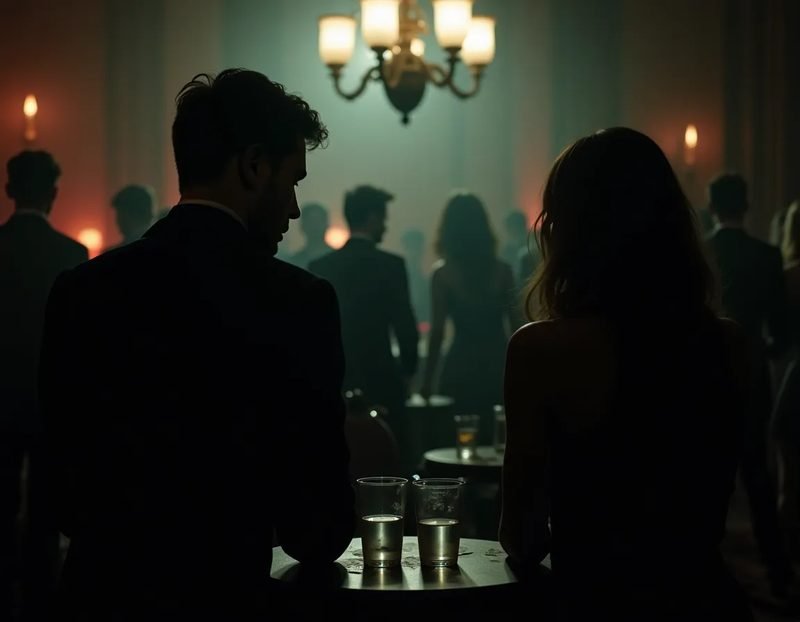
The middle category is where most performers struggle. Someone asks you directly: “Was any of that real? Do you actually believe in this?”
The temptation is to crack. To break frame entirely and explain everything. Give them the comfortable exit. Reassure them that it’s all technique and psychology and there’s nothing to worry about.
Don’t.
Not because protecting your method matters more than the person. It doesn’t. But because “it’s all tricks” is its own kind of damage. You’ve just told someone that the experience they had, the one that clearly reached something real inside them, was manufactured and hollow. That’s not generous. It’s just easy.
The language that works sits in the middle ground. Honest about your own uncertainty. Clear that you don’t make supernatural claims. Fully respectful of what they experienced. For years, my response to this question has been some version of: “I don’t know everything that happens in those rooms. I’ve seen things I can’t explain and things I can. I try not to claim more than I know.” That’s true. It’s not a script, it’s a genuine position I hold.
What you’re doing is holding the experience without inflating it further, and without collapsing it either. You’re modeling honest uncertainty. For a lot of people, that’s more steadying than a debunk would ever be. And that’s the whole approach, honestly.
A few words to avoid in the immediate post-show conversation: “trick.” “Illusion,” used casually. “Method.” If someone is still partially inside the frame, these land like a slap, and you’ll watch it happen in real time on their face.
The Genuinely Destabilized Audience Member
Almost nothing in the performance literature addresses this person directly. I’m not sure why. Maybe because acknowledging it means acknowledging that what we do carries weight that outlasts the applause.
At a private house event in Louisville a few years ago, I had a participant who didn’t come back to the group conversation at all after the show ended. She sat in a corner chair, completely still, for close to forty minutes while everyone else drifted toward the kitchen. Not visibly upset. Not crying. Just gone somewhere that wasn’t the room.
When I finally went over, she told me she’d recognised something in the working that she hadn’t thought about in eleven years.
I stayed for another hour.
Signs to watch for: pale, hands not quite still, standing slightly apart from the group, or leaving in a way that looks more like retreat than departure. They’re not engaged in the normal social reprocessing. They’ve gone internal.
Find them. Do not let them leave without a private conversation!
The approach matters. Don’t open with a debunk. Don’t perform concern either, it reads as condescending and can amplify distress. Open with presence. Move close, lower your voice, and check in with something simple: “How are you doing? That one seemed to land differently for you.”
Give them permission to say they’re fine without accepting it too quickly if they clearly aren’t. Let them talk. And then, if you judge it right, begin a very quiet dissolve of the frame. Not a sudden “it was all fake.” A gentle acknowledgment that you built the environment deliberately, the room, the props, the pacing, the language, all of it was designed to create what they experienced. That the mechanism behind the effect is human and learnable and not something to be afraid of.
Sometimes that’s enough. Sometimes they just needed to know someone noticed.
When the Frame Has to Come Down
I hold this conviction and won’t soften it: full disclosure of method is not the ethical default. The experience your audience had is real, even when the mechanism isn’t what they imagined. Taking that away from them is not automatically kind, and the performer who thinks revealing everything is always the responsible move hasn’t thought hard enough about what they’re actually doing to the person.
But there’s a line.
If someone is integrating what happened into a belief system in a way that’s going to follow them home and cause lasting distress, you have an obligation to redirect. If someone is attributing a cold read to contact with a deceased family member and they’re trembling in the hallway, you’ve moved past entertainment into something that requires a different response entirely.
The comfortable “I don’t make claims” language has to be set aside.
Be direct. Be warm. Be specific: “What you felt in there was real. My ability to know what I seemed to know was not supernatural. I want you to understand that clearly, because I think it matters for you right now.” And then stay with them. Don’t say it and walk away.
The performance has a curtain. Your ethics don’t.
What You’re Actually Signing Up For
I’ve been doing this long enough to know that the best séance work leaves marks. That’s the point. A show everyone walks out of and immediately forgets is entertainment, technically accomplished and ultimately hollow. A show that follows someone into the parking lot and sits with them on the drive home was something else.
The difference between an experience that haunts and one that genuinely harms is narrow, and it lives almost entirely in the twenty minutes after your final effect. In the hallway. In the parking lot. In the quiet conversation you didn’t plan to have but should have been ready for.
If you perform this material, perform it with full knowledge of the weight you’re taking on. Know what you’ll say when someone approaches with shaking hands. Know what you won’t say. Know when to hold the mystery and when the ethical move is to quietly dissolve it. Know the difference between someone who’s moved and someone who’s troubled.
The craft of the performance is not the hard part. It never was.
If you’re working at this level and looking for the tools that match the ambition, Arcane Relics is where we’ve put everything together. Built for performers who take the weight seriously, and the work alongside it.