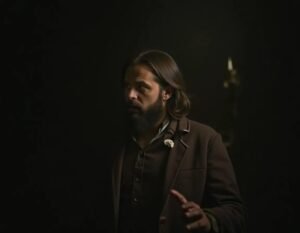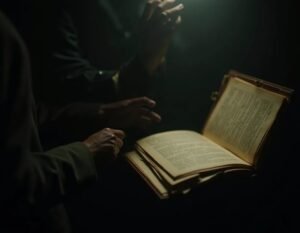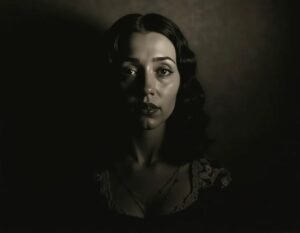

Every performer is already playing a character. That’s the part most discussions about mentalism persona skip past entirely. Before you choose a costume, before you decide how to frame your opening line, the audience has already reached into their memory and started filling in the blanks. They’ve seen this before. Not you, specifically, but the shape of you. The archetype.
This matters more than most performers admit. You can build a show from scratch, develop original material, craft a thoughtful character, and still find yourself accidentally inhabiting one of six ancient personas that an audience reads almost automatically. The six archetypes below map across mythology, literature, and history into the performer each one becomes in a bizarre magic context. Some of these pairings are flattering. One isn’t. Knowing which one you are is useful. For the structural work of shaping that raw material into a persona that holds up under pressure, The Second Skin Problem covers what comes next. This piece surveys what you’re drawing from in the first place.
The Wise Old Man: The Victorian Spiritualist and the Academic Skeptic-Turned-Believer
Gandalf does not explain his power. Dumbledore does not justify his certainty. Merlin simply knows. The Wise Old Man archetype carries authority that precedes the room, built from age, from accumulated study, from a lifetime of looking at things other people passed by. The audience’s instinct is to trust before they understand why.
In history, this archetype lands cleanest in two related figures. First, the Victorian Spiritualist of genuine intellectual standing. Men like Frederic Myers, who helped found the Society for Psychical Research in 1882, or William Crookes, a working chemist who studied the medium Florence Cook and came away with notes he couldn’t explain to his own satisfaction. These were not credulous men, they were trained observers who reported what they could not resolve. The second figure is the Academic Skeptic-Turned-Believer, of whom Arthur Conan Doyle is the most famous and most cautionary example. Doyle began as a physician trained in empirical method. The fact that he ended up photographing fairies at the bottom of gardens is its own lesson, but as an archetype the journey matters more than the destination.
As a bizarre magic performer, this archetype shows up as the collector-scholar. The one with the cabinet of documented objects, the decades of field investigation, the quiet authority of someone who looked into things rather than simply claiming things. The promise it makes to an audience is enormous: I earned this. I looked at it harder than you did, and here is what I found. The danger is proportional to the promise. Visible effort breaks the illusion entirely, because effort implies doubt, and the Wise Old Man is not permitted doubt.
The Trickster: The Carnival Mystic
Loki does not tell you what he wants until it’s too late. Puck redirects your life for his own entertainment and feels no obligation to apologize. The Fool in the Tarot stands at the cliff’s edge and looks entirely unconcerned. The Trickster operates at the boundary between order and chaos, and the key quality is this: the Trickster tells the truth. Just not the truth you expected, and not in the form you asked for.
Historically, this maps to the carnival tradition. The sideshow mystic who genuinely gave you something, something unexplained, something that stayed with you, but who operated in a space where the rules about sincerity were deliberately blurred. These performers didn’t claim fraud and didn’t claim supernatural authority. They lived in the gap between the two, and the gap was the whole act.
As a bizarre magic performer, the Carnival Mystic is the archetype that gives itself the most room. Done well, you can be funny and frightening in the same breath. The audience knows you might be having them on. That knowledge does not defuse the experience, it intensifies it, because they also know you might not be. Where this archetype breaks down is commitment. Push the winking too far and nothing lands with real weight. Remove it entirely and you’ve become something else altogether. The balance is harder to sustain than it looks, and that’s the whole difficulty, honestly.
The Oracle: The Gothic Bizarrist

Cassandra knew. That was the terrible part. She stood in Troy and told everyone exactly what was coming, and she was right about all of it, and no one believed her until it was far too late. The Pythia at Delphi sat in the volcanic vapors beneath Apollo’s temple and spoke in riddles deliberately, truths structured to be understood only after the fact. The Oracle archetype is not about power. It’s about weight. The burden of knowing things that arrive unbidden and demand to be spoken.
The Gothic tradition carries this directly. Victorian table-tippers, the mediums who delivered messages they claimed no conscious part in, the automatic writers whose hands moved while they looked away. The atmosphere these practitioners created was not spectacle. It was dread. The Oracle does not entertain. The Oracle reveals, and what gets revealed is not always welcome.
As a bizarre magic performer, this is the Gothic Bizarrist. The one whose effects arrive with weight rather than wonder. I notice it in my hands when a performance tips into that territory, a stillness that isn’t quite voluntary, a sense of the room pressing in close. That quality of silence is not applause. It is older than applause. The Oracle archetype promises the audience access to something they didn’t entirely want, and a skilled Gothic Bizarrist delivers exactly that. Where it fractures is in duration. Extended Oracle work is emotionally exhausting for a room. You cannot sustain prophetic dread across two hours without an audience shutting down entirely.
The Confidence Man: The Corporate Mentalist
Herman Melville published The Confidence-Man in 1857, and it remains the sharpest examination of this type in American literature. The Confidence Man does not threaten. He does not alarm. He makes you trust him, specifically and personally, before you’ve had time to consider why. In Huckleberry Finn, the Duke and the King work the same mechanism: they arrive in a town, they read the room fast, and they offer the room exactly what it most wants to hear.
Here’s where I’ll stop softening the pairing.
The Corporate Mentalist, the performer who bills themselves as a behavioral profiler, a human lie detector, an expert in micro-expressions and unconscious tells, is the Confidence Man cleaned up for a TED Talk audience. The framing has shifted. The supernatural language has been replaced with neuroscience language. The seance cabinet has become a whiteboard. But the mechanism is identical, you are being made to believe something that serves the performer’s purpose, and the specific thing you’re being made to believe is that what you’re watching is not a performance. That is the Confidence Man’s oldest trick. It works beautifully in corporate settings because the audience already wants to believe in expertise. They’ve paid for it. They need it to be real.
I don’t say this to condemn the archetype. I say it because a performer who inhabits it without recognizing it tends to write their own ethical ceiling without knowing it. The Confidence Man as a deliberate artistic choice is interesting. As an unconscious default, it’s something else.
The Hermit: The Folk Healer and Rootworker
In the fairy tales, the alchemist lives alone at the edge of something, a forest, a moor, a mountain pass. People seek him out. The wise-woman of the village does not come to you. You go to her, usually in desperation, usually at night, and she gives you something specific, a herb, a word, a knotted cord, and she tells you exactly what to do with it. The Hermit archetype is built on isolation as credential. The implication is that this person has stepped away from ordinary life because ordinary life was too limited for what they know.
The historical tradition runs deep. The cunning folk of England, the rootworkers and conjurers of the American South, the curanderas of Mexico. These practitioners worked with an intimacy that stage performance rarely achieves. Their work was personal. Addressed to one person’s particular trouble. The materials mattered, the timing mattered, the specific words mattered. There was no room for a general solution.
As a bizarre magic performer, the Folk Healer archetype is the most intimate of the six. It works best in close-up and parlor settings, where a performer can give each person the sense of being specifically attended to. The promise it makes is not authority or prophecy or entertainment. The promise is: I see your particular situation, and I have something for it. And that’s a powerful thing to offer, when you can actually deliver on it. Where it collapses is in scale. Amplify this archetype to a full stage and you’ve stripped out the only thing that makes it work.
The Shapeshifter: The Performer Who Never Commits
Every tradition has this figure. The one who moves between forms, between truths, between commitments. The Shapeshifter is not the Trickster. The Trickster knows exactly what they are and chooses to deceive. The Shapeshifter genuinely inhabits the ambiguity. The uncertainty is not a technique.
It is the condition.
As a performing archetype, the Shapeshifter is the one who never says “I believe in what I’m presenting” and never says “I don’t.” The question is left open, structurally open, not as a rhetorical dodge but as a philosophical position. When an audience asks whether it’s real, the Shapeshifter gives them something that functions as an answer without being one.
This site runs on that question. The “trick or real?” current underneath everything at Arcane Relics is not an accident. I don’t claim to have a clean answer. I’ve handled objects that resisted easy categorization, I’ve sat with materials whose histories made my breath catch, and I’ve also studied the mechanisms behind what looks inexplicable. Both things remain true simultaneously, and I haven’t resolved them. The Shapeshifter performer works from that same unresolved tension, not as evasion, but as the most honest position available to someone who has actually been paying attention.
The risk is dissolution. A persona built entirely on ambiguity can stop feeling like a persona at all. The Shapeshifter needs one anchoring quality, something real and consistent and genuinely present, or the audience has nothing to hold between the moments of uncertainty. Let the ambiguity be the effect. There must be a self underneath it doing the work.
These six archetypes are not boxes. Most working performers blend two or three, and the mix shifts depending on the material and the room. But knowing which ones you’re drawing from, what each one silently promises an audience, and where each one fractures under pressure, is useful knowledge. It lets you inhabit your persona with intention rather than accident.
The archetypes don’t go away when you stop paying attention to them.
They just run without you.
If you’re building a practice around any of these, the objects and artifacts in the shop are chosen for performers who want materials with actual weight. Browse the full collection at Arcane Relics.