The Six Faces of Belief: Common Performer Archetypes and What Each One Actually Signals

The Six Faces of Belief: Common Performer Archetypes and What Each One Actually Signals

Every performer is already playing a character. That’s the part most discussions about mentalism persona skip past entirely. Before you choose a costume, before you decide how to frame your opening line, the audience has already reached into their memory and started filling in the blanks. They’ve seen this before. Not you, specifically, but the shape of you. The archetype.

This matters more than most performers admit. You can build a show from scratch, develop original material, craft a thoughtful character, and still find yourself accidentally inhabiting one of six ancient personas that an audience reads almost automatically. The six archetypes below map across mythology, literature, and history into the performer each one becomes in a bizarre magic context. Some of these pairings are flattering. One isn’t. Knowing which one you are is useful. For the structural work of shaping that raw material into a persona that holds up under pressure, The Second Skin Problem covers what comes next. This piece surveys what you’re drawing from in the first place.

The Wise Old Man: The Victorian Spiritualist and the Academic Skeptic-Turned-Believer

Gandalf does not explain his power. Dumbledore does not justify his certainty. Merlin simply knows. The Wise Old Man archetype carries authority that precedes the room, built from age, from accumulated study, from a lifetime of looking at things other people passed by. The audience’s instinct is to trust before they understand why.

In history, this archetype lands cleanest in two related figures. First, the Victorian Spiritualist of genuine intellectual standing. Men like Frederic Myers, who helped found the Society for Psychical Research in 1882, or William Crookes, a working chemist who studied the medium Florence Cook and came away with notes he couldn’t explain to his own satisfaction. These were not credulous men, they were trained observers who reported what they could not resolve. The second figure is the Academic Skeptic-Turned-Believer, of whom Arthur Conan Doyle is the most famous and most cautionary example. Doyle began as a physician trained in empirical method. The fact that he ended up photographing fairies at the bottom of gardens is its own lesson, but as an archetype the journey matters more than the destination.

As a bizarre magic performer, this archetype shows up as the collector-scholar. The one with the cabinet of documented objects, the decades of field investigation, the quiet authority of someone who looked into things rather than simply claiming things. The promise it makes to an audience is enormous: I earned this. I looked at it harder than you did, and here is what I found. The danger is proportional to the promise. Visible effort breaks the illusion entirely, because effort implies doubt, and the Wise Old Man is not permitted doubt.

The Trickster: The Carnival Mystic

Loki does not tell you what he wants until it’s too late. Puck redirects your life for his own entertainment and feels no obligation to apologize. The Fool in the Tarot stands at the cliff’s edge and looks entirely unconcerned. The Trickster operates at the boundary between order and chaos, and the key quality is this: the Trickster tells the truth. Just not the truth you expected, and not in the form you asked for.

Historically, this maps to the carnival tradition. The sideshow mystic who genuinely gave you something, something unexplained, something that stayed with you, but who operated in a space where the rules about sincerity were deliberately blurred. These performers didn’t claim fraud and didn’t claim supernatural authority. They lived in the gap between the two, and the gap was the whole act.

As a bizarre magic performer, the Carnival Mystic is the archetype that gives itself the most room. Done well, you can be funny and frightening in the same breath. The audience knows you might be having them on. That knowledge does not defuse the experience, it intensifies it, because they also know you might not be. Where this archetype breaks down is commitment. Push the winking too far and nothing lands with real weight. Remove it entirely and you’ve become something else altogether. The balance is harder to sustain than it looks, and that’s the whole difficulty, honestly.

The Oracle: The Gothic Bizarrist

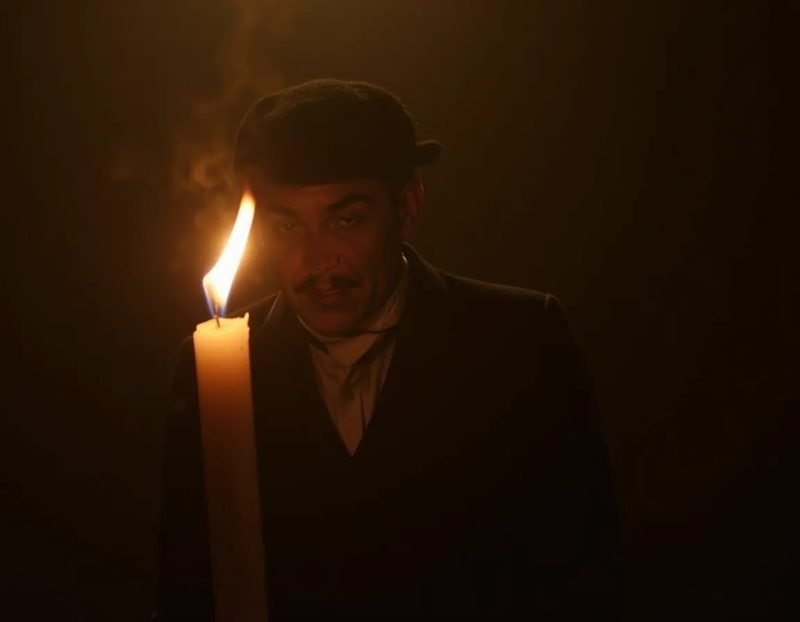
ruins by candlelight with an aged manuscript open to a page of handwritten prophecy

Cassandra knew. That was the terrible part. She stood in Troy and told everyone exactly what was coming, and she was right about all of it, and no one believed her until it was far too late. The Pythia at Delphi sat in the volcanic vapors beneath Apollo’s temple and spoke in riddles deliberately, truths structured to be understood only after the fact. The Oracle archetype is not about power. It’s about weight. The burden of knowing things that arrive unbidden and demand to be spoken.

The Gothic tradition carries this directly. Victorian table-tippers, the mediums who delivered messages they claimed no conscious part in, the automatic writers whose hands moved while they looked away. The atmosphere these practitioners created was not spectacle. It was dread. The Oracle does not entertain. The Oracle reveals, and what gets revealed is not always welcome.

As a bizarre magic performer, this is the Gothic Bizarrist. The one whose effects arrive with weight rather than wonder. I notice it in my hands when a performance tips into that territory, a stillness that isn’t quite voluntary, a sense of the room pressing in close. That quality of silence is not applause. It is older than applause. The Oracle archetype promises the audience access to something they didn’t entirely want, and a skilled Gothic Bizarrist delivers exactly that. Where it fractures is in duration. Extended Oracle work is emotionally exhausting for a room. You cannot sustain prophetic dread across two hours without an audience shutting down entirely.

The Confidence Man: The Corporate Mentalist

Herman Melville published The Confidence-Man in 1857, and it remains the sharpest examination of this type in American literature. The Confidence Man does not threaten. He does not alarm. He makes you trust him, specifically and personally, before you’ve had time to consider why. In Huckleberry Finn, the Duke and the King work the same mechanism: they arrive in a town, they read the room fast, and they offer the room exactly what it most wants to hear.

Here’s where I’ll stop softening the pairing.

The Corporate Mentalist, the performer who bills themselves as a behavioral profiler, a human lie detector, an expert in micro-expressions and unconscious tells, is the Confidence Man cleaned up for a TED Talk audience. The framing has shifted. The supernatural language has been replaced with neuroscience language. The seance cabinet has become a whiteboard. But the mechanism is identical, you are being made to believe something that serves the performer’s purpose, and the specific thing you’re being made to believe is that what you’re watching is not a performance. That is the Confidence Man’s oldest trick. It works beautifully in corporate settings because the audience already wants to believe in expertise. They’ve paid for it. They need it to be real.

I don’t say this to condemn the archetype. I say it because a performer who inhabits it without recognizing it tends to write their own ethical ceiling without knowing it. The Confidence Man as a deliberate artistic choice is interesting. As an unconscious default, it’s something else.

The Hermit: The Folk Healer and Rootworker

In the fairy tales, the alchemist lives alone at the edge of something, a forest, a moor, a mountain pass. People seek him out. The wise-woman of the village does not come to you. You go to her, usually in desperation, usually at night, and she gives you something specific, a herb, a word, a knotted cord, and she tells you exactly what to do with it. The Hermit archetype is built on isolation as credential. The implication is that this person has stepped away from ordinary life because ordinary life was too limited for what they know.

The historical tradition runs deep. The cunning folk of England, the rootworkers and conjurers of the American South, the curanderas of Mexico. These practitioners worked with an intimacy that stage performance rarely achieves. Their work was personal. Addressed to one person’s particular trouble. The materials mattered, the timing mattered, the specific words mattered. There was no room for a general solution.

As a bizarre magic performer, the Folk Healer archetype is the most intimate of the six. It works best in close-up and parlor settings, where a performer can give each person the sense of being specifically attended to. The promise it makes is not authority or prophecy or entertainment. The promise is: I see your particular situation, and I have something for it. And that’s a powerful thing to offer, when you can actually deliver on it. Where it collapses is in scale. Amplify this archetype to a full stage and you’ve stripped out the only thing that makes it work.

The Shapeshifter: The Performer Who Never Commits

Every tradition has this figure. The one who moves between forms, between truths, between commitments. The Shapeshifter is not the Trickster. The Trickster knows exactly what they are and chooses to deceive. The Shapeshifter genuinely inhabits the ambiguity. The uncertainty is not a technique.

It is the condition.

As a performing archetype, the Shapeshifter is the one who never says “I believe in what I’m presenting” and never says “I don’t.” The question is left open, structurally open, not as a rhetorical dodge but as a philosophical position. When an audience asks whether it’s real, the Shapeshifter gives them something that functions as an answer without being one.

This site runs on that question. The “trick or real?” current underneath everything at Arcane Relics is not an accident. I don’t claim to have a clean answer. I’ve handled objects that resisted easy categorization, I’ve sat with materials whose histories made my breath catch, and I’ve also studied the mechanisms behind what looks inexplicable. Both things remain true simultaneously, and I haven’t resolved them. The Shapeshifter performer works from that same unresolved tension, not as evasion, but as the most honest position available to someone who has actually been paying attention.

The risk is dissolution. A persona built entirely on ambiguity can stop feeling like a persona at all. The Shapeshifter needs one anchoring quality, something real and consistent and genuinely present, or the audience has nothing to hold between the moments of uncertainty. Let the ambiguity be the effect. There must be a self underneath it doing the work.

These six archetypes are not boxes. Most working performers blend two or three, and the mix shifts depending on the material and the room. But knowing which ones you’re drawing from, what each one silently promises an audience, and where each one fractures under pressure, is useful knowledge. It lets you inhabit your persona with intention rather than accident.

The archetypes don’t go away when you stop paying attention to them.

They just run without you.

If you’re building a practice around any of these, the objects and artifacts in the shop are chosen for performers who want materials with actual weight. Browse the full collection at Arcane Relics.

Part 3: The Promise You Didn’t Mean to Make, When the Persona Puts You in Ethical Situations You Never Planned For

Part 3: The Promise You Didn't Mean to Make — When the Persona Puts You in Ethical Situations You Never Planned For

The previous installment in this series, Part 2: The Mask That Makes Promises, made the case that your mentalism persona doesn’t just shape how you present, it shapes what audience members believe they’re entitled to receive from you. The character communicates access. It implies that certain truths might move through you that couldn’t move through anyone else in the room. People hear that before you open your mouth, and they act on it, sometimes weeks later, sometimes right after the bow. That’s where this piece begins. Not with the theory. With the room, and the moment when the contract your persona created is about to be called in.

The Moment Before You Understand What’s Happening

It doesn’t announce itself. Nobody walks up and says, “I need you to stand in for my grief therapist for the next twelve minutes.” What happens is quieter, and you miss it if you’re not paying attention to the register of the conversation.

A woman lingers while everyone else files out. She’s holding your business card with both hands. She says something like, “What you said about objects carrying memory. I have something I’ve been holding onto since my mother passed and I was wondering…”

You catch it at that ellipsis. My hands go still, and I mean that literally, I stop whatever I’m doing and give her my full attention, because I know the kind of moment I’ve just entered.

She isn’t curious about my methods. She’s looking for something that was apparently made plausible by the character I spent months building. A character that told a story about consciousness surviving matter and emotional residue persisting in physical objects.

I built a persona that made this conversation possible.

Now I’m in it.

Three Situations That Will Find You

three different performance environments, a parlor setting, a convention table, a private event, suggesting the range of

There are patterns to this. Performers working in bizarre and psychological territory encounter the same three situations with enough regularity that naming them directly is worth doing before we talk about navigation.

The Grief Seeker. Someone who has lost a person and is drawn to a performer whose character suggests knowledge beyond ordinary consciousness. They know, on some level, that you’re a mentalist doing a Thursday night show at the Riverside Hotel. But grief suspends the usual filters, it makes the unlikely feel worth trying, and your persona gave it a hook. They want to ask about the object. The photograph. Whether you sense anything.

The Anchor. Someone who attends multiple shows, joins your mailing list, sends messages that start professionally and drift personal. They’ve made you a kind of orientation point. Your character, the one who perceives what others miss and understands situations with uncommon clarity, has become someone they want near their own decision-making. This isn’t infatuation in the conventional sense. It’s something harder to name and, in some ways, harder to address.

The Confirmation Seeker. Someone facing a real decision, a relationship, a job offer, a family crisis, who wants your character to weigh in. Not theatrically. They want the persona to tell them what to do because they believe, based on what you showed them, that you perceive something they can’t.

None of these people are hostile. None of them are irrational, given the information you gave them. That’s precisely what makes all three difficult.

The Grief Seeker Requires Honesty First

I don’t believe I have access to information about the dead. I want to be direct about that, because everything that follows in this section depends on the clarity of that position. If you do believe it, your calculus here is different from mine, and some of this won’t apply to you.

For the rest of us: when a grieving person asks whether you sense anything from their mother’s ring, you’re at an ethical fork. One path is to perform something reassuring wrapped in the language of your character. The other is to find a way out that doesn’t humiliate them, doesn’t dismiss what they’ve shared, and doesn’t make a claim you can’t support.

Cold reading them is not an option. The asymmetry of the situation, they’re vulnerable, they came to you in good faith, they’ve told you something true, makes that a violation no performance context excuses. I want to be blunt about that.

What works, and I’ve used versions of this in more than one room, is an honest redirect that stays inside the character’s logic without making claims. Something like: “What I do in a show is different from what you’re describing. I wouldn’t want to take something that means this much to you and treat it like a demonstration.” That framing respects the person. It doesn’t break the persona, it deepens it, because a character with real integrity draws exactly that line. Then you listen. Let them talk about the object, about the person. That’s almost always what they needed.

The Anchor Problem Moves Slowly

The Anchor situation is slower and easier to miss. You notice it when you’re checking your inbox before a show and realize you’ve traded nineteen messages with the same person over four months. Nothing alarming in any one message. But the pattern tells you something is happening that isn’t about your show schedule.

The instinct is usually to keep being warm and gradually reduce responsiveness. That instinct is understandable, it’s also usually wrong. A slow withdrawal reads as rejection by degrees, it tends to escalate what you’re trying to de-escalate.

The cleaner move is a single, direct message that names the limit without naming the person’s behavior as a problem. Something that communicates: my public work is available to you, my personal attention is necessarily limited, I appreciate your engagement with what I do. You say it once, hold that line, and don’t elaborate further.

Your persona created this. The character’s apparent perceptiveness, its suggestion of knowledge others lack, made you look like exactly what someone in this state would seek out. That’s yours to manage, not theirs to understand.

A Framework for the Live Moment

When the situation arrives in real time, you don’t have long. Here’s the framework I use, reduced to its working parts.

  1. Name the register first. Is this person operating in performance mode or genuine need? The tell is usually the shift from curiosity to confession. Someone asking about your methods is curious. Someone telling you about their sister is somewhere else entirely.
  2. Decide whether the character can help honestly. Sometimes the persona has an answer available that’s true. More often, the honest answer requires stepping partly outside it. You can do that without a full character break if you do it deliberately.
  3. Don’t perform comfort you don’t mean. A vague, reassuring non-answer is worse than a clear, warm redirect. People in real distress can read the gap between a genuine response and a performed one. They came to you because they believed your character perceived things. Don’t prove them wrong in the moment that matters most.
  4. End with something real. A referral. A limit stated plainly. A next step that’s genuinely available. Leaving someone suspended between “the performer listened” and “I don’t know what just happened” is a harm, even a mild one.

None of this is fast. That’s the point. Handling these moments well takes longer than the show, and factoring that into how you design the persona from the start is what this whole series has been arguing for.

The Character You’re Responsible For

The persona isn’t the problem. The problem is building a character without deciding in advance what it stands for when it’s pressed.

A mentalism character that makes claims it won’t honor in the hard moments is a liability to everyone who encounters it. A character with a coherent ethical core, one that knows its own limits and says so plainly when it has to, is something rarer. It’s also more convincing. Real authority knows its own edges.

So does the best mentalism.

The woman who pressed me in that lobby wasn’t wrong to believe my character might have something to offer her. She was working from the information I gave her. What I owed her, and what you owe everyone who responds to your persona in earnest, is a character whose promises you’ve thought through before you walk into the room.

That’s the whole game, honestly. Not building the persona. Building the person behind it who can handle what the persona invites.

If you’re looking for the props and presentation tools that help you build performance work serious enough to carry that weight, you’ll find what we carry at the Arcane Relics shop.

Continue reading: Part 4: Where the Mask Meets the Method, Connecting Persona to the Ethics of Belief

Forcing Belief: The Neuroscience Behind Why Mentalism Hits Harder Than Conjuring

Forcing Belief: The Neuroscience Behind Why Mentalism Hits Harder Than Conjuring

Forcing Belief: The Neuroscience Behind Why Mentalism Hits Harder Than Conjuring

The Difference Nobody Talks About

Show someone a card trick and they applaud. Read their mind and they go quiet. That silence is not politeness. It is a different cognitive process entirely, and understanding it separates performers who consistently destroy audiences from those who consistently impress them.

Visual magic and mentalism do not hit the brain the same way. The research is specific enough now that it has direct implications for how you construct a routine, what you say before the effect begins, and how long you wait after it ends. This post is not about the history of either discipline. It is about the machinery underneath both, and why one machine has more torque.

Cognitive Dissonance Is Your Best Prop

Cognitive Dissonance Is Your Best Prop

Leon Festinger’s dissonance research from the 1950s still holds. When a person holds two contradictory beliefs simultaneously, the brain works to resolve the tension. It does not sit comfortably with contradiction. It needs a winner.

In a card trick, the contradiction is simple: “I saw the card go into the middle, but now it is on top.” The brain resolves this quickly. It files it under “trick.” Clever, yes, but categorized. The mystery has a container.

Mentalism presents a different problem. The spectator knows, rationally, that you cannot read their mind. That is belief one. But you just described their mother’s name, the number they were thinking of, and the specific memory they chose. That is belief two. The brain cannot resolve this cleanly. There is no “trick” category that feels satisfying. The contradiction lingers.

Festinger found that unresolved dissonance intensifies when the person is publicly committed to one of the beliefs. If your spectator said out loud, in front of a group, “I’m thinking of a number,” and you name it, their discomfort is not just cognitive. It is social. That combination locks the experience in far more deeply than any visual surprise can.

Banachek understood this. Read Psychosomatic again with Festinger in mind. The script work is not just atmosphere. It is systematic commitment-extraction before the reveal.

The Compliance Window

Social compliance research, particularly Milgram’s obedience studies and Cialdini’s work on influence, outlines a consistent pattern: people follow authority signals, especially in ambiguous situations. A mentalism performance is an ambiguous situation by design.

The spectator does not know the rules. They do not know what is possible. In that uncertainty, they look for social cues. You are the person who has done this before. You are confident. You are not surprised by what is happening. Those signals read, neurologically, as evidence of legitimacy.

Visual magic undercuts this. The moment you produce a deck of cards or a silk, the spectator places you in a category: conjurer, entertainer, trickster. Useful categories, all of them, but they trigger skepticism as a reflex. The compliance window narrows before you have said a word.

Mentalism, framed correctly, delays categorization. The spectator cannot immediately file what you do. They stay in that open state longer. The compliance window stays wider longer. This is not theory. It is directly observable in how audiences behave during a cold reading versus a color-change sequence.

Corinda addressed this obliquely in Thirteen Steps. His notes on “creating the right atmosphere” are not decoration. They are instructions for managing the compliance window. The candles, the quiet room, the unhurried pace: all of it keeps the spectator in evaluative suspension, where social compliance sits at its highest.

The Pattern-Seeking Problem

The Pattern-Seeking Problem

The human brain is a prediction machine. That is not metaphor. Predictive processing is one of the more durable models in current cognitive neuroscience. The brain constantly generates predictions about incoming sensory data and updates when those predictions fail.

Visual magic produces prediction failures, but bounded ones. The coin disappears. The prediction fails. The brain flags the failure, notes it as entertainment, and moves on. The failure is in the external world, not in the self.

Mentalism attacks the prediction machine from inside. When you name what someone is thinking, the prediction failure is not “something outside me behaved unexpectedly.” It is “something inside me was accessed without my permission.” That is a categorically different disruption. The brain does not have a clean protocol for handling it.

Apophenia, the tendency to perceive meaningful connections in unrelated events, activates strongly in this state. After a successful mentalism piece, spectators regularly report noticing “signs” in the days that follow. They connect unrelated events to the experience. The effect propagates outward. A well-executed card trick does not do this.

Annemann built his entire performance persona around this gap. The dark suit, the direct gaze, the economy of movement: none of it was designed to entertain. It was designed to occupy the space left by a disrupted prediction machine. He left nothing cheerful to grab onto. The discomfort had nowhere to go except inward.

Verbal Structures That Activate Belief

Specific language patterns activate pattern-seeking more reliably than others. These are not “patter” in the old sense. They are structural tools, and treating them as such changes how you write material.

  • Present-tense framing. “You are thinking of something right now” is more disorienting than “Think of something.” The present tense implies access already in progress. The spectator is behind before they start.
  • Partial revelation with a pause. State part of the information, stop, let the spectator fill the gap mentally before you complete it. The brain’s completion reflex creates a sense of co-authorship. They feel like you pulled it from inside them, not from a system.
  • Specificity over generality. “A woman” lands differently than “someone close to you.” The Barnum effect works, but it works best as a warm-up, not a closer. Specific details that land produce the dissonance spike. Generalities produce mild assent. Mild assent is not what you are after.
  • Presuppositions over questions. “Is it the one on the left, or the other one?” assumes there is a “one.” It presupposes rather than asks. Presuppositions bypass the critical filter more cleanly than direct statements because the brain processes the assumed content before it evaluates the question.
  • Silence after the reveal. This is the most ignored tool in the set. The moment of impact is not the reveal. It is the three to five seconds after. Do not fill that silence. Let the brain work. What it does in those seconds is the actual effect.

These are drawn from the same compliance and cognitive literature that underlies NLP, therapeutic suggestion, and structured interviewing. They work in those fields because they are accurate descriptions of how language interfaces with belief formation. They work here for the same reason.

Framing and Pacing: Where the Real Work Is

Pacing in mentalism is not about timing in the comedic sense. It is about managing the spectator’s cognitive load.

When you move too quickly through a piece, the spectator’s brain is still processing the previous beat when you deliver the next. The compounding effect is lost. Each moment lands independently, which weakens the overall architecture. The effect becomes a series of small surprises rather than a single escalating disruption.

Slow down at the moments of commitment, not the moments of revelation. Ask your spectator to concentrate, to hold the thought, to confirm it silently. Give them time to reinforce their internal belief before you break it. The revelation hits harder because the belief it challenges is more firmly in place. You are not speeding toward the payoff. You are building the wall you are about to walk through.

On framing: the pre-frame determines how much cognitive resistance you face. “I want to try something” generates more resistance than “Something I’ve noticed is.” The first positions you as a performer attempting a trick. The second positions you as an observer reporting a discovery. One triggers the skepticism reflex. The other invites the spectator into a shared observation, which is an entirely different relationship to what follows.

Max Maven’s scripting consistently does this. The effect often begins before the spectator knows it has begun. By the time they realize they are a participant, they have already committed to the frame. Reversal at that point requires more social courage than most people have in front of a group.

What This Changes About How You Build Material

None of this replaces a strong method. Cognitive science does not make a weak effect strong. What it does is show you where the real gain is once the method is solid.

The suspension you are after is not achieved by the effect alone. It is achieved by the total architecture: the framing before, the language during, the silence after, and the pacing throughout. Get any one of those wrong and the effect underperforms regardless of how clean the method is.

Mentalism is not harder to perform than visual magic. It is harder to perform well, because the psychological scaffolding is visible in a way that a sleight is not. The psychology is the method. You cannot hide a weak pre-frame behind technical skill. There is nothing to hide it behind.

Learn the cognitive structure. Build your routines around it deliberately, not as an afterthought to the method. The audiences who go quiet in that particular way will confirm when the architecture is working.

For manuscripts, props, and tools built specifically for this kind of work, the Arcane Relics shop stocks material selected for performers who take the psychology as seriously as the method.

Cold Reading Is Dead, Long Live Warm Reading: A Mentalist’s Field Guide to Genuine Connection

Cold Reading Is Dead — Long Live Warm Reading: A Mentalist's Field Guide to Genuine Connection

The Problem Nobody Wants to Admit

Cold reading has a reputation problem. Not among magicians. Among everyone else.

The mechanics are on YouTube. James Randi spent decades documenting them. Pop psychology articles have turned Barnum statements into cocktail party trivia. The well-read layperson sitting down for a reading in 2026 has a reasonable chance of recognizing what a rainbow roping statement looks like. They might even catch you mid-delivery.

That’s not an accusation against cold reading as a body of knowledge. Corinda’s Thirteen Steps is still essential reading. Banachek’s work on psychological subtleties remains some of the sharpest thinking in the field. The problem isn’t the techniques. It’s using them as a primary performance framework when the audience has shifted under your feet.

Warm reading is different. It isn’t a trick. It isn’t a system you work from the outside in. It’s a set of skills, borrowed largely from behavioral psychology and clinical interview practice, that let you build a genuine picture of a person in real time. The result isn’t that your subject thinks you’re psychic. The result is that your subject feels genuinely understood. That’s a harder thing to achieve, and a much harder thing to dismiss.

What Cold Reading Actually Does (and Doesn’t Do)

What Cold Reading Actually Does (and Doesn't Do)

To be precise: cold reading works on probability. You make statements that apply broadly, delivered with enough specificity and conviction that subjects interpret them as personal. You invite them to do the interpretive work. When they confirm something, you build. When they don’t, you redirect without losing ground.

This is clever. Done well, it can be striking. The problem is that its success depends on the subject not knowing how it works, and on the performer maintaining control of the framing at all times. The moment a subject becomes skeptical, or starts testing rather than accepting, the whole structure gets fragile.

Warm reading doesn’t share that vulnerability. It doesn’t ask the subject to accept anything. It listens to what they actually say, notices what they actually do, and reflects it back with precision. The subject can be as skeptical as they like. You’re not making guesses. You’re observing.

That distinction is worth sitting with. Cold reading is a performance of insight. Warm reading is an exercise in it.

The Disclosure Loop

The core mechanic of warm reading is what behavioral researchers call the disclosure loop. The principle is straightforward: people reveal information about themselves continuously, most of it outside their conscious awareness. Your job is to create the conditions for disclosure, recognize what’s being offered, and use it precisely.

Creating conditions for disclosure means asking open questions. Not leading questions. Not questions that contain their own answers. Open questions that give the subject room to go wherever they’re inclined to go. “Tell me about something you’ve been carrying lately” is better than “I sense you’ve been under a lot of stress.” The first invites. The second performs.

What comes back is raw material. A subject might mention a family member. They might use a particular word twice. They might pause before answering, or answer quickly and then walk it back. All of that is data.

Recognition is where the skill lives. Most people hear words. A good warm reader hears the architecture of the response: where the subject went, where they didn’t, what they said with their body while saying something else with their mouth.

Reflection is the final step, and the most delicate. You take what you’ve gathered and give it back with precision and care. Not as a guess. As an observation. “You mentioned your father, but you shifted when you said his name.” That’s not a cold reading statement. That’s attention. Subjects feel the difference.

Behavioral Anchors and What to Do with Them

Behavioral Anchors and What to Do with Them

An anchor, in this context, is any specific detail a subject offers that you can tie your performance to. It could be a name, a relationship, a repeated choice of words, a physical gesture. Anchors are what separate a reading that feels personal from one that feels generic.

The mechanics of anchoring are not complicated. When a subject gives you something specific, you hold it. You don’t use it immediately. You let the conversation develop, then return to it at a moment of your choosing. “Earlier you said your mother was complicated. I want to come back to that.” The subject registers that you listened. That you remembered. That this reading is about them specifically, not about people in general.

This is also where behavioral observation earns its keep. Micro-expressions, posture shifts, changes in breathing rate, the way someone’s eyes move when accessing memory versus constructing an answer: all of it feeds the anchor bank. A good warm reader gathers more than they use. The selection is as important as the collection.

What you don’t do is over-explain. You use the anchor to illuminate something real, then let it sit. The subject will do the rest. The human mind is built to find meaning. Give it something genuine to work with and it will work.

The Difference Between Being Clever and Being Present

Here’s what most technical treatments of cold reading miss. The most technically skilled cold reader in the room is not necessarily the most effective one. Effectiveness in a reading context, especially one-on-one or in intimate group settings, depends heavily on genuine presence.

Presence is not a soft concept. It’s the quality of your attention. When a subject looks at you and talks, are you thinking about your next move, or are you actually listening? The subject can tell. Not consciously, usually, but they can feel the difference between being used and being heard.

This is where warm reading has a structural advantage. Because the method depends on actual listening, it trains presence as a byproduct. You can’t anchor what you didn’t hear. You can’t reflect what you weren’t attending to. The discipline of warm reading makes you a better listener, and better listeners are more effective performers. Full stop.

Annemann wrote about the performer’s need to genuinely care about the subject, not as a moral instruction but as a practical one. A performer who cares gets more information, builds faster rapport, and delivers readings that stick. That observation holds. Warm reading builds that quality into the method itself.

Building the Practice

This isn’t a skill you develop by reading about it. It’s a skill you develop by practicing it, systematically, in non-performance contexts first.

Start with observation. Spend time in places where you can watch people interact without participating. Coffee shops, waiting rooms, airports. Watch posture changes. Watch how people hold or break eye contact. Watch what happens to someone’s face when they’re asked a question they weren’t expecting. Build your vocabulary for what you’re seeing.

Move to conversation. Practice open questioning with people you know well enough to check your readings against afterward. Did you notice something real, or did you interpret noise as signal? Calibration takes repetition.

Add the performance layer last. Once you can observe accurately and question well, structure comes easier. You’ll know how to pace a reading, where to press and where to give room, when to surface an anchor and when to hold it.

Keep a log. Not of routines. Of observations. What did you notice tonight that you hadn’t noticed before? What did you use, and what did you leave on the table? The practitioners who develop fastest are the ones who treat every reading as data.

The Reading List and What to Do Next

If you’re serious about this, the reading list extends well past magic. Richard Bandler and John Grinder’s work on representational systems is dated in places but still useful for pattern recognition. Paul Ekman’s research on micro-expressions is the standard reference for behavioral baseline work. In the magic literature, Derren Brown’s Tricks of the Mind is worth reading not for the tricks but for its treatment of suggestion and misdirected attention. Banachek’s Psychological Subtleties series remains the most rigorous published thinking specifically for our context.

Props and tools matter more than some performers admit. A well-constructed reading deck, a thoughtfully designed stimulus object, or a structured interview framework can open a subject significantly faster than questions alone. The structure gives both parties something to focus on while the actual exchange happens underneath. The tool doesn’t do the work. It creates the conditions for the work.

What doesn’t work is treating warm reading as a softer, more ethical version of cold reading. It isn’t a substitute. It’s a different discipline with different demands, and it asks more of the performer. The return, for those willing to put in the time, is a reading practice that holds up under skepticism, generates genuine responses, and leaves subjects with something they didn’t walk in with.

That’s a harder standard than fooling someone. It’s also a more interesting one.

Arcane Relics stocks tools built for working performers: reading decks, psychological props, and materials for serious mentalism practice. No beginner kits. No shortcuts. Browse the shop at arcanerelics.com.

“`