

Part 3 of 4 in The Mentalism Persona. Start from Part 1
The previous installment in this series, Part 2: The Mask That Makes Promises, made the case that your mentalism persona doesn’t just shape how you present, it shapes what audience members believe they’re entitled to receive from you. The character communicates access. It implies that certain truths might move through you that couldn’t move through anyone else in the room. People hear that before you open your mouth, and they act on it, sometimes weeks later, sometimes right after the bow. That’s where this piece begins. Not with the theory. With the room, and the moment when the contract your persona created is about to be called in.
The Moment Before You Understand What’s Happening
It doesn’t announce itself. Nobody walks up and says, “I need you to stand in for my grief therapist for the next twelve minutes.” What happens is quieter, and you miss it if you’re not paying attention to the register of the conversation.
A woman lingers while everyone else files out. She’s holding your business card with both hands. She says something like, “What you said about objects carrying memory. I have something I’ve been holding onto since my mother passed and I was wondering…”
You catch it at that ellipsis. My hands go still, and I mean that literally, I stop whatever I’m doing and give her my full attention, because I know the kind of moment I’ve just entered.
She isn’t curious about my methods. She’s looking for something that was apparently made plausible by the character I spent months building. A character that told a story about consciousness surviving matter and emotional residue persisting in physical objects.
I built a persona that made this conversation possible.
Now I’m in it.
Three Situations That Will Find You
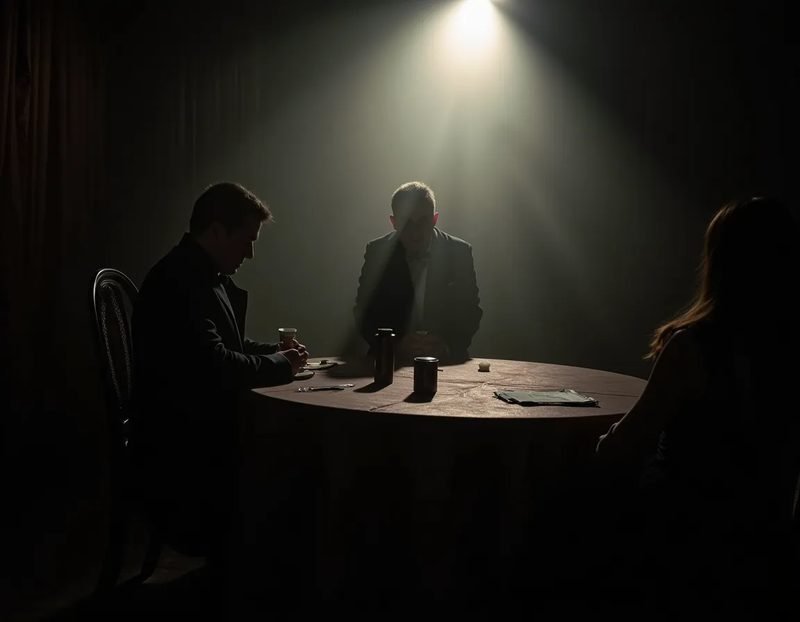
There are patterns to this. Performers working in bizarre and psychological territory encounter the same three situations with enough regularity that naming them directly is worth doing before we talk about navigation.
The Grief Seeker. Someone who has lost a person and is drawn to a performer whose character suggests knowledge beyond ordinary consciousness. They know, on some level, that you’re a mentalist doing a Thursday night show at the Riverside Hotel. But grief suspends the usual filters, it makes the unlikely feel worth trying, and your persona gave it a hook. They want to ask about the object. The photograph. Whether you sense anything.
The Anchor. Someone who attends multiple shows, joins your mailing list, sends messages that start professionally and drift personal. They’ve made you a kind of orientation point. Your character, the one who perceives what others miss and understands situations with uncommon clarity, has become someone they want near their own decision-making. This isn’t infatuation in the conventional sense. It’s something harder to name and, in some ways, harder to address.
The Confirmation Seeker. Someone facing a real decision, a relationship, a job offer, a family crisis, who wants your character to weigh in. Not theatrically. They want the persona to tell them what to do because they believe, based on what you showed them, that you perceive something they can’t.
None of these people are hostile. None of them are irrational, given the information you gave them. That’s precisely what makes all three difficult.
The Grief Seeker Requires Honesty First
I don’t believe I have access to information about the dead. I want to be direct about that, because everything that follows in this section depends on the clarity of that position. If you do believe it, your calculus here is different from mine, and some of this won’t apply to you.
For the rest of us: when a grieving person asks whether you sense anything from their mother’s ring, you’re at an ethical fork. One path is to perform something reassuring wrapped in the language of your character. The other is to find a way out that doesn’t humiliate them, doesn’t dismiss what they’ve shared, and doesn’t make a claim you can’t support.
Cold reading them is not an option. The asymmetry of the situation, they’re vulnerable, they came to you in good faith, they’ve told you something true, makes that a violation no performance context excuses. I want to be blunt about that.
What works, and I’ve used versions of this in more than one room, is an honest redirect that stays inside the character’s logic without making claims. Something like: “What I do in a show is different from what you’re describing. I wouldn’t want to take something that means this much to you and treat it like a demonstration.” That framing respects the person. It doesn’t break the persona, it deepens it, because a character with real integrity draws exactly that line. Then you listen. Let them talk about the object, about the person. That’s almost always what they needed.
The Anchor Problem Moves Slowly
The Anchor situation is slower and easier to miss. You notice it when you’re checking your inbox before a show and realize you’ve traded nineteen messages with the same person over four months. Nothing alarming in any one message. But the pattern tells you something is happening that isn’t about your show schedule.
The instinct is usually to keep being warm and gradually reduce responsiveness. That instinct is understandable, it’s also usually wrong. A slow withdrawal reads as rejection by degrees, it tends to escalate what you’re trying to de-escalate.
The cleaner move is a single, direct message that names the limit without naming the person’s behavior as a problem. Something that communicates: my public work is available to you, my personal attention is necessarily limited, I appreciate your engagement with what I do. You say it once, hold that line, and don’t elaborate further.
Your persona created this. The character’s apparent perceptiveness, its suggestion of knowledge others lack, made you look like exactly what someone in this state would seek out. That’s yours to manage, not theirs to understand.
A Framework for the Live Moment
When the situation arrives in real time, you don’t have long. Here’s the framework I use, reduced to its working parts.
- Name the register first. Is this person operating in performance mode or genuine need? The tell is usually the shift from curiosity to confession. Someone asking about your methods is curious. Someone telling you about their sister is somewhere else entirely.
- Decide whether the character can help honestly. Sometimes the persona has an answer available that’s true. More often, the honest answer requires stepping partly outside it. You can do that without a full character break if you do it deliberately.
- Don’t perform comfort you don’t mean. A vague, reassuring non-answer is worse than a clear, warm redirect. People in real distress can read the gap between a genuine response and a performed one. They came to you because they believed your character perceived things. Don’t prove them wrong in the moment that matters most.
- End with something real. A referral. A limit stated plainly. A next step that’s genuinely available. Leaving someone suspended between “the performer listened” and “I don’t know what just happened” is a harm, even a mild one.
None of this is fast. That’s the point. Handling these moments well takes longer than the show, and factoring that into how you design the persona from the start is what this whole series has been arguing for.
The Character You’re Responsible For
The persona isn’t the problem. The problem is building a character without deciding in advance what it stands for when it’s pressed.
A mentalism character that makes claims it won’t honor in the hard moments is a liability to everyone who encounters it. A character with a coherent ethical core, one that knows its own limits and says so plainly when it has to, is something rarer. It’s also more convincing. Real authority knows its own edges.
So does the best mentalism.
The woman who pressed me in that lobby wasn’t wrong to believe my character might have something to offer her. She was working from the information I gave her. What I owed her, and what you owe everyone who responds to your persona in earnest, is a character whose promises you’ve thought through before you walk into the room.
That’s the whole game, honestly. Not building the persona. Building the person behind it who can handle what the persona invites.
If you’re looking for the props and presentation tools that help you build performance work serious enough to carry that weight, you’ll find what we carry at the Arcane Relics shop.
Continue reading: Part 4: Where the Mask Meets the Method, Connecting Persona to the Ethics of Belief