
The Uncanny Valley of Belief: Why Almost Explainable Effects Unsettle Audiences More Than Impossible Ones

The Uncanny Valley of Belief: Why Almost Explainable Effects Unsettle Audiences More Than Impossible Ones

A fully impossible effect gets filed away in about four seconds. The audience says “how did he do that,” laughs, moves on to their drink order. But an effect that feels almost explainable does something different. It lodges. It sits in the back of the mind for days, gets replayed in the car, gets described badly to a spouse who wasn’t there. If you want your work to outlive the room you performed it in, you need to understand why that gap exists and start designing for it on purpose.

The Trick the Brain Can Solve Is Not a Trick At All

Here is the uncomfortable truth most lecture notes skip over. A spectator’s brain does not experience your effect as magic. It experiences your effect as a puzzle, and it immediately starts running solutions against it, whether you want it to or not. Force, switch, gimmick, confederate. The brain has a short list of categories and it is trying to sort your moment into one of them before you’ve even finished your sentence.

When an effect is fully impossible, meaning there’s no visible mechanism a layperson could construct even in fantasy, something strange happens. The brain gives up the search almost instantly. It can’t build a plausible false solution, so it stops trying and just labels the whole event “trick,” files it, and moves on. No mechanism to chase means no discomfort to sit with.

An almost-explainable effect refuses to close that file.

Why the Almost-Solution Is Worse Than No Solution
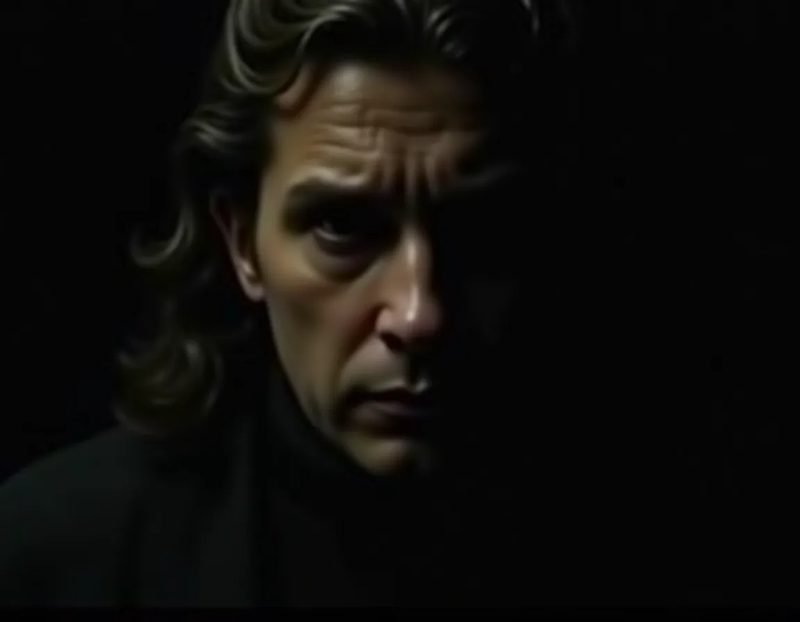
a person's face mid-thought, brow furrowed, natural lighting, no props visible

Psychologists call the general discomfort here cognitive dissonance, the tension of holding two contradictory beliefs at once. “This is impossible” and “I almost saw how it worked” cannot both be true, and the mind hates sitting in that gap. It wants resolution. Give it none, and it keeps working the problem on its own time, unpaid, for free, long after you’ve packed your case.

I’ve watched this happen in real time during a private event in downtown Louisville. A guest got close, really close, on a piece involving a sealed prediction. Close enough that she started to build her own theory out loud to the table. Then the reveal contradicted her theory just enough to collapse it.

She didn’t laugh it off. She went quiet.

That quiet is the entire game. It is the sound of a brain that thought it had the answer, watched the answer get taken away, and now has nowhere to put the experience. Fully impossible effects rarely produce that silence. They produce delight, which is lovely and worth having, but delight fades by the parking lot. The uncanny discomfort of an almost-solved puzzle does not fade nearly as fast.

The Uncanny Valley Isn’t Just for Robots

You’ve heard the term uncanny valley applied to robotics and animation, that dip in comfort when a face is almost human but not quite. The nose is right, the eyes are wrong, and the wrongness reads as more disturbing than something that looks nothing like a face at all. A crude stick figure doesn’t bother anyone. A face that’s ninety-six percent correct bothers everyone.

Effect design lives in the exact same valley, and most performers never build their material with that curve in mind.

An effect that’s zero percent explainable (a flatly impossible production, a levitation with no visible support at all) sits comfortably outside the valley. So does an effect that’s eighty percent explainable, the kind where the method is nearly visible and the audience solves it before your climax even lands. That one just reads as a bad trick.

The valley lives in the middle. Ninety-five percent explainable. Close enough that a spectator’s own logic gets them most of the way there, then watches that logic betray them at the last possible second.

Building the Almost-Solution on Purpose

Most performers build toward astonishment. Fewer build toward this specific, uncomfortable middle ground, and that’s a mistake, because the middle ground is where reputations get made.

A few principles I’ve come back to again and again:

  • Give the audience a real theory, not a strawman one. If the only explanation they can construct is obviously wrong, there’s no dissonance, just confusion. The theory has to be genuinely plausible, sometimes the actual method’s cousin, close enough that smart people in the room nod along with it.
  • Let the theory survive for a while before you kill it. Don’t collapse it in the same beat you introduced it. Give it room to breathe, let a spectator invest in it, maybe even say it out loud to a friend. The investment is what makes the collapse land.
  • Kill it with specificity, not with a bigger miracle. A vague “and it wasn’t that either” doesn’t work. You need one precise detail their theory can’t account for. Precision is what makes a false solution feel truly false, rather than just insufficiently miraculous.
  • Never explain what actually happened. The moment you resolve the dissonance for them, even implicitly, the file closes and the effect stops working on them after the fact. Leave the door open. Let it stay unsolved.

Where Mentalism Has an Unfair Advantage

Card magic and coin magic mostly live in the world of physical method, sleights, gimmicks, switches. A spectator’s theory about a card trick is a theory about hands. Mentalism gets to work a different territory entirely, because a spectator’s theory about a mentalism effect is often a theory about themselves. Did I give something away? Was I more predictable than I thought? Is my “free choice” not as free as it feels?

That’s a far more unsettling place to leave someone than “his hands did something clever.”

I don’t necessarily believe mentalism effects tap into anything beyond psychology, misdirection, and careful structure. I’ve built my entire career on the conviction that they don’t need to. But I have a strong conviction that the discomfort of almost catching yourself in a cognitive trap outlasts almost any physical secret a spectator might almost catch you performing.

That’s the real product you’re selling. Not the moment. The unresolved aftertaste of it.

Designing the Aftertaste, Not Just the Climax

Most effect construction, mine included for years, gets obsessed with the climax. The reveal, the gasp, the applause break. Worth caring about, sure. But if you only design for the ten seconds of the reveal, you’re leaving the most valuable part of the effect on the table, unbuilt.

The aftertaste is what happens in the car. In bed that night. Three days later, when the guest tries to explain it to a coworker and realizes she can’t, not because she forgot, but because her own explanation keeps arguing with itself.

That argument is the tell of a well-built almost-explainable effect. If a spectator can retell your trick cleanly, start to finish, with a theory that holds up under her own retelling, you didn’t build the valley deep enough. If she gets three sentences in and stops, frustrated, unable to make her own logic behave, you built it exactly right.

I’d rather build one effect a season that does that than ten effects that just get a laugh and a “no way” and nothing else.

Where This Leaves the Working Performer

None of this argues for pulling back your miracles. It argues for aiming them differently. A flatly impossible effect is a gift you hand someone, they open it, they enjoy it, they set it down. An almost-explainable effect is a splinter. Small, specific, and it stays under the skin exactly because it almost, almost came out clean.

Most performers chase the gift. The splinter is harder to build and it’s worth more.

If you’re the kind of performer who wants that splinter, the pieces in our shop are built with this exact psychology in mind, tools designed to leave a theory just close enough to plausible that it never quite resolves.

Browse the current collection at Arcane Relics.

Forcing Belief: The Neuroscience Behind Why Mentalism Hits Harder Than Conjuring

Forcing Belief: The Neuroscience Behind Why Mentalism Hits Harder Than Conjuring

Forcing Belief: The Neuroscience Behind Why Mentalism Hits Harder Than Conjuring

The Difference Nobody Talks About

Show someone a card trick and they applaud. Read their mind and they go quiet. That silence is not politeness. It is a different cognitive process entirely, and understanding it separates performers who consistently destroy audiences from those who consistently impress them.

Visual magic and mentalism do not hit the brain the same way. The research is specific enough now that it has direct implications for how you construct a routine, what you say before the effect begins, and how long you wait after it ends. This post is not about the history of either discipline. It is about the machinery underneath both, and why one machine has more torque.

Cognitive Dissonance Is Your Best Prop

Cognitive Dissonance Is Your Best Prop

Leon Festinger’s dissonance research from the 1950s still holds. When a person holds two contradictory beliefs simultaneously, the brain works to resolve the tension. It does not sit comfortably with contradiction. It needs a winner.

In a card trick, the contradiction is simple: “I saw the card go into the middle, but now it is on top.” The brain resolves this quickly. It files it under “trick.” Clever, yes, but categorized. The mystery has a container.

Mentalism presents a different problem. The spectator knows, rationally, that you cannot read their mind. That is belief one. But you just described their mother’s name, the number they were thinking of, and the specific memory they chose. That is belief two. The brain cannot resolve this cleanly. There is no “trick” category that feels satisfying. The contradiction lingers.

Festinger found that unresolved dissonance intensifies when the person is publicly committed to one of the beliefs. If your spectator said out loud, in front of a group, “I’m thinking of a number,” and you name it, their discomfort is not just cognitive. It is social. That combination locks the experience in far more deeply than any visual surprise can.

Banachek understood this. Read Psychosomatic again with Festinger in mind. The script work is not just atmosphere. It is systematic commitment-extraction before the reveal.

The Compliance Window

Social compliance research, particularly Milgram’s obedience studies and Cialdini’s work on influence, outlines a consistent pattern: people follow authority signals, especially in ambiguous situations. A mentalism performance is an ambiguous situation by design.

The spectator does not know the rules. They do not know what is possible. In that uncertainty, they look for social cues. You are the person who has done this before. You are confident. You are not surprised by what is happening. Those signals read, neurologically, as evidence of legitimacy.

Visual magic undercuts this. The moment you produce a deck of cards or a silk, the spectator places you in a category: conjurer, entertainer, trickster. Useful categories, all of them, but they trigger skepticism as a reflex. The compliance window narrows before you have said a word.

Mentalism, framed correctly, delays categorization. The spectator cannot immediately file what you do. They stay in that open state longer. The compliance window stays wider longer. This is not theory. It is directly observable in how audiences behave during a cold reading versus a color-change sequence.

Corinda addressed this obliquely in Thirteen Steps. His notes on “creating the right atmosphere” are not decoration. They are instructions for managing the compliance window. The candles, the quiet room, the unhurried pace: all of it keeps the spectator in evaluative suspension, where social compliance sits at its highest.

The Pattern-Seeking Problem

The Pattern-Seeking Problem

The human brain is a prediction machine. That is not metaphor. Predictive processing is one of the more durable models in current cognitive neuroscience. The brain constantly generates predictions about incoming sensory data and updates when those predictions fail.

Visual magic produces prediction failures, but bounded ones. The coin disappears. The prediction fails. The brain flags the failure, notes it as entertainment, and moves on. The failure is in the external world, not in the self.

Mentalism attacks the prediction machine from inside. When you name what someone is thinking, the prediction failure is not “something outside me behaved unexpectedly.” It is “something inside me was accessed without my permission.” That is a categorically different disruption. The brain does not have a clean protocol for handling it.

Apophenia, the tendency to perceive meaningful connections in unrelated events, activates strongly in this state. After a successful mentalism piece, spectators regularly report noticing “signs” in the days that follow. They connect unrelated events to the experience. The effect propagates outward. A well-executed card trick does not do this.

Annemann built his entire performance persona around this gap. The dark suit, the direct gaze, the economy of movement: none of it was designed to entertain. It was designed to occupy the space left by a disrupted prediction machine. He left nothing cheerful to grab onto. The discomfort had nowhere to go except inward.

Verbal Structures That Activate Belief

Specific language patterns activate pattern-seeking more reliably than others. These are not “patter” in the old sense. They are structural tools, and treating them as such changes how you write material.

  • Present-tense framing. “You are thinking of something right now” is more disorienting than “Think of something.” The present tense implies access already in progress. The spectator is behind before they start.
  • Partial revelation with a pause. State part of the information, stop, let the spectator fill the gap mentally before you complete it. The brain’s completion reflex creates a sense of co-authorship. They feel like you pulled it from inside them, not from a system.
  • Specificity over generality. “A woman” lands differently than “someone close to you.” The Barnum effect works, but it works best as a warm-up, not a closer. Specific details that land produce the dissonance spike. Generalities produce mild assent. Mild assent is not what you are after.
  • Presuppositions over questions. “Is it the one on the left, or the other one?” assumes there is a “one.” It presupposes rather than asks. Presuppositions bypass the critical filter more cleanly than direct statements because the brain processes the assumed content before it evaluates the question.
  • Silence after the reveal. This is the most ignored tool in the set. The moment of impact is not the reveal. It is the three to five seconds after. Do not fill that silence. Let the brain work. What it does in those seconds is the actual effect.

These are drawn from the same compliance and cognitive literature that underlies NLP, therapeutic suggestion, and structured interviewing. They work in those fields because they are accurate descriptions of how language interfaces with belief formation. They work here for the same reason.

Framing and Pacing: Where the Real Work Is

Pacing in mentalism is not about timing in the comedic sense. It is about managing the spectator’s cognitive load.

When you move too quickly through a piece, the spectator’s brain is still processing the previous beat when you deliver the next. The compounding effect is lost. Each moment lands independently, which weakens the overall architecture. The effect becomes a series of small surprises rather than a single escalating disruption.

Slow down at the moments of commitment, not the moments of revelation. Ask your spectator to concentrate, to hold the thought, to confirm it silently. Give them time to reinforce their internal belief before you break it. The revelation hits harder because the belief it challenges is more firmly in place. You are not speeding toward the payoff. You are building the wall you are about to walk through.

On framing: the pre-frame determines how much cognitive resistance you face. “I want to try something” generates more resistance than “Something I’ve noticed is.” The first positions you as a performer attempting a trick. The second positions you as an observer reporting a discovery. One triggers the skepticism reflex. The other invites the spectator into a shared observation, which is an entirely different relationship to what follows.

Max Maven’s scripting consistently does this. The effect often begins before the spectator knows it has begun. By the time they realize they are a participant, they have already committed to the frame. Reversal at that point requires more social courage than most people have in front of a group.

What This Changes About How You Build Material

None of this replaces a strong method. Cognitive science does not make a weak effect strong. What it does is show you where the real gain is once the method is solid.

The suspension you are after is not achieved by the effect alone. It is achieved by the total architecture: the framing before, the language during, the silence after, and the pacing throughout. Get any one of those wrong and the effect underperforms regardless of how clean the method is.

Mentalism is not harder to perform than visual magic. It is harder to perform well, because the psychological scaffolding is visible in a way that a sleight is not. The psychology is the method. You cannot hide a weak pre-frame behind technical skill. There is nothing to hide it behind.

Learn the cognitive structure. Build your routines around it deliberately, not as an afterthought to the method. The audiences who go quiet in that particular way will confirm when the architecture is working.

For manuscripts, props, and tools built specifically for this kind of work, the Arcane Relics shop stocks material selected for performers who take the psychology as seriously as the method.