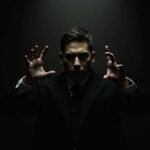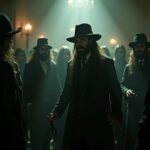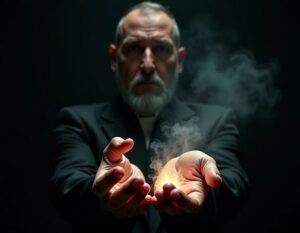

A ticket seller in a lobby, a cardboard skeleton in the window, and a house full of teenagers who’d been told the lights would go out at midnight and that nobody was responsible for what happened next. That’s the whole business model. It worked for about thirty years.
The Séance Gets a Box Office
I don’t claim the spook show was a séance. It wasn’t, and the people running them knew it. I do, however, have a strong conviction that it was the first time spirit theatre stopped being a parlor secret and became something a stranger could buy for the price of a matinee.
Before that, the séance was intimate, expensive, and private. A medium worked a small room with a cabinet, a trumpet, and a sitter list she’d studied for weeks. The Fox sisters had gone public in the previous century, and stage performers like Howard Thurston had folded spirit effects into full evening shows. But the format stayed a luxury. You had to be invited, or you had to pay a lot.
Then, in the early 1930s, performers began booking themselves into movie houses after the last feature. Same seats. Same screen. A fraction of the price. The audience was no longer a circle of the grieving or the curious. It was two thousand kids and their dates.
That changes everything about how you build a ghost.
How the Shows Were Built
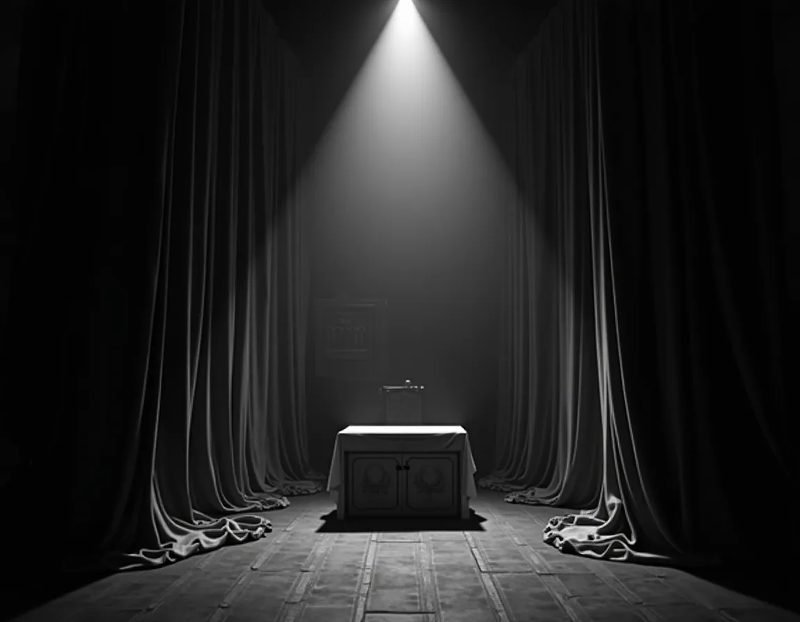
The format was consistent enough that you can lay it out like a recipe. A stage act of conventional magic came first, often with a levitation or a sawing, to warm the room and establish the performer as capable. Then the “ghost” half, which is the part collectors chase now.
The spirit cabinet was the backbone. A performer, or a bound volunteer, went inside. Bells rang, tambourines flew, a hand appeared at the aperture. This was straight out of the Davenport Brothers’ repertoire, recycled for a mass crowd a full seventy years later. Nobody in row Q cared that the method was old. They cared that it was dark.
Alongside it ran the packaged manifestations, and this is where the shows earned their reputations:
- Luminous painted objects under blacklight, so a skull or a gauze figure seemed to float with no support.
- Dark-suited assistants against black velvet, handling props that appeared to move on their own.
- Wire-run “ghosts,” cloth figures that swept over the audience on a line from the projection booth to the stage.
- Rattling, breathing, and thumping from the pit and the balcony, timed to the performer’s patter.
Dr. Silkini, Jack Baker, and the touring outfits that followed the Dell and Ade circuits worked variations of this. Some carried a full crew. Some carried a trunk and a projectionist who owed them a favor. The scale varied wildly. The structure barely changed.
Why the Blackout Was the Signature
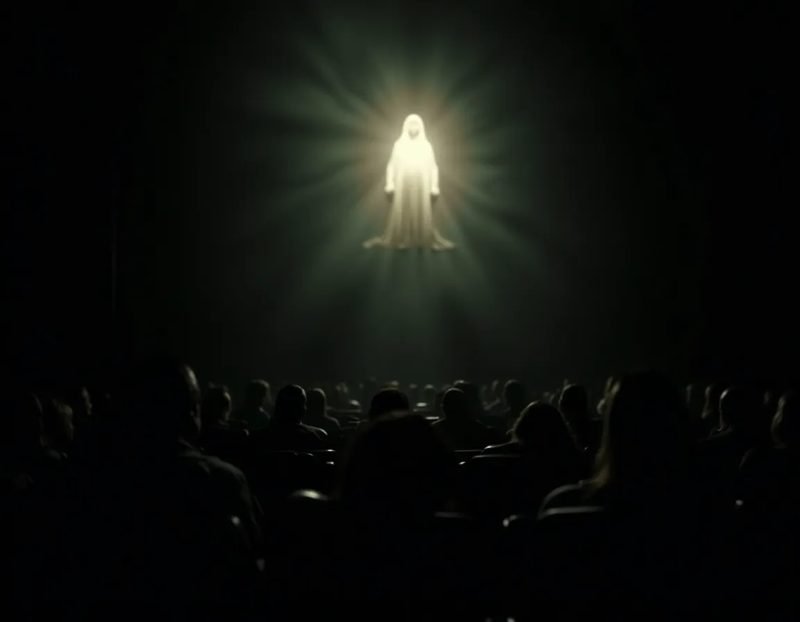
Ask most performers what made the spook show work and they’ll say the props. They’re wrong. It was the dark.
Total darkness does three things at once, and every one of them helps the performer. It hides the method, obviously. It removes the audience’s sense of scale, so a cloth figure eight feet away feels like it’s on your lap. And it breaks the social contract of the theatre. In a lit room, you’re a spectator. In the black, with a stranger’s shoulder against yours and something brushing your hair, you’re a participant, whether you agreed to it or not.
That’s the part that sold. The manager would announce a “blackout” during the show, a marked stretch of a few minutes when the house went completely dark and the ghosts were, in the patter, “released” into the audience. Screams were expected. Screams were, in fact, the product.
I feel it in my stomach when I think about a room that size going black on purpose. Two thousand people, all holding the same breath, all sure something is about to touch them. You cannot fake that hush with a soft lighting cue. You have to actually remove the light.
Which is exactly why so few modern performers will do it properly.
The Business Behind the Fear
Here’s the detail that gets lost in the nostalgia. These were commercial products, engineered at the level of the lobby card.
The shows shipped with advance material: heralds, window cards, newspaper mats, even pre-written radio spots. Some promised a “ghost guarantee” or a nurse in the lobby. Some issued “certificates of courage” afterward. The gimmick was to make attendance a dare, then reward the survivor with proof.
Theatre owners loved it because midnight was dead time. An empty house at 11:30 p.m. earns nothing. A full one, at a premium price, earns a lot, plus concessions. By the late 1940s, and into the fifties when horror films gave the shows a second wind, a strong spook act could out-draw the feature it followed.
Then television arrived, the monsters moved to the living room, and the circuit thinned out by the late sixties. A few outfits carried on. Most of the trunks went into storage.
And that’s where the story gets a little unnerving for collectors.
What Survived in the Trunks
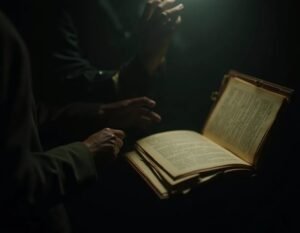
What survives is mostly ephemera and hardware, and it’s peculiar stuff. Hand-lettered cabinet panels with wear where a thousand hands pushed the same spot. Painted skulls, the paint gone chalky. Show scripts in a performer’s pencil, cues marked in the margin with a circled “DARK.” I’ve handled a folded ghost sheet with a stiffened grommet edge, and I’ll admit my hands went still. It’s a piece of cloth. It’s also the exact object that made a room scream.
Those pieces matter for a reason beyond nostalgia. They show you what the performers actually prioritized. The hardware is crude. The timing notes are obsessive. Nobody was proud of the ghost. They were proud of the pacing.
What a Modern Performer Should Steal
You don’t need a theatre. I’ve done a scaled-down version of this in a client’s home in Anchorage, twelve guests, one room, every lamp off. Here’s what I noticed. The dark still works. It works better small, honestly.
Take these lessons, not the costumes:
- Announce the blackout. Tell your audience the lights are going out and roughly when. Anticipation does half the work, and the spook shows knew it.
- Commit to real darkness. A dimmed room is a mood. A dark room is an event. Cover the exit signs if the venue allows it, and check first.
- Give the audience one physical moment. A breath of air, a light touch, a sound behind them. One, placed well, beats ten scattered.
- Time it like a script. The old performers marked the dark in pencil. You should too.
- Keep the method boring and the effect enormous. The tricks were old. The delivery was not.
The spook show taught a lesson bizarre performers keep relearning. People will pay to be frightened, as long as they feel it was their own choice.
Nothing sells like a dare.
If you are like me and you build your evenings around the hush before something unexplained happens, then you my friend, are home. Browse the shop at https://arcanerelics.com/shop/ and find the piece that turns your next room into one.