
Every performer fears the word “exposed.” I used to fear it too, until I started reading what Victorian newspapers actually printed about mediums, and realized something that should unsettle every mentalist who panics over a YouTube “secrets revealed” video. The exposés didn’t kill spiritualism. They built it. Editors who set out to strangle the movement in its cradle ended up writing its advertising copy, and they never once sent an invoice.
The Fox Sisters and the Confession Nobody Wanted
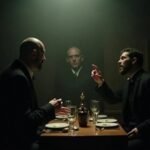
Spiritualism as a mass movement starts in 1848, in a farmhouse in Hydesville, New York, where two sisters named Kate and Margaret Fox convinced their neighbors that rapping sounds in the walls were spirits answering questions. Within five years there were mediums working in nearly every American city. Newspapers covered the phenomenon obsessively, and a fair number of those stories were written specifically to debunk it.
Here’s the part that gets left out of the popular version. In 1888, Margaret Fox stood on a stage in New York and confessed the whole thing was a fraud, that she and her sister produced the raps by cracking their toe joints against a wooden floor. It was a full, detailed, physically demonstrated confession, printed widely.
Spiritualism kept growing anyway.
By the time Margaret recanted her confession a year later, the movement had already spread across two continents, and most of its new converts had never read the original story closely enough to remember it. They remembered that there had been a mystery. The mechanics evaporated. The wonder stayed.
Newspapers as Unpaid Marketing Departments
Read an actual 19th century debunking piece, not a summary of one, and you’ll notice something odd about the structure. The writer spends six paragraphs describing the darkened parlor, the trembling table, the cold hand that brushed a sitter’s cheek, the voice that knew a dead child’s name. Then, almost as an afterthought, comes paragraph seven: here is how it was done with a hidden foot lever and a confederate in the next room.
Readers absorbed the atmosphere first. The mechanism came late, dry, and technical, competing against a scene the writer had already made unnerving on purpose because unnerving sells papers.
The Seybert Commission at the University of Pennsylvania ran one of the most rigorous investigations of the era, publishing its findings in 1887 after testing dozens of mediums and catching most of them cold. The report is a genuinely thorough piece of skeptical work. It’s also, structurally, a travelogue through the most sinister séance rooms in the country, written by men who clearly found the whole subculture troubled and irresistible in equal measure.
You cannot write convincingly about how something fools people without describing, in loving detail, exactly how convincing it is.
Houdini, Margery, and the Investigation That Backfired Twice
By 1924, Scientific American had put up a cash prize for any medium who could produce genuine phenomena under controlled conditions. A Boston medium known publicly only as “Margery” (real name Mina Crandon) became the star candidate, and Houdini himself joined the investigating committee specifically to catch her.
He did catch her, eventually, exposing a bell box trick worked with her foot and later a telekinetic effect involving a hidden ruler. The newspaper coverage of the Margery investigation ran for months. It made her one of the most famous women in America.
Houdini wanted to end her career. He gave it international attention instead, and drew more sitters to her Boston seances than she’d ever had before the controversy started.
That’s the pattern, over and over, decade after decade. The skeptic supplies the proof. The public supplies the audience anyway, because being told “don’t look” is the single most reliable way to guarantee someone looks.
Why the Backfire Isn’t a Fluke
There’s a reason this keeps happening and it isn’t naivety on the reader’s part. Attention doesn’t come pre-sorted into “admiring” and “skeptical.” A newspaper reader in 1887 who finished a debunking article had just spent fifteen minutes thinking about ghosts, spirit hands, and voices from the dead. The emotional residue of that fifteen minutes outlasts the logical conclusion tacked onto the end.
Curiosity is the actual currency, not belief.
Modern research on the “curiosity gap” describes exactly this mechanism in digital media, but the Victorian press stumbled onto it a century and a half early, purely by accident, while trying to do the opposite. Every exposé that named the trick also named the desire. Once a reader knows a desire exists, the explanation of the method rarely talks them out of wanting to feel that desire again in person.
The Same Trap Is Running on YouTube Right Now
Swap “newspaper” for “reaction channel” and the mechanism hasn’t changed even slightly. Every viral video titled something like “Mentalist Trick EXPOSED” follows the Victorian template with startling precision, atmosphere first, revelation second, and the revelation almost never survives contact with a live room the way the video implies it should.
I’ve watched performers panic over these videos like they’re a death sentence. They’re not. A method explained on a screen, stripped of pacing, stripness of a real subject, and stripped of the performer’s presence, is a diagram. A diagram is not an experience.
I tested a piece built specifically to survive full explanation at a private event near Louisville a while back, telling the room outright, before the effect even started, that I was going to explain exactly how mentalists fake this kind of thing. Then I ran it anyway, explanation and all.
They still gasped. Every one of them, even the two who’d nodded along with the explanation.
Knowing a mechanism and experiencing its effect land in different parts of a person. This is the single most important thing a working performer can understand about “exposure,” and almost none of them act like they believe it.
Building a Piece That Survives Being Explained
If a Victorian editor could hand spiritualism a marketing campaign by trying to destroy it, a working mentalist can build routines that do the same job on purpose. A few things I hold to when I’m constructing new material:
- Anchor the piece to an emotional question, not a mechanical secret. “How did he know that” fades once explained. “What does it mean that he knew that” doesn’t fade at all.
- Let the method be genuinely clever, but never let the method be the point of the piece for the spectator. It’s your insurance, not your headline.
- Consider naming the exposure risk out loud before you perform, the way I did at that event. It disarms the room’s skepticism and it costs you almost nothing if the piece is built correctly.
- Study which “exposed” videos of your own genre get the most views. That list is a free market survey of what audiences are hungry to see performed live, whether the video’s creator intended it that way or not.
The lesson from 1848 through 1924 and straight into this year’s most-watched debunking channel is the same lesson, stated once and never revised: skepticism is not the opposite of an audience. Skepticism is frequently how an audience gets built in the first place.
I don’t chase virality and I don’t perform for cameras looking to catch me. But I do build every piece assuming someone in the room already read the method online before I walked in.
So far, that’s made the work better, not weaker.
If you build routines and collect artifacts the way I do, treating the history of the craft as raw material rather than trivia, you’ll find plenty here suited to that kind of thinking. Browse the current collection at arcanerelics.com/shop.