Three Raps in Hydesville: How the Fox Sisters Accidentally Built Modern Spiritualism

Three Raps in Hydesville: How the Fox Sisters Accidentally Built Modern Spiritualism

Every performer who works a séance room owes a debt to two girls who never meant to start anything. Margaret Fox was fourteen. Kate Fox was eleven. In March of 1848, in a small frame house in Hydesville, New York, they convinced their mother that the ghost of a murdered peddler was answering questions with knocks on the wall. It wasn’t a peddler. It wasn’t a ghost. It was Kate’s toe joints, cracked against a bedframe or a floorboard, depending on which account you trust.

That’s the whole trick. That’s the entire technical secret behind a movement that filled parlors, opera houses, and eventually the White House with people desperate to hear from the dead.

I’ve spent years collecting the objects and methods that came out of this era, and I still find it staggering how little apparatus it took. No black cabinet. No spirit cabinet, no trumpet, no cheesecloth ectoplasm. Just two kids, a curious mother, and a house with a reputation for strange noises already attached to it.

A House That Was Already Listening for Something

The Fox family didn’t move into Hydesville looking for a haunting. The house came with a rumor already built in, neighbors said a peddler had once vanished there under bad circumstances, and the family had heard knocking for weeks before Margaret and Kate turned it into a conversation.

This detail matters more than most retellings give it credit for. The girls didn’t invent the concept of a haunted house, they inherited one. They just gave the haunting a grammar. One knock for no, two for yes, then a full alphabet code so the “spirit” could spell out names and answers letter by letter.

Most performers today think mentalism effects need a clever new mechanism to feel fresh.

They don’t. The Fox sisters proved that a rumor plus a simple code plus total commitment from the room is enough to convince otherwise sensible adults they’ve made contact with the other side.

The Method Was Almost Embarrassingly Simple

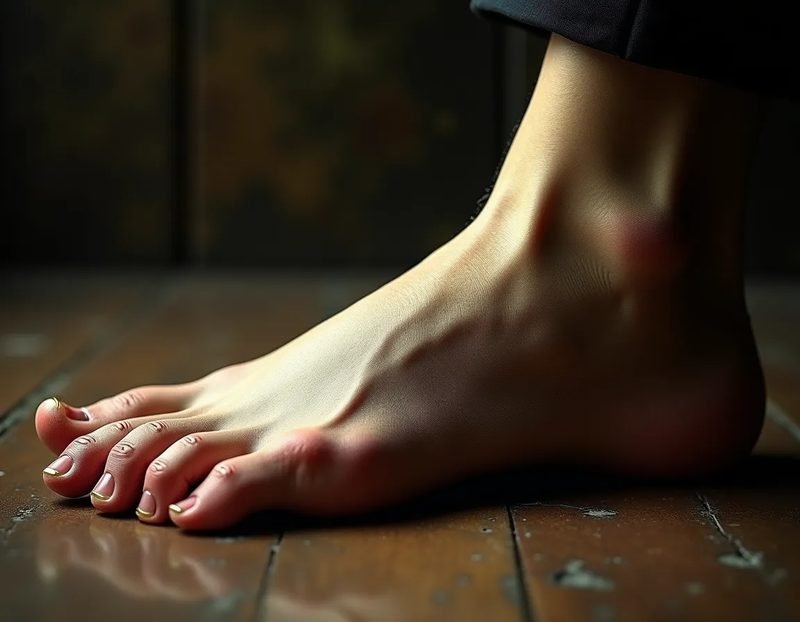
close-up illustration or diagram of foot/toe anatomy referencing joint-cracking

Kate Fox could crack the joints in her toes and, later, her knees, loud enough to sound like a rap on wood when she pressed her foot against a floor or door. Margaret eventually confirmed this herself in 1888, standing on a stage in New York and demonstrating the sound to a paying audience, though she recanted the confession a year later under pressure from believers and from money. The recantation almost doesn’t matter. The mechanism was already public.

What should unsettle you, my dear friend, isn’t the method. It’s how little resistance it met.

Nobody in that farmhouse checked under the table. Nobody asked Kate to keep her feet visible. The investigating committees that came later, and there were several, mostly focused on ruling out wires, mirrors, and hidden confederates. A body making its own sound effects wasn’t on anyone’s checklist, because nobody wanted it to be. The Fox sisters weren’t fighting skepticism. They were working with an audience that had already decided what it wanted to hear.

From Farmhouse to Franchise

Within two years, the Fox sisters were touring. Their older sister Leah, sharp and business-minded in a way the younger girls were not, managed the act and turned séance sittings into a paid public spectacle. P.T. Barnum reportedly wanted a piece of it. Horace Greeley, one of the most respected newspaper editors in the country, sat with the sisters and came away convinced something real was happening.

By the mid-1850s, Spiritualism had somewhere between one and two million adherents in the United States, depending on whose contemporary estimate you trust. Mediums were operating in nearly every major American city. Spirit rapping had spawned table tipping, automatic writing, slate writing, trance lecturing, and eventually the full theatrical séance format that bizarre magic performers still study: darkened room, circle of hands, a medium controlling pacing and tension while “manifestations” arrive on cue.

None of that came from a manual. It came from imitation, competition, and one Hydesville code spreading mouth to mouth until it became an entire industry.

Why This Still Matters to a Working Performer

I don’t run séances pretending to summon anyone. I don’t need to. But I build atmosphere the same way the Fox sisters accidentally discovered how to, and so does every serious bizarre magic performer I respect.

Here’s what the Hydesville case actually teaches, stripped of the ghost story:

  • A believable frame does more work than a clever mechanism. The house’s existing reputation carried more weight than anything Kate or Margaret did with their joints.
  • Audiences that want an explanation to be true will supply their own corroborating details. Neighbors who sat in on those early sessions reported knocks answering questions the girls couldn’t have overheard. Some of that was cold reading before anyone had the term for it. Some of it was people remembering the sitting as more precise than it was.
  • A simple code, learned once, scales. One knock, two knocks, then a full alphabet. That’s the same principle behind a well-built book test or a peek system, complexity hidden behind a rule so basic the audience stops looking for it.

I tested something built on this same principle at a private event, a code embedded in something as ordinary as a knock on a table, no props, no gimmick anyone could point to.

The room went quiet in exactly the way the old accounts describe. That quality of silence hasn’t changed in a hundred and seventy years.

The Sisters Never Recovered, and That’s the Part Nobody Sells

Margaret Fox spent her later years drinking heavily and resenting the movement she’d built. Kate followed a similar path. Both died in poverty in the 1890s, within a few years of each other, largely abandoned by the Spiritualist community that had built churches and fortunes on their original trick.

Leah, the sister who managed the business, fared better financially and distanced herself from the younger two as scandal followed them.

I don’t tell this part to be morbid. I tell it because it’s the part every history of Spiritualism wants to rush past, and it’s the part that actually explains why the movement survived the sisters’ confession at all. By 1888, Spiritualism didn’t need Kate and Margaret anymore. It had grown into churches, publications, and a belief system that could absorb the original hoax being exposed and keep going anyway.

That should trouble you a little.

A method got exposed in a New York theater, in public, by the woman who invented it, and the belief it created outlived the confession by decades.

What Survived in the Séance Room

Nearly every convention modern séance performers use traces back to this era, not because Hydesville was clever, but because it was first at scale. The darkened room. The circle. The insistence that skeptics in the audience will only interfere with the “energy.” The idea that a spirit communicates through a code rather than plain speech, which does more to build suspense than any direct statement could.

I don’t necessarily believe the Fox sisters felt any of what their audiences felt. I don’t think they set out to build a religion out of a toe joint. But I do have a strong conviction that they stumbled onto something true about human nature, that people would rather have a code to decipher than an answer handed to them plainly.

By the way, I still think that’s the whole secret of the séance format.

If you perform anything that touches this territory, spirit communication, code work, a séance-style sitting, you’re standing in a room the Fox sisters built without meaning to. Understanding where the format came from, joint cracks and all, makes you sharper with it than most performers who never bothered to ask.

We carry a working collection of séance-era techniques, code systems, and atmosphere pieces built for performers who take this history seriously. You can look through the current stock at https://arcanerelics.com/shop/.

The Hand That Writes Itself: A History of Automatic Writing in Séance and Stage Work

The Hand That Writes Itself: A History of Automatic Writing in Séance and Stage Work

A woman’s hand starts moving before she tells it to. She isn’t trying to write anything, she says so herself, but the pen keeps dragging across the page in loops and jagged little peaks. Someone in the room whispers that it looks like a name. Nobody in that parlor in 1858 would have called it a magic trick. They called it proof.

The Séance Table Before the Cabinet

Automatic writing predates the rapping cabinets and the levitating trumpets by a good margin, and it did something those later effects couldn’t. It left behind a document. A ghost that raps twice for yes is gone the moment the séance ends, but a page covered in trembling script sits on the table afterward, ready to be read, copied, mailed to relatives, published in a spiritualist newspaper. That’s a different kind of evidence entirely, and the Victorians understood exactly what they were looking at.

The practice traces back through Andrew Jackson Davis and the early American spiritualist movement of the 1840s and 50s, though mediums claiming pen-guided revelation existed well before spiritualism had a name for itself. What changed in the mid nineteenth century wasn’t the phenomenon. It was the audience. A newly literate, newly skeptical, newly scientific public wanted something they could hold and examine, not just a knock in the dark.

By the 1870s automatic writing had mediums touring with it as a headline act. Reverend William Stainton Moses filled notebooks with material he claimed came from spirits identifying themselves by name and biography. Decades later, Pearl Curran, a St. Louis housewife with no formal education past eighth grade, produced hundreds of thousands of words of archaic English verse and prose she attributed to a seventeenth century spirit named Patience Worth, using a Ouija board and then, later, direct automatic writing. Scholars still argue about what was happening in Curran’s mind. Nobody argues that the material was strange, dense, and produced with a fluency she couldn’t reproduce in her own conscious writing style.

I don’t know what was moving Pearl Curran’s hand. I doubt anyone alive does.

The Mechanism Nobody Wanted to Believe

close-up illustration or diagram of a hand holding a planchette, muscle tension implied

Here’s the part most performers skip past, and it’s the part that actually matters if you want to build a routine on this rather than just borrow its aesthetic. Automatic writing works because of something real, measurable, and not remotely supernatural, the ideomotor effect.

Michael Faraday investigated it in 1852, not with a pen but with a table. Sitters would rest their fingers lightly on a tabletop during a séance, and the table would rock, slide, tilt, seemingly guided by nothing. Faraday built an apparatus that could detect which direction force was actually being applied, and he found it every time. The sitters were moving the table. They weren’t lying about it and they weren’t tricking anyone on purpose. Their own small, unconscious muscle movements, driven by expectation and belief, were doing the work, and their conscious minds simply weren’t reporting it as their own action.

Automatic writing runs on the identical principle. A person holding a pen who expects, hopes, or fears that the pen will move without her intention is unconsciously supplying the tiny movements that make it move. The physiologist William Carpenter formalized the term “ideomotor action” a few years after Faraday’s table experiments, and it’s held up. It’s the same principle behind dowsing rods, behind a pendulum swinging over a name on a table, behind a planchette gliding to letters on a board.

I don’t necessarily believe the mind is capable of producing coherent narrative under full unconscious control, not the way Pearl Curran’s output suggests. I do have a strong conviction that the physical mechanism, the hand moving without the moving hand’s owner claiming credit, is completely real and completely explainable.

By the way, that’s what makes it useful to us. A real, documented psychological mechanism is a far better foundation for a bizarre magic piece than a prop that only works because the audience agrees not to look too closely.

When the Board Became a Toy

Somewhere in this history the automatic hand and the automatic board split into two different cultural objects, and it’s worth understanding why, because it shapes how a modern audience reacts to each.

The planchette, a small heart-shaped device on wheels with a pencil fitted through it, was patented in France in the 1850s specifically to make automatic writing easier for ordinary sitters to produce. It’s a direct ancestor of the Ouija board. When William Fuld and his business partners commercialized the talking board in the 1890s, they took the ideomotor mechanism and simplified it into a parlor game, and that simplification is exactly why the board reads as toyish today while a page of trembling handwritten script still reads as troubled.

A Ouija board announces itself as a game. Everyone at the table knows the rules and half of them are half performing their own belief. A handwritten page found in a drawer, or produced under conditions the sitter didn’t fully control, doesn’t announce anything. It just sits there, demanding an explanation nobody in the room wants to give it.

That distinction is the whole reason automatic writing survives as a serious tool in bizarre magic while the talking board mostly gets left to novelty shops.

Why a Modern Room Still Falls for It

Skepticism has gotten sharper since 1858, not weaker, and that actually helps this kind of work rather than hurting it. A contemporary audience has seen enough television psychics and enough debunking videos to distrust a floating trumpet on sight. Handwriting reads differently. Handwriting feels like biography, not performance.

Most performers dismiss this effect as dated. They’re wrong, and they’re wrong for a specific reason: they’re thinking about the Victorian trance medium version instead of the psychological one. You don’t need a costume or a fainting spell to make a page of script land. You need the spectator to believe, even briefly, that the movement producing it wasn’t fully theirs.

I tested a version of this at a private event in the Louisville area a while back, working with a folded note and a pen the sitter held herself. I watched her hand hesitate at the second letter, catch itself, then keep moving in a script that didn’t match her normal signature style at all. Her breath caught before she even looked down at what she’d written.

That reaction is the entire effect. Everything else is scaffolding around it.

Building It Without the Cliché

The trap most performers fall into with automatic writing is treating it as a prop instead of a psychological event. They buy a pre-written slate, reveal it with a flourish, and wonder why the room claps politely instead of going quiet.

A few things separate the pieces that actually unnerve a room from the ones that just decorate a table.

  • The handwriting itself needs to look wrong in a specific way, not generic spooky scrawl. Real automatic writing from the historical record tends to be cramped, inconsistently sized, sometimes angled steeply against the line, occasionally trailing off mid word. Genuine urgency looks different from a font choice.
  • The sitter’s own hand should be doing real work, or appearing to. A pre-written reveal is a magic trick. A pen that seems to move under a spectator’s own fingers is a psychological event, and those live in completely different parts of an audience’s memory.
  • Don’t explain the mechanism to the room. Explaining ideomotor action to your spectators kills the moment faster than any technical flaw would. Save that conversation for your fellow performers, not your audience.
  • Let the content stay a little unresolved. The historical cases that still get discussed, Curran’s Patience Worth material especially, are compelling partly because they were never fully solved. A message that answers every question feels written. A message that raises one more than it answers feels found.

The pieces that stay with a room are the ones that borrow the mechanism honestly and the atmosphere sparingly.

What the Page Leaves Behind

A rapping cabinet ends when the lights come back up. A page doesn’t. That’s still, more than a century and a half later, the real advantage automatic writing has over almost every other séance era effect, it produces an artifact your spectator can carry out of the room with them, fold into a pocket, find again at two in the morning when they can’t sleep.

I’ve collected more than a few handwritten pieces over the years, letters, journal fragments, notes tucked into books, some with histories I can trace and some I can’t. The ones that unsettle me most aren’t the ones with the most dramatic content. They’re the ones where the handwriting itself seems to be fighting something, strokes smeared, pressure uneven, a word crossed out and rewritten harder than it needed to be.

If you are building bizarre magic work around physical evidence, artifacts that carry weight because of what they appear to have witnessed rather than what a performer claims about them, automatic writing deserves a permanent place in your repertoire. It’s one of the few séance era techniques built on a mechanism that’s actually true.

We keep a working collection of handwritten and troubled pieces suited to exactly this kind of routine. If you are like me and find yourself drawn to objects that seem to carry their own history, take a look at what’s currently available.

Browse the current collection at Arcane Relics