Three Raps in Hydesville: How the Fox Sisters Accidentally Built Modern Spiritualism

Every performer who works a séance room owes a debt to two girls who never meant to start anything. Margaret Fox was fourteen. Kate Fox was eleven. In March of 1848, in a small frame house in Hydesville, New York, they convinced their mother that the ghost of a murdered peddler was answering questions with knocks on the wall. It wasn’t a peddler. It wasn’t a ghost. It was Kate’s toe joints, cracked against a bedframe or a floorboard, depending on which account you trust.
That’s the whole trick. That’s the entire technical secret behind a movement that filled parlors, opera houses, and eventually the White House with people desperate to hear from the dead.
I’ve spent years collecting the objects and methods that came out of this era, and I still find it staggering how little apparatus it took. No black cabinet. No spirit cabinet, no trumpet, no cheesecloth ectoplasm. Just two kids, a curious mother, and a house with a reputation for strange noises already attached to it.
A House That Was Already Listening for Something
The Fox family didn’t move into Hydesville looking for a haunting. The house came with a rumor already built in, neighbors said a peddler had once vanished there under bad circumstances, and the family had heard knocking for weeks before Margaret and Kate turned it into a conversation.
This detail matters more than most retellings give it credit for. The girls didn’t invent the concept of a haunted house, they inherited one. They just gave the haunting a grammar. One knock for no, two for yes, then a full alphabet code so the “spirit” could spell out names and answers letter by letter.
Most performers today think mentalism effects need a clever new mechanism to feel fresh.
They don’t. The Fox sisters proved that a rumor plus a simple code plus total commitment from the room is enough to convince otherwise sensible adults they’ve made contact with the other side.
The Method Was Almost Embarrassingly Simple
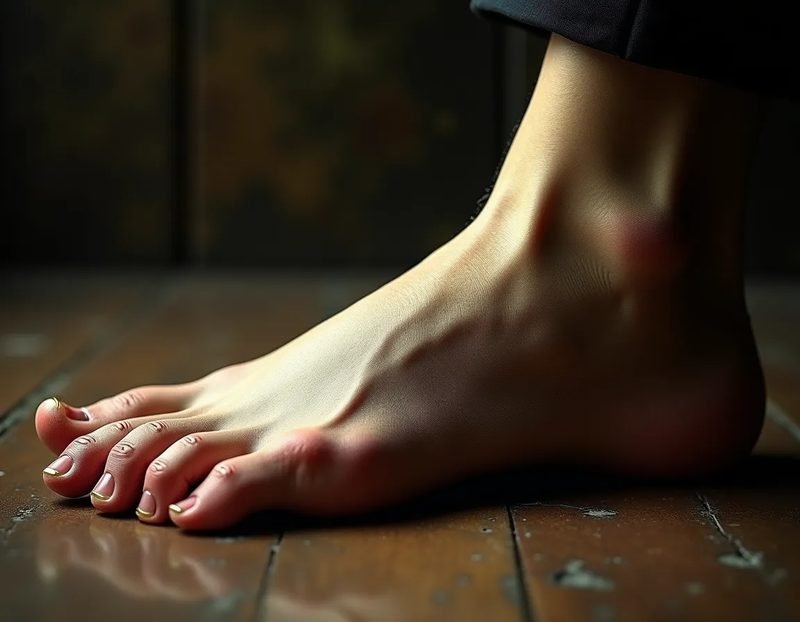
Kate Fox could crack the joints in her toes and, later, her knees, loud enough to sound like a rap on wood when she pressed her foot against a floor or door. Margaret eventually confirmed this herself in 1888, standing on a stage in New York and demonstrating the sound to a paying audience, though she recanted the confession a year later under pressure from believers and from money. The recantation almost doesn’t matter. The mechanism was already public.
What should unsettle you, my dear friend, isn’t the method. It’s how little resistance it met.
Nobody in that farmhouse checked under the table. Nobody asked Kate to keep her feet visible. The investigating committees that came later, and there were several, mostly focused on ruling out wires, mirrors, and hidden confederates. A body making its own sound effects wasn’t on anyone’s checklist, because nobody wanted it to be. The Fox sisters weren’t fighting skepticism. They were working with an audience that had already decided what it wanted to hear.
From Farmhouse to Franchise
Within two years, the Fox sisters were touring. Their older sister Leah, sharp and business-minded in a way the younger girls were not, managed the act and turned séance sittings into a paid public spectacle. P.T. Barnum reportedly wanted a piece of it. Horace Greeley, one of the most respected newspaper editors in the country, sat with the sisters and came away convinced something real was happening.
By the mid-1850s, Spiritualism had somewhere between one and two million adherents in the United States, depending on whose contemporary estimate you trust. Mediums were operating in nearly every major American city. Spirit rapping had spawned table tipping, automatic writing, slate writing, trance lecturing, and eventually the full theatrical séance format that bizarre magic performers still study: darkened room, circle of hands, a medium controlling pacing and tension while “manifestations” arrive on cue.
None of that came from a manual. It came from imitation, competition, and one Hydesville code spreading mouth to mouth until it became an entire industry.
Why This Still Matters to a Working Performer
I don’t run séances pretending to summon anyone. I don’t need to. But I build atmosphere the same way the Fox sisters accidentally discovered how to, and so does every serious bizarre magic performer I respect.
Here’s what the Hydesville case actually teaches, stripped of the ghost story:
- A believable frame does more work than a clever mechanism. The house’s existing reputation carried more weight than anything Kate or Margaret did with their joints.
- Audiences that want an explanation to be true will supply their own corroborating details. Neighbors who sat in on those early sessions reported knocks answering questions the girls couldn’t have overheard. Some of that was cold reading before anyone had the term for it. Some of it was people remembering the sitting as more precise than it was.
- A simple code, learned once, scales. One knock, two knocks, then a full alphabet. That’s the same principle behind a well-built book test or a peek system, complexity hidden behind a rule so basic the audience stops looking for it.
I tested something built on this same principle at a private event, a code embedded in something as ordinary as a knock on a table, no props, no gimmick anyone could point to.
The room went quiet in exactly the way the old accounts describe. That quality of silence hasn’t changed in a hundred and seventy years.
The Sisters Never Recovered, and That’s the Part Nobody Sells
Margaret Fox spent her later years drinking heavily and resenting the movement she’d built. Kate followed a similar path. Both died in poverty in the 1890s, within a few years of each other, largely abandoned by the Spiritualist community that had built churches and fortunes on their original trick.
Leah, the sister who managed the business, fared better financially and distanced herself from the younger two as scandal followed them.
I don’t tell this part to be morbid. I tell it because it’s the part every history of Spiritualism wants to rush past, and it’s the part that actually explains why the movement survived the sisters’ confession at all. By 1888, Spiritualism didn’t need Kate and Margaret anymore. It had grown into churches, publications, and a belief system that could absorb the original hoax being exposed and keep going anyway.
That should trouble you a little.
A method got exposed in a New York theater, in public, by the woman who invented it, and the belief it created outlived the confession by decades.
What Survived in the Séance Room
Nearly every convention modern séance performers use traces back to this era, not because Hydesville was clever, but because it was first at scale. The darkened room. The circle. The insistence that skeptics in the audience will only interfere with the “energy.” The idea that a spirit communicates through a code rather than plain speech, which does more to build suspense than any direct statement could.
I don’t necessarily believe the Fox sisters felt any of what their audiences felt. I don’t think they set out to build a religion out of a toe joint. But I do have a strong conviction that they stumbled onto something true about human nature, that people would rather have a code to decipher than an answer handed to them plainly.
By the way, I still think that’s the whole secret of the séance format.
If you perform anything that touches this territory, spirit communication, code work, a séance-style sitting, you’re standing in a room the Fox sisters built without meaning to. Understanding where the format came from, joint cracks and all, makes you sharper with it than most performers who never bothered to ask.
We carry a working collection of séance-era techniques, code systems, and atmosphere pieces built for performers who take this history seriously. You can look through the current stock at https://arcanerelics.com/shop/.