The Dual Act: Two-Person Telepathy, Coded Systems, and the Vanishing Format That Changed Modern Mentalism

The Dual Act: Two-Person Telepathy, Coded Systems, and the Vanishing Format That Changed Modern Mentalism

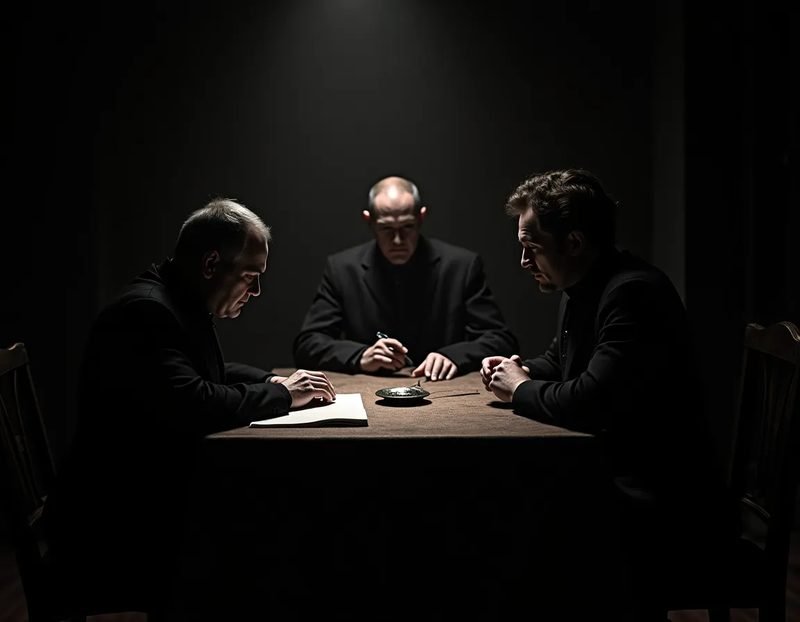
Two people. No visible signal between them that anyone could verify. An audience of seven million listening on BBC Radio in 1949, and a woman in the studio naming objects she had no earthly reason to know.

The BBC switchboard lit up after every broadcast, viewers and critics alike demanded explanation. The network quietly launched investigations. What Sydney and Lesley Piddington had built wasn’t a trick in any conventional sense. It was a system. A discipline. A partnership refined over years of genuine failure and deliberate study.

I don’t claim what the Piddingtons did was telepathy. I don’t claim that about anything. But I have a strong conviction that what they understood about trained human communication, about the architecture of shared perception, most working mentalists today have never thought about seriously. The two-person mental act is largely extinct now. That’s a loss worth examining.

Before the Piddingtons: The Zancig Code and What It Revealed

Julius and Agnes Zancig performed their “Two Minds With But a Single Thought” act across Britain, America, and Europe in the opening decades of the twentieth century. They were the headliners. Royalty watched them. Scientists tried to catch them.

They were never caught.

After their retirement, Julius published the code. Not grudgingly, not under legal pressure. He offered it openly, because he understood something most performers never learn: knowing the principle doesn’t diminish what decades of execution has made into something else entirely. He was right about that.

I read through the Zancig code for the first time years ago. My hands went still over the page. The vocabulary ran deeper than I’d expected, each phrasing compressed into something that looked like ordinary conversation and meant nothing of the kind. I turned the pages slowly and read the same exchanges twice.

The system was built on coded vocabulary embedded in the questions Julius asked. “What am I holding?” designated one category of object. “Tell me what you perceive” designated another. The first significant word in every question encoded the object type; the pause before a secondary prompt encoded a qualifier. Agnes, seated across the stage with her back partially turned, had internalized the entire matrix. She wasn’t computing it consciously. She’d rehearsed the vocabulary until it was reflex.

That’s the part people miss. The code wasn’t wordplay. It was a language, and they were native speakers.

The Architecture of a Two-Person Code

close-up of handwritten vintage mentalism notes or a coded vocabulary manuscript, worn edges

Most coded systems share the same structural logic, even when their surface vocabulary looks completely different. The transmitter, usually the performer circulating through the audience, encodes information across several simultaneous channels: the exact phrasing of a question, the syntax of a sentence, the position of an emphasized word, the timing of a pause before the next exchange.

The receiver doesn’t decode consciously. Not after sufficient training.

That’s the critical point. A receiver who is actively translating a code will hesitate. They’ll show micro-expressions, a fractional delay, a slight vacancy while the computation runs. A receiver who has internalized a system to the level of reflex responds with the fluency of genuine knowledge. Audiences read that fluency as real. They can’t help it. It’s a deeper kind of misdirection than any prop can provide.

The classic Nikola card system formalized this logic into a thirty-card vocabulary. Annemann refined the verbal framework in Practical Mental Effects. Nelson built further on that foundation. Each generation inherited the architecture and adapted the surface, the vocabulary changed, the underlying structure didn’t. The systems got more elegant, harder to trace, more robust under pressure.

And performers still got exposed, because the code was rarely the problem. The partnership was.

The Piddingtons and the Problem of Radio

Sydney Piddington began developing the act in a Japanese prisoner of war camp at Changi, working with a psychologist named Russell Braddon. By the time he returned to England and refined the work with his wife Lesley, what had begun as a wartime experiment had become something with genuine professional ambition behind it.

The BBC broadcasts of 1949 and 1950 created a problem no standard coded system could solve outright. Radio stripped every visual channel. No hand positions, no object indicators, no micro-gestures. What remained was timing, vocabulary, and structure, and Lesley’s capacity to draw inferences the audience couldn’t follow.

That last part matters. Lesley wasn’t a passive receiver, she was half the intelligence in the act. The histories tend to cast Sydney as the architect and Lesley as the instrument. That framing is wrong. A trained receiver who understands the full scope of a code, who can anticipate transmission errors and compensate in real time, who knows the performance well enough to recover when something breaks, isn’t an instrument. She’s a co-author.

Their methods have never been fully published. The most credible reconstruction suggests a hybrid of pre-show information gathering, verbal encoding in Sydney’s framing language, and contextual inference operating at a level the audience wasn’t positioned to track. Seven million listeners heard the broadcasts. The BBC received letters for months afterward. When Lesley was asked directly, on air, whether it was genuine, she said: “That’s for you to decide.”

She wasn’t deflecting. She meant it exactly as she said it.

Why the Acts Got Exposed When They Did

The code vocabulary almost never fails on its own.

Acts that were exposed typically broke in one of three ways. The first was repetition: working the same coded vocabulary to overlapping audiences long enough that someone started noticing patterns in the questioning. The questions sounded like questions until you’d heard them enough times to realize they always followed the same grammar. That’s a dreadful discovery for an audience member with a good ear and too much time to think.

The second was partnership breakdown. If the relationship between transmitter and receiver deteriorated, the receiver held the most damaging insider knowledge imaginable, and occasionally the motivation to share it. Your greatest professional asset and your most catastrophic liability are the same person. That’s a peculiar vulnerability, and there’s no elegant solution to it.

The third was greed. Performers who extended bookings past a code’s natural lifespan, rather than retiring it and building a new one, eventually played to audiences who’d seen them before. That audience member, watching more carefully the second time, heard the architecture under the words.

The Zancigs retired before any of that happened. The Piddingtons did too. Neither act was ever conclusively exposed during its working life, and that tells you something about their discipline. They knew when to stop.

What Television Did to the Format

Television didn’t set out to kill the two-person mental act. It did it anyway.

A close-up camera on the transmitter’s hands during the question phase, or on the receiver’s face during the response interval, creates scrutiny no coded system survives if any seam is visible. Stage work controlled sightlines. Television couldn’t be managed the same way. The camera went where the director sent it, and directors sent it where they thought something was happening.

The economics completed the job. A genuine two-person mental act requires two people performing the code at reflex speed, who trust each other completely, who’ve invested months of practice before a paying audience ever sees the work. That’s an enormous collaborative investment for a format the market had already started rewarding less. Single-performer mentalism is easier to book, easier to travel with, easier to explain to a client. Audience participants don’t demand equal billing.

So that’s what most performers became.

The loss is real. A trained partner is something no audience plant can replicate, a person who knows your rhythm, who has internalized the texture of your performance, who can track what a room is doing and adjust without a word passing between you. That’s a different kind of intelligence than any prop or technique provides. It went mostly unused, and the format nearly took it with it into the archive.

What the Format Could Still Give You

The two-person mental act isn’t coming back as a mainstream format. I won’t pretend otherwise. But for the performer willing to invest in a genuine partner piece, even a single effect built around a trained receiver, the potential is unlike anything single-performer methods can touch.

Modern communication tools have added to the vocabulary without changing the underlying structure. An earpiece is a channel, not a code. The shared information architecture still has to be built, the vocabulary still has to be internalized, the fluency still has to be rehearsed to the point where it disappears. Technology gives you bandwidth. It doesn’t give you a partner.

What a real trained partner gives you is something no plant can replicate. They haven’t been handed information. They haven’t been positioned. They’ve been sitting across the room for twenty minutes, visible, uninstructed, doing nothing unusual at all.

And yet.

The Zancigs understood this. The Piddingtons built a career on it. The architecture hasn’t changed, the performers willing to invest in it are just rarer now. If you’re serious about this format, the original materials are worth your time. Annemann’s Practical Mental Effects. The Nikola system. The academic papers on the Piddington broadcasts. The Zancig code in print. These aren’t historical curiosities, they’re working blueprints for a format that still has no equal when it’s executed properly.

So yes, the act nearly vanished. Nearly isn’t completely. And you, my friend, might be exactly the performer it’s been waiting for.

Browse the full catalog at Arcane Relics for texts, tools, and props that serious performers actually use.

Hellstromism: The Lost Art of Contact Mind Reading and the Performers Who Nearly Buried It

Hellstromism: The Lost Art of Contact Mind Reading and the Performers Who Nearly Buried It

I don’t necessarily believe that thought travels through skin. I do, however, have a strong conviction that something travels, something real, something the body broadcasts without permission, and that a trained performer can read it with accuracy that has no comfortable explanation for a watching audience. Contact mind reading “what came to be called Hellstromism” is the only technique I’m aware of in the performing arts where the method and the effect are genuinely the same thing. There’s no deck to stack, no force to disguise. You hold someone’s wrist, and you find what they’re thinking about. The line between method and miracle is thinner than most performers are willing to admit.

Stuart Cumberland and the Lineage Before the Name

Stuart Cumberland didn’t invent contact mind reading, he just made it undeniable. Born in 1857, he spent the final decades of the nineteenth century working thought-reading demonstrations across Britain and the Continent, holding spectators’ wrists and locating hidden objects with a consistency that unsettled audiences who prided themselves on clear thinking. He performed for the Prince of Wales. He performed for scientists who came specifically to expose him and left without their explanation.

Cumberland was candid about the mechanism, more candid than most would have been. In A Thought-Reader’s Thoughts, published in 1888, he wrote plainly that he wasn’t reading minds. He was reading bodies. The hand tells you things the mouth won’t say, the muscles tell you things the hand doesn’t know it’s saying. That’s not mysticism. That’s a precise technical claim, and it holds up.

What Cumberland gave the art was credibility through volume. Hundreds of performances, hostile conditions, skeptical observers, consistent results. His track record made the technique impossible to dismiss as a fluke or a stunt. But his work also had a ceiling, a theatrical one. He operated in an era before amplification, before cameras, before the performing context shifted enough that a man holding a stranger’s wrist and walking silently across a stage started to look merely strange instead of inexplicable. His audiences were predisposed to attend closely. That predisposition wouldn’t last.

The performer who understood how to build for the new century was someone else entirely.

Axel Hellstrom and the Art That Took His Name

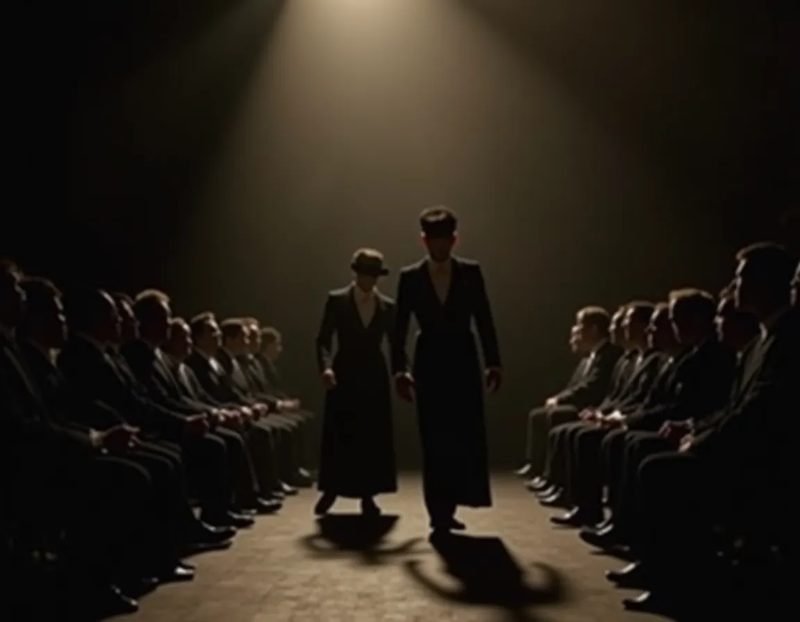
1920s stage photograph, a performer in evening dress leading a blindfolded subject through rows of seated spectators in

Hellstromism is named for a reason. Axel Hellstrom, a Norwegian-born performer working in the early twentieth century, didn’t merely demonstrate contact mind reading, he theatricalized it to the point where his name became the noun. He found hidden objects in large venues, duplicated drawings, identified numbers, all through skin contact, all in real time, in front of audiences who had no useful framework for what they were witnessing.

The genius wasn’t sensitivity. The genius was framing.

Hellstrom understood the single structural vulnerability of the method: the moment it looks like the performer is leading, the whole thing collapses into something mechanical. He spent enormous effort appearing passive, receptive, almost reluctant. He would pause. He would move in one direction, stop, correct. He would look uncertain at moments of actual certainty. All of this was calculated performance, but it read as genuine struggle. Audiences believed they were watching a man straining to catch something barely audible. They leaned in.

By the middle of the twentieth century, his name had become a category. If you were serious about the performing arts of the mind, you knew what Hellstromism was. If you didn’t, you weren’t serious.

What Is Actually Happening in Your Hands

Most accounts go vague here, and that vagueness is a disservice to any performer who might actually want to study this.

When you hold someone’s wrist and they know where the hidden object is, their body knows too. Not metaphysically. Physiologically. Moving toward the target, their forearm flexors tighten in increments too small to see but not too small to feel. Their breathing shortens. Their pulse shifts. Moving away, those signals reverse. The subject isn’t doing anything consciously, they’re not trying to guide you, but the information is present in the musculature. Your job is to read it.

Contact point matters. Wrist is better than hand, hand is better than elbow. You want access to involuntary movement at its most legible and least consciously controlled. Just below the palm, held with genuine lightness, the wrist gives you simultaneous access to flexor and extensor tension. You’re reading a dial, not listening for words.

The baseline pass is essential. Before committing to any direction, you move in several directions to calibrate the subject’s response pattern. Some people register strongly. Some barely. A few seem to generate no readable signal at all, and when you find one, you adjust your approach or acknowledge the limitation openly. Pushing through a dead signal produces bad work, it produces obvious work.

The real skill, the part that requires years and not weeks, is learning to accelerate toward resistance without telegraphing the acceleration. You’re using the subject’s muscular response as a guide while appearing to be guided. That inversion is the whole art, and you won’t find it in a book.

Why It Convinced Educated People

The structural misdirection in Hellstromism is unlike anything else in mentalism. In conventional mental effects, the performer conceals information, the audience knows information is being concealed, and the game is figuring out how. In contact mind reading, the mechanism is visible. The subject knows where the object is. The performer holds the subject. The performer finds the object. The chain of causation is transparent, the audience can observe every link, and they’re still left without an explanation they can use.

My spine chills when I think about that, even now.

The misdirection isn’t about hiding the mechanism. It’s about hiding which direction the mechanism runs. Audiences assume information flows from subject to performer through the contact point. They’re right that information travels. They have the direction reversed. The performer is pulling, testing, calibrating, and the subject is providing involuntary confirmation. The subject usually feels, afterward, that they helped make it work. That feeling is real. It’s just not the full story.

That’s what made Victorian scientists walk away unsettled. They couldn’t find the lie, because the lie wasn’t there. The redirection was in the framing, not the facts.

How It Nearly Disappeared

Television did serious damage. Contact mind reading depends on proximity. A live audience sees the physical connection, registers the subject’s honest uncertainty, watches the performer navigate in real time. The effect is immediate and visceral. On camera, the wrist grip looks like a prop. The subject’s face, which in a live performance reads as genuine concentration, compresses to a small square in the corner of a monitor. The primary evidence evaporates.

The postwar mentalism revival made things worse, though not intentionally. The generation of performers who rebuilt mental magic in the 1950s and 60s were rightly focused on no-touch methods, envelopes, cards, sealed predictions, effects that read as impossible precisely because there was no physical connection to explain them. That work was valuable and it was necessary. But it pushed contact reading to the edges, and once a technique loses its practitioners, it starts to lose its literature.

There’s also a practice problem that can’t be reasoned away. You cannot learn Hellstromism from a manuscript. The sensitivity required develops only through repetition on actual human beings, which means finding subjects, working privately, making errors, recalibrating from the ground up. Most performers, given the choice between a technique that demands that investment and a technique that works from a script, take the script. That’s not a criticism. It’s just honest about how scarce practice time really is.

The performers who stayed with it tended to stay quiet about it. Not from secrecy exactly, more from the difficulty of explaining it in an era when audiences assume any effect has a tutorial.

The Performers Who Are Bringing It Back

Something has been shifting in serious mentalism over the last decade, you can feel it if you’re paying attention. Performers building theatrical experiences rather than trick sequences. Work that moves slowly and lets a moment breathe. An appetite for effects that produce a specific kind of bewilderment, not the “how did you do that” of a card trick, but the quieter, harder-to-categorize feeling of watching something that doesn’t fit any available explanation.

Contact mind reading fits that world precisely.

It’s intimate. It’s slow. It puts the performer and subject in genuine physical connection, which creates a relational weight that no prediction envelope can match. For performers working in bizarre magic or theatrical mentalism, the theatrical framing writes itself. A practitioner who reads impressions through contact, who traces the emotional residue of an object through skin, isn’t performing a trick in any conventional sense. The technique becomes the performance, the method and the effect are genuinely the same thing, and the audience feels that truth even if they can’t articulate it.

The lineage running from Cumberland through Hellstrom to the present is a technical tradition that most contemporary performers have never seriously studied. The ones who have tend to produce work that doesn’t look like anyone else’s. That’s not an accident, it’s what happens when you develop a skill almost no one else is developing.

If you’re looking for the books, the resources, and the tools serious performers are working with right now, browse the Arcane Relics shop.

Annemann’s Shadow: How ‘Practical Mental Effects’ Quietly Rewired Modern Mentalism

Annemann's Shadow: How 'Practical Mental Effects' Quietly Rewired Modern Mentalism

The Book That Defined the Genre Without Saying So

Pick up a copy of Practical Mental Effects and you are holding something that has shaped every professional mentalist working today, whether they know it or not. Most know it. Some have simply forgotten to notice the debt.

Published in 1944 by Max Holden, two years after Annemann’s death, the book compiled effects from The Jinx, the influential periodical Annemann ran from 1934 to 1941. Over two hundred effects. Organized by method. Dense, specific, occasionally repetitive. Not a manifesto. Not a theory book. A working document from a working performer.

That practicality is exactly why it lasted. Annemann was not writing for posterity. He was writing for the guy who had a club date on Saturday and needed something that played. The fact that his solutions still play, eighty years later, tells you everything about the quality of his thinking.

What gets missed in casual discussion of the book is how much of its influence operates below the surface. Performers cite Annemann for specific effects. They rarely cite him for the deeper structural decisions that quietly shaped how modern mentalism is built, presented, and justified.

What The Jinx Actually Was

What The Jinx Actually Was

Before the book, there was the magazine. The Jinx ran for 151 issues. Annemann edited, wrote, and largely populated it himself, pulling in contributions from Corinda before Corinda was Corinda, from Bruce Elliott, from Stewart James. The subscriber list read like a working roster of mid-century mentalism.

What Annemann built across those issues was not just an effects library. It was a shared vocabulary. When performers talked to each other about billets, book tests, or center tears, they were increasingly talking in Annemann’s terms. He did not invent all of those methods, not even close, but he standardized the language around them. That standardization is invisible now because we absorbed it completely.

Corinda acknowledged this. Banachek’s work shows it. When you read 13 Steps to Mentalism alongside PME, you see Corinda expanding on a foundation Annemann already poured. The vocabulary, the categories, the basic taxonomy of mentalism as a performing genre, all of it runs through Annemann’s decade of publishing.

The Effects That Became Templates

The book contains over two hundred effects. Not all of them survived. Plenty are period pieces, dependent on props or cultural assumptions that no longer hold. But a specific cluster became structural templates that working mentalists still build around.

Billet work is the clearest example. Annemann’s billet handling techniques, particularly his center tear variations, remain foundational. The basic logic of the center tear, destroy the evidence while retaining the information, is Annemann’s codified approach. He did not invent it wholesale, but he articulated it clearly enough that generations learned it from him rather than from vaguer earlier sources.

His thought-of-card material was similarly influential. “The Jinx” card in wallet is still in rotation. The underlying construction, a natural, low-heat selection process followed by a controlled, seemingly impossible revelation, became a template for how mentalists structure single-object demonstrations. The pacing alone is instructive: Annemann gave the selection process more time than the revelation. He understood that the journey mattered as much as the destination.

His book test thinking, distributed across multiple issues of The Jinx and collected in PME, influenced how the entire format developed. He kept returning to the problem of getting a thought into a book and a thought out of a performer’s mind without apparatus, without assistants, without anything that looked like machinery. That constraint, self-imposed, produced cleaner thinking than performers who had no such restrictions.

His Q&A act structure deserves separate mention. The one-ahead principle was not his invention, but his applications of it, and his discussion of how to pace a Q&A act for genuine theatrical weight, shaped how the format is taught and performed today. Read his notes on timing and you are reading something that still applies to any mentalist building a center piece for a corporate room.

The Presentational Logic Nobody Credits

The Presentational Logic Nobody Credits

Effects are the easy part to trace. What is harder to see, and more important, is how Annemann’s presentational philosophy seeped into modern practice.

Annemann wrote consistently about naturalism. Not the theatrical naturalism of the stage actor, but the social naturalism of a person at a dinner table. He wanted mentalism to look like something happening, not something being performed. That preference shows up in his prop choices, his handling instructions, and his scripting notes.

He favored what he called “casual” handling. The billet that is not handled carefully because it does not need to be. The book that sits on the table rather than being ritualistically produced. The spectator who is spoken to rather than directed. These choices were deliberate, and they ran against the theatrical grain of much 1930s stage magic.

Contemporary mentalism, at its best, still operates on this logic. When Banachek talks about natural body language or psychological convincers, he is speaking a language with Annemann’s fingerprints on it. When performers talk about removing the “magic show” feel from mentalism, they are arguing for something Annemann argued for in 1937.

The specific phrase Annemann used often was “convincing.” Not “amazing.” Not “mystifying.” Convincing. He wanted the audience to believe, or at least to be unable to disbelieve. That is a different target than the standard conjuring goal of astonishment, and it produced different methods and different scripts.

The Ethics Hiding in the Margins

Annemann was not comfortable with the ethics question. Read across the full run of The Jinx and you see him returning to it without resolution, which is itself instructive.

He never settled on a clean position about whether mentalists should claim genuine psychic ability. He understood the performance value of leaving the question open. He also understood the moral problem with that choice. His own published advice shifted over the years, sometimes favoring explicit “for entertainment” framing, sometimes clearly recommending the ambiguous approach that lets audiences decide what they saw.

That unresolved tension is exactly where modern mentalism still lives. The ethics debate you hear in green rooms and convention hallways today, should you claim powers or not, how explicit does your disclaimer need to be, what do you owe an audience that genuinely believes, all of it is a continuation of an argument Annemann was having with himself in print between 1934 and 1941.

He did not resolve it. Neither has the field. But Annemann’s willingness to think about it seriously, and to publish that thinking, helped establish that the ethics question was worth taking seriously at all. In a genre that was not particularly interested in self-examination, that was not nothing.

What Modern Mentalism Borrowed and What It Missed

The methods transferred well. The presentational philosophy transferred imperfectly. The ethical seriousness transferred least of all.

Modern mentalism absorbed Annemann’s technical solutions and sometimes his naturalistic handling. It frequently missed his insistence on economy. Annemann’s effects are lean. He cut what did not need to be there. Contemporary mentalism, particularly in the post-Derren-Brown era, often adds layers of psychological framing that Annemann would have found indulgent. Not wrong, necessarily, but padded.

He also had a clarity about what mentalism was for that sometimes gets lost. It was not therapy. It was not self-help. It was not a delivery mechanism for messages about human potential. It was performance, and performance was enough. The effect had to work on a practical, theatrical level before it could work on any other level. That order of operations matters.

Performers who go back to PME with fresh eyes consistently report the same thing: the book is more modern than it looks. Strip away the period-specific prop references and the dated social contexts, and what remains is a rigorous set of arguments about what mentalism can do and how it should do it. Those arguments have not aged out.

What Annemann built, between a magazine nobody outside the trade read and a posthumous book nobody outside the trade bought, was the structural grammar of a performing genre. Mentalism had practitioners before him. It had a grammar because of him.

Most performers working today are writing sentences in that grammar without knowing who taught them the rules.

Where to Go From Here

If you have not read Practical Mental Effects cover to cover, with a performer’s eye rather than a collector’s, do that first. Read it alongside the specific issues of The Jinx if you can find them. The context matters.

Then read Corinda’s 13 Steps again, noticing where the DNA matches. Then Banachek’s Psychological Subtleties series. The lineage is clear once you are looking for it.

Annemann’s methods are practical, which is what he said on the cover. His influence is structural, which is what nobody says enough. Both are worth your time.

At Arcane Relics, we stock serious tools for serious performers, including classic mentalism texts, contemporary billet workers, and working props built around the methodologies that have held up since Annemann proved they would. If you are building a mentalism act that actually works, or refining one that mostly does, start with what has already been proven.

Browse the Arcane Relics shop for mentalism books, props, and performance tools selected for working performers.

Continue reading: The Q&A Act Reconsidered: Billet Work, Switches, and the Power of the Written Confession

Spirit Slates and Their Shadows: The Forgotten Spiritualist Prop That Still Haunts the Stage

Spirit Slates and Their Shadows: The Forgotten Spiritualist Prop That Still Haunts the Stage

Chalk and Darkness

Pick up a genuine Victorian spirit slate. Feel the weight of it. The blackened surface, the wooden frame, the faint ghost of chalk that no amount of cleaning fully removes. There is something in the object itself that a folded piece of paper or a digital display cannot fake. The slate carries history in its grain.

Spirit slates are one of the most misunderstood props in the serious performer’s toolkit. Most magicians dismiss them as relics, dusty frauds from the Spiritualist era. That is exactly wrong. The best bizarre magic workers today understand what the Victorian mediums understood instinctively: the prop does half the work before you open your mouth.

This is the story of where slates came from, who used them, what made them work, and why they belong on the working table of anyone performing theatrical mentalism or bizarre magic right now.

The Seance Circuit: Where Slates Came From

The Seance Circuit: Where Slates Came From

American Spiritualism erupted after the Fox sisters of Hydesville, New York claimed in 1848 that mysterious rappings in their farmhouse were communications from the dead. By the 1860s, the movement had spread across the United States and Britain with the speed of a fever. Mediums ran what amounted to a touring theatrical circuit, performing in parlors, lecture halls, and dedicated spirit rooms for paying audiences who desperately wanted contact with lost husbands, children, and parents.

Slate writing appeared on that circuit in the 1870s and became one of the defining phenomena of the movement. The premise was simple and brilliant. A question was written on a small chalkboard slate, the slate was sealed or held between two surfaces, and when it was opened, an answer had appeared in chalk. No human hand could have written it. Or so the story went.

Henry Slade was the figure most associated with early slate phenomena. He toured Europe in 1876 and convinced serious investigators, including the German physicist Johann Zollner, that the messages were genuine. Zollner spent years attempting to prove that the writing appeared from a fourth spatial dimension. Slade was eventually convicted of fraud in England, appealed on a technicality, and continued performing anyway. His career lasted decades. The conviction did not slow him down noticeably.

The Davenport Brothers worked related territory with their spirit cabinet, but slate workers occupied a specific niche. The slate was intimate. It came to you. You could hold it, inspect it, even write on it yourself. That proximity was part of the theater.

The Mechanics: What Was Actually Happening

The core methods were not subtle once exposed, but they were technically demanding in performance. The most common approach involved two slates with a pre-written message concealed on one inner surface. When the slates were pressed together and separated “for inspection,” the writing appeared to have materialized from nothing.

More sophisticated work involved hinged frames with a concealed flap that could turn. The performer might hand the slates for examination, both surfaces blank, reclaim them, build a moment of theater around the contact, then open them to reveal the writing. Timing and audience management were everything. The prop demanded real handling skill, not sleight of hand in the technical sense, but physical confidence and the ability to direct attention through presence alone.

A third approach used by more accomplished workers involved slates that could be cleanly switched. But the mechanical slate, worked without a confederate, was the professional standard. Annemann addressed slate work in Practical Mental Effects with characteristic directness: the method is crude, the effect is not. The gap between those two facts is where the performer lives.

The success of slate phenomena did not depend on the impossibility of the mechanism. It depended on the context built around it. A message appearing on a slate in a charged atmosphere hits differently than the same words on a card. The object carries the weight. The method is almost secondary.

The Mediums Who Owned the Stage

The Mediums Who Owned the Stage

Slade has been mentioned, but he was not alone. William Eglinton, the British medium, became one of the most celebrated slate workers of the 1880s. He worked under test conditions repeatedly and produced results that baffled investigators who were not looking carefully enough. Eglinton was eventually exposed by the conjurer John Nevil Maskelyne, who demonstrated identical effects from the stage at the Egyptian Hall in London.

That exposure made a specific argument. These are theatrical methods. They belong on stage as theater, not in parlors as fraud. The methods were identical. The framing was different. That argument has not lost its force in the intervening century and a half.

Eusapia Palladino, the Italian medium who dominated European investigations in the 1890s and early 1900s, did not specialize in slates but her career illustrated the same principles across different phenomena. She was caught cheating repeatedly, admitted it when pressed, and continued to draw serious investigators to her sittings. The desire to believe was stronger than the evidence of deception. Any performer working in the bizarre tradition should study her career carefully. She understood precisely what she was selling.

In America, the medium Pierre Keeler worked slate phenomena for over thirty years. His approach was theatrical in the fullest sense. He built a world around the sitting. Preparation, atmosphere, history, personal detail. The slate was not a trick. It was an event. That distinction is worth sitting with.

Why Slates Hit Different Than a Screen

Here is the practical argument for the working performer.

We live in a time of screens. Every person in your audience has watched video that shows things that cannot exist. Deep fakes, composites, AI-generated imagery. Their threshold for being impressed by a visual on a screen is essentially zero. Show someone a message on a phone and they assume a trick with the phone. The technology is too familiar to carry mystery.

A piece of blackboard slate with writing on it is different. It is old. It has texture. You can hand it to someone. They can feel the chalk dust under their fingers. There is no battery, no connectivity, no algorithm. The object predates their understanding of how it could have been faked. That unfamiliarity creates a gap, and that gap is where you work.

This is something the original mediums understood by necessity. They used the materials their audiences trusted as plain and ungimmickable. Slate, chalk, wood. The simplicity of the materials made the impossibility more convincing. A message appearing on a sealed slate in 1880 was more credible as a genuine impossibility than a ghostly voice from an unseen machine. Today, a message appearing on a slate in your hands is more credible than a message on a screen for exactly the same reason: the object precedes suspicion.

The physical weight of the prop matters too. You can feel it through an entire performance. Holding something real, something with documented history, changes how you carry yourself with it. The prop is not just a device. It is an actor in the piece.

Slates in the Bizarre Magic Tradition

Tony Andruzzi understood this. His work in the bizarre magic tradition, developed over decades and documented in the columns he wrote and the Invocation journal he edited, insisted on the importance of genuine artifacts over replicas. Objects that had lived in the world. Slates qualified on every count.

The question Andruzzi kept returning to was the difference between an effect and an experience. A trick produces an effect. A well-constructed bizarre piece produces an experience the audience carries with them. The slate, presented as a contact point with something that cannot be explained, does not need to simply deceive. It needs to open a door in the audience’s attention.

Eugene Burger took a similar position. His performances with spirit slates were not demonstrations of impossibility. They were invitations into a particular kind of focused attention. Burger drew heavily on Spiritualist history, not to endorse the fraud but to use the weight of it. He brought the period, the parlor, the grief of the original séance sitters into the frame. The effect was inseparable from the history that surrounded it.

That approach is still the right one for anyone working with slates today. You are not doing a chalk-and-flap trick. You are working with an object that spent a century in the hands of people who believed, or performed believing, that it could bridge the living and the dead. That history is in the prop. It is yours to use.

On the practical side: antique slates can still be found. Estate auctions, specialist dealers, occasional finds at general antique markets. The frames are usually intact. The mechanisms, when present, often still function after careful cleaning. A genuine Victorian slate in working condition is a performance prop, not just a display piece. Modern reproductions exist for performers who need consistent mechanical reliability, but the originals are worth the effort of hunting. The age shows in handling. The audience reads it.

What the Prop Demands From You

The slate is a demanding prop. It rewards preparation and punishes laziness.

You need a script in the old sense: a story attached to the object that explains why it is here and what it has witnessed. Not a long story. The best performers use less exposition than you expect. But the object needs a biography. A provenance, even a fictional one, gives the audience somewhere to stand while you work.

You need to know the history well enough that it lives in your handling rather than your patter. If you are self-conscious about the prop’s past, the audience will feel it. If you are genuinely at home in the Spiritualist tradition, the confidence will show in how you hold the thing before you say a word.

And you need to be honest with yourself about what kind of piece you are building. A slate used for a direct written revelation in a close-up parlor setting is a different animal from a slate used as a focal point in a longer theatrical arc. Corinda addressed this kind of structural decision in the Thirteen Steps without naming it in so many words: the prop and the structure must match, or both are undermined by the mismatch.

Spirit slates have been sitting in drawers and gathering dust in antique shops for decades, waiting for performers who understand what they are. The Spiritualists who used them were frauds. The theater they built around those frauds was genuine. The gap between those two facts has not closed. It is still working territory for any performer willing to enter it on its own terms.


Arcane Relics carries a rotating selection of antique and reproduction spirit slates, along with other Victorian-era props suited for bizarre magic and theatrical mentalism. We have partnered with Joseph Daniels to bring you something special: a true Victorian-style spirit slate bundled with his award-winning presentation, available exclusively through Arcane Relics.
Browse the current inventory at the Arcane Relics shop.

Continue reading: Beyond the Slate: Forgotten Instruments of the Victorian Séance Room