The Camera Didn’t Lie: Spirit Photography, Double Exposures, and the Modern Performer’s Use of Visual Evidence

The Camera Didn't Lie: Spirit Photography, Double Exposures, and the Modern Performer's Use of Visual Evidence

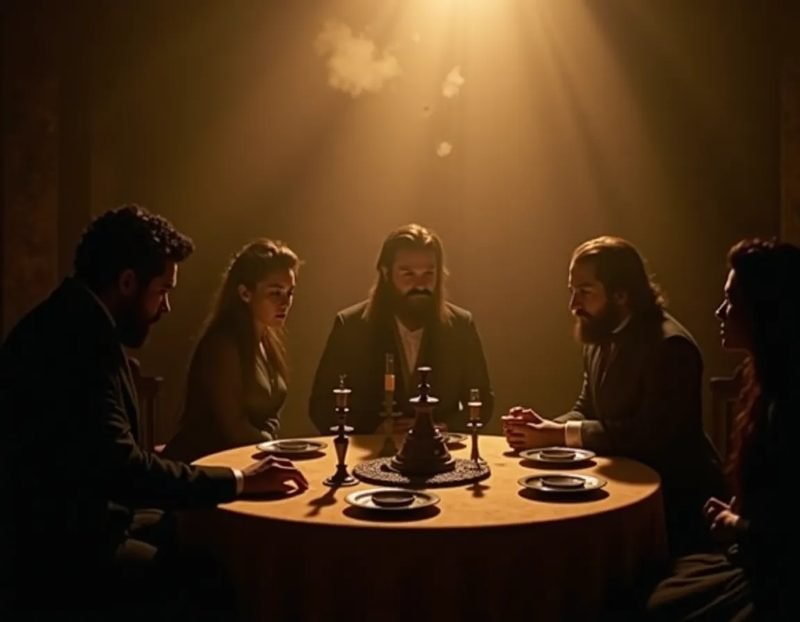
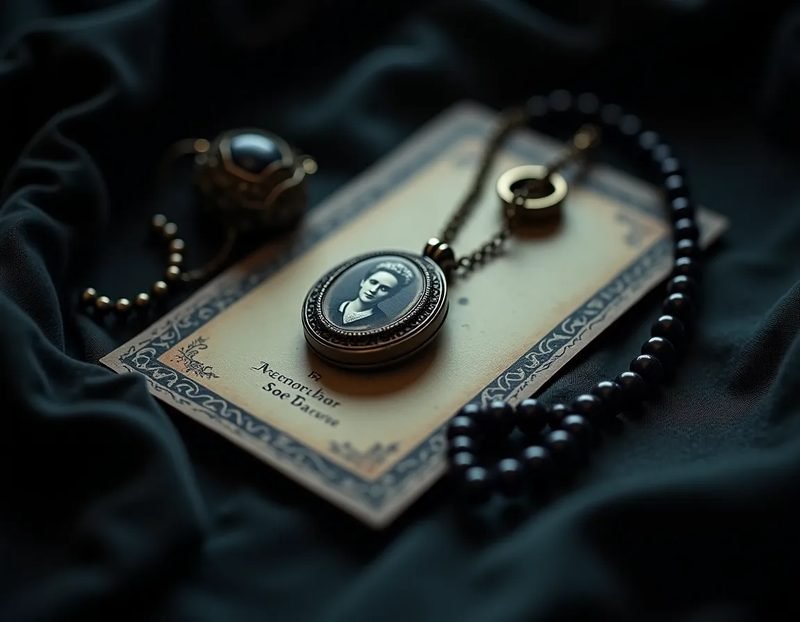
The photograph arrived in mourning families’ hands weeks after the sitting. It showed what they’d hoped for and hadn’t dared name out loud: a translucent face drifting behind the living subject, unmistakably the deceased. William Mumler understood exactly what he was producing. The séance was theater. The photograph was evidence. And evidence, unlike performance, doesn’t end when the performer leaves the room.

That asymmetry deserves serious attention from any performer thinking about how their work lives in the world after the show closes. The history here is unambiguous about method and moral failure. It’s also, if you read it clearly, a precise education in why physical imagery carries weight that no spoken claim ever can.

William Mumler and the First Ghost Portraits

Mumler was a Boston jewelry engraver who stumbled onto the trick in 1861. A self-portrait he’d accidentally double-exposed showed a second figure, ghostly and indistinct, sharing the frame. He claimed it was his dead cousin. He showed it around. People believed him almost immediately. That speed of belief was the thing worth watching.

He opened a studio on Washington Street. His prices ran five to ten dollars a sitting, substantial money in 1862. His clients came in grief. They hoped for confirmation that the dead hadn’t entirely gone. He gave them photographs. Photographs that could be handled, held up to gaslight, passed to a neighbor. Objects that existed independent of his presence or his testimony.

The method was elegant in its plainness. Mumler worked with glass-plate negatives prepared in advance, sourcing images of deceased persons from cartes de visite or photographing confederates separately. He introduced the spirit figure through double exposure or during the developing process itself. The overlay was soft enough to read as supernatural, solid enough to survive casual scrutiny.

He was prosecuted for fraud in 1869. The case collapsed. The prosecutor couldn’t prove the images were fabricated, the burden of disproof proved impossible to meet in a courtroom. Mumler walked, battered in reputation but legally untouched.

The photographs remained.

The Darkroom as a Stage

Victorian spirit photographers were, technically speaking, skilled darkroom operators working problems that weren’t so different from those facing any close-up worker: control the conditions, misdirect attention, manage when and where the critical move occurs.

The double exposure was the foundational technique. One exposure in daylight, the sitter photographed straight. A second exposure on the same plate, a confederate in white muslin, lit obliquely and softly, positioned to read as distant and insubstantial. Print it. The result shows something present that doesn’t quite belong to the material world.

Frederic Hudson, working in London through the 1870s, refined this with theatrical lighting knowledge. My reading of his surviving prints tells me he understood reflected light the way a stage manager understands it: where it falls, how it registers at the edge of a frame, what the eye reads as depth versus flatness. His spirit extras had defined features, they weren’t blurs. Defined features make things credible. Vagueness invites doubt.

The more sophisticated operators worked in advance and switched the evidence before it ever reached the camera. Total private control. No real-time management required.

Unlike the live séance, where the medium had to perform and manage the room simultaneously, the darkroom gave these operators private time to build the evidence carefully, then present the finished object as something that had occurred objectively, without human interference. The séance asks you to believe in the moment. The photograph asks you to believe the chemistry.

The Crewe Circle and the Plate Switch

William Hope was a Crewe carpenter who began producing spirit photographs in 1905. By the early 1920s he was the most prominent spirit photographer in Britain. The Crewe Circle had produced thousands of prints for thousands of paying clients, many of them prominent, educated people who had lost family in the war and were carrying that loss into every séance room they could find.

Hope’s method relied on switching photographic plates. Sitters sometimes brought their own sealed packets of unexposed plates, intending to control for substitution. Hope swapped these for pre-exposed plates before they reached the camera, through careful timing and confederate management. The ghostly extras that appeared on the developed prints were his work, prepared in advance.

In 1922, Harry Price of the National Laboratory of Psychical Research marked a set of test plates with X-ray exposure before handing them to Hope. The developed prints showed no trace of those markings. The plates had been switched. Price published his findings. The evidence was solid.

Hope continued working for another decade.

The prints his clients already held weren’t returned. The grief those images had settled into wasn’t undone by Price’s technical report. The photograph had already done its work, it had become part of the story people told about their dead…and no exposure delivered years afterward could reach that.

Why the Print Did More Work Than the Séance

There’s a structural reason the photograph was more durable than the live performance: the séance required the medium’s presence to sustain its effect. The room, the atmosphere, the controlled darkness, the performer managing conditions in real time. Take the performer out of the room and the experience is a memory, subject to doubt, subject to revision.

The photograph doesn’t need the performer in the room.

Every time a client showed that print to a neighbor, described what it showed, answered questions about where it came from, the performance ran again. Mumler was in Boston. The client was in their parlor. The evidence was in their hands. He’d built himself a perpetual motion machine out of grief and paper chemistry, it required no further maintenance from him at all.

What this reveals isn’t a trick about the gullible. Photographs feel different from testimony because they present themselves as automatic. A witness claim implies a person with motives. A photograph implies a mechanical process without agenda. Light hitting a plate. A chemical reaction. Physics. That intuition is almost impossible to argue out of someone in real time, even someone who knows photographs can be manipulated and has been told so their entire life.

Roland Barthes wrote about this: the sense that a photograph guarantees its own referent, the feeling that whatever appears in the image has been in front of the lens. It’s not a rational conclusion. It’s a perceptual response. And perceptual responses don’t yield to argument the way beliefs do.

The Psychology of Visual Evidence

I don’t believe in spirit photography as a paranormal phenomenon. I never have. I approach these accounts as a performer interested in mechanism, not as someone looking for confirmation of the impossible.

But what the spirit photography record makes plain is that the psychological weight of a physical image is genuinely disproportionate to what we consciously understand about photographs. Audiences in 2026 know images can be manipulated. They’ve been told this their whole lives. And yet, hand someone a physical print, something they can hold, turn over, examine under light, and watch what happens. The analytical frame loosens. The object asks to be held, not argued with.

This isn’t about intelligence or credulity, it’s a baseline cognitive response to material objects. We process held evidence differently than we process spoken claims.

The spirit photographers understood this before the cognitive scientists named it.

There’s a secondary effect worth noting. When a person receives a physical artifact during an emotionally loaded experience, they tend to reach for it afterward. They keep it. They return to it. Each return is another encounter with the original experience, and each encounter deepens the memory’s emotional character. The photograph doesn’t just document the moment. It keeps reaching back into it.

Building Work That Follows the Spectator Home

If your piece ends and nothing leaves the room with the spectator, you’re leaving most of the performance behind.

A photograph given at the close of a piece, one that confirms something apparently impossible, doesn’t just commemorate the experience. It becomes the experience in every subsequent retelling. Your spectator shows it to their partner that night. The partner asks what happened. The spectator explains the whole sequence. Your performance runs again, without you present, without any further effort on your part!

This is why physical artifacts, photographs, printed cards, apparently aged documents, work so well as closers in bizarre magic and mentalism. The spectator becomes your distributor, because they have evidence. And so yes, this is worth building into your work deliberately, not as an afterthought.

If you’re like me, you’ve already noticed the difference between a performance people talk about in general terms and one they describe to others with something in their hands. The object changes the conversation. It gives the story weight it wouldn’t have on its own.

The applications are concrete. A pre-prepared photograph introduced as documentation at the climax of a séance narrative. A printed image in a sealed envelope, held by the spectator throughout the performance, opened at the moment of revelation. A photograph that appears to show something impossible, given as the confirmation rather than just the verbal climax. Staged imagery from a fictional event your character supposedly witnessed, presented to the spectator as historical record.

I’ve used sealed printed photographs as closers in readings for years. My experience is consistent: people keep them. They photograph the photograph and send it to someone else. The conversation about what happened travels further than I could reach on my own. The image does that. Not me.

A photograph is the obvious example. It isn’t the only artifact that does this.

Audio works the same way. A spectator who goes home with a recording, one that appears to confirm something your performance implied, plays it for someone that night. That person asks what happened. Your show runs again, without you, in someone else’s kitchen.

Intonation does exactly this. It’s a prop designed to close a piece by handing the spectator an audio record of something that shouldn’t exist. The recording travels. It becomes the evidence, it starts the conversation, it does the work.

The Victorians understood that the print outlasts the performer. They used that understanding to exploit grieving people, and that’s its own clear and troubling story. But the principle itself, that a physical image carries weight that spoken performance never can, is entirely available to the serious worker building theater that means something.

Build things that leave the room with people.

If you’re looking for props, artifacts, and materials built for exactly this kind of work, have a look at what we carry at Arcane Relics.

The Collector’s Eye: Authenticating, Sourcing, and Valuing Antique Occult Instruments

An antique wooden planchette, a worn Lenormand tarot deck, and a brass magnifying loupe on a dark wood table

Most collectors learn the hard way. They buy what looks right, trust a seller’s word on age, and discover six months later they’ve paid a premium for a 1970s reproduction dressed in convincing grime. The antique occult market rewards patience and punishes enthusiasm. If you’re serious about building a collection worth something, the authentication work begins before any money changes hands.

What You’re Actually Buying

The occult instrument market sits in an awkward position. It’s large enough to attract serious fakers but niche enough that most auction houses and antique dealers don’t know what they’re handling. That creates opportunity, and it creates risk in equal measure.

Period pieces fall into a few broad categories. Parlor instruments, such as planchettes, talking boards, and spirit writing devices, were produced commercially from the 1860s onward. Genuine Victorian examples aren’t always rare, but fine examples in original condition are a different matter. Professional apparatus, including slates, sealed envelopes, and letter-reading devices used by working mediums, is rarer because it was made in smaller quantities and often destroyed or heavily modified. Esoteric tools, astrology wheels, cartomancy decks, dowsing equipment, ritual objects, span a wider range of origin dates and are harder to authenticate because production was often cottage-scale.

Know which category you’re shopping in before you start. The criteria for authentication aren’t the same across all three.

Reading Provenance

aged handwritten estate sale receipt beside weathered wooden spirit slate, magnifying glass resting on paper surface, ov

Provenance is a chain of custody. You want to trace an object from its original owner to the current seller, with as few gaps as possible. In practice, most antique occult instruments arrive with thin or invented provenance. Your job is to distinguish thin from fabricated.

Legitimate provenance tends to be boring. Estate sale receipts, auction house catalogues, private correspondence mentioning the piece, period photographs showing the object in use. These documents rarely make dramatic claims. A planchette listed in a 1910 estate inventory as “parlor game, wooden” is more credible than one sold with a story about its former owner receiving messages from a famous spirit.

Research the seller, not just the piece. Established auction houses with esoterica departments, such as Sotheby’s or Heritage Auctions, have authenticators on staff. Small specialist dealers can also be trustworthy, but you need to verify that knowledge. Ask specific questions. A dealer who knows the difference between an automatic writing planchette and a pendulum board, and can explain why the construction differs, is worth dealing with. One who reaches for romantic backstory when you ask about construction dates is not.

Cross-reference against catalogues and period advertising. Many American and British manufacturers of occult parlor instruments ran advertisements in the spiritualist press from the 1870s through the 1910s. Publications like The Banner of Light and Light: A Journal of Psychical, Occult, and Mystical Research are digitized in several archives. If you can match a piece’s form to a documented manufacturer’s design, that’s a meaningful step toward confirmation.

Spotting Reproductions and Fakes

The reproduction market is not inherently dishonest. Plenty of quality reproductions are sold as exactly that, and they have their uses. The problem is when they migrate into the secondary market without that disclosure, intentionally or not.

Wood is the first thing to examine. Period pieces used whatever domestic hardwoods were standard for their region: walnut, oak, cherry, mahogany. Look at the grain structure, the cut, and the patina. Old wood develops a quality of color that’s difficult to fake convincingly in a short timeline. Artificial aging through vinegar washing and UV exposure creates surface color but doesn’t replicate the gradual compression of old wood grain. Under magnification, artificially aged wood often shows inconsistent surface oxidation.

Hardware is another tell. Pre-1900 screws were hand-cut, which means the threads are irregular and the slots aren’t perfectly centered. Machine-cut screws became standard in the early twentieth century. If you’re examining a piece claimed to be from the 1880s and find perfectly uniform machine screws, ask questions. Replacement hardware is common on working pieces, so screws alone aren’t damning, but they should prompt further investigation.

For printed materials, including cartomancy decks, astrological charts, and instructional inserts, examine the paper stock and printing method. Pre-1900 printing was letterpress. Lithographic printing dominated from the mid-nineteenth century through the early twentieth. Modern offset printing looks different at the edges of characters and illustrations. A loupe reveals this quickly. Period paper also foxes and yellows in characteristic patterns that are difficult to counterfeit at scale.

Felt and leather components on planchettes and similar instruments were replaced regularly with use. Don’t expect original material there. But examine the attachment methods. Period work tends to use animal-hide glues that behave differently over time than modern adhesives. Old glue joints have a characteristic dry brittleness that’s hard to reproduce.

Rarity, Context, and What Drives Value

Rarity alone doesn’t determine value. Context does. A planchette from a documented spiritualist circle with surviving correspondence describing its use is worth more than an identical planchette with no history. The first one is also a historical record.

Condition matters differently in this category than in general antiques. A piece in pristine, unplayed condition is sometimes worth less than one showing the specific wear patterns of actual use. A medium’s sealed-envelope reading stand with chalk residue in the grooves, with original felting compressed from decades of handling, tells a story a mint-condition example doesn’t. The performance context is part of the object’s value.

Regional production history also affects price. American parlor instruments from the height of the spiritualist movement, roughly 1870 to 1920, command premiums because the collector base is larger and the documentation is better. British seance apparatus from the same period is often rarer in the American market simply due to import history. Continental European items, particularly German and French ritual instruments, can be undervalued because fewer American collectors know how to research them.

Know when to pay for rarity and when to be skeptical of it. “One of a kind” is a claim that means nothing without supporting evidence. Conversely, items from documented limited production runs, specific manufacturers who operated for short periods, or instruments associated with notable figures in psychical research history, can carry legitimate premiums that casual buyers simply don’t recognize.

Display Piece or Working Prop

This question matters practically, not just philosophically. A display piece needs to survive handling, light, and occasional examination. A working prop needs to survive performance conditions, which are rougher than they look from the audience.

Antique wood is often more fragile than it appears. Genuine period planchettes can crack if humidity swings significantly. Inlay work loosens. Joints that have held for a century can fail suddenly under stress. If you’re planning to use a genuine antique in performance, understand its structural condition first, not just its aesthetic condition.

Spirit slates are a specific case. Original Victorian slates are made from actual slate: heavier and more brittle than modern substitutes. The writing surface requires specific chalk that won’t score the material. If you’re working slate work on stage, a period piece adds weight in both the literal and figurative sense. Annemann sourced his apparatus with care, and the distinction between a display piece and a performance instrument was one he took seriously. Know what you’re risking before you take something irreplaceable on the road.

Many working performers keep the genuine antique on display and commission a functional replica for stage use. This is a sensible approach, not a compromise. A replica built to period specifications from the same materials can be indistinguishable to an audience. The original stays intact and appreciates.

If you have a piece worth preserving, we can do this for you. Send it to us. We reproduce it to working specifications and return the original with a stage-ready copy built to match. The original stays in your cabinet. The replica takes the knocks.

Building a Collection That Holds

The collectors who end up with significant, valuable collections share a few habits.

They specialize early. A collection focused on American spiritualist parlor instruments from 1870 to 1910 is more coherent and more valuable than a general accumulation of “occult stuff.” Depth in a specific area makes you a better buyer and a more informed seller.

They document obsessively. Every piece gets a folder: purchase receipt, seller information, any provenance documents, condition notes at time of purchase, photographs from multiple angles. This documentation becomes the provenance for the next buyer. You are always creating the paper trail that will matter to someone else later.

They buy from primary sources when possible. Estate sales, specialist auctions, directly from other serious collectors. The further a piece has traveled through the general antique market, the more provenance has been lost or confused along the way.

And they’re patient. The right piece at the right price appears irregularly. Buying the wrong piece at a premium because you’re impatient is how collections stay mediocre.

If you’re looking for serious instruments, documented apparatus, and unusual occult objects sourced with an eye toward both historical integrity and performance utility, the Arcane Relics shop is a good place to start. We know what we’re selling, and we know who we’re selling it to.

Spirit Slates and Their Shadows: The Forgotten Spiritualist Prop That Still Haunts the Stage

Spirit Slates and Their Shadows: The Forgotten Spiritualist Prop That Still Haunts the Stage

Chalk and Darkness

Pick up a genuine Victorian spirit slate. Feel the weight of it. The blackened surface, the wooden frame, the faint ghost of chalk that no amount of cleaning fully removes. There is something in the object itself that a folded piece of paper or a digital display cannot fake. The slate carries history in its grain.

Spirit slates are one of the most misunderstood props in the serious performer’s toolkit. Most magicians dismiss them as relics, dusty frauds from the Spiritualist era. That is exactly wrong. The best bizarre magic workers today understand what the Victorian mediums understood instinctively: the prop does half the work before you open your mouth.

This is the story of where slates came from, who used them, what made them work, and why they belong on the working table of anyone performing theatrical mentalism or bizarre magic right now.

The Seance Circuit: Where Slates Came From

The Seance Circuit: Where Slates Came From

American Spiritualism erupted after the Fox sisters of Hydesville, New York claimed in 1848 that mysterious rappings in their farmhouse were communications from the dead. By the 1860s, the movement had spread across the United States and Britain with the speed of a fever. Mediums ran what amounted to a touring theatrical circuit, performing in parlors, lecture halls, and dedicated spirit rooms for paying audiences who desperately wanted contact with lost husbands, children, and parents.

Slate writing appeared on that circuit in the 1870s and became one of the defining phenomena of the movement. The premise was simple and brilliant. A question was written on a small chalkboard slate, the slate was sealed or held between two surfaces, and when it was opened, an answer had appeared in chalk. No human hand could have written it. Or so the story went.

Henry Slade was the figure most associated with early slate phenomena. He toured Europe in 1876 and convinced serious investigators, including the German physicist Johann Zollner, that the messages were genuine. Zollner spent years attempting to prove that the writing appeared from a fourth spatial dimension. Slade was eventually convicted of fraud in England, appealed on a technicality, and continued performing anyway. His career lasted decades. The conviction did not slow him down noticeably.

The Davenport Brothers worked related territory with their spirit cabinet, but slate workers occupied a specific niche. The slate was intimate. It came to you. You could hold it, inspect it, even write on it yourself. That proximity was part of the theater.

The Mechanics: What Was Actually Happening

The core methods were not subtle once exposed, but they were technically demanding in performance. The most common approach involved two slates with a pre-written message concealed on one inner surface. When the slates were pressed together and separated “for inspection,” the writing appeared to have materialized from nothing.

More sophisticated work involved hinged frames with a concealed flap that could turn. The performer might hand the slates for examination, both surfaces blank, reclaim them, build a moment of theater around the contact, then open them to reveal the writing. Timing and audience management were everything. The prop demanded real handling skill, not sleight of hand in the technical sense, but physical confidence and the ability to direct attention through presence alone.

A third approach used by more accomplished workers involved slates that could be cleanly switched. But the mechanical slate, worked without a confederate, was the professional standard. Annemann addressed slate work in Practical Mental Effects with characteristic directness: the method is crude, the effect is not. The gap between those two facts is where the performer lives.

The success of slate phenomena did not depend on the impossibility of the mechanism. It depended on the context built around it. A message appearing on a slate in a charged atmosphere hits differently than the same words on a card. The object carries the weight. The method is almost secondary.

The Mediums Who Owned the Stage

The Mediums Who Owned the Stage

Slade has been mentioned, but he was not alone. William Eglinton, the British medium, became one of the most celebrated slate workers of the 1880s. He worked under test conditions repeatedly and produced results that baffled investigators who were not looking carefully enough. Eglinton was eventually exposed by the conjurer John Nevil Maskelyne, who demonstrated identical effects from the stage at the Egyptian Hall in London.

That exposure made a specific argument. These are theatrical methods. They belong on stage as theater, not in parlors as fraud. The methods were identical. The framing was different. That argument has not lost its force in the intervening century and a half.

Eusapia Palladino, the Italian medium who dominated European investigations in the 1890s and early 1900s, did not specialize in slates but her career illustrated the same principles across different phenomena. She was caught cheating repeatedly, admitted it when pressed, and continued to draw serious investigators to her sittings. The desire to believe was stronger than the evidence of deception. Any performer working in the bizarre tradition should study her career carefully. She understood precisely what she was selling.

In America, the medium Pierre Keeler worked slate phenomena for over thirty years. His approach was theatrical in the fullest sense. He built a world around the sitting. Preparation, atmosphere, history, personal detail. The slate was not a trick. It was an event. That distinction is worth sitting with.

Why Slates Hit Different Than a Screen

Here is the practical argument for the working performer.

We live in a time of screens. Every person in your audience has watched video that shows things that cannot exist. Deep fakes, composites, AI-generated imagery. Their threshold for being impressed by a visual on a screen is essentially zero. Show someone a message on a phone and they assume a trick with the phone. The technology is too familiar to carry mystery.

A piece of blackboard slate with writing on it is different. It is old. It has texture. You can hand it to someone. They can feel the chalk dust under their fingers. There is no battery, no connectivity, no algorithm. The object predates their understanding of how it could have been faked. That unfamiliarity creates a gap, and that gap is where you work.

This is something the original mediums understood by necessity. They used the materials their audiences trusted as plain and ungimmickable. Slate, chalk, wood. The simplicity of the materials made the impossibility more convincing. A message appearing on a sealed slate in 1880 was more credible as a genuine impossibility than a ghostly voice from an unseen machine. Today, a message appearing on a slate in your hands is more credible than a message on a screen for exactly the same reason: the object precedes suspicion.

The physical weight of the prop matters too. You can feel it through an entire performance. Holding something real, something with documented history, changes how you carry yourself with it. The prop is not just a device. It is an actor in the piece.

Slates in the Bizarre Magic Tradition

Tony Andruzzi understood this. His work in the bizarre magic tradition, developed over decades and documented in the columns he wrote and the Invocation journal he edited, insisted on the importance of genuine artifacts over replicas. Objects that had lived in the world. Slates qualified on every count.

The question Andruzzi kept returning to was the difference between an effect and an experience. A trick produces an effect. A well-constructed bizarre piece produces an experience the audience carries with them. The slate, presented as a contact point with something that cannot be explained, does not need to simply deceive. It needs to open a door in the audience’s attention.

Eugene Burger took a similar position. His performances with spirit slates were not demonstrations of impossibility. They were invitations into a particular kind of focused attention. Burger drew heavily on Spiritualist history, not to endorse the fraud but to use the weight of it. He brought the period, the parlor, the grief of the original séance sitters into the frame. The effect was inseparable from the history that surrounded it.

That approach is still the right one for anyone working with slates today. You are not doing a chalk-and-flap trick. You are working with an object that spent a century in the hands of people who believed, or performed believing, that it could bridge the living and the dead. That history is in the prop. It is yours to use.

On the practical side: antique slates can still be found. Estate auctions, specialist dealers, occasional finds at general antique markets. The frames are usually intact. The mechanisms, when present, often still function after careful cleaning. A genuine Victorian slate in working condition is a performance prop, not just a display piece. Modern reproductions exist for performers who need consistent mechanical reliability, but the originals are worth the effort of hunting. The age shows in handling. The audience reads it.

What the Prop Demands From You

The slate is a demanding prop. It rewards preparation and punishes laziness.

You need a script in the old sense: a story attached to the object that explains why it is here and what it has witnessed. Not a long story. The best performers use less exposition than you expect. But the object needs a biography. A provenance, even a fictional one, gives the audience somewhere to stand while you work.

You need to know the history well enough that it lives in your handling rather than your patter. If you are self-conscious about the prop’s past, the audience will feel it. If you are genuinely at home in the Spiritualist tradition, the confidence will show in how you hold the thing before you say a word.

And you need to be honest with yourself about what kind of piece you are building. A slate used for a direct written revelation in a close-up parlor setting is a different animal from a slate used as a focal point in a longer theatrical arc. Corinda addressed this kind of structural decision in the Thirteen Steps without naming it in so many words: the prop and the structure must match, or both are undermined by the mismatch.

Spirit slates have been sitting in drawers and gathering dust in antique shops for decades, waiting for performers who understand what they are. The Spiritualists who used them were frauds. The theater they built around those frauds was genuine. The gap between those two facts has not closed. It is still working territory for any performer willing to enter it on its own terms.


Arcane Relics carries a rotating selection of antique and reproduction spirit slates, along with other Victorian-era props suited for bizarre magic and theatrical mentalism. We have partnered with Joseph Daniels to bring you something special: a true Victorian-style spirit slate bundled with his award-winning presentation, available exclusively through Arcane Relics.
Browse the current inventory at the Arcane Relics shop.

Continue reading: Beyond the Slate: Forgotten Instruments of the Victorian Séance Room