
The Bell Stand Reconsidered: How a Séance Instrument Found Its Way Back to the Table

A bell rings in an unlit room with no hand near it. Nobody moves. Nobody breathes right. That single sound, unexplained and unaccompanied, has done more work in the history of the séance than most full-blown illusions ever managed.
I don’t necessarily believe a stand full of brass bells has ever summoned anything from beyond. I do, however, have a strong conviction that certain objects carry a kind of authority no amount of modern technology can replicate, and the spirit bell is one of them. It’s mechanical, it’s old, and it still works exactly the way it worked in 1875.
This post is about why.
The Victorian Séance Room Ran on Sound
Long before anyone talked about “mentalism” as a genre, mediums of the 1850s through the 1920s built entire reputations on sound in the dark. Rapping on tables came first, the Fox sisters made that famous. But raps are limited, they’re a code, a yes or no. A bell is different. A bell announces itself. It has pitch, duration, and a decay you can feel in your chest if the room is quiet enough.
Séance circles wanted more than knocks, they wanted an instrument that felt like it belonged to the spirit rather than the sitter. Bell stands, specifically ones rigged so bells appeared to ring, lift, or fly without a visible hand, became a fixture of the “physical mediumship” era. Cabinet mediums like the ones investigated (and often exposed) by the Society for Psychical Research used them constantly, sometimes alongside trumpets, slates, and luminous paint.
What’s easy to miss, looking back, is how deliberate the choice of a bell was. It’s not a violent sound. It’s not comic. A bell in the dark reads as ceremonial, almost churchlike.
That’s not an accident. That’s design.
How the Bell Actually “Talks”
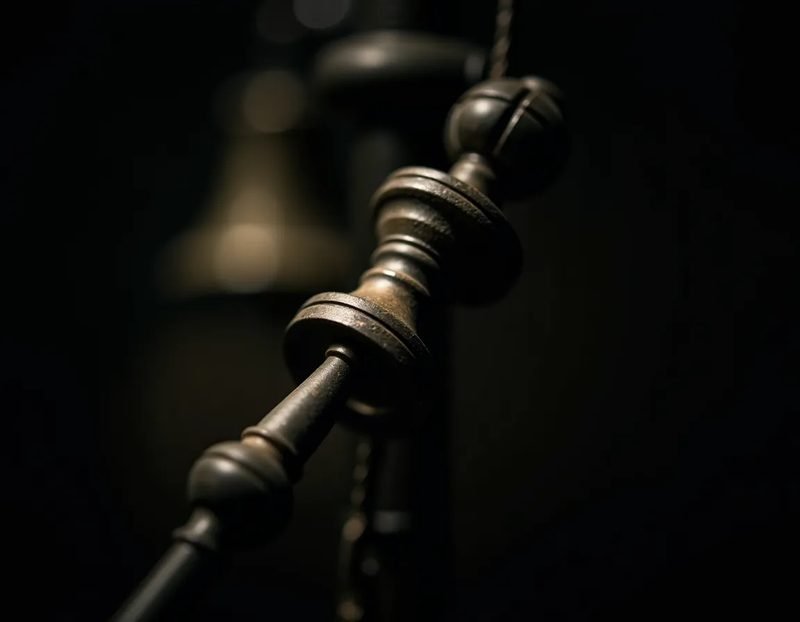
Strip away the candlelight and the Victorian costuming, and a talking bell stand is a piece of engineering with a genuinely elegant problem to solve. How do you make a suspended bell ring on command, from a distance, without a mechanism the sitter can hear or see?
The classic answer used a bell mounted on a light gimbal or spring arm, set just off balance, controlled by thread, magnet, or a foot-operated line running to the medium’s chair. A slight pull, a slight release, and the bell swings into its own clapper. Done well, the ring arrives a half second after the medium finishes a sentence, right when the sitter’s attention has drifted from “watch the hands” to “listen to the voice.”
Timing does more work than mechanism, it always has.
Later versions got cleverer still, some rigged for “yes” and “no” bells at different pitches, letting a medium run an entire question and answer session using nothing but two tones and careful pacing. The sitter supplies the narrative. The bell just supplies the punctuation.
Why Skeptics Couldn’t Debunk What They Couldn’t See
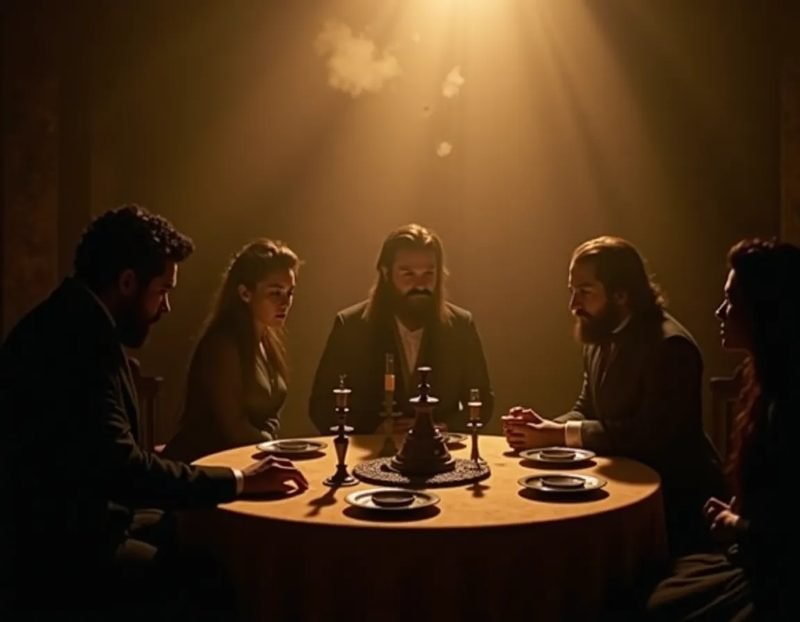
Harry Houdini spent a good chunk of his later career tearing physical mediumship apart in front of paying crowds, and bell stands were high on his list. He understood something that a lot of modern skeptics forget, exposure requires access. You can’t debunk a mechanism you’re not allowed to touch, and Victorian séance rooms were built, room by room, to control exactly what a sitter could touch.
Darkness did half the job. Trust did the other half.
Investigators who did get their hands on rigged bell stands, the SPR’s case files are full of them, found threads no thicker than hair, magnets sewn into cuffs, and mechanisms small enough to vanish inside a sleeve. None of it was especially advanced. What made it convincing wasn’t the engineering, it was the emotional context the medium built around it. A grieving sitter doesn’t audit a bell. A grieving sitter listens for a voice they’ve been waiting months to hear.
That’s the part modern performers tend to skip past, and it’s the part worth sitting with.
The Bell Stand’s Fall and Quiet Return
Physical mediumship collapsed hard once exposures piled up through the early twentieth century. Bell stands got packed away with slate writing and spirit trumpets, filed under “obviously Victorian,” and mostly forgotten by anyone doing platform mentalism after the 1940s. Mentalism moved toward psychology, cold reading, billet work, the stuff that didn’t require a rigged cabinet.
But something got lost in that shift, and a lot of working performers are quietly rediscovering it now.
A bell doesn’t need a narrative to be unsettling. It just needs silence around it.
Modern séance-style shows, the ones built around genuine dread rather than jump scares, have started bringing bell stands back into rotation precisely because audiences have never actually seen one in person. A phone can fake a floating object. A phone cannot fake the specific, physical decay of a real bell ringing eight feet from where you’re sitting in the dark. That sound has no modern substitute, and audiences feel the difference even when they can’t articulate it.
Building a Séance Around a Sound, Not a Trick
Most performers treat a bell stand as a single beat, ring the bell, get the gasp, move on. That’s a waste of a genuinely rare instrument.
The Victorian mediums who built careers on this got one thing right that’s worth stealing outright: repetition with escalation. One ring establishes the rule. A second ring, unprompted, breaks it. A third, in direct response to a question the sitter asked out loud, does something to a room that no verbal cold reading ever will.
I’ve run séance material for small groups where the entire first ten minutes has no trick in it at all, just conversation, just atmosphere. The bell doesn’t ring until the room has fully forgotten it’s there.
Then it does.
The reaction isn’t a scream, it’s quieter than that, a held breath, a hand grabbing the nearest arm. If you’ve performed séance work anywhere in the Louisville area, you know that particular silence. It’s worth more than applause.
What Makes a Bell Stand Worth Owning
A cheap bell stand announces itself, wobbly gimbal, visible thread wear, a clapper that rattles when it shouldn’t. Serious performers need something that survives handling before the show, close inspection during it if a bold sitter asks, and repeated use across seasons of work.
What separates a piece worth owning from a novelty shop toy comes down to three things: a mechanism quiet enough to trust in true silence, a bell voice with real sustain instead of a tinny clatter, and a finish that photographs like the antique it’s pretending to be, because in this era, your séance table gets photographed whether you like it or not.
This is not a prop you buy for one show and shelve.
It’s a prop you build a reputation around.
If you’re serious about séance work, the bell stand deserves a place on your table, not as decoration, but as the one sound in the room nobody in the audience has ever actually heard before.
Browse the collection at Arcane Relics.