The Moving Hand: Automatic Writing as a Performance Tool, From Spiritualist Parlors to the Contemporary Seance

The Moving Hand: Automatic Writing as a Performance Tool, From Spiritualist Parlors to the Contemporary Seance

Nobody hands you their hand and asks you to write with it. That’s the wall automatic writing breaks through, and it’s why the effect still lands two centuries after it was born in a parlor in upstate New York. I don’t believe a spirit ever guided a pencil across a page. I do believe something real happens in the body when a performer sets up the conditions correctly, and that gap between what’s real and what’s staged is where this entire piece of magic lives.

The Parlor Where It Began

Automatic writing didn’t start as a magic trick. It started as a devotional practice among Spiritualists in the 1850s, spreading fast in the wake of the Fox sisters and their rapping séances. Sitters would hold a pencil loosely over paper, empty their minds, and wait. Sometimes nothing came. Sometimes pages filled with looping, unfamiliar script that the sitter swore they hadn’t written on purpose.

The case that still gets cited in serious literature is Pearl Curran, a St. Louis housewife who in 1913 began producing enormous volumes of poetry and prose she attributed to a seventeenth-century woman named Patience Worth. Curran had no formal education to speak of. The material she produced was stylistically consistent, archaic in vocabulary, and utterly unlike anything she wrote under her own name. Psychologists studied her for years and never fully closed the case.

Around the same period, the Swiss psychologist Théodore Flournoy was documenting a medium named Hélène Smith, whose automatic writing sessions produced what she claimed was a Martian language, complete with its own grammar. Flournoy didn’t believe a word of the Mars story. What he found instead, and wrote up at length, was a mind capable of generating complex, internally consistent material entirely outside conscious authorship.

That’s the thread worth pulling. Not the ghosts, the mechanism.

What’s Actually Happening in the Hand
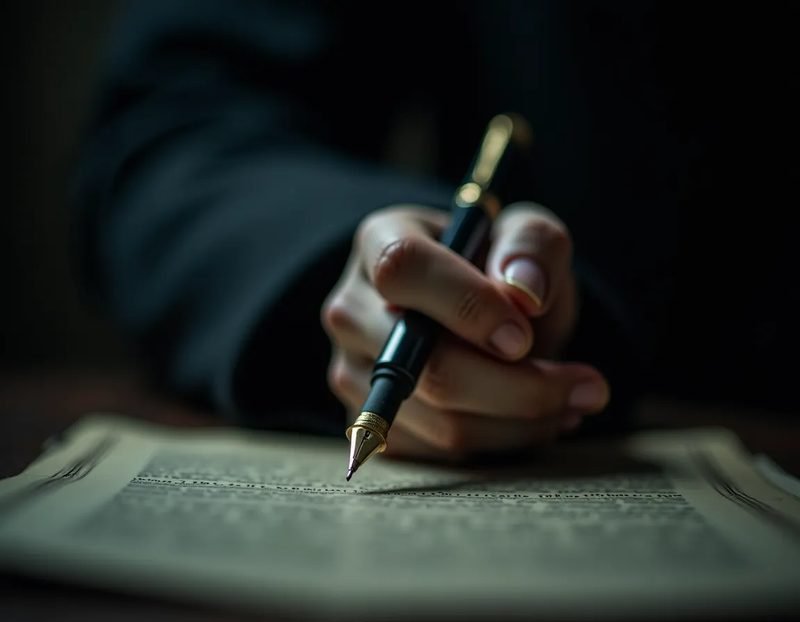
close-up macro shot of a hand gripping a pen mid-stroke, motion blur on the pen tip

Here’s what most performers get wrong about automatic writing: they treat it as pure theater, a hidden gimmick with a story bolted on. It’s more interesting than that, and the honest version of the pitch is stronger for it.

The underlying phenomenon has a name. It’s called ideomotor response, first formally described by the physiologist William Benjamin Carpenter in 1852. His claim was simple and it has never been overturned, the body will sometimes execute small muscular movements in response to a thought or expectation, without the conscious mind registering the action as voluntary. It’s the same mechanism behind a dowsing rod, a Ouija planchette drifting toward a letter, and a pendulum swinging in the direction a person is quietly hoping it will swing.

The French chemist Michel-Eugène Chevreul had already documented the pendulum version of this back in 1833, and his explanation held up. Small, involuntary muscle contractions, invisible to the person making them, driven by expectation rather than deception.

Layer dissociation on top of that. A relaxed, trance-adjacent state narrows conscious attention and lets the ideomotor pathway run without editorial interference from the part of the brain that usually vetoes strange impulses. This is not hypnosis in the stage sense. It’s closer to the state you fall into driving a familiar route and arriving with no memory of the turns.

Put those two things together, a body that moves on its own and a mind quiet enough to let it, and you have a genuine psychological phenomenon that a trained performer can put to work honestly. The audience isn’t watching a lie. They’re watching a real human capability, aimed at a theatrical end.

Building the Instrument

The classic apparatus is the planchette, a small heart-shaped or teardrop board riding on three points, one of them a pencil. It rolls freely under light fingertip pressure, and its weight distribution matters more than most builders think. Too light and it skitters unpredictably. Too heavy and it resists the small involuntary pushes that make the whole effect believable in the first place.

For a working piece, I favor a board with two brass casters at the rear and the writing point set slightly forward of center, it gives the tool a natural pull toward the paper rather than away from it. The pencil should be soft, a 2B or softer, because a hard lead skips and breaks the illusion of fluid, unconscious motion.

If you’re building a straight automatic writing routine rather than a planchette piece, the pen itself is the prop. A slightly weighted fountain pen, heavier in the barrel than a modern ballpoint, changes how it moves across paper and reads as more deliberate, more antique, more serious. Paper choice matters too. A cheap legal pad kills the mood before you’ve said a word. Cream stock with a slight tooth to it holds ink the way older paper did, and that tactile difference registers with a room even if nobody in it could tell you why.

The Physical Technique

The technique underneath the presentation has two parts, and you need both.

First is the genuine skill of dissociative writing, which any performer can train. Sit with a pen resting on paper, breathe slowly, and let your hand rest without directing it. Most people, with practice, can produce loose scrawls, loops, and eventually legible fragments this way, especially if they’ve primed themselves beforehand with a specific word or phrase held loosely in mind. This isn’t fake. It’s a real, trainable ideomotor skill, and building it honestly gives your performance a foundation that doesn’t depend on props at all.

Second is the controlled version, where you guide the outcome toward a specific reveal, a name, a number, a phrase tied to your prediction. This is where craft replaces mysticism. You slow your breathing, soften your shoulders, let your eyes go unfocused. Your hand does move on its own, or close enough to it that no observer can tell the difference, and you’re steering with the barest fraction of conscious pressure required to land the content where you need it.

My hands go cold every time I run this live, even now. That reaction is real, it’s not performed, and I’ve stopped trying to suppress it because it reads as truth to the room.

Framing Language That Sells the Moment

The words you use before your hand ever touches the pen do half the work. Don’t announce “automatic writing” like a lecture title, it flattens the moment. Instead, slow the room down first.

Tell them what you’re not claiming. Something like: I don’t know what moves a hand when the mind steps back and lets it. I’ve never had proof of anything beyond the page in front of me. But I’ve watched my own hand produce words I did not consciously choose, more than once, and I no longer dismiss it as coincidence.

Then narrow the frame to something concrete and personal to the moment, a name only one person in the room would recognize, a date, an object someone is holding. Vague mysticism bores a modern audience. Specificity, even eerie specificity, is what keeps them leaning forward.

And let the ending stay unresolved. Don’t explain the mechanism to your audience, ever. The moment you rationalize it out loud, you’ve handed them permission to stop feeling it.

Bringing It Into a Modern Set

The trap most performers fall into with automatic writing is treating it as a costume piece, candles, lace, a fake Victorian accent. That reads as nostalgia, not danger, and a modern audience clocks it as theater within seconds.

Strip the aesthetic down instead. A plain notebook. A single pen. No séance table trappings unless your whole show already lives in that world. Let the psychological weight of the moment do what the props used to do. I’ve run a stripped-back version of this at private events around Louisville, no planchette at all, just a pen, a borrowed notebook, and silence held a beat too long before the hand starts moving. The reaction in the room has nothing to do with era. It’s about a person watching another person do something their own hand has never done.

That’s the real inheritance from the Spiritualist parlor, not the props, the permission to sit with something the rational mind can’t fully close the book on.

If this piece is calling to you, the tools for building it honestly, planchettes, weighted pens, aged stock notebooks, live in our shop. Browse the full collection at arcanerelics.com/shop.

The Ghost Hunters Effect: How Paranormal Reality TV Reshaped What Audiences Expect From a Séance

The Ghost Hunters Effect: How Paranormal Reality TV Reshaped What Audiences Expect From a Séance

A sitter walked into a private event in the Louisville area a few years back already holding her phone up, recording for what she called “the EVP.” Nobody asked her to do that. She just assumed it was part of the deal. I don’t think she’d ever sat for a real séance in her life, but she’d watched enough hours of grainy night-vision footage to know exactly what a haunted room was supposed to sound like. That’s the audience walking through your door now, whether you asked for her or not.

Twenty Years of Training the Wrong Instincts

Paranormal reality television didn’t invent the séance, obviously. It did something stranger. It taught two full generations what a séance is supposed to look like, and that education has almost nothing to do with the actual history of the form. The Victorian sitting room, the rapping table, the medium’s trance, all of that got replaced in the public imagination by static bursts, red digital readouts, and a man in a ballcap whispering “did you hear that?” into a camera that heard nothing.

I’ve watched this happen in real time with sitters. They come in primed for a jump scare, a sudden bang, a spike on a meter. What they don’t come in primed for is silence. Real silence, the kind that stretches until someone’s shoulders start to shake, has almost vanished from how modern audiences understand the paranormal. Television edited it out decades ago because dead air doesn’t hold a commercial break.

This is the part most performers get wrong when they update their séance work for a modern room.

They add gadgets. Spirit boxes, K2 meters, an Ovilus barking out random words. And sure, those props read as “authentic” to an audience raised on cable television, I won’t pretend otherwise. But bolting hardware onto a script built for quiet dread doesn’t modernize the piece, it just changes the furniture. The bones underneath still don’t match what the audience expects from the pacing.

What the Genre Actually Trained Your Audience to Expect

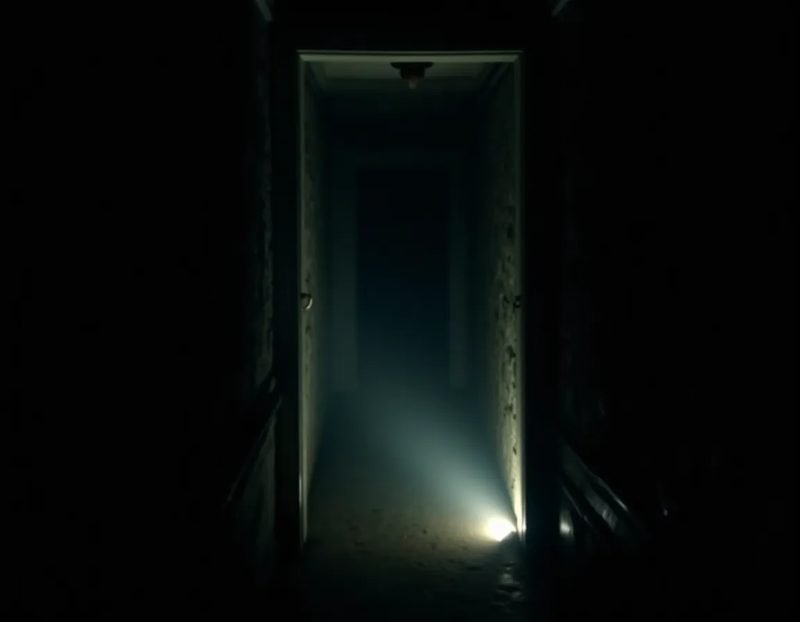
a dark hallway lit only by a handheld flashlight beam

Strip the paranormal reality format down to its skeleton and you get a specific rhythm. Long stretches of nothing, punctuated by a sudden claim of evidence, followed immediately by group reaction and speculation. The claim itself is almost never dramatic on its own, a shadow that might be a cameraman, a bump that might be the building settling. What sells it is the reaction. Four or five people leaning in at once, someone saying “did everybody see that,” the immediate collective agreement that something just happened.

Your modern sitter has internalized that structure whether she knows it or not. She expects the group to co-authenticate the moment. She expects evidence to be ambiguous rather than obvious, because ambiguous evidence feels more believable to a skeptical brain than a full apparition ever could. And she expects the reaction to happen fast, within a beat or two of the event, not built slowly over the twenty minutes a Victorian medium might have taken to bring a table to life.

Here’s the part that should make you stop and think about your own act.

That trained expectation is a gift, not a threat. An audience that already believes ambiguous is more convincing than obvious will do half your selling for you, if you understand how to withhold rather than how to display.

The Three Things TV Actually Got Right

I’m skeptical of almost everything that genre claims about its methods. I do think it stumbled into three real truths about how belief forms in a room, and they’re worth stealing on purpose.

  • Ambiguity outperforms certainty. A faint noise that might be nothing convinces more people than a loud noise that’s obviously staged. Your audience’s imagination is doing labor a special effect never could.
  • Group contagion is real. One person’s genuine, unscripted reaction spreads through a room faster than any line you deliver yourself. Plant your first believer carefully, or better, let a real reaction happen and get out of its way.
  • Technology reads as neutral. A meter or a recorder feels less biased to a modern sitter than a human medium does, even though you’re the one holding it. That perceived neutrality is worth more than most performers realize.

Where the Format Fails You, and Fails Hard

Now the bad news. Paranormal television also trained your audience toward habits that will wreck a live performance if you copy them directly.

Pacing is the biggest one. Television compresses hours of dead footage into ninety seconds of highlights, it has to, dead air kills ratings. A live sitter doesn’t get an edit. If you try to deliver a “moment” every four minutes because that’s the rhythm she’s used to from the screen, you’ll exhaust your material by the halfway mark and the second half of your séance will feel like padding. Real dread needs the boredom. It needs the room to sit in nothing long enough that the nervous system starts filling in the blanks on its own.

The second failure is evidentiary fatigue. A generation that’s watched a thousand hours of ambiguous static and unexplained bumps has also, without meaning to, built up a real tolerance for that exact category of ambiguous evidence. Show your sitter one more meter spike and you might get a shrug instead of a gasp, she’s seen that exact beat a hundred times on a screen where nothing was ever actually at stake. The moments that still land are the ones television structurally cannot deliver: something that responds directly to a detail she never said out loud, something that couldn’t have been edited in later because she’s watching it happen with her own eyes, one foot away from your hands.

That’s your entire advantage over the genre that shaped her expectations. Use it.

Building a Séance for a Trained, Skeptical Room

I don’t run my sittings like a cable special, and if you’re doing serious work in this space, neither should you. But I do borrow the genre’s grammar deliberately, the same way a good con man borrows the mark’s own assumptions and uses them as the setup. Here’s how I structure it now.

  1. Open slower than feels comfortable. Let the first several minutes contain genuinely nothing. Your modern sitter’s patience for silence has atrophied, which means silence now reads as more unnerving to her than it did to her grandmother’s generation, not less. Use that.
  2. Let the first “event” be small and deniable. A faint sound, a temperature note, something you could walk back if pressed. She’s been trained to trust small and deniable over big and obvious. Give her what she already believes in.
  3. Personalize before you escalate. The moment that breaks through evidentiary fatigue is always specific to her, a name, a detail she hasn’t spoken aloud in the room. Television can never do this authentically because it’s filming strangers on a schedule. You’re not.
  4. Resist the meter trap. If you use spirit boxes or EMF tools, treat them as texture, not proof. Your strongest moment should never depend on a gadget, because gadgets are exactly what her skepticism is calibrated against.
  5. End before the group needs to co-authenticate. Television always lets the group argue about what they saw. You want your sitters walking out still a little unsettled and undecided, not debating amongst themselves in a way that lets the room talk itself out of the feeling.

The Skeptic in the Room Is Now the Default, Not the Exception

I don’t necessarily believe most of what’s presented as “evidence” on paranormal television, most of it collapses under about ninety seconds of honest scrutiny. But I’ve built a career understanding why people want to believe it anyway, and that wanting hasn’t gone anywhere. If anything, the skepticism trained by two decades of debunked spirit boxes has made the wanting more stubborn, not less. Your modern sitter has learned to distrust easy evidence. She hasn’t learned to distrust her own nervous system.

That’s still yours to work with.

The performers who struggle right now are the ones treating this cultural shift as a problem to route around, buying gadgets to chase a credibility the genre already burned down for everyone. The performers who thrive are the ones reading the shift for what it actually is, a room full of people who’ve been taught exactly how to recognize a manufactured moment, and who will feel something real precisely because you never give them one.

What This Means for Your Own Séance Work

If you’re building or rebuilding a séance for a modern audience, the fix isn’t just a bigger prop table. It’s a sharper read of what your sitter already believes about how hauntings behave, because television installed that belief whether either of you asked for it. Lean into the ambiguity she trusts. Withhold the certainty she’s learned to doubt. Let the silence run long enough that her own mind does the work no meter ever could. Add the gadgets yes but not just for the sake of it! have a plan.

I keep a small collection of period-correct séance tools and a few stranger pieces that don’t fit any single tradition, the kind of objects that read as neither prop nor gadget to a sitter who’s grown suspicious of both. If you’re rebuilding your own sitting for a room full of people raised on static and spirit boxes, it helps to work with pieces that were never built for a camera in the first place.

You can look through what’s currently available at Arcane Relics.

The Camera Didn’t Lie: Spirit Photography, Double Exposures, and the Modern Performer’s Use of Visual Evidence

The Camera Didn't Lie: Spirit Photography, Double Exposures, and the Modern Performer's Use of Visual Evidence

The photograph arrived in mourning families’ hands weeks after the sitting. It showed what they’d hoped for and hadn’t dared name out loud: a translucent face drifting behind the living subject, unmistakably the deceased. William Mumler understood exactly what he was producing. The séance was theater. The photograph was evidence. And evidence, unlike performance, doesn’t end when the performer leaves the room.

That asymmetry deserves serious attention from any performer thinking about how their work lives in the world after the show closes. The history here is unambiguous about method and moral failure. It’s also, if you read it clearly, a precise education in why physical imagery carries weight that no spoken claim ever can.

William Mumler and the First Ghost Portraits

Mumler was a Boston jewelry engraver who stumbled onto the trick in 1861. A self-portrait he’d accidentally double-exposed showed a second figure, ghostly and indistinct, sharing the frame. He claimed it was his dead cousin. He showed it around. People believed him almost immediately. That speed of belief was the thing worth watching.

He opened a studio on Washington Street. His prices ran five to ten dollars a sitting, substantial money in 1862. His clients came in grief. They hoped for confirmation that the dead hadn’t entirely gone. He gave them photographs. Photographs that could be handled, held up to gaslight, passed to a neighbor. Objects that existed independent of his presence or his testimony.

The method was elegant in its plainness. Mumler worked with glass-plate negatives prepared in advance, sourcing images of deceased persons from cartes de visite or photographing confederates separately. He introduced the spirit figure through double exposure or during the developing process itself. The overlay was soft enough to read as supernatural, solid enough to survive casual scrutiny.

He was prosecuted for fraud in 1869. The case collapsed. The prosecutor couldn’t prove the images were fabricated, the burden of disproof proved impossible to meet in a courtroom. Mumler walked, battered in reputation but legally untouched.

The photographs remained.

The Darkroom as a Stage

Victorian spirit photographers were, technically speaking, skilled darkroom operators working problems that weren’t so different from those facing any close-up worker: control the conditions, misdirect attention, manage when and where the critical move occurs.

The double exposure was the foundational technique. One exposure in daylight, the sitter photographed straight. A second exposure on the same plate, a confederate in white muslin, lit obliquely and softly, positioned to read as distant and insubstantial. Print it. The result shows something present that doesn’t quite belong to the material world.

Frederic Hudson, working in London through the 1870s, refined this with theatrical lighting knowledge. My reading of his surviving prints tells me he understood reflected light the way a stage manager understands it: where it falls, how it registers at the edge of a frame, what the eye reads as depth versus flatness. His spirit extras had defined features, they weren’t blurs. Defined features make things credible. Vagueness invites doubt.

The more sophisticated operators worked in advance and switched the evidence before it ever reached the camera. Total private control. No real-time management required.

Unlike the live séance, where the medium had to perform and manage the room simultaneously, the darkroom gave these operators private time to build the evidence carefully, then present the finished object as something that had occurred objectively, without human interference. The séance asks you to believe in the moment. The photograph asks you to believe the chemistry.

The Crewe Circle and the Plate Switch

William Hope was a Crewe carpenter who began producing spirit photographs in 1905. By the early 1920s he was the most prominent spirit photographer in Britain. The Crewe Circle had produced thousands of prints for thousands of paying clients, many of them prominent, educated people who had lost family in the war and were carrying that loss into every séance room they could find.

Hope’s method relied on switching photographic plates. Sitters sometimes brought their own sealed packets of unexposed plates, intending to control for substitution. Hope swapped these for pre-exposed plates before they reached the camera, through careful timing and confederate management. The ghostly extras that appeared on the developed prints were his work, prepared in advance.

In 1922, Harry Price of the National Laboratory of Psychical Research marked a set of test plates with X-ray exposure before handing them to Hope. The developed prints showed no trace of those markings. The plates had been switched. Price published his findings. The evidence was solid.

Hope continued working for another decade.

The prints his clients already held weren’t returned. The grief those images had settled into wasn’t undone by Price’s technical report. The photograph had already done its work, it had become part of the story people told about their dead…and no exposure delivered years afterward could reach that.

Why the Print Did More Work Than the Séance

There’s a structural reason the photograph was more durable than the live performance: the séance required the medium’s presence to sustain its effect. The room, the atmosphere, the controlled darkness, the performer managing conditions in real time. Take the performer out of the room and the experience is a memory, subject to doubt, subject to revision.

The photograph doesn’t need the performer in the room.

Every time a client showed that print to a neighbor, described what it showed, answered questions about where it came from, the performance ran again. Mumler was in Boston. The client was in their parlor. The evidence was in their hands. He’d built himself a perpetual motion machine out of grief and paper chemistry, it required no further maintenance from him at all.

What this reveals isn’t a trick about the gullible. Photographs feel different from testimony because they present themselves as automatic. A witness claim implies a person with motives. A photograph implies a mechanical process without agenda. Light hitting a plate. A chemical reaction. Physics. That intuition is almost impossible to argue out of someone in real time, even someone who knows photographs can be manipulated and has been told so their entire life.

Roland Barthes wrote about this: the sense that a photograph guarantees its own referent, the feeling that whatever appears in the image has been in front of the lens. It’s not a rational conclusion. It’s a perceptual response. And perceptual responses don’t yield to argument the way beliefs do.

The Psychology of Visual Evidence

I don’t believe in spirit photography as a paranormal phenomenon. I never have. I approach these accounts as a performer interested in mechanism, not as someone looking for confirmation of the impossible.

But what the spirit photography record makes plain is that the psychological weight of a physical image is genuinely disproportionate to what we consciously understand about photographs. Audiences in 2026 know images can be manipulated. They’ve been told this their whole lives. And yet, hand someone a physical print, something they can hold, turn over, examine under light, and watch what happens. The analytical frame loosens. The object asks to be held, not argued with.

This isn’t about intelligence or credulity, it’s a baseline cognitive response to material objects. We process held evidence differently than we process spoken claims.

The spirit photographers understood this before the cognitive scientists named it.

There’s a secondary effect worth noting. When a person receives a physical artifact during an emotionally loaded experience, they tend to reach for it afterward. They keep it. They return to it. Each return is another encounter with the original experience, and each encounter deepens the memory’s emotional character. The photograph doesn’t just document the moment. It keeps reaching back into it.

Building Work That Follows the Spectator Home

If your piece ends and nothing leaves the room with the spectator, you’re leaving most of the performance behind.

A photograph given at the close of a piece, one that confirms something apparently impossible, doesn’t just commemorate the experience. It becomes the experience in every subsequent retelling. Your spectator shows it to their partner that night. The partner asks what happened. The spectator explains the whole sequence. Your performance runs again, without you present, without any further effort on your part!

This is why physical artifacts, photographs, printed cards, apparently aged documents, work so well as closers in bizarre magic and mentalism. The spectator becomes your distributor, because they have evidence. And so yes, this is worth building into your work deliberately, not as an afterthought.

If you’re like me, you’ve already noticed the difference between a performance people talk about in general terms and one they describe to others with something in their hands. The object changes the conversation. It gives the story weight it wouldn’t have on its own.

The applications are concrete. A pre-prepared photograph introduced as documentation at the climax of a séance narrative. A printed image in a sealed envelope, held by the spectator throughout the performance, opened at the moment of revelation. A photograph that appears to show something impossible, given as the confirmation rather than just the verbal climax. Staged imagery from a fictional event your character supposedly witnessed, presented to the spectator as historical record.

I’ve used sealed printed photographs as closers in readings for years. My experience is consistent: people keep them. They photograph the photograph and send it to someone else. The conversation about what happened travels further than I could reach on my own. The image does that. Not me.

A photograph is the obvious example. It isn’t the only artifact that does this.

Audio works the same way. A spectator who goes home with a recording, one that appears to confirm something your performance implied, plays it for someone that night. That person asks what happened. Your show runs again, without you, in someone else’s kitchen.

Intonation does exactly this. It’s a prop designed to close a piece by handing the spectator an audio record of something that shouldn’t exist. The recording travels. It becomes the evidence, it starts the conversation, it does the work.

The Victorians understood that the print outlasts the performer. They used that understanding to exploit grieving people, and that’s its own clear and troubling story. But the principle itself, that a physical image carries weight that spoken performance never can, is entirely available to the serious worker building theater that means something.

Build things that leave the room with people.

If you’re looking for props, artifacts, and materials built for exactly this kind of work, have a look at what we carry at Arcane Relics.