
Magicians work in loose sleeves and big pockets for a reason. A cape hides a dove. A servante hides a load. The whole silhouette of stage magic was built, historically, around distance and drape, room to conceal that a suit and a six-foot conversational radius simply doesn’t give you. Mentalism doesn’t get that luxury. You’re standing eighteen inches from someone in a well-lit living room, wearing a suit jacket that was tailored to fit close, and you’re expected to produce a folded prediction from somewhere. That’s an entirely different engineering problem, and most of the gimmicks sold under “mentalism” on the general market were never built to solve it.
The Costume Isn’t the Problem, the Proximity Is
Here’s the part most performers get backwards. They think concealment is about the garment, so they hunt for a bigger pocket or a deeper sleeve. Wrong problem. Concealment for a mentalist is about angle math under close scrutiny, not fabric volume. A magician working a stage has forty feet of dead air between himself and the nearest spectator, and darkness doing half his work for him. You, doing a billet switch across a coffee table, have someone’s eyes eleven inches from your hands under a hundred-watt bulb.
That changes everything about what “hidden” means. A move that reads as invisible from a theater seat reads as a fumble from a barstool. I learned this the slow way, doing corporate and private work around Louisville, where the rooms are small, the lighting is honest, and people like to lean in. A load that would vanish on a stage in Vegas gets caught by a guest standing at your elbow with a drink in her hand.
So the first rule of mentalism concealment isn’t “hide it better.” It’s “need less concealment to begin with.”
Why Magic-Shop Gimmicks Get Mentalists Caught
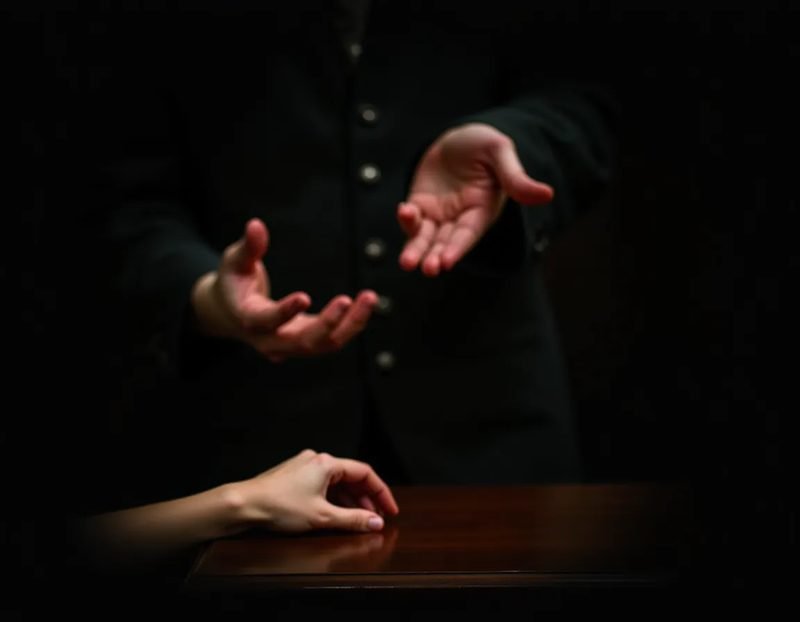
Most stage-built gimmicks assume three things a mentalist doesn’t have: a jacket cut loose enough to hide a mechanism, an audience that isn’t standing close enough to see your wrist tension, and a moment of misdirection big enough, a flash, a production, a joke, to cover a reload. Take those three away and a pull system built for a magician’s coat becomes a bulge under a fitted blazer that a sharp-eyed guest will clock in about four seconds.
I’ve watched it happen. A performer borrows a topit rig meant for full evening wear, drops it into a modern slim-cut suit, and spends the whole set with one shoulder held slightly wrong. The audience can’t name what’s off, but they feel it, they feel it in their gut before they understand why. That crooked posture is doing more to expose the method than the reload ever would on its own.
The fix isn’t a better gimmick. It’s picking gimmicks and carries that were designed for the constraint you’re actually working under: close, lit, conversational, no misdirection window bigger than a sentence.
Sleeving, Rebuilt for a Blazer Cuff
Classic sleeving, the Tenkai palm lineage, the elastic pull that drags a card or billet up into the coat, was designed around a roomy sleeve and a stage-length reach. Try it in a fitted modern cut and the elastic either can’t travel far enough or it prints against thin wool the second your arm bends.
The mentalist’s version solves this differently. Instead of pulling an object a foot up your arm, you’re moving it two or three inches, wrist to cuff edge, using body position rather than distance to do the hiding. A slight turn of the shoulder, a hand that drops to adjust a cufflink, buys you the half-second you actually need. It’s a smaller move because it has to survive a smaller gap between you and the eyes watching it.
This is also where a lot of expensive gimmicked wallets and card tools quietly fail. They were built to be worked at range, and the tolerances, the clearances, the exact amount of “give” in the mechanism, assume nobody’s watching your fingers from a foot away. A tool built specifically for close mentalism work will have tighter tolerances and a shorter, cleaner travel path. That’s not a cosmetic difference. It’s the whole difference.
Body Carries That Survive a Handshake
A body load has to survive contact now, not just distance. Mentalism runs on proximity. People shake your hand, touch your arm, sit close enough that their knee brushes the table leg. A waistband carry that would be invisible on a stage magician doing a silent act becomes a real risk the moment someone leans in for a hug at the end of a reading.
The carries that actually hold up share a few traits.
- They sit flat against the body, not just concealed from front-on view but concealed from an accidental brush.
- They release with a motion that has a built-in cover story, adjusting a watch, checking a phone, not a motion that only makes sense if you’re hiding something.
- They don’t depend on a jacket staying buttoned. Suits get unbuttoned mid-conversation. Plan for that, don’t fight it.
The nail writer and swami-style tools that survived decades in mentalism did so because they solve a body-carry problem elegantly, small, low-profile, deployable with a gesture that already looks natural in a reading. Compare that to a full load harness built for a magic act, something meant to survive being seen from thirty feet but never touched. Wrong tool. Different job entirely.
The Switch Is Still the Whole Game
Loads get the attention. Switches win the show.
Most of what a mentalist actually does, center tears, envelope switches, one billet standing in for another, isn’t concealment of an object so much as concealment of a moment. Annemann understood this a century ago, and Corinda spent a good part of Thirteen Steps making the same argument in different language: the switch has to disappear into a piece of business the audience already expects to see. Folding paper. Sealing an envelope. Handing something back.
This is where borrowed magic-shop switches fall apart fastest. A switch designed to happen during a flourish, a fan, a ribbon spread, has no home in a mentalism routine, because mentalism doesn’t have flourishes. It has conversation. Your switch needs a conversational excuse, not a theatrical one. “Let me make sure this is sealed properly” does more concealment work than any mechanical gimmick ever will.
I’ll say this plainly: if your switch only works when the room is dim and the audience is thirty feet back, it’s not a mentalism switch. It’s a stage switch wearing a mentalist’s clothes.
Building for the Room You’re Actually In
The uncomfortable truth is that most performers buy concealment tools the way they buy everything else in this business, by reputation, not by fit. A gimmick that’s famous, that’s been used by five well-known names, gets purchased and dropped into a completely different working style without anyone asking whether the geometry even applies.
Ask the boring question first. How close will you actually be standing? What’s the lighting like? Is your jacket fitted or loose? Will people touch you during the piece? Those four answers will tell you more about which concealment system belongs in your act than any endorsement will.
We build and source pieces at Arcane Relics with exactly that constraint in mind, close range, real light, a suit that fits like a suit is supposed to. Not everything on a magic shop shelf survives that test. The pieces that do are worth having in rotation for the rest of your working life.
Browse the current concealment and close-up tools at Arcane Relics.