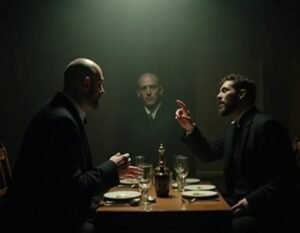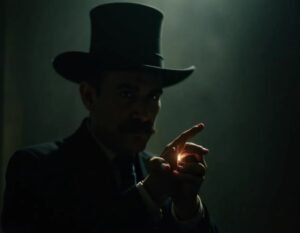

A binary is the most dangerous structure in mentalism. Fifty-fifty odds sound like nothing, and any spectator with half a brain for math knows it. Yet somehow, when you tell someone “living or dead” and land it clean, the room doesn’t do math. It does something closer to grief, or awe, or both at once. That gap between the actual odds and the felt impossibility is the whole game, and almost nobody builds for it correctly.
Why Fifty-Fifty Should Be the Easiest Thing to Expose
Think about what a coin flip actually asks of an audience. It asks them to accept that you knew, in advance, which of two states applies to a person, an object, or an outcome. There’s no narrative cover for a coin flip. It’s just a guess that happened to be right, and everyone in the room knows it going in.
Most dual-outcome effects fail because the performer treats the binary as a magic trick problem, something to be solved with a switch or a force. That’s backwards. The binary isn’t the trick, it’s the frame. If the frame reads as a coin toss, you’ve already lost, no matter how clean your method is.
I’ve watched skilled performers run gimmicked coin routines, envelope splits, even electronic tells, and still get the same reaction: a shrug, a “neat,” a spectator moving on with their evening intact. The method worked. The moment didn’t.
What Holmes Living and Dead Gets Right

Holmes Living and Dead doesn’t ask the audience to accept a coin flip. It asks them to accept a verdict. That distinction sounds small. It isn’t.
The construction gives you total freedom over which outcome lands, and it does so without a single visible decision point for the audience to latch onto. There’s no moment where you appear to choose. There’s no moment where a spectator can point and say “that’s when he picked.” The reveal simply arrives, already true, as though it had been true the whole time you were talking.
That’s the part worth sitting with. Most props hide the mechanism. This one hides the decision itself, which is a harder and more valuable thing to conceal.
I’ve tested a lot of binary props over the years, most privately, some on stage. Holmes is one of maybe three I’d trust in a room full of skeptics who are actively hunting for the tell.
The Psychology of “Fate” Versus “Chance”
Here’s the counterintuitive part. A binary outcome feels most like fate precisely when you stop trying to make it feel mysterious and start making it feel inevitable.
Mystery invites suspicion, it says “something odd is happening, watch closely.” Inevitability invites surrender, it says “this was already decided before you walked in the room.” Those are different emotional contracts, and only one of them survives a spectator replaying the moment in their head three days later.
Holmes leans hard into inevitability. The presentation isn’t “I’m going to guess if this person is living or dead.” It’s closer to “this was already settled, we’re just finding out together.” Your job as the performer is to get out of the way of that framing, not to perform the tension of not-knowing. You already know. Play that you know.
My jaw actually tightens a little every time I run this one for a new group, even now. Not because I doubt the mechanism, I’ve run it enough to trust it completely, but because the presentation asks me to sit in a kind of certainty most magic doesn’t require. That’s an unusual feeling to hold on stage, and it reads.
Where Comparable Effects Fall Apart
I want to name the failure modes directly, because they’re common and they’re avoidable.
- The tell of relief. A performer who’s been sweating a fifty-fifty force visibly relaxes the instant the “correct” outcome lands. Audiences read body language before they read props. If you look relieved, they clock that something was at risk.
- Over-explaining the process. The more you narrate how the decision is being made, “the spirits are weighing in,” “the pendulum is choosing,” the more you remind the audience there was a decision at all. Silence sells inevitability. Narration sells a process, and a process implies a choice point.
- A method that requires a peek. Anything that asks the performer to glance, angle, or check creates a physical tell that a trained eye catches even when a casual one doesn’t. Bizarre magic audiences skew toward people who’ve seen a lot of magic. Some of them are watching your eyes, not the prop.
- No emotional stakes attached to the outcome. If “living or dead” doesn’t cost the audience anything, curiosity, dread, hope, it’s just trivia with theater around it. The binary needs weight before it needs mystery.
Holmes solves the first three structurally. The fourth one is on you, and it’s the more interesting problem anyway.
Building the Weight Before You Build the Reveal
A dual outcome only feels like fate if the audience has something riding on it emotionally before you ever get to the answer. That means your setup has to do real work, not just logistical work.
Don’t open with the prop. Open with the question the prop is going to answer, and let that question breathe for a beat longer than feels comfortable. Who is this person to the spectator. Why does the answer matter tonight, in this room, to this person specifically. You’re not stalling, you’re building the thing the reveal is going to pay off.
I keep my patter spare for this one. Short sentences. Long pauses. The prop does enough visual work on its own, you don’t need to compete with it for attention.
One thing I’d tell any performer picking this up: resist the urge to explain your method’s fairness. Don’t say “I have no way of knowing this.” The line is almost always a mistake, it plants a doubt that wasn’t there before you spoke it. Let the prop’s construction do that convincing silently, through how it behaves, not through what you claim about it.
Who Should Actually Own This Piece
This isn’t a piece for someone building their first ten minutes of stage time. The construction rewards a performer who already understands pacing, who knows how to sit inside a silence instead of rushing to fill it. Hand this to someone who narrates too much and they’ll undercut the very thing that makes it work.
But for a working mentalist or a bizarrist who’s tired of binary effects that feel like binary effects, this is a real answer to a real design problem. Not a gimmick dressed up in Victorian language. A structural solution to the coin-flip problem, dressed, appropriately, in exactly that kind of language.
I don’t hand out easy recommendations. This one earns its place in a working set.
You can find Holmes Living and Dead, along with the rest of the current collection, at arcanerelics.com/shop/.