The Mentalist’s Memory: Mnemonic Systems and the Performance of Impossible Recall

A performer stands before a room of strangers. Someone calls out a word. Then another. Then thirty more, tossed out in no order at all, groceries and countries and the names of dead relatives. Five minutes later the performer recites all thirty back, in order, then backward, then names which number each word was. The room goes quiet in that particular way rooms go quiet when they’ve just watched something they can’t file under “trick I’ve seen before.”
I don’t believe this is supernatural. I never have. But I’ve built pieces of my own act on techniques that are, by any honest account, a few thousand years old, and I still watch audiences reach for the word “impossible” when a more accurate word would be “unpracticed.” Mnemonic systems aren’t a secret. They’re a skill most people simply never sat down to learn.
That gap, between “learnable” and “learned,” is where a mentalist lives.
The Trick Behind No Trick
The memory palace, or method of loci if you want the Latin, works because your brain is extraordinarily good at remembering places and shockingly bad at remembering lists. Ancient Greek and Roman orators used it to deliver hours-long speeches without notes, walking an imagined building in their mind and picking up an idea at each doorway, each windowsill, each chair.
Here’s the part most people get wrong when they first hear about it: you’re not memorizing the list. You’re memorizing a walk you already know, your childhood home, your morning commute, the route from your car to your front door, and then you’re hanging strange, vivid images on the furniture along the way.
Say the first word is “trumpet.” You don’t picture a trumpet sitting quietly on your porch. You picture it blasting so loud your porch light shatters, brass and glass raining down as you step through the door. The stranger and more absurd the image, the stickier it gets. Calm images vanish. Violent, funny, or sexual images stay, that’s not a performer’s opinion, that’s just how the associative memory built into your skull happens to work.
I use a version of this that runs through a location I’ve walked a thousand times, and when I need thirty items in order, I’m not doing math in my head. I’m just walking my hallway and reporting what I see. The audience is watching a magic trick. I’m watching a home movie.
Turning Numbers Into People, Places, Things
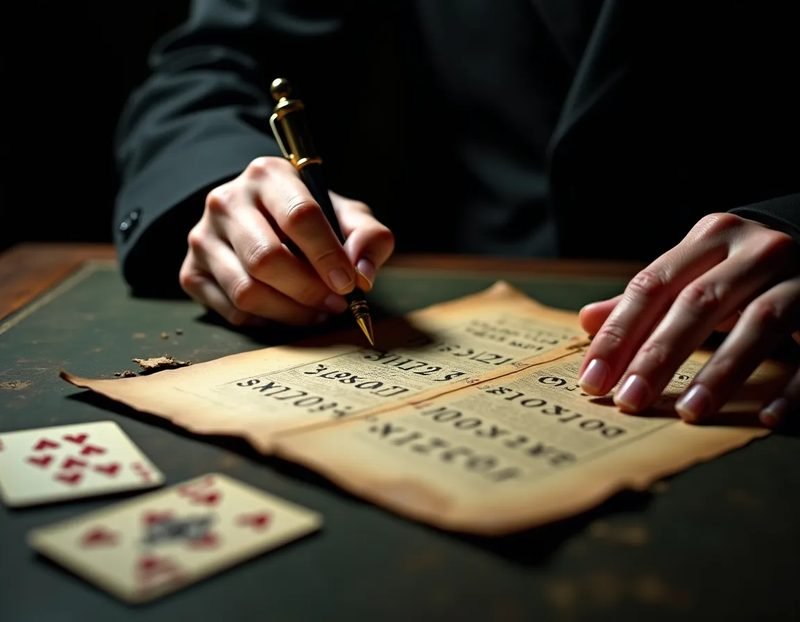
Memorizing a shuffled deck or a string of fifty digits called out by the crowd requires a different tool, because numbers themselves don’t hang on hallway furniture very well. This is where peg systems and the Major System come in, and if you’ve never built one, this single technique is worth more to a working mentalist than most props on the market.
The Major System assigns a consonant sound to each digit, 0 through 9, and lets you build any number into a word using vowels as filler. The digit 1 becomes T or D. The digit 2 becomes N. Put them together and 12 becomes “TN,” which with a vowel dropped in becomes “tin,” or “ton,” or “dawn.” Suddenly a boring number is a picture. String enough of these picture-words together into a scene, and a forty-digit number becomes a short, absurd story you can walk through exactly like a memory palace.
A peg system does the same job with a fixed list, one peg image for every number from one to a hundred, memorized once and reused forever. Once your pegs are locked in, you can drop any new list onto them instantly, because you already know what lives at “seventeen.” You’re not building new architecture every time. You’re just hanging new coats on hooks that were already on the wall.
This is the part serious performers underestimate. The palace gives you order. The number system gives you the numbers themselves, dates, phone numbers, deck positions, dollar amounts. Combine them and you can build routines that feel like they violate physics.
Building Your Palace for the Stage, Not Just the Study
A memory athlete competing for a title needs speed and raw capacity. A performer needs something else entirely, drama. Your palace has to survive interruption, hecklers, a dropped line, a phone ringing in the third row, without collapsing.
Build your palace slower than a competitive memorizer would, and build it with theatrical logic instead of pure efficiency. If your stations are also good story beats, a doorway, a mirror, a locked drawer, your recall doubles as narration. I run a private routine where each “stop” in my mental route corresponds to a beat in the story I’m telling out loud, so my performance patter and my private recall system are the same walk. The audience thinks they’re just enjoying a story.
Test your palace under pressure before you ever use it live. Have someone talk over you while you recall it. Have someone bump the table. A palace that only works in a quiet room isn’t ready for a stage, it’s ready for a diary.
I tested an early version of a long-form recall piece at a private event in the Louisville area, thirty-some items called out by a fairly loud room, and the thing that surprised me wasn’t that I remembered them. It was that a stumble two-thirds through didn’t sink the piece, because my palace was sturdy enough that I could skip a station, recover a beat later, and nobody in the room noticed the seam.
Why Memory Alone Doesn’t Sell the Effect
Here’s the counterintuitive part. A flawless recall, performed flatly, reads as a party trick, a curiosity, nothing more. The exact same recall, performed with the right pacing and the right pauses, reads as something the audience can’t explain and doesn’t want explained.
Psychologically, audiences don’t evaluate your memory. They evaluate your effort. If you rattle off fifty items instantly with no hesitation, some part of the room assumes a gimmick, a plant, a hidden earpiece. But if you close your eyes for a beat before item thirty, if your face shows the tiniest flicker of genuine searching, the room reads that struggle as proof of authenticity. A little friction sells more truth than a perfect, frictionless delivery ever will.
This is why the best memory performers build in small, honest stumbles or slow their pacing right where the audience expects a computer would speed up. You’re not faking difficulty. You’re letting the real difficulty, the part where you’re genuinely walking a mental hallway under real pressure, show through instead of hiding it.
One more thing worth saying plainly, because most guides skip it. The story you tell about your method matters as much as the method. I never claim a photographic memory. I let people believe what they want to believe, and what most people want to believe is stranger than any technique I could explain to them anyway.
Where Performers Break Their Own Illusion
The most common failure isn’t a forgotten item. It’s over-explaining. A performer gets nervous after a strong recall and starts narrating the method unprompted, “I use a memory palace technique,” and just like that, the room’s sense of wonder collapses into a classroom. You don’t owe anyone an explanation, and giving one for free is the fastest way to turn magic into homework.
The second failure is under-rehearsing the retrieval, not the memorization. Most performers drill getting information in and never drill getting it back out under performance conditions, with adrenaline, with a heckler, with house lights in their eyes. Practice recall in the exact conditions you’ll perform in, standing, moving, talking simultaneously, or your palace will fail you the one time it actually matters.
The third, and this one took me longer to learn than I’d like to admit, is choosing lists that are too clean. A random list generated by an app often isn’t random enough, it repeats patterns your brain quietly exploits, and audiences sense when something felt just a little too convenient. Real audience-shouted chaos is harder to memorize and far more convincing once you pull it off.
Starting Your Own System Tonight
You don’t need to memorize a deck of cards this week. Start smaller. Pick ten stops along a walk you already know cold, your route from bed to kitchen works fine, and assign one wildly specific image to each stop. Then memorize ten unrelated words using nothing but that walk. Do it again tomorrow with ten different words on the same walk. Within a week or two, you’ll notice the palace holding steady even as the contents change.
Build your peg list slowly too, one to twenty is plenty to start, and resist the urge to rush toward a hundred. A shaky peg system full of fifty half-remembered images is worth less onstage than twenty pegs you’d recognize in your sleep.
And here’s the truth most instruction manuals leave out. This work is quiet, unglamorous, and repetitive, and it will feel like nothing is happening for longer than you’d like. Then one night it clicks, and you’re standing in front of a room reciting back forty things a stranger just made up, and the room goes still.
By the way, I still find that stillness a little unnerving, even now, even knowing exactly how I got there.
If you want tools built for performers who take this work seriously, the kind of pieces that reward real study rather than a shortcut, take a look through what we carry at Arcane Relics.