The Book Test Reconsidered: Construction, Psychology, and Why No Other Effect Generates the Same Silence

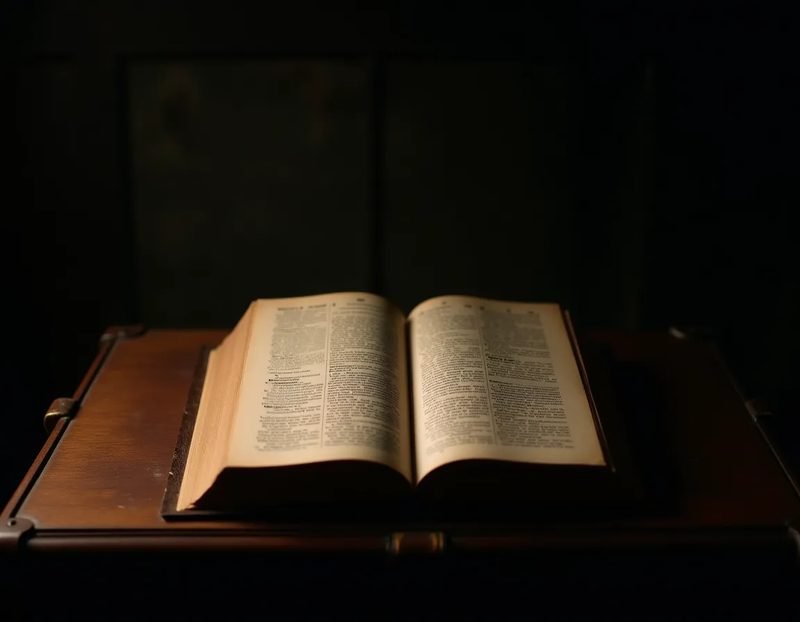
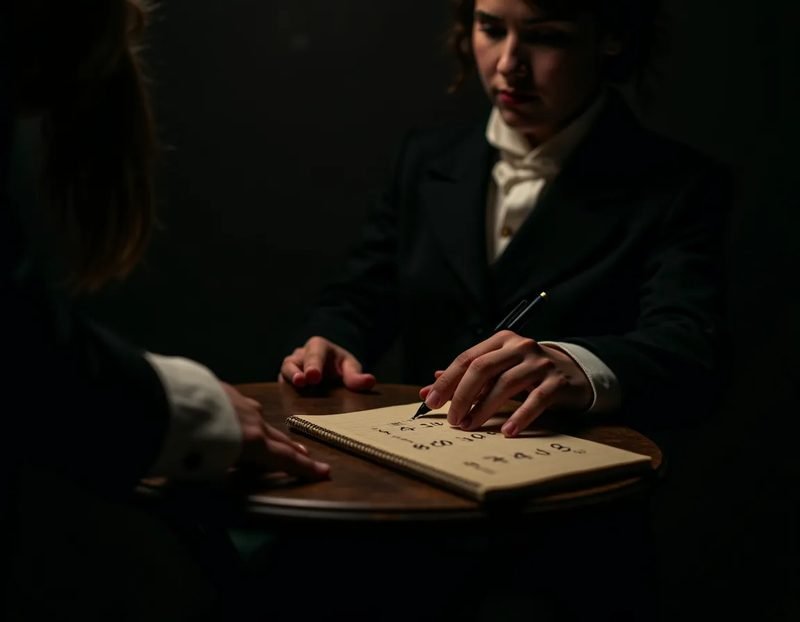
An open antique book with a handwritten slip of paper tucked between the pages, candlelight

Most performers who do book tests can’t tell you why the effect works. They know it lands. They know the room goes quiet in a way it doesn’t for most other material. Press them on the structural logic and you’ll get something vague about “free choice” or “an unexamined object.” That’s not wrong. It’s just not enough to build a real performance from.

The book test is the most requested effect in mentalism. It deserves more rigorous thinking than it usually gets.

What the Book Test Does to a Room

There’s a quality of silence a book test generates that I haven’t found in any other effect. I’ve performed in rooms of every size, close-up tables to theaters, and nothing else creates quite the same suspension. The spectator goes inward. They hold a word in their head like something fragile, the room holds its breath alongside them, and for a moment everyone present is leaning toward a single piece of private information they have no right to reach.

That silence isn’t just tension. It’s a particular kind of cognitive isolation: the spectator is holding private information in a public space and watching you reach for it. The word they’re thinking isn’t in a box. It isn’t written anywhere. It lives, as far as they’re concerned, only inside their own mind.

That architecture is worth understanding before you choose your method. Because the method doesn’t create that silence. Your framing does, and your framing needs something solid underneath it.

Why a Freely Chosen Word Hits Differently

an open book lying spine-up on a worn wooden surface, pages slightly fanned, natural light

Card selections, sealed billets, even good peek work, all of it has invisible seams. The spectator knows, somewhere, that you touched the thing. The suspicion may stay dormant during the performance. But it’s there, it’s almost always there, and it limits how far the effect can travel into them.

A book is different. It came off a shelf, or out of a bag, or was sitting in the middle of the room before you walked in. The spectator turned to their own page. They chose their own word. You never handled it. The object is theirs, the word is theirs, and you’re about to name it.

This is why the book test reads as genuinely uncanny even to audiences who’ve seen a lot of magic. The seam isn’t hidden. In the best work, there isn’t one. The word was freely chosen, they know that, they know it, and you know it anyway. That’s a different category of impossible than anything a card deck offers.

It’s worth protecting.

Four Methods and What Each One Costs You

The major methodological families in book test work each carry distinct tradeoffs. Most performers settle on one early and never seriously re-examine it. That’s a mistake, especially when your performing conditions change.

  • One-ahead. The classic engine. A pipeline of information that keeps you one step ahead of the spectator’s awareness. When it’s clean, it’s undetectable. The risk is in the handling: any pause that reads like thinking can crack it open. Spectators won’t know what you’re doing, but they feel hesitation, and hesitation reads as fishing.
  • Equivoque. Force logic dressed as free choice. You guide the spectator to a predetermined word through seemingly fair decisions. Elegant in theory, demanding in practice. It requires precise verbal control under pressure, and a small deviation from your intended path can leave you holding nothing. This rewards performers who are genuinely confident under pressure, and punishes everyone else.
  • Memory work. A legitimate page-and-word memorization system. The spectator genuinely picks any page, any word, and you retrieve it. The hardest approach in terms of preparation. Also the most unassailable. There’s nothing to detect because nothing is happening. You just know it.
  • Technical forces. Gimmicked books or prepared pages that force a word while appearing to allow a free selection. The upside is reliability. The downside is that the effect lives entirely on your framing. A technical force without strong presentation is a trick. The same force inside the right atmosphere is something harder to shake, something that follows the spectator home.

None of these is categorically superior. The right choice depends on your performing conditions, your audience, and how much preparation you’re genuinely willing to do. Know at least two methods, from different families if you can, and know when each one belongs. And that’s the whole game, honestly.

Framing Determines What the Audience Walks Away With

Here’s what most guides on book tests get wrong: the reveal is the least important part.

Watch two performers work the same method, the same book, the same word. One names it and looks pleased with himself. The audience applauds politely and moves on. The other names it, then goes quiet. Stays with the spectator in that moment. My hands go still in those moments. I stop performing and just wait. I give her somewhere to go with it.

The second performer isn’t demonstrating cleverness. He’s facilitating something she’ll turn over on the drive home.

A book test framed as mental calculation reads as clever. The same effect framed as something even the performer can’t entirely account for, something a little unnerving even to him, reads as haunting. That difference lives entirely in your presentation, not your method. The build matters as much as the reveal. Slow it down. Don’t rush toward the moment you’ve worked to create.

Give the silence somewhere to go.

Madness at the Castle

My own book test is Madness at the Castle, and I built it for performers who want something that doesn’t feel like a trick when it’s in the spectator’s hands.

The book is a genuine piece of Gothic fiction, a story that earns its atmosphere before you ask anyone to open it. That matters more than most performers consider. When a spectator picks it up, they’re already inside something. The word they choose feels weighted by the narrative, and the reveal carries that weight with it. You’re not manufacturing atmosphere on the fly. The object does that work alongside you.

I’ve performed it close-up and for theater audiences. It holds in both contexts because the framing is embedded in the object itself, not bolted on at performance time. The method is clean, the reset is fast, and it’s a piece I come back to consistently in my own working set. That consistency is the test I apply to everything I put in my case.

Something New Is Coming

I’m not ready to say everything yet.

Performers who’ve followed my work know I’ve been building something in the Wimhoff world for a while now, something layered in a way I haven’t attempted before. The Wimhoff Journals is a book test unlike anything I’ve released. The force architecture is clean. But the object itself carries a history that performs alongside you, a complete narrative ecosystem that deepens every performance rather than just enabling it. The framing possibilities go further than any single effect I’ve built.

More soon. If you’re on the mailing list, you’ll hear it before anyone else.

What to Take Into Your Next Performance

The book test works because it exploits something true about how we experience privacy, the felt inaccessibility of our own inner life. When you name the word correctly, you’re not just doing a trick. You’re violating a boundary the spectator didn’t know they believed in until you crossed it.

That’s worth protecting. It rewards performers who’ve thought carefully about why it works, not just how. Start from the psychology. Build your presentation from there. Choose a method that gives you real confidence under pressure, because no method supplies that for you.

Browse the full catalog at arcanerelics.com/shop, including Madness at the Castle and everything else built for performers who take this work seriously.

The Q&A Act Reconsidered: Billet Work, Switches, and the Power of the Written Confession

A broken wax seal on an antique billet envelope, candlelight, quill and ink beside old books

In Part 1: Annemann’s Shadow: How ‘Practical Mental Effects’ Quietly Rewired Modern Mentalism, we traced how Annemann’s foundational text quietly restructured the philosophy beneath the entire craft. That post was about the shape of the thing. This one is about the hands. It assumes you’ve already accepted the premise that Practical Mental Effects wasn’t a collection of parlor games. It was a technical manifesto. And nowhere is that manifesto more pressurized, more exposed to failure, and more capable of genuine astonishment than in the Q&A act.

Nobody finds their way into Q&A work by accident. Something calls you to it, or it doesn’t.

Why Writing Something Down Changes Everything

Here’s what I won’t claim: I don’t think a handwritten billet carries any mystical charge. I’ve handled thousands of them. Paper is paper.

What I do believe is that the spectator thinks it does. And that distinction is the entire foundation of the act.

When someone writes a question on a slip, they commit in a way that speech never quite forces. Writing is a declaration. It has weight. The spectator folds it, holds it, sometimes clutches it across their lap. Their handwriting is in there. Their actual question, the one they’d be embarrassed to say out loud, is sealed inside. They’ve locked the thought. And when you answer that question before they’ve handed it to you, their internal logic says: you can’t have seen that. I wrote it. I held it.

That’s the psychology Annemann was building around. Not the billet as a prop, but the billet as proof. The spectator carries their own evidence of impossibility in their hand. That’s what makes thought reading land differently when there’s a written word involved. The confession creates the miracle. The method almost doesn’t matter.

Almost.

The One-Ahead Structure, Honestly Explained

I’m not going to dress this up. If you’re reading this post, you already know the basic engine, or you should. You’re always one answer ahead of the billet you’re appearing to work from. You use the revelation of one question as cover for reading the next. You manage the cycle until it closes.

Simple to describe. Genuinely difficult to do well.

What most performers get wrong about the one-ahead isn’t the mechanics. It’s the pacing. They rush it. They’re so anxious about the handling that they burn through the reveal in under ten seconds, move on, and never let the audience absorb what just happened. Annemann’s Q&A work had a quality that’s easy to miss in the text: patience. He described working the room between revelations, asking follow-up questions, drawing the subject out. The handling happens inside that conversation, not before it.

The billet work is cover for the talking. The talking is not cover for the billet work.

Read that again. I mean it.

When you invert that relationship, when you treat conversation as a stall while your hands do the real work, audiences feel it. They can’t name what’s wrong. They just stop believing. The one-ahead only functions when the performance logic surrounding it is airtight. Annemann understood that the method and the presentation weren’t two separate things you bolted together. They were the same thing.

Billet Handling: The Part Nobody Teaches You

Your hands are always visible in Q&A work. You’re not a card man working under cover of a table. You’re standing in someone’s living room, on a small stage, or seated across from three people with nothing between you and them. Every gesture reads.

carry

The classic advice is “be natural.” That’s useless. Natural means nothing if you’ve never held a billet in performance conditions before. What you’re actually after is casual, and casual is a practiced thing.

Annemann favored a simple single fold in much of his early work, which gives you a thumbnail-width edge to work against during a peek. The four-fold, which became more standard later, creates additional handling complexity but gives the spectator more confidence in the seal. Know what fold you’re requesting before you hand out the slips. This isn’t a minor decision. The fold determines your peek options, your switch windows, and the psychological heat the billet carries when it comes back to you.

“Heat” is the part nobody explains directly. If the spectator watched you pick their billet up from the table directly in front of them, that slip is hot. You don’t switch a hot billet. You peek it, or you work around it. The switch belongs to billets that have made a small journey, passed through a hat, traveled via a third party. Know your heat levels before you start handling. If you don’t, you’ll make the wrong choice at the wrong moment, and something will feel off to someone in the room, and they won’t know why, and neither will you.

On Switches, and When Not to Use Them

A switch is not a solution to a handling problem. A switch is a commitment.

Once you’ve made an exchange, the original billet is out of the action. You’d better know exactly what you have in hand and where the original is going. Classic coat-pocket architecture is still the cleanest approach: switched billets go to one specific pocket, your dummy billets come from a different one, and you never cross those streams. It sounds obvious. Under performance pressure, with four people watching you, obvious has a way of evaporating.

Annemann’s approach to the switch was almost philosophical. He didn’t use it casually. He built conditions where the exchange was so well motivated, so embedded in handling that looked completely normal, that even a skeptic watching for it would struggle to name what happened. The lesson isn’t “learn the switch.” It’s “build the cover before you build the move.” The cover is the design. The move is just execution inside a design that’s already working.

The kiss switch, which Annemann described in various forms throughout Practical Mental Effects, is worth dedicated practice even if you never use it in its pure form in performance. Learning the mechanics of that exchange sharpens your overall handling economy. Your wasted motion disappears. Your hands get smaller.

Small hands are honest hands. In this work, at least.

The Psychological Architecture of a Full Act

A Q&A act isn’t a series of revelations. It’s a single sustained experience with a shape, and if you’re treating each answered billet as its own individual effect, you’re building a variety show, not a performance.

Annemann was explicit about this in structure, even when he didn’t say it directly in words. Look at how he sequenced revelations: an opener that felt strong but not impossible, a middle section that escalated and included at least one moment that stopped the room, and a close that was personal enough to make someone genuinely uncomfortable in the best way. That’s not a coincidence of method. That’s dramatic architecture.

Your opener establishes the premise. You’re receiving thoughts. Something is happening. Don’t open with your strongest moment, it’ll flatten everything after it. Open with something clean and confident, something that makes two or three people lean forward without making the skeptic in the back fold his arms.

Your middle is where you do your real work, including the riskiest handling. The audience is committed by now, their guard is partly down because they’ve already seen two correct answers, this is the window for your best moment. Use it.

Your close should be personal. Always. Find the question in the stack that belongs to someone who clearly cares about the answer, and close with that one. Let them feel found. A Q&A act that ends on a funny question is a comedy bit. That’s a different show entirely.

What Annemann Actually Left Behind

I don’t think Annemann invented thought reading as a performance form. The history of mentalism is littered with older examples, and he would have said the same.

What he did, and what gets missed in the reverence people carry for Practical Mental Effects, is codify the thinking behind it. Not just the methods. The reasoning. Why this fold. Why this sequence. Why you speak before you open the billet rather than after. He was documenting a performance logic that the best Q&A workers of his era carried in their heads and never bothered to write down, because they assumed it was obvious. He knew it wasn’t.

That logic is still sound. The envelopes are fancier now. The billets come pre-printed. The one-ahead gets redressed in new clothes every decade or so. The architecture underneath it is Annemann’s.

My spine chills a little, thinking about that. A man who died at thirty-six managed to document something that performers are still selling tickets to eighty years later.

That’s not a small thing.

If you’re building a Q&A act, or reconsidering one you’ve been running for years, the source material is still waiting for you. It’s old. It’s specific. And it holds up in ways that a lot of newer material doesn’t. Browse our full selection of billet work tools, Q&A supplies, and performance texts at Arcane Relics.

August 10, 2026 — Scribe Is Now Live

I have not been this excited about a new product in a while. I’ve seen too many “revolutionary” props that just move a problem somewhere else without solving it. Pre-show has always been exactly that kind of problem. You need the information before the show starts. The spectator can’t know you have it. And the moment you collect those billets, something already feels off.

That’s why Scribe will stop you cold.

It looks like a clipboard. A beautiful wooden one, sure, but a clipboard. The spectator writes on real paper with a real pen. They can examine everything. There is nothing strange about any of it, because there isn’t anything strange about any of it.

What they don’t know is that what they just wrote appeared on your phone the moment the pen touched the paper.

Bluetooth 5.0, 20 to 50 feet of range, 16 hours of battery on a wireless charge, 8192 levels of pressure sensitivity. It captures what they write with more accuracy than most people write with. The tech disappears because the prop is ordinary, it was designed to look like nothing but an old wooden clipboard.

I’ve been using it for pre-show, for billet work, for Q&A sessions. The moment I knew I’d buld them permanently was a show where a woman wrote three things on the paper and looked up expecting nothing. My mouth went dry. I already knew all three. The routine hadn’t even started yet.

Scribe is available now! A charger and a second clipboard with a recessed phone compartment are available as add-ons.

If you do real work with real people, this belongs in your kit.

Pre-Show as Performance: The Art of Intelligence Gathering Before the First Effect Begins

Pre-Show as Performance: Intelligence Gathering Before the First Effect Begins

The show doesn’t begin when you ask for silence. For a working mentalist, the show begins when the first guest arrives, or in some cases when the person who greets you at a venue mentions that the guest of honor has a mother who passed away recently. That piece of information correctly filed away becomes the key upon which the entire evening will hang. Pre-show isn’t preparation.

The Pre-Show Window Is Finite and Unforgiving

Pre-show is the opening act to a performance you probably won’t even realize is happening. The Pre-Show Window Is Finite and Unforgiving There is a pre-show window that opens as soon as guests begin to arrive for your performance and closes as soon as you take your stage. Experienced performers know this window is rarely open for longer than 20 minutes in close-up, 30 minutes in stage settings. Every minute that you’re socializing rather than working during this window is a minute of information you’ll never get back.

While most mentalists struggle to keep the performance concept in mind at all during this time, failing to transition seamlessly from a preparatory state to performance mode, they often fall into one of the common pitfalls of this time frame: setting up props, mentally rehearsing routines, and standing by waiting for the act to begin. In the mean time, the guests are socializing. They’re introducing each other and explaining their relationship to each other. They’re mentioning names, dates, and preferences.

The entire time they’re completely unaware that there is a working mentalist in their midst listening for important information. Working the Pre-Show Window Effectively Strategic conversation during this time isn’t small talk. In fact finding isn’t casual. It isn’t natural.

Engineering Useful Conversations

performer in dark suit shaking hands with a guest at a venue entrance, leaning slightly forward in attentive posture

It takes work and an understanding of the psychology of what’s happening and what’s necessary in order to elicit the information that you’ll need during the act. There are three principles you should keep in mind when trying to collect information during this period: Ask open-ended questions that yield proper nouns “What brings you here tonight?” doesn’t yield as much useful information as “How do you know the host?” Proper nouns give the mentalist context that they can later use in the performance and they serve to anchor specific details to time and place. The first sentence of a reply will always include the wording that you asked for, but it’s the second sentence of the reply that yields the most useful information. Ask for additional information after they’ve told you what they think you want to hear: “She mentioned her friend David” and “She mentioned a friend” are not quite the same to a working mentalist.

Ask for additional information after they’ve told you what they think you want to hear and you’ll find that they’re happy to share as much information as you’ll allow them to. Be receptive to topics that they bring up. The most useful information will always arise organically and will be related to topics that they want to discuss. Be receptive and you’ll get more than you would if you were to steer the conversation in a specific direction.

  • Ask open questions that return proper nouns. “What brings you here tonight?” nets you little. “How do you know the host?” gives you a name, a context, and a relationship to map. Proper nouns anchor specificity in a show. “She mentioned her friend David” lands differently than “she mentioned a friend.”
  • Listen for the second sentence. The first sentence is usually managed. The second sentence is where people tell you what they actually think. Give people room to keep talking after their initial answer and you will collect something useful roughly sixty percent of the time.
  • Let the topic land on you, not the other way around. The best pre-show intelligence comes from subjects the guest raises voluntarily. A comment about a long drive from the coast gives you geography. A mention of a recent health scare gives you something more. You do not steer toward these things. You create the conditions for them to surface.

Working the Room Before Anybody Takes a Seat A working mentalist has complete control of the venue before an audience member ever sits down or even takes notice of their presence. Having control of the environment before a performance is the key to seamlessly integrating it into the show itself. All of the information contained in this section is in addition to your natural working knowledge of a venue and everything you’ve learned up to this point about a performance. Some of the information contained here will be entirely new to you while other parts will be reinforced from your experience with magic and mentalism.

Reading the Room Before Anyone Sits Down

It is all important. Begin by learning the space without any people in it. Pay particular attention to the entry and exit points and the path that guests will follow as they move into the performance area. Take a look at the bar and try to get an idea of who will be standing there during the performance, and where they’ll be relative to the other audience members.

As guests begin to arrive, pay particular attention to their clusters and movement patterns. Remember that extroverted guests will tend to seek out and take up space nearest to entrances and exits. Guests who are shy or wish to avoid social interaction during the performance will hug the walls and seek to put as much distance between themselves and the rest of the audience as possible. Couples will often sit apart during the performance if they’re not speaking to one another.

These patterns should be studied and taken into consideration when crafting your act. A bizarre magic performer should also be aware of the ambient props in a space that will be available to them to set up and use during the act. Having a sealed envelope sitting on a table and a covered object on a pedestal before an audience takes notice of them is very different from doing so after the audience has taken their seats and is focused upon the performance. Having an open book face down on a chair before an audience takes notice of it is very different from doing so after the audience has taken their seats and is focused upon the performance.

Engineering Useful Conversations During this time, there is no distinction between socializing and performing. Strategic conversation is not about being friendly to an audience and working them for information during the pre-show period. It is about about using the format of social conversations to collect the information you’ll need to perform during the main portion of your act. A working mentalist will have to be able to craft conversations that feel like social gatherings to the other participants, yet yield a high degree of useful information about the guests and relationships between the guests.

Scribe: Building a Pre-Show System That Holds

As such, pre-show conversation engineering is quite different from both magic and mentalism in a traditional sense and also quite different from most people’s everyday social interactions. Scribe: Building a Pre-Show System That Holds A working mentalist can collect a tremendous amount of information from their guests. The problem isn’t collecting it. It’s organizing it so that they can access it properly when it’s needed during the performance.

A good system for pre-show intelligence is like a scribe that serves the mentalist by allowing them to quickly and easily access the information that they’ve collected, while hiding the process from the audience’s view. Mental notes aren’t reliable and they tend to break down long before the pressure of the stage performance begins to mount. A detail that seemed very important as it was collected will begin to fade by the time you’re three effects into the main portion of the act. You’ll start to notice the faces of the people in the third row staring up at you as the mental notes you’ve collected up to this point begin to fall apart under the pressure of the stage.

Scribe serves to help fill this gap between collecting the information and having it available for you to use during the main portion of the act. It’s a tool that has been designed from the ground up to serve the needs of the working mentalist. It’s something that you can naturally use during your pre-show conversations with the guests, without drawing any suspicion to yourself, yet it serves to organize all of the important details that you’ve collected in a way that’s useful to you during your performance. The practical benefits of using Scribe as a tool to organize your pre-show intelligence are easy to see.

It enables you to cruise through a room of guests, collecting whatever information you can find along the way, while at the same time using that information to create a structured performance that will allow you to create the illusions and impressions that you’re looking to create. You can use it to build a basic intelligence picture prior to the arrival of your guests, so that you have a good idea of what they’ll be like before they start to arrive. You can then use this information to help build your set list and guide your decisions regarding the main portion of your act. Collecting Intelligence and Depoying It Without Warning There’s an art to using the information you’ve collected during the pre-show period, and presenting it to the right people at the right time in such a way that it always feels right and never like magic or trickery.

The timing of when you deploy the information you’ve collected will be critical. There’s an art to presenting the information in such a way that it never feels like you’re using it. When you present correct information at the wrong time, it always comes across as luck. Present it at the right time, and in the right context, and it will always feel like more than luck.

Deploying Intelligence Without Telegraphing the Work

Again, it’s a matter of presenting it in such a way that it feels right rather than like it’s part of a trick. The timing of when you use the information you’ve collected is important but it’s not the only thing. It’s also important that you follow a few guidelines for presenting this information so that it’s always felt organically and never as part of the performance itself. The principles to keep in mind are as follows: Never lead with specific information; Build up to it; Make the audience feel the performance of the magic as you lead them to the punch line so that they have time to fully buy into it before it’s revealed.

By presenting your information in a broad way that leads up to a specific punch line you’ll create a completely different impression than if you were to just state the information outright. Use the information to ask questions; Rather than to state information; The punch line to a question will always feel different than a statement would. Not all of the information you’ve collected during the pre-show period will necessarily be used during your performance. In fact, it’s always better to have more information than you’ll be able to use, because having more than you need adds to the impression that you could have done more if you had chosen to.

The pre-show period isn’t preparation for a performance. It’s the performance itself. The performance of magic isn’t something that you do on stage in front of the audience. It’s something you do every minute of every performance.

  1. Never lead with the specific. Build toward it. Let the audience feel the approach before the arrival. A broad statement narrowing toward a precise detail creates a different psychological experience than going straight for the name.
  2. Use the information to ask a question, not make a statement. “Is the person you’re thinking of someone who recently moved?” lands with more apparent impossibility than “You’re thinking of someone who recently moved.” The question format requires the subject to confirm, which creates a visible moment of astonishment rather than a statement they simply receive.
  3. Let some of it go unused. Not every piece of pre-show intelligence needs to be spent. If you have six strong details and you use three, the audience assumes you could have gone further and chose not to. Restraint implies depth.

Pre-Show as a Performance Philosophy

If you can keep this in mind and remember that every minute is part of your performance, then you’ll be able to create the most amazing and memorable effects possible for your audience. A mentalist who creates truly amazing performances for his audiences doesn’t think of the time before the act in terms of preparation or even in terms of working for the act. It’s more than that. The time before the act is part of the act itself.

The time before the act is the performance. The entire time before an audience takes their seats for a performance is, in effect, a continuous performance of its own. The curtain never rises because the curtain never falls. The act never begins and ends because the act never ends or begins.

If you can remember this fact and learn to see everything that you’re doing as part of this performance, you’ll be able to create an experience that’s far more mysterious and compelling than anything else that you’ve ever done before. The preparation for a stage performance is never preparation for the stage performance itself. The preparation for a stage performance is always part of the stage performance. Working a room before an audience arrives is part of the performance of magic and mystery that you do for the guests before they take their seats.

Working a bar before the audience arrives is part of the performance of magic and mystery that you do for the guests before they take their seats. In fact, the preparation for a stage performance is merely a subset of this larger act of magic and mystery that working mentalists perform for an audience on a daily basis. You’re not preparing for an act when you’re working a room or the bar prior to a performance of magic. You’re already performing.

In fact, you’re already performing at its most intimate and essential level, because the performances you give the guests while preparing for the stage show is the most important aspect of any stage show, because it provides the time spent preparing for the stage performance is always the audience’s most intimate experience with the performer during the entire performance. It’s also one of the few periods during which the audience feels free to express themselves and behave in ways that they might not feel free to do when they’re sitting in the seats and fully focused upon the stage performance. If you can perform during this time in a way that adds to the overall magic and mystery of your stage performance, you’ll create an experience for your audience members that will be far more memorable and unique than anything else that you could do. Corinda touched on this idea in The Thirteen Steps To Mentalism but to fully grasp the concept it’s up to you to apply it. The pre-show period is treated far too often as if it were a sub-set of technique, a grab-bag of things to use in an emergency. If you treat pre-show intelligence as a philosophy of performance that underpins everything you do in a show rather than as an afterthought, you’ll find that you’re able to perform at an entirely different level. The pre-show period is the period of time that begins when the guests for your show start to arrive and continue on until you take your stage. This period of time has nothing in common with what most people consider to be a performance of magic. Browse the Arcane Relics shop for tools built for performers who work at this level, including Scribe and the full range of mentalism and bizarre magic resources.

The Force Unseen: Psychological Forcing Techniques for the Modern Mentalist

The Force Unseen: Psychological Forcing Techniques for the Modern Mentalist

The best kind of force is the kind that does not even feel like force. You can mix up the cards in the deck if you know what to do. But getting someone to say the number seven without any cards is a different thing. You can see it when someone asks the question. You might notice it if there is a pause. You could find it in a hint that showed up before.

Why Psychological Forces Hold Differently Than Physical Ones

Mentalists started looking into this topic after Annemann wrote Practical Mental Effects in the 1940s. Now, books about mentalism are simpler to read than before. This breakdown helps people who know some of the topic. This overview does not help beginners. Psychological forces are different from physical forces. Sometimes a card force works, but other times people do not choose the card you want.

The classic card force does not always give the result you look for. The spectator takes the wrong card. The angle is not right. The touch gives away the secret. A psychological force does not fall apart the same way every time. Things do not always go wrong all at once.

This influence reaches many people. People in cognitive science call this idea choice architecture. The way people show choices can change which choice people choose. I will not say what I think. I will not give any idea. Kahneman’s work on System 1 and System 2 thinking shows how people think when someone watches people in a study.

Anchoring and the Weight of the First Number

close-up of performer's hand writing a number on notepad, spectator watching from across small table

When the brain faces social pressure and does not have much time, the brain finds patterns instead of going through each step. The mind starts to work in the space between the two ways. The mentalist starts working before anyone even thinks to ask who the mentalist is. Start by setting up the environment. Build trust next. Match the pace that comes after.

Follow the earlier suggestions to decide the next step. Banachek’s Psychological Subtleties talks about many of the same ideas. Banachek explains things in a clear way. If you have not read it yet, go back and read it first. Anchoring is a common bias. Anchoring happens when the first number or fact makes people see later information in a certain way.

Many people have studied anchoring. Not many people who do mentalism talk about anchoring. Anchoring can help mentalists. The idea is simple. When people pick the first number, thing, or word, the other choices stay closer to that first choice. There is a classic trick where you ask the person to think of the number 37.

Double Anchoring

If you want someone to say a number, you can talk about 37 days, give an address in the thirties, or show something with that number. We do not use a sledgehammer when we set the anchor. Someone says something fast, and the brain remembers it. When someone asks me to pick a number, I go with the number I have in my head already. Two changes are important here. First, the anchor should not be the same as the target.

The Language of Restriction

Plant 35 sits on one side. Plant 39 stands on the other side. Plant 37 stays in the middle. People say nothing about Plant 37. The anchor should be about something people care about. The anchor can be a story.

The anchor can also be a real question. Sometimes the anchor is just something people see and notice. When people give numbers without any meaning, other people may feel like something is missing, even if no one really cares. Double Anchoring Corinda talks about anchor-based priming in 13 Steps to Mentalism. Corinda does not use that name. People have done this trick for years.

People give the numbers before and after the number they want. Then people ask for any number. People used this trick long before someone named the trick. Today, performers can use intention. Make sure you know the exact numbers you plant. Find out why people use brackets around the target.

Do not guess. Do not hope. People use strong words and clear words when people talk about Restriction Elimination. You show the options and then hide the unwanted options quickly, so most people do not notice the options are missing. The easy way to say this is, do not picture a red card. Most people think of a red card.

Priming Before the Decision Point

The rule is in a short guide. The guide says, “I want you to stay away from things that look too clear, too simple, or things a mentalist often picks.”You did not add the safe choices. You did not add the clear choices. What stays behind often builds up near your target. The rule works for things and numbers. If you ask someone to pick one envelope from three envelopes, the way you talk about the other two envelopes can make those envelopes feel more or less important to that person.

Pick the wrong ones when you talk. Take a quick look at them. Then use your body to show you have finished. The person watching will choose the hand that you did not block. Restriction framing works best when the spectator feels like the spectator has more choices and not fewer choices. When someone says, “I want your genuinely free choice, not something you think I would guess,” it feels like a rule instead of a real offer.

Listen to your own scripts to hear how they sound. Priming starts before people make any choice. The hidden forces start to work before anyone talks about a decision. Priming takes place when you see or hear something by chance. Your mind begins to link these things. When you need that idea or try to remember it later, it comes to you quickly.

Word priming is the simple form. Begin the talk using words that are similar to your main word. When I think about fire, I remember how warm fire feels. Fire reminds me of summer days. Fire gives light. Fire gives heat.

Framing the Question Itself

Fire shows that something is burning. The spectator cannot see a pattern. The spectator just knows that when someone asks for an element, fire comes up first and it feels right. Object priming works better, but people do not use object priming often. Before you decide, you set up the space or the spot where you look so the main object stands out more. No, not really.

I do not want to come across as rude. Just a little. Make it easier to spot the difference. The position is a bit closer. This person faces the viewer. The others sit straight on.

The mind does not see these small signals. These signals can make the hand move. The priming time must be exact. If you try it too soon, the link goes away. If the suggestion comes just before the decision, the spectator might see the connection and think someone is guiding the spectator. The window stays open for about one to one and a half minutes before the decision point.

You need to keep practicing this until you feel comfortable doing this on stage. Most mentalists take months to learn the force method. Many mentalists spend about twenty minutes to figure out how to ask the question. We need to change the ratio. Or we need to make the ratio more balanced. The question that asks for the choice matters.

Putting the Structure Together in Performance

Each one of these feels dull. It does not show the way. Which one do you think belongs to you?is different. When people really like something without thinking too hard, talking about it makes other people want it too. Choosing that thing feels like the right choice, not just any choice. The spectator does not take any envelope.

The spectator just looks for the envelope with the spectator’s name on it. The way you see things helps people. Questions with ideas can help with this too. Pick the one you like and let me know. This means you already decided. The spectator does not begin to choose when you ask.

  1. Environmental setup before performance: Position props so the target sits in the natural sightline. Not front and center; slightly favored.
  2. Verbal priming during rapport building: Plant the semantic field of your target through casual conversation. Two to three touches, spaced, not clustered.
  3. Anchoring 30 to 60 seconds before the decision: Introduce numbers or words that bracket the target naturally in context.
  4. Restriction framing at the decision moment: Present the ask using language that pre-excludes the non-targets without appearing to do so.
  5. Ownership language on the final ask: Use recognition or identity framing to invite the selection rather than command it.

The spectator knows that the choice began earlier. The word “settled” means coming to an end when there are only a few choices left. Banachek goes through these question structures in detail. The words used in a force question matter. Each word can bring the goal closer or make the goal harder to reach. When you put the structure together during a show, the real power comes from more than one way of doing things.

Three or four people go one after the other. Each person goes into the room alone. There are never two people in the room at the same time. This is how the setup works. First, check that the environment is ready before you start. Put the props where you can see the target easily.

Do not put it in the middle. Move it to the side a little. Pick the main topic you want to talk about before you meet someone. Use words from that topic as you talk. This helps you guide the talk the way you want. Make two or three touches.

Leave a space after each touch. Do not put the touches too close together. Put the numbers or words near the target about thirty seconds to one minute before you pick. Make sure the numbers or words match what is happening. When you ask a question, use words that tell who you are talking to. Pick words that do not leave anyone out. Use these words at the start of the question. For the last question, try to ask in a way that helps the person feel included or noticed, rather than just giving instructions. The many layers make the psychological force harder to see than the physical force. You can show this in different ways. The spectator can pick one layer. The spectator does not know how the layers got put together. There is something else. These ways work well for people who watch things closely and feel a bit of pressure from the people near them. A distant or unfriendly watcher stays away from these things. The watcher does not hold back because the watcher has a side. The watcher stays back because to feel this, the watcher would need to join in first. The force checks the spectator area and gets it ready before the event starts. People do not talk about that part in the books as much as people should talk about that part. Take a look at the structure. Try to get the timing right. Make a language library for each layer yourself. The force stands out because someone made the force that way. People build this force on purpose. No one finds this force by accident. Do you want to know more?You can visit the Arcane Relics shop if you want books, old papers, and tools for mentalism. The shop offers only items picked for real mentalism work. The literature is there. The props hold it up. The props stay there.