Casting Before the Curtain: How Mentalists Choose a Volunteer Before the Room Notices

Casting Before the Curtain: How Mentalists Choose a Volunteer Before the Room Notices

Every working mentalist has stood at the edge of a room and felt it before understanding it, a pull toward one face in the crowd and away from another. Most performers think volunteer selection happens when they say “how about you, sir.” It doesn’t. It happens sixty seconds earlier, while you’re still setting your table, still adjusting a lav mic, still pretending you haven’t already made your choice. The room reveals itself before you ever ask it to participate. Most performers don’t watch for that. Most performers are wrong to skip it.

The Sixty Seconds Before You Ever Speak

I don’t necessarily believe casting is instinct in the mystical sense. I do, however, have a strong conviction that it’s pattern recognition dressed up as instinct, the kind you build after watching a few hundred audiences behave in a few hundred rooms.

Before I say a word to a crowd, I’m already watching who leans forward when I walk in, who checks their phone, who talks to the person next to them versus who sits quietly and studies me. That quiet study matters more than almost anything else. A person who watches you closely before you’ve asked anything of them has already decided, somewhere under the surface, that they’re willing to be watched back.

I worked a private event in the Louisville area a while back where I clocked my volunteer before I’d finished my opening line, a man in a rumpled blazer who hadn’t touched his drink and hadn’t looked away from me once. He wasn’t the loudest person in the room. He wasn’t trying to be noticed at all.

He turned out to be exactly right.

Where They’re Sitting Tells You Who They Are
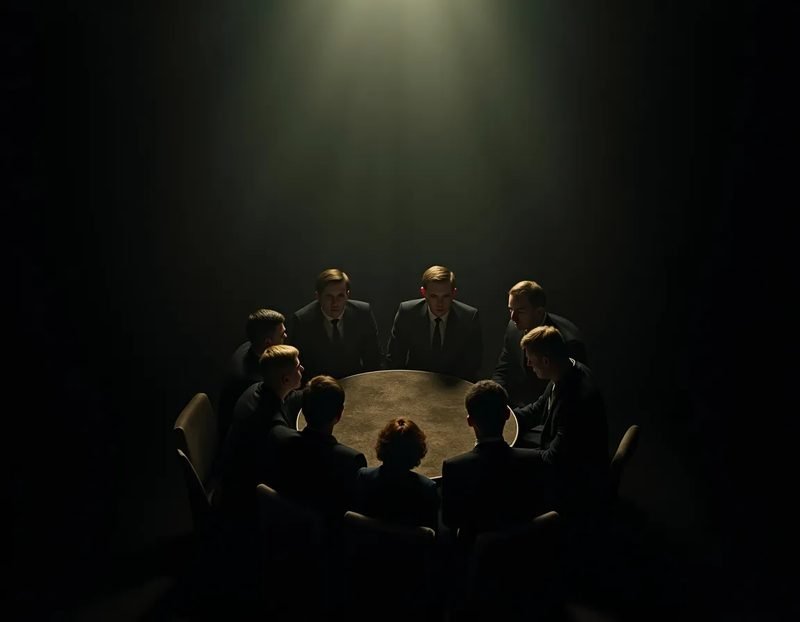
Overhead view of a seated audience arranged in rows or around tables, showing varied body positioning

Seating position is not random, it’s confession. People choose where to sit based on how visible they want to be, and that choice happens before you’ve even entered the room.

Center-front seats attract two very different personalities: the genuinely eager and the performatively eager. Learn to tell them apart. The genuinely eager lean in with their whole torso. The performatively eager lean in with their chin, chasing attention rather than experience, and they’ll fight you for control of the moment once you bring them up. That’s a bad casting decision waiting to happen.

The aisle seats are worth watching too. Someone who picks an aisle seat at a show wants an exit route, physically or socially. That’s not a rule against them, plenty of wonderful volunteers sit on the aisle, but it’s data. Combine it with everything else you’re seeing.

Back-of-room sitters get dismissed by performers who haven’t done this long enough. Don’t make that mistake. Some of the sharpest, most emotionally present volunteers I’ve ever worked with were sitting in the back because they wanted to observe the whole room before committing to anything, including you.

Reading the Body Before the Mouth Opens

Arms crossed doesn’t automatically mean closed off, I know that’s the tired advice everyone repeats, and it’s not always true. Context is everything. A person with crossed arms who’s also nodding along, whose eyes track your every move, is engaged. A person with crossed arms who’s glancing at the exit is not.

What I actually watch for is mirroring. If someone in the crowd starts unconsciously matching your posture, leaning when you lean, going still when you go still, they’ve already synced with your rhythm. That synchronization is the real tell, it happens below conscious thought, and it’s a far more reliable signal than a raised hand or an eager smile.

Eye contact duration matters too. A volunteer who holds eye contact a beat longer than is socially comfortable is telling you something real. They’re not performing interest for the people around them, they’re actually present with you.

My hands go still sometimes when I spot it, that half-second where I know I’ve found my person before I’ve said a word to them.

The Loud One Is Rarely the Right One

This is the part most guides get wrong, and it costs performers clean effects more often than any technical fumble ever will.

The person waving their hand, calling out “pick me,” standing halfway out of their chair, they want the spotlight. That’s fine for some formats. It is disastrous for most mentalism, where the entire illusion depends on the room believing this ordinary person had no idea what was coming and no reason to perform for you.

An audience reads a volunteer’s motives the same way they read yours. If your volunteer is visibly hungry for attention, the room quietly discounts everything that happens next, they assume some collusion, some eagerness to play along, even when there’s none. You’ve done nothing wrong and you’ll still lose credibility you never should have had to defend.

Social proof is a trap here, it fools performers who mistake enthusiasm for suitability. The volunteer who raises their hand is voting for themselves. The volunteer you actually want rarely votes at all, you have to go find them.

When the Read Goes Wrong

I’ve misread a room. Every performer who tells you they haven’t is either lying or hasn’t worked enough rooms yet to know what a bad read feels like.

The most common misread isn’t picking a bad person, it’s picking a guarded person and mistaking their guardedness for cooperation. You bring them up, and thirty seconds in you feel the temperature drop. Their answers get short. Their body angles away from you toward their seat, toward the exit, toward anywhere that isn’t this stage.

My jaw tightens the moment I feel that shift, because I know I have maybe ten seconds to recover the moment before the whole room feels the friction too.

Recovery starts with giving them an easy win immediately, something low stakes that lets them relax into the role rather than perform under scrutiny. Ask a simple question. Make a small joke at your own expense, never theirs. A guarded volunteer who feels mocked will shut down completely, and once that happens, no technique in the world saves the effect.

The deeper lesson here is that casting isn’t a one-time decision made at the moment of selection. It continues for the entire length of the interaction, you’re reading and adjusting the whole time, not just in that first sixty seconds.

Building the Instinct

You build this the same way you build any skill worth having, through repetition and honest review afterward. After every show, ask yourself who you almost picked and why you didn’t. That near miss teaches you as much as the choice you actually made.

Watch rooms even when you’re not performing. Restaurants, waiting rooms, family gatherings, they’re all free practice. Notice who’s mirroring whom, who’s holding eye contact a beat too long, who chose the seat closest to the door and why. This kind of observation becomes second nature faster than most performers expect.

Trust builds slowly and then all at once.

By the time you’re standing at the edge of your own room, scanning faces before your opening line, you won’t be guessing anymore. You’ll already know.

If you’re the kind of performer who studies a room the way I do, who wants your tools to carry the same weight as your read, take a look through what we’ve built at Arcane Relics: https://arcanerelics.com/shop/.

When the Sitter Is Grieving: Handling Real Loss at a Theatrical Séance

When the Sitter Is Grieving: Handling Real Loss at a Theatrical Séance

I don’t believe the dead speak through a tipping table. I never have. But I do hold a strong conviction that a séance room is the most honest stage a performer will ever work, because people walk into it carrying something real, and pretending otherwise is the fastest way to become the thing you’re supposed to be playing with.

Sooner or later, someone arrives with a fresh loss. They won’t announce it. They’ll sit down, fold their hands, and quietly hope you’re wrong about what you are.

This post is about that person.

The Sitter Who Isn’t Here for the Show

Most audiences at a theatrical séance come for the shiver. They want the cold spot, the rapping, the name that lands too accurately. They know the deal, and the deal is what makes it fun.

The grieving sitter has read the same program and signed the same booking form, but they’ve made a private edit to the contract. Somewhere in the drive over, they decided this might be different. Not because you promised it. Because hope doesn’t check the fine print.

Houdini is the famous case, and he’s worth a second look. After his mother Cecilia died in 1913, he sat with mediums for years, and he was a man who knew every trick they used. He still went. He still wanted the door to open. When Lady Doyle produced a page of automatic writing for him in Atlantic City in 1922, marked with a cross, he was shaken, and he was also unconvinced, and that friendship with Conan Doyle never recovered.

Read that again. The greatest skeptic in our history sat there anyway, hands still, wanting.

Your sitter is not gullible. Your sitter is bereaved. Those are different conditions, and they demand different handling.

Reading the Room Before the Lights Go Down

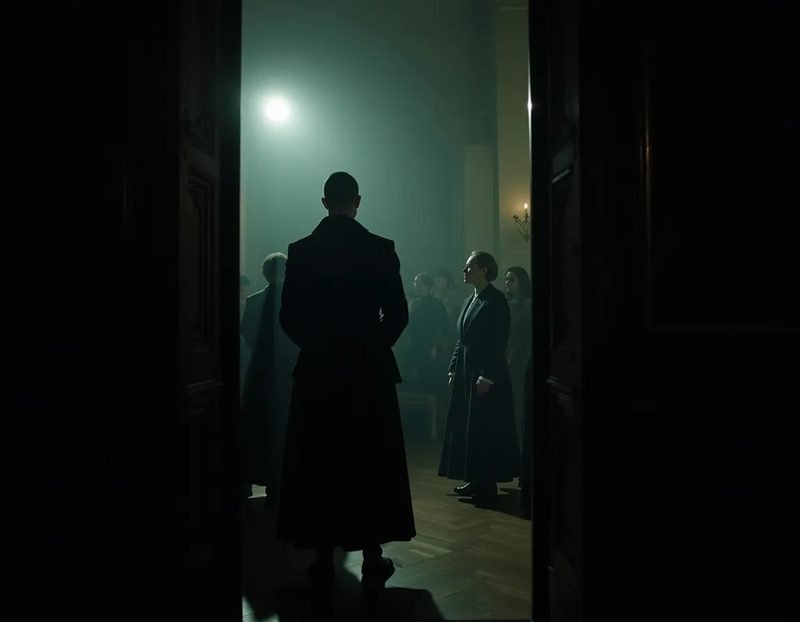
A performer's view from the doorway, guests arriving and taking seats in a dim parlor, coats still on

You get about ten minutes of usable information before the room goes dark. Spend them looking, not greeting.

Here’s what I watch for, roughly in the order it shows up:

  • Who arrived alone. Couples and groups come for entertainment. A single guest at a séance is usually there for a reason, and it isn’t always curiosity.
  • Who asks a question that isn’t about the show. “Do people ever really get through?” is not a booking inquiry. It’s a door left ajar.
  • Who doesn’t join the nervous laughter. Every room has a laugh that goes around when the host mentions spirits. Watch for the person whose face stays still while everyone else’s moves.
  • Mourning objects. A wedding band worn on the wrong hand, a man’s watch on a woman’s wrist, a small photo in a locket she keeps touching. Those aren’t fashion.
  • Someone else guiding them. A friend who hovers, who says “she just really wanted to come,” is often carrying the story for the person who can’t.

None of this is mind reading. It’s ordinary attention, the same kind you’d use for any audience volunteer. The difference is what you do with it.

Once, at a private event in Middletown, I noticed a guest who declined the pen and card I was passing out. Politely, twice. Her friend answered for her both times. My hands went still, and I set the stack down on the mantel instead of the table. I rebuilt the first twenty minutes of the evening in my head while I was still shaking hands.

Nobody in that room knew I’d changed anything. That’s the point.

Changing the Script Without Breaking the Frame

A well-worn performance script with pencil edits and a struck-through section, beside a brass bell

Here’s the counterintuitive part, and it’s the piece most performers get backwards. You don’t pull the grieving sitter out of the show. You reshape the show so that it can’t reach them in the places where it would cut.

Pulling them out is the loud option. It announces the problem to the whole room, and it tells the sitter you saw them as a hazard. Nothing humiliates a mourner faster than being handled.

Instead, work the structure. A few adjustments I’ve made, all invisible from the seats:

  1. Shift from named to general. If your usual plot has the spirit produce a first name or a relationship, swap it for atmosphere and sensation. A chill, a sound, a scent of pipe smoke everyone can claim. Personal detail is the razor. Ambient detail is the smoke.
  2. Move the sitter’s seat. Place them away from the focal point of any dramatic reveal, not so far that it’s noticeable, just out of the direct line of your gaze and your gestures.
  3. Choose other volunteers. You control who holds the planchette, who touches the table, who speaks the question. Give those jobs to the guests who arrived in a laughing group.
  4. Keep the frame theatrical. Use the language of performance a little more than usual. The word “tonight,” the phrase “for our purposes,” a wink in the pacing. You’re reminding the room, gently, that this is a played thing.

None of that breaks the spell. If anything, it tightens it, because a controlled room is a frightening room, and I mean that as praise.

What You Never Say

There’s a line, and every serious performer should be able to name it without thinking.

You never let the sitter hear the voice of the person they lost. Not a name guessed from a locket, not a phrase like “she says you shouldn’t blame yourself.” That last one is the most dangerous sentence in our entire craft, because it’s the one every grieving person is starving to hear, and it works on nearly everyone, and that’s exactly why you don’t use it!

Cold reading has a well-documented power. A vague statement, offered with confidence, gets filled in by the sitter with their own most urgent material. In a comedy club that’s a party trick. In front of the bereaved, you are handing someone a forgery of their dead and letting them sign for it.

Modern grief research points the other way. The “continuing bonds” work from the 1990s, Klass, Silverman and Nickman, argued that healthy mourning often keeps the relationship alive in memory and ritual rather than severing it. A séance can serve that. A fake message from the departed can poison it, because the mourner may build on something you made up.

So the rule is simple. You can perform mystery. You can’t perform testimony.

The Conversation Afterward

Often the real event begins when the lights come up.

The grieving sitter will linger. They’ll help you stack chairs, or ask where you got the table, or stand near your case long after the others have gone. That’s the opening. Take it slowly.

Don’t ask what’s wrong. Don’t say you sensed something. And please don’t say you’re sorry for their loss unless they’ve told you of one, because then you’ve confessed to watching them all night.

Ask about the evening. “What did you make of it?” Then be quiet. Let the silence do the asking.

If they tell you, and many will, resist every urge to fix it. My whole answer is usually short. I tell them the show is a play, that I’m a performer and not a medium, and that what they felt in the room was real even though my methods weren’t. I say that plainly. To be honest: it’s the kindest thing I know how to give, and it’s the only thing that lets them leave with their grief intact rather than borrowed.

Some people cry at that point. Some nod and thank you. One or two get angry, which is fair.

Take it.

Build the Exit Into the Format

The best protection is structural, and you can install it before anyone is hurt.

Put the frame in writing. Your invitation, your program card, your host’s opening remarks should all say, in your own atmospheric language, that the evening is theatre. Not a disclaimer buried in gray type. A line with some voice in it, spoken aloud in the first two minutes while the candles are still lit.

Give every guest a quiet way out. A back chair near the door. A host who can offer water. A standing line in your patter, “anyone who needs air, just take it,” that reads as part of the mood and functions as a release valve. The person in pain will use it, and nobody else will notice.

And decide, before you ever book the room, what you’ll do if someone asks you sincerely to contact a specific person. Know your answer. Rehearse it like a routine. Mine is a gentle no, followed by an offer to talk. It has never once been the wrong call.

Bizarre magic earns its power from the edge of belief. That edge is exactly where someone can fall.

What the Craft Owes the Room

We build our reputations on atmosphere. On the held breath, the trembling flame, the moment a room decides, against its own better judgment, to lean in. That’s a real gift, and it’s a form of trust the audience extends before we’ve earned it.

The grieving sitter tests that trust harder than anyone. They’ll show you, without saying a word, whether you’re a performer or an opportunist. Every choice you make about seating, about language, about what you refuse to say, is your answer.

I’ve walked away from cleverer effects to keep a room safe. I’d do it again tomorrow.

The dark is still ours to use. Use it carefully, and you my friend, will be the sort of performer people trust with their most fragile evenings. If you’re building a séance that can carry that weight, the props matter as much as the manners, and you’ll find serious ones waiting at Arcane Relics.