Part 2: The Center Tear in a Phone-First World, Adapting Mentalism’s Most Important Move for Volunteers Who Don’t Carry Paper

In Part 1: The Center Tear: A Design History of Mentalism’s Most Important Move, I traced where this move came from and why it still sits at the center of serious written-word work. That piece was about lineage. This one is about survival. Because the center tear, in its purest classic form, assumes something that is no longer true of the person standing in front of you: that they are carrying paper.
The Volunteer Doesn’t Carry a Pen Anymore
Ask a room full of people to write something down and watch what happens. Half of them pat their pockets out of habit, find nothing, and look at you like you’ve asked them to churn butter. The wallet is gone too, or it’s a phone case with two cards wedged in the back. This isn’t a generational quirk you can route around. It’s the new baseline, and every written-word method built before 2010 has to answer for it.
Here’s what most performers get wrong when they try to fix this. They treat the phone as an inconvenience, a paper substitute to be tolerated. That’s backwards. The phone is a better prop than paper ever was, it has a lock screen, a notification tray, a camera roll, and a dozen built-in misdirection points that a torn sheet of paper never had. You just have to stop thinking like a paper mentalist and start thinking like someone who understands what a phone actually does in a stranger’s hand.
What the Center Tear Actually Requires
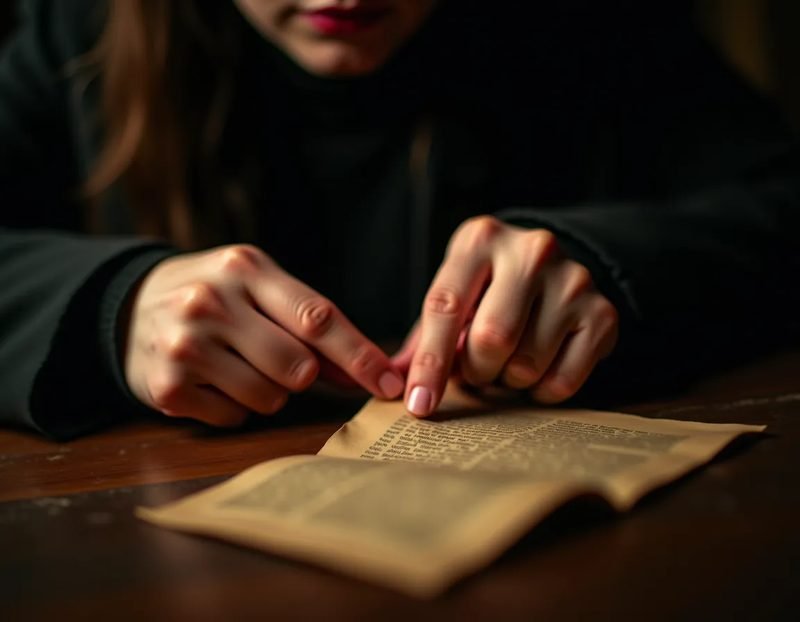
Strip the center tear down to its skeleton and you get three requirements, none of which mention paper by name. You need the spectator to commit something privately. You need a moment where your attention appears to be elsewhere while it is not. And you need a clean, natural reason to be holding or looking at the object that contains the information.
Paper satisfied all three because tearing is a familiar, disposable gesture, nobody questions why a torn scrap gets handled. The digital equivalent has to find its own disposable gesture, its own reason for you to be looking at a screen that isn’t yours. Get that part wrong and the whole structure collapses into “why is he looking at my phone.”
That question, my friend, is the one thing a center tear can never allow.
The Notes App Billet
The most direct adaptation asks the spectator to open their own Notes app and type a single word, a name, a childhood memory. You never touch their phone while it’s unlocked. That’s the line. Cross it and you’ve turned a piece of mentalism into a privacy incident, and volunteers remember that longer than they remember the trick.
Instead, you route the glimpse through something they do naturally. Ask them to lock the phone once they’ve typed the word. Most lock screens still show a notification preview for a few seconds, or the last-used app thumbnail in the app switcher. Ask them to hand you the phone “so I don’t influence what I say next,” face down, screen off. You’re not unlocking it. You’re catching the preview during the natural handoff, before the screen fully sleeps. It’s a glimpse window measured in a second and a half, not a hack.
Some performers prefer the safer route: have them screenshot the note, then show you the screenshot in their gallery for a beat, no unlock required on your end because they’re the one holding and driving the phone the entire time. Slower, but it removes any question of you touching a stranger’s device. For a first-time digital center tear, I’d start there.
Texting the Thought
A second approach skips their phone screen altogether. You give the spectator a number, sometimes framed as “text this to my assistant,” sometimes just “text this to me,” and they type their word into a message. You never need their device at all, which solves the privacy problem outright.
The information arrives on your end instead, on a phone in your pocket or, better, on a smartwatch where a glance reads as checking the time. That’s the misdirection beat the classic center tear built around a table crumb or a lit match. A glance at a watch is one of the most socially invisible gestures a person can make in public. Nobody clocks it as suspicious, they clock it as habit.
The tradeoff is timing. Texts don’t arrive instantly, carrier delay is real, and you need a routine that tolerates a five to fifteen second gap between the send and your glance. Build that gap into your patter rather than fighting it. A pause that feels like “tuning in” plays better than a pause that feels like waiting for a bar of signal.
When the Old Handling Still Wins
None of this means paper is dead as a prop, it means paper now has to be supplied, not assumed. I keep a small stack of blank cards and a decent pen in my kit for exactly this reason, because when I hand someone a nice card and a pen that actually writes well, the object itself does some of the framing work a phone can’t. It signals ceremony. A phone signals errands.
I’ve run both versions back to back at private events around Louisville, close-up sets where the room shifts between six people at a table and it matters which prop matches which mood. The card version reads as more intimate, almost old-world, and it’s what I reach for when the piece is about a name that matters to someone, a lost relative, a decision they’re sitting with. The phone version reads as sharper, more “how is this even possible,” and it’s what I reach for when the piece needs to feel contemporary, unnerving in a modern way rather than a gothic one.
Choose the object for the emotional register you want, not because one is easier to carry.
Where Digital Billets Break Down
I’d be lying if I said the phone methods were flawless, and a skeptic who’s been surprised by plenty still has to be honest about what fails. Dead batteries kill the bit before it starts. Face ID lockouts happen when a volunteer’s hands are cold or shaking, which, ironically, tends to happen most during the emotionally loaded readings where the trick matters most. Notification previews get disabled by privacy-conscious users, more of them every year, which quietly removes your glimpse window without warning.
Build a paper-based backup into every phone-based routine you run. Not as an apology, as a second weapon. If the digital glimpse doesn’t present itself, you fall to the card and pen without the audience ever knowing you had a contingency at all. That’s not a compromise. That’s just how working professionals build a piece that has to fire every single time, not just on the nights the technology cooperates.
Building Your Own Handling
The center tear survived a century of format changes because the principle underneath it never depended on the material. Wax tablets gave way to slates, slates gave way to paper, paper is now giving way to glass and silicon. What hasn’t changed is the requirement for a natural reason to be looking where the secret lives.
Don’t chase a single “correct” digital method. Build two or three handlings, one for phones, one for paper, maybe one for a borrowed object entirely, and let the room tell you which one to run. A volunteer who flinches at handing over their phone has just told you something useful. Listen to it.
If you’re serious about rebuilding your written-word work for the world your volunteers actually live in, we keep a working selection of billet pads, impression devices, and the kind of pens that make paper feel like ceremony again. Take a look at the Arcane Relics shop and build the version of this move that fits your hands.