The Callback: Structuring a Bizarre Magic Set So the Opening Pays Off the Close

A woman asked me, halfway through a private show in Okolona a few years back, why I’d mentioned her grandmother’s ring at the start of the night. I hadn’t answered her then. I let the question sit, because I already knew where the set was going, and she didn’t. Forty minutes later, when that same ring came back into the room in a way she couldn’t explain, she wasn’t surprised. She was caught.
That’s the difference between a trick and a structure. A trick surprises. A structure catches you, because some part of your mind already knew this was coming and just couldn’t say how.
Most Sets Are a Pile of Miracles, Not a Story
Here’s the part most guides get wrong, they treat routining as sequencing. Open strong, put the slow piece in the middle, close with your best visual, done. That’s playlist thinking. It optimizes for pacing, not meaning.
The strongest bizarre magic sets I’ve watched, and the ones I try to build myself, aren’t sequenced. They’re engineered. Every piece up front is quietly doing double duty, it entertains in the moment, and it’s also planting something that has no visible purpose yet. The audience files it away without noticing they filed it away at all.
Most performers don’t think about this because it’s genuinely hard to plan backward. You have to know your ending before you write your opening. Most performers build forward instead, piece by piece, and hope the closer feels big enough to justify itself.
It usually doesn’t. A closer that hasn’t been earned by anything before it just feels loud.
What a Callback Looks Like
One of the best bizarre performers working today is Joseph Daniels. His sets are built so carefully that the crowd stops thinking about the magic itself, not because the magic is weak, my dear friends, it is not, but because every piece has a place, a reason for being there. He weaves the story in so well that by the time the last piece arrives, it’s too late. You are caught.
What’s his secret? Seeding “Callback”.
By the time that final piece lands, he has planted it so many times that people are still caught off guard. Not because they missed what was being set up. They saw it. They just didn’t believe it would actually happen, and when it does, they are stunned into disbelief anyway.
What a Callback Actually Requires
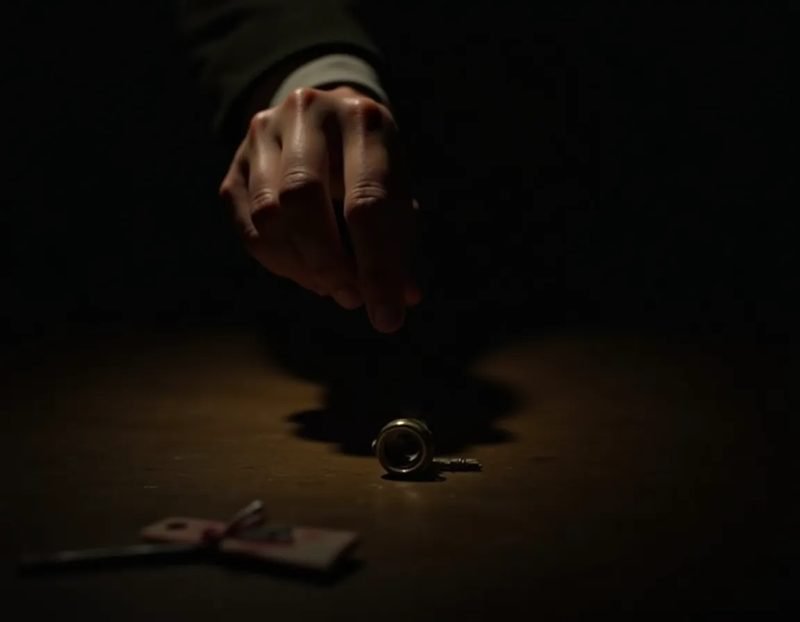
A callback is a detail seeded early, forgotten consciously, and returned late in a way that reframes everything the audience thought they understood. Three parts, and all three matter.
The seed has to feel incidental the first time. Not foreshadowed, not underlined, incidental. If people notice you’re planting something, you’ve told them a twist is coming, and that kills the payoff before it happens.
The forgetting is the part performers skip past. You need real time and real content between the seed and the callback, enough that the detail drops out of active memory but stays in the room’s collective sense of “something happened earlier.” Fifteen minutes minimum, in my experience, longer for a full evening show.
The return has to answer a question the audience didn’t know they were holding. Not “remember this thing,” that’s a callback in stand-up comedy, and it’s fine there. In a bizarre magic set, the return needs to feel less like a punchline and more like a door that was locked the whole time, quietly, and just opened.
Get the timing wrong and you get a coincidence. Get it right and you get inevitability.
The Ring in Okolona

I’ll describe the shape of it without giving away the mechanics, because the method isn’t the point here, the architecture is.
Early in the evening, during a casual moment before the “real” routine started, I asked the woman about a ring she was wearing. Just conversation, or so it looked. I made a small, dismissible comment about its age. She confirmed it, briefly, and we moved on. No pause, no music sting, no meaningful eye contact held a beat too long. It was small talk with a magician in the room, forgettable by design.
Three routines later, in a completely unrelated piece involving a sealed prediction, her grandmother’s name surfaced in a way that connected directly back to that ring. Not the ring itself, its history, its date, a detail she’d mentioned only because I’d asked.
Her hand went to the ring before she said a word. That’s the tell you’re building toward, the body reacting before the mind has caught up to why.
I didn’t plan that specific ring going in, you can’t, you’re reading the room and casting your seeds live. What I had planned was the slot. I knew I needed one incidental, personal detail in the first ten minutes that I could route into the closer. The ring is just what showed up that night.
That’s the craft. Not memorizing a script, building a structure loose enough to hold whatever the room gives you.
Choosing What to Seed
Not every detail works as a seed. Some categories perform better than others, and it’s worth knowing why.
- Names outperform objects. A name lodges in memory differently than a prop does, and its return feels more personal, closer to being known rather than tricked.
- Numbers work well but need repetition to survive the forgetting window. Say it once early, let it resurface briefly and harmlessly in the middle, then land it at the close.
- Objects are the easiest to seed and the hardest to make land, because an object’s return can feel like a prop reveal instead of a meaning reveal. Tie the object to a story or a person, never let it just be a thing.
- Emotional admissions, a fear named, a regret mentioned in passing, are the strongest seeds of all and the riskiest. Handle them with real care. You’re not mining someone’s vulnerability for a trick, you’re building a moment that should feel like it honors what they told you.
Pick one, maybe two seeds per set. More than that and you’re not building a callback structure, you’re juggling loose threads, and audiences can feel the difference between a woven set and a busy one.
Where Performers Break the Structure Without Noticing
The most common failure isn’t a bad idea, it’s bad discipline in the middle of the set.
You seed the detail well. Then, twenty minutes later, something in the room derails your plan, a heckler, a phone going off, a piece that runs long, and you improvise your way through the next routine without protecting the thread you planted. By the time you reach your closer, the seed has been buried under new information, or worse, contradicted by something you said in the meantime.
Protect your seeds like you’d protect a stack in a card trick. Know exactly where they live in your head at all times, even when you’re twelve minutes into unrelated material.
The second failure is over-signaling the return. Performers get nervous the audience won’t connect the dots, so they announce the callback instead of letting it surface. “Remember when I asked about your ring?” That line kills the moment. If you have to ask whether they remember, the structure already failed, because the whole point is that they remember without being told to.
The third failure, and this one is subtle, is seeding too cleanly. A seed that’s obviously a plant, phrased too precisely, delivered with too much weight, reads as foreshadowing rather than incidental detail. Real conversation is messy. Let your seed be messy too.
Building the Set Backward
Here’s how I actually build one of these, in practice, not theory.
I start with the closer. Not the trick, the meaning, what do I want the room to feel in the last sixty seconds. Once I know that, I ask what single detail, planted early, would make that feeling land harder. Then I go looking for where in my opening ten minutes that detail could live without calling attention to itself.
Everything in between gets built as if the set were a series of standalone pieces, because to the audience, it should look that way! The connective tissue is invisible on purpose. That’s the whole craft, structure the audience can feel but never see.
This is slower to design than sequencing a set the normal way. It’s also the difference between a show people enjoyed and a show people can’t stop describing to their friends the next morning.
One sentence, from a client after that Okolona show, has stuck with me since: “You knew that thirty minutes before I did.”
She wasn’t wrong. That’s the whole game, honestly.
Building Toward a Closer Worth Earning
A callback costs you almost nothing to build and changes what your entire set is capable of doing. It doesn’t require new material, new props, or new patter, it requires a different order of operations in your planning, and the discipline to protect a thread across forty minutes of live, unpredictable performance.
Most bizarre magic gets remembered as “that was creepy” or “that was clever.” A well built callback gets remembered as something else entirely, a feeling that the performer knew something about you before you told them.
That feeling doesn’t come from a better trick. It comes from a better architecture.
If you’re building a set that needs pieces engineered for this kind of long structure, ones with the weight and history to survive being seeded early and returned late, take a look through what we carry. Browse the shop at Arcane Relics.