
Reading the Room in Real Time, Adjusting a Bizarre Magic Set Without Breaking the Frame

A room lies to you before the show even starts. The promoter tells you the crowd skews older, reflective, ready for slow reveals. Then forty minutes in you’re standing in front of twenty-five-year-olds who came from an open bar downstairs, restless, phones half out, and your carefully sequenced hour of quiet dread is built for people who aren’t in the seats. This happens more than performers admit. The gap between the room you prepared for and the room you got is where careers get made or quietly stall.
The Room Tells You Everything in the First Ninety Seconds
Most performers read the room during their opening line. That’s too late. The room starts talking the moment you walk toward the space, before you’ve said a word. Watch how people are already sitting. Are they leaning toward each other, still finishing conversations, or are they turned toward the stage waiting? Are drinks half full or nearly gone? A crowd two rounds deep responds to different rhythms than a crowd that just sat down.
I read three things before I open my mouth: posture, noise floor, and eye contact density. Posture tells you energy. Noise floor tells you attention span. Eye contact density, how many people are actually looking at the space where the show will happen versus looking at their table, tells you how much work your opening needs to do to earn focus.
None of this requires magic. It requires paying attention like your set depends on it, because it does.
Build Your Set in Modules, Not a Script
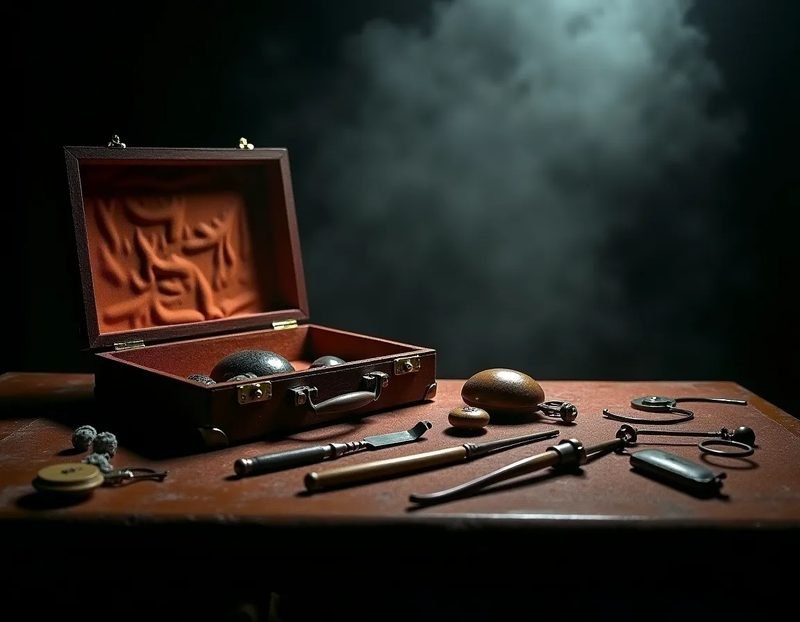
Here’s the part most guides get wrong. They tell you to memorize a running order and stick to it, because consistency equals professionalism. That’s true for a magician doing card tricks at a corporate happy hour. It’s false for a bizarrist working a room that might swing between reverent silence and restless energy inside the same hour.
Your set should exist as interchangeable modules, not a fixed script. Think of each piece as carrying its own emotional signature, a slow burn, a jolt, a quiet unsettling, a comic release, and know which signature each one delivers before you ever walk in. Then you can reorder them live without anyone noticing the seams, because the transitions were built to work in more than one sequence.
I keep four or five pieces in rotation for any given evening, each rated on two axes: how much silence it demands and how much energy it needs from the room to land. A piece that needs the room quiet and attentive doesn’t go first in a loud room. It waits. You open with something that can survive noise, something visual or startling enough to cut through chatter, and you earn the silence before you spend it on your best material.
Pacing Is a Conversation, Not a Countdown
New performers treat their set like a train schedule. Effect one at minute three, effect two at minute eight, reveal at minute twelve. The room doesn’t run on your watch. It runs on its own nervous system, and if you ignore that, you’ll deliver a technically flawless show to an audience that checked out four minutes ago.
Watch for the tell that a room needs a breath: shifting in seats, side conversations creeping back in, someone glancing at a phone screen that just lit up. When you see two or three of these at once, that’s not a signal to push harder into your next big reveal. That’s a signal to shorten your setup, cut a beat you’d normally savor, and get to payoff faster than planned.
The opposite tell matters too, and it’s rarer. When a room goes still in a way that feels earned rather than polite, when you can hear the ice not moving in anyone’s glass, don’t rush past it to keep pace with your rehearsed timing. Let it sit. That stillness is the whole reason you do this work. Spending it too fast is the mistake of someone still counting minutes instead of reading faces.
Adjusting Without Breaking the Frame
This is where bizarre magic asks more of you than mainstream conjuring does. A card magician can drop a trick and grab another deck without much cost to the illusion. You can’t. If your persona is a man who reads objects for their history, or a woman who claims uneasy contact with things left behind, every adjustment has to happen inside that frame or the whole evening collapses into a guy doing tricks.
So the skips and substitutions need built-in cover. I never say “let’s try something else” or anything that admits a change of plan. Instead the persona makes the call. A brief pause, a line about needing a moment, a redirection toward an object already on the table, these all read as choices the character is making in real time, not corrections to a broken show. If you write your patter with even a little flexibility baked in, phrases that work whether the next beat is effect A or effect C, the audience never sees the seam.
I’ve cut a planned centerpiece mid-set at a private event because the energy in the room had gone quiet in the wrong way, tired rather than transfixed, and I needed something shorter and stranger instead. Nobody in that room knew a piece got dropped. They just experienced a show that felt inevitable, because the persona never broke character to manage logistics.
Know Your Silence Tolerance Before You Need It
Every performer has a personal threshold for how long they can hold silence before their nerves make them fill it. Most people’s threshold is too short, and they don’t know it until they’re in front of a crowd that’s gone quiet for reasons they can’t read. Is the silence engagement or discomfort? If you can’t tell the difference under pressure, you’ll rush the reveal that needed three more seconds to land, or worse, you’ll crack a joke that shatters a mood you spent ten minutes building.
Practice sitting in silence deliberately, outside of any show. Time yourself. Notice the exact second your body wants to talk. That’s data, not a character flaw, and once you know your number you can push past it on purpose when the room’s silence reads as held breath rather than confusion.
I’ve found that most rooms can hold far more silence than performers give them credit for. The audience isn’t waiting for you to rescue them from the quiet. They’re waiting to see what you do with it.
Recovery Is a Skill, Not an Accident
Something will go wrong in every extended run of shows. A prop misbehaves, a spectator gives an answer that derails your setup, a heckler decides tonight’s the night. Amateur performers treat these moments as emergencies to survive. Professionals treat them as material, because the persona you’ve built should have a plausible reaction to almost anything, if you’ve thought it through in advance.
Write yourself two or three all-purpose lines that fit your character and can absorb a derailment without acknowledging failure. Not jokes about technical difficulty, those break the frame instantly, but lines that reframe the interruption as part of the phenomenon itself. A misbehaving object becomes evidence something doesn’t want to be touched tonight. A skeptical spectator becomes exactly the kind of resistance your character claims to expect and even prefer.
The performers who unnerve a room most convincingly aren’t the ones with the most polished routines. They’re the ones who never once look like anything could throw them off. That composure isn’t personality, it’s rehearsal, applied to the moments you can’t script.
Reading a room and adjusting inside your persona is a discipline, and like any discipline it improves with the right tools built for exactly this kind of flexible, atmospheric work. If you want pieces engineered to bend without breaking, built for performers who need material that survives an unpredictable room, take a look through what we carry at Arcane Relics.