Part 2: What Poker Tells Teach That Interrogation Manuals Don’t

In Part 1: Reading the Body Before the Mind: What Interrogation Trained Microexpression Work Actually Offers a Mentalist, I laid out why the Reid technique and its cousins are built for a subject under real pressure, someone hiding a specific fact with real consequences attached to being caught. That’s a narrow room. Most of what you do on stage or at a table happens somewhere else entirely, with a volunteer who has nothing to lose and nothing to hide beyond the small, delicious secret you asked them to keep for thirty seconds. Poker rooms have spent a hundred years studying exactly that kind of person. It’s time we borrowed properly.
Two Rooms, Two Kinds of Liar
An interrogation subject is defending something. A poker player is performing something, and so is your volunteer. That distinction changes everything downstream of it, because fear-based tells and performance-based tells don’t look alike, they don’t time out alike, and they don’t fade the same way once the moment passes.
A person hiding a crime tightens. A person bluffing a pot, or holding a card they were told to think about intensely, loosens in specific, giveaway ways, because they’re enjoying the deception a little. Mike Caro wrote about this decades ago in his work on poker tells, and the core idea holds up, weak often looks strong and strong often looks weak, because a comfortable liar overcorrects on purpose.
Your volunteer is a comfortable liar. They know it’s a game. They want you to win.
Bet Sizing Tells and the Mentalism Equivalent
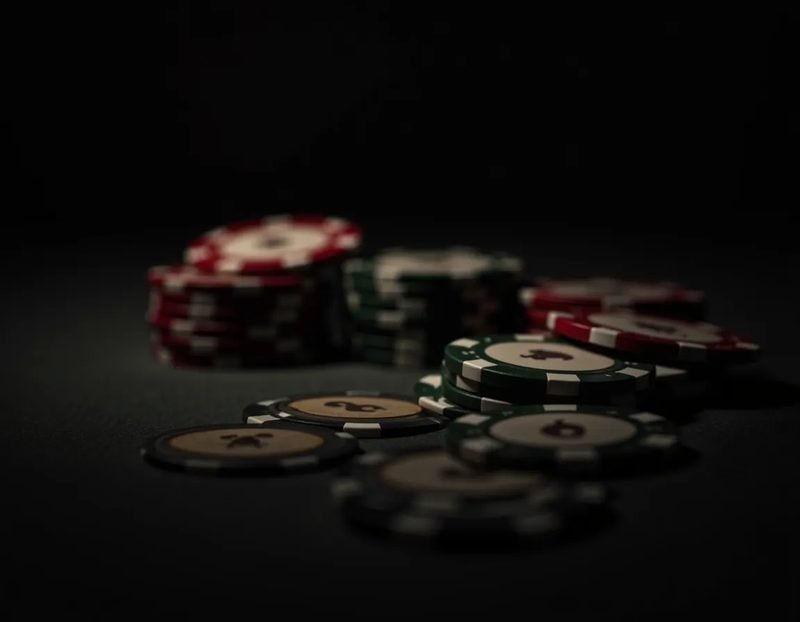
In poker, the size of a bet often says more than the face above it. A player who suddenly bets big with a weak hand is trying to close the conversation fast, because lingering invites questions they can’t answer. A player who bets small and slow with a monster hand is trying to keep you in the pot, because they need your money to keep coming.
Watch for the mentalism version of this at the moment of commitment, not before it. When you ask a volunteer to settle on a word, a number, a name, watch how fast or slow they commit once you push them to lock it in. A rushed, oversized commitment, blurting the answer, writing it too fast, nodding too hard, often means they’re trying to close the moment before you look closer. A slow, small commitment, a pause, a soft mumble, a half-written word they then complete, often means the opposite, they’re comfortable and in no hurry because there’s nothing underneath to protect.
This runs backwards from what most performers assume. Most performers read hesitation as concealment.
Sometimes hesitation just means the person is relaxed enough to take their time.
Timing Patterns Beat Content Every Time
Interrogation training spends a lot of energy on content, on what the words themselves reveal. Poker players mostly ignore words and count seconds, because a table doesn’t reward listening, it rewards rhythm. A player who takes their usual four seconds to check is telling you nothing. A player who takes four seconds today when their pattern all night has been instant is telling you plenty.
This is the single most transferable skill in this whole piece, so read it twice if you need to.
You cannot read a stranger’s timing in isolation. You can only read a change in their own timing against their own baseline. That means the first thirty seconds of any interaction with a volunteer are not about the effect at all, they’re about establishing their normal tempo, how fast they answer easy questions, how fast they move their hands, how fast they blink when nothing is at stake. Everything after that is measured against that baseline, not against some universal chart of what nervousness looks like.
I ran a private event around the Louisville area a while back and used the first minute of an ambitious card location purely as a clock-setting exercise, asking throwaway questions I didn’t care about the answers to. By the time the real moment came, I had her rhythm memorized without her noticing I was building a baseline at all. The tell, when it came, was a half-second stall in a spot where she’d been instant all night.
Half a second. That’s the whole trick.
Calibration Over Catalog
Interrogation manuals lean on catalogs, a raised eyebrow means this, a lip press means that. Poker players mostly distrust catalogs, because a catalog assumes people are uniform, and people are not uniform, they’re just consistent with themselves.
Good players talk about a “tell” as something that only exists in contrast to a baseline they built by watching someone play a dozen hands before it mattered. Zachary Elwood, who’s written extensively on this exact discipline, calls it reading patterns rather than reading people, and that phrase does a lot of work. You’re not decoding a universal grammar of the face. You’re noticing when someone stops behaving like themselves.
Your volunteer gives you that same gift, if you take the time to watch for it. Before you ever ask for a name or a memory or a hidden object, watch how they stand when nothing is asked of them yet. Watch where their hands rest by default. Watch their default speaking pace. That’s your instrument being tuned. Skip it, and you’re reading a stranger cold and calling it insight.
Comfort as the Real Baseline, Not Stress
Here’s the part interrogation work genuinely cannot teach you, because it never has to deal with it. A relaxed subject who is enjoying themselves produces tells that a stressed subject never will, tells of pleasure, not fear. A held-back smile. A held breath before a laugh. A little performance of surprise that arrives a beat before the surprising thing has actually happened.
Poker players call this a “value tell”, the giveaway that shows up not when someone is scared, but when someone is happy about their position and struggling to hide the happiness. Your volunteer wants to be caught being amazed. Some of them start rehearsing the reaction before you’ve earned it.
Watch for the anticipatory reaction. It’s one of the strongest, least discussed signals in the whole discipline, a laugh that starts before the punchline, hands that move toward a pocket before you’ve asked them to check it. That’s not deception. That’s someone unable to hide that they already suspect what’s coming, and it tells you exactly how close you are.
Bringing It to the Table, Literally or Otherwise
None of this replaces the muscle and instinct you already carry from years on your feet in front of strangers. It sharpens it. Interrogation training gives you the anatomy of fear. Poker gives you the anatomy of enjoyment, and enjoyment is the emotion you’ll actually be working with ninety percent of the nights you perform.
Start small. Pick one baseline habit, blink rate, hand position, answer speed, and clock it in every volunteer’s first thirty seconds before you ask them for anything real. Do this for a month of shows and you’ll stop guessing at nervousness and start reading contrast instead. It changes what a “cold read” even means to you.
I don’t think this discipline ever fully resolves into a formula, and honestly, that’s the appeal. So yes, this is a habit worth building slowly, one volunteer at a time.
If you want to go deeper into the psychology behind the tools you already carry onstage, browse the full collection at Arcane Relics.