Lighting Design for the Séance Room: A Working Framework for Every Effect

Most performers think about lighting once, on the day of the show, when they walk into the room and realize the overheads are fluorescent and merciless. That is not lighting design. That is triage.
A séance room is not lit, it is built, and the light is one of the load-bearing walls. If you are still treating your lighting as something you adjust after you arrive, you are leaving half your effect on the table before you say a word.
Why Lighting Belongs in the Script, Not the Setup
Here is the part most guides get wrong. They talk about lighting like it is decoration, something you layer on top of a finished routine to make it feel spooky. That is backwards. Lighting is not a mood, it is a cue system, and every change in light should be doing a job: hiding a move, directing an eye, marking a beat, or telling the audience’s nervous system that something has shifted before their conscious mind catches up.
Think about how a good director uses a lighting cue in theater. The audience doesn’t consciously register that the light dimmed two stops when the villain entered, they just feel the room get colder. That is the effect you are after, and it only works if you decided on it in advance, wrote it into your blocking, and rehearsed it like any other piece of technique.
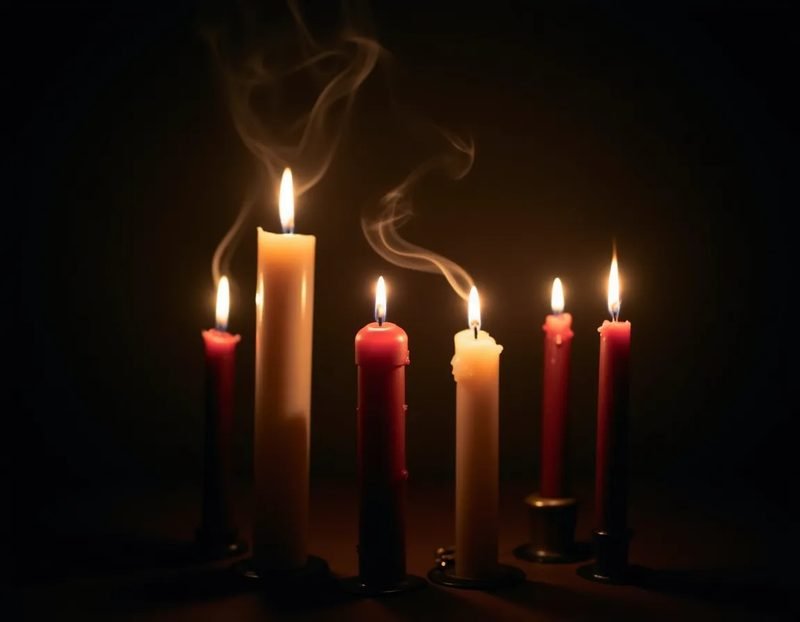
I don’t necessarily believe a candle has any power beyond wax and wick. I do, however, have a strong conviction that a flame at the right distance from a face changes what a room is willing to believe.
Candlelight: The Workhorse, Not the Prop
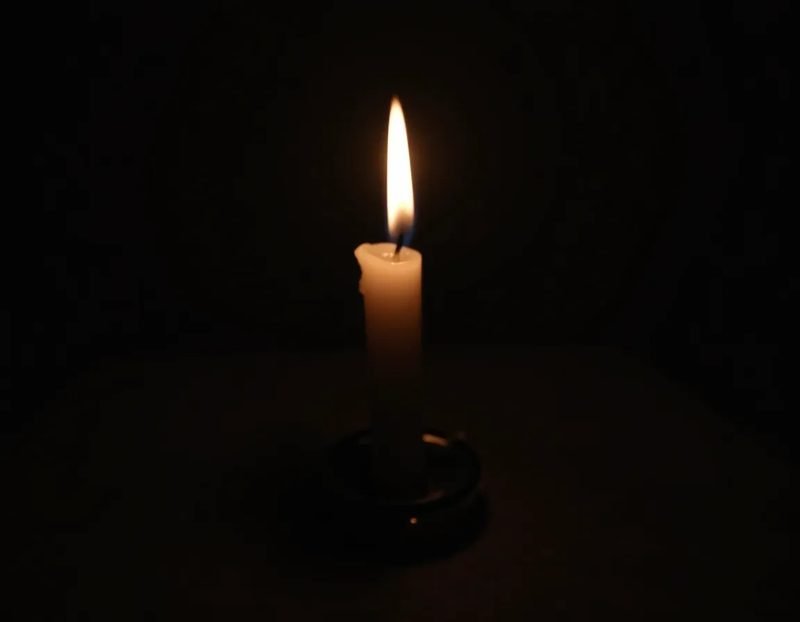
Candlelight gets treated as set dressing far too often. It is not set dressing, it is your primary light source, and it behaves nothing like a stage instrument. It flickers, it throws inconsistent shadow, it moves when someone breathes near it. Use that.
Place your candle low and off-center, never dead center on the table. A centered flame lights both hands evenly and kills the very shadow you need for cover. An off-center flame, six to ten inches to one side, throws a long shadow across your working hand while leaving your face lit enough to read. That asymmetry is the whole trick. Your audience reads the light on your face as sincerity. They never notice what the shadow is doing to your hands.
For revelations, the move is different. Bring the candle closer to your own face in the final second before the reveal, not before. The light climbing up under your chin does something primal to an audience, it reads as exposure, as a face suddenly seen too clearly. Save that proximity for the moment you want them leaning forward.
A word of caution, and I mean this one. Real flame in a working environment is a liability if you have not tested it. Wax pools unevenly on an uneven table, wicks gutter in air conditioning, and a nervous participant can knock a taper over faster than you’d think. If your venue won’t allow open flame, a well chosen flameless taper with a genuine flicker chip will get you eighty percent of the effect with none of the risk. Test it in the actual room, under the actual conditions, before you commit to it as a cue.
Colored Gels: Psychological Cueing, Not Halloween Decoration
Most bizarre magic performers reach for red or purple gel and call it done. That’s a mistake, it treats color as flavor when color is actually information.
Red reads as danger, heat, blood, urgency, your nervous system knows this before your brain does. Use it sparingly and only at the point of highest tension, a reveal, a name spoken aloud, a card turned face up. If red is on for the whole routine, it stops meaning anything, it’s just wallpaper.
Deep blue does the opposite work. It slows a room down, it reads as cold, as distance, as the space between the living and whatever you’re implying is not. Blue is your default atmosphere gel, the wash you sit in for most of the piece, because it lets the occasional warm light (a candle, an amber gel) feel like an intrusion when it appears.
Amber sits in between, and it’s underused. Amber over a low source reads as old light, gaslight, the glow of something that shouldn’t still be burning. If your routine has any element of an object with a history, a letter, a photograph, a “troubled possession” with a story attached, amber is the color that makes the audience believe the object predates the room they’re sitting in.
The rule I give performers who ask me about this: pick two colors for a routine, never three. One is your resting state, one is your alarm state. If you’re reaching for a third, you’re decorating instead of cueing, and the audience will feel the difference even if they can’t name it.
Shadow Placement: What You Hide Matters as Much as What You Show
Shadow is not the absence of light, it’s a tool with its own geography, and most performers only think about where the light falls, never about where it deliberately doesn’t.
Map your working area before you map your patter. Know exactly which six inches of table stay dark for the full routine, that’s your utility zone, the place a switch or a load can happen without needing a moment of misdirection to cover it because the misdirection is already built into the room. This is different from a magician’s servante or a table well, it’s slower and more permanent, and audiences never suspect a shadow the way they suspect a piece of furniture.
Face shadow does something different again. A light angled slightly below eye level, coming up rather than down, puts shadow in the eye sockets and under the brow. It’s an old technique, campfire storytellers have used it for longer than magic has existed as a formal art, and it works because it removes just enough of your expression that the audience has to fill in the rest themselves. They always fill it in as more unsettling than your actual face.
My pendulum work benefits from this constantly, it’s resting in low light with my face half in shadow, and the swing reads as more deliberate than it would under even light. The shadow isn’t hiding anything mechanical there. It’s doing something more interesting, it’s removing your certainty about what my face is telling you.
Building the Cue Sheet: Tying Light to the Effect, Not the Room
This is the step almost nobody takes, and it’s the one that separates a lit room from a designed one.
Write your routine out beat by beat. Next to every beat, write the light state, not “dim” or “spooky,” but a specific instruction. “Candle at eight inches left of center, no gel, full flame.” “Blue wash to 40 percent, amber spot rises on the box over four seconds.” “All light cut except the single candle, held at chin height.” Specific instructions are the only kind you can rehearse, and light you haven’t rehearsed is light you can’t rely on.
Once you have the sheet, look for the biggest single change in the whole routine and ask whether it lands on your biggest effect. If your most dramatic lighting shift happens during a transition nobody remembers, and your climax gets the same steady candle as everything before it, you’ve built your cue sheet backward. The light should peak where the effect peaks. That sounds obvious written down. It’s astonishing how rarely it happens in practice.
I ran an early version of this framework at a private event in the Louisville area, working a small room with nothing but two candles and a single practical lamp on a dimmer I’d wired myself. I didn’t have gels that night, just distance and angle. The shift, moving one candle four inches and cutting the lamp entirely for the final piece, produced a reaction in the room I hadn’t gotten from that same routine under flat light. Nobody could tell me what changed. They just went quiet in a different way.
That quality of quiet is the whole reason to do any of this.
Where Practical Lighting Fits Alongside Atmosphere
None of this requires a lighting rig or a theater budget. Most séance work happens in rooms you don’t control, living rooms, small venues downtown, a table set up an hour before the audience arrives. Your kit needs to be portable and needs to work with whatever fixed light already exists in that room.
A small battery dimmer, two or three gel swatches, a reliable candle source, and a flashlight with a warm filter will cover the overwhelming majority of rooms you’ll ever work in. What matters isn’t the gear, it’s that you’ve decided in advance what each piece is for and when it fires. A performer who shows up with expensive equipment and no cue sheet is worse off than one who shows up with a single candle and a plan.
Build the plan first. The gear follows.
If you want to put real hardware behind this framework, dimmers, gel sets, and the kind of practical light sources built for close work rather than a stage, take a look at what we carry.
Continue reading: Part 2: The Nose Remembers, Scent as the Séance’s Overlooked Instrument