Part 2: The Nose Remembers, Scent as the Séance’s Overlooked Instrument

Part 2: The Nose Remembers, Scent as the Séance's Overlooked Instrument

In Part 1: Lighting Design for the Séance Room: A Working Framework for Every Effect, I laid out how light shapes belief before a single word is spoken. Sound gets its due too, most working mentalists have some opinion about creaking floorboards or a low drone under the table. But scent, the sense most wired into memory and dread, sits almost untouched. Ask ten performers what their séance room smells like and eight will shrug. That gap is the subject of this piece.

Why the Nose Gets There First

Here’s the part most performers skip past. Your olfactory bulb sits a few synapses from the amygdala and the hippocampus, the brain’s fear switch and its memory library. Sight and sound route through the thalamus first, a kind of security checkpoint that filters and labels before the feeling arrives. Smell doesn’t wait in that line. It hits the emotional centers almost raw.

That’s why a smell can drop you back into a specific afternoon of your childhood with no warning at all, while a photograph from the same day leaves you cold. Marcel Proust built a whole novel out of this exact mechanism, a piece of madeleine dipped in tea. Psychologists now just call it the Proust effect, and it’s real, it’s measurable, and it’s sitting unused in most séance rooms.

A sitter who smells something faintly wrong, wrong in a way they can’t name, starts distrusting their own certainty within seconds. That’s the doorway. Everything else you do in the room walks through it.

Candle Wax and the Grammar of Old Fire
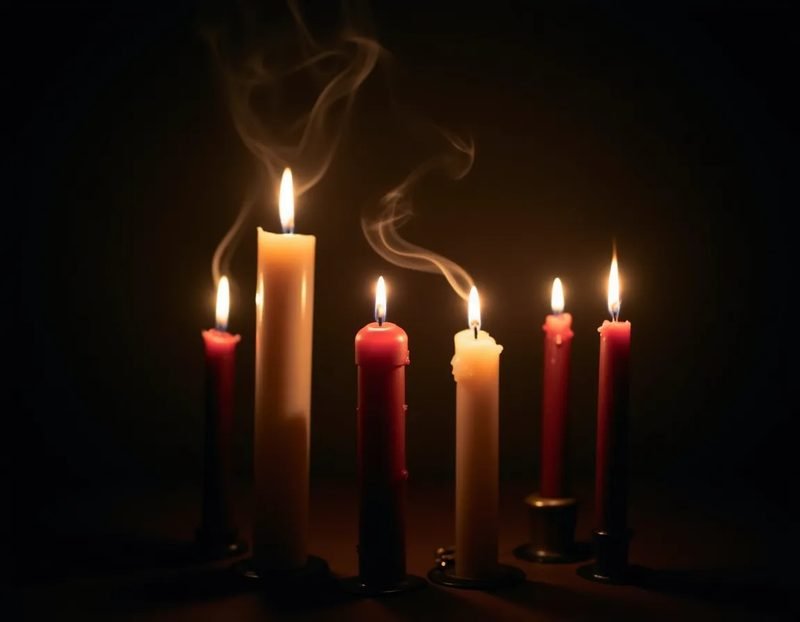
several types of candles burning side by side, smoke trails visible

Most performers grab whatever candle is on the shelf and call the mood handled. That’s a mistake, and it’s an easy one to fix.

Paraffin, the wax in most cheap tapers, throws a thin petroleum note when it burns, faint but there. It reads as modern. Your sitters won’t consciously register “petroleum,” but some part of them files the smell under hardware store, not haunted parlor. Beeswax burns honeyed and warm, closer to what a room lit only by candlelight would have smelled like for the four hundred years before electricity existed. Tallow, rendered animal fat, is harder to source and messier to burn, but it carries a smoky, almost meaty undertone that nothing else replicates. Some of the darkest Victorian séance accounts describe exactly that smell without ever naming it.

The snuffed wick matters more than the burning one. That thread of smoke right after you pinch a flame out, the sitters catch it. Time it. A candle extinguished at the moment of a “contact” moment does something a candle burning steadily through the whole sitting can’t.

Paper, Dust, and the Smell of Time

Old paper doesn’t smell old by accident. Lignin, a compound in wood pulp, breaks down as paper ages and releases vanillin, the same aromatic compound in actual vanilla, along with faint notes of almond and grass. That’s the real chemistry behind what people call the “old book smell.” You can buy synthetic versions of it. Don’t. Once you know what to look for, a real aged document, foxed with those small rust colored spots from trace iron and mold spores, holds its scent in a way no spray bottle matches.

I keep a handful of period correspondence and ledger pages in a sealed box specifically so I can bring one out mid effect. The moment a sitter leans in to read something and gets that particular dry, sweet, mineral smell before they’ve read a single word, something shifts in how they hold the object. They’ve already decided it’s real. The reading just confirms it.

Dust itself is worth staging too. A light layer, undisturbed on a specific shelf or box lid, tells a story your dialogue doesn’t have to.

Incense as Punctuation, Not Wallpaper

This is where most performers who do think about scent get it wrong. They burn incense continuously through the whole sitting, and the room adapts within four or five minutes. Your nose fatigues to a constant stimulus fast, it’s a documented sensory mechanism called olfactory adaptation, and once it happens the incense becomes furniture. Expensive, fragrant furniture, but furniture.

Use incense like you’d use a music cue. Frankincense and myrrh together carry centuries of ecclesiastical weight, they smell like consecration, like something being marked as sacred or dangerous. Dragon’s blood resin burns sharper, resinous and a little bitter, useful right before a moment you want to feel like a threshold being crossed. Benzoin is warmer, almost vanilla adjacent, good for closing a sitting gently rather than opening one.

Light it, let it build for under a minute, then let it fade rather than replenishing it. The rise and fall does more work than a steady cloud ever will.

Copal is worth mentioning on its own. Used across Mesoamerican ritual practice for centuries, it has a bright, almost citrus sharpness under the resin that most sitters have never smelled before and can’t place. Unfamiliar scent reads as unfamiliar event. That’s the whole trick.

Controlled Staleness

Here’s the technique nobody talks about, and it’s the one I’d argue matters most.

A room that’s been closed up, low airflow, slightly higher humidity than comfortable, develops its own smell within an hour or two. Not mold, you’re not trying to make anyone sick, just a faint mineral closeness, the smell of air that hasn’t moved. Close the vents an hour before sitters arrive. Skip the air freshener entirely, that’s the opposite instinct from what you want. A slightly damp cloth left folded in a drawer, removed just before the room is used, will do more for atmosphere than any diffuser on the market.

Your instinct as a business owner is to make the room smell clean and welcoming.

Resist it.

A séance room that smells too clean reads as staged, because in daily life almost nothing does. The rooms we associate with the uncanny, attics, cellars, houses left standing after someone died in them, all share that faint closeness. You’re not decorating a room. You’re aging one, in real time, for the ninety minutes your sitters are inside it.

Building the Cue Into the Effect Itself

Scent works best when it’s not ambient at all, when it’s tied directly to a specific beat. I’ve built pieces where a sealed object, opened only at the reveal, releases a scent the sitter didn’t expect and can’t source. The gap between “I smell something” and “I can name it” is where belief lives. Keep sitters in that gap as long as you honestly can.

I tested an early version of this at a private event in the Louisville area, a small reading where the reveal involved an old tin the sitter hadn’t touched yet. The tin had spent two weeks with a folded scrap of aged paper and a pinch of dried myrrh sealed inside it. When she opened it, her breath caught before she’d even processed what was on the paper. That reaction, the body responding before the mind catches up, is the entire argument for taking scent as seriously as light and sound. It got there first.

Don’t announce the scent. Never say “do you smell that.” The moment you name it, you’ve handed the sitter permission to rationalize it. Let it work in silence. Let them wonder later whether they imagined it.

Where This Leaves You

Lighting sets the stage. Sound sets the pulse. Scent sets the memory, and it does it whether you plan for it or not. The only choice you actually have is whether you’re the one designing it or whether you’re leaving it to whatever the room happened to smell like that day, old carpet, cleaning spray, nothing at all.

Most performers leave it to chance.

They shouldn’t.

If you’re ready to start building this into your own room, I keep a working selection of resins, aged paper stock, and period correspondence suited exactly to this kind of staging. Have a look at the Arcane Relics shop.

Light as Language: A Working Performer’s Guide to Atmospheric Illumination

Light as Language: A Working Performer's Guide to Atmospheric Illumination

Most performers think about lighting the way they think about tablecloths. Something to have, not something to use. They dim the overheads, put a candle on the table, and call it atmosphere. They’re not wrong that the room feels different. They are wrong about why, and that misunderstanding costs them more than they realize. Light isn’t decoration. It’s a priming mechanism. And most performers are leaving it to chance.

What Light Temperature Actually Does

Light temperature is measured in Kelvin. Daylight runs around 5000 to 6500K, clean and clinical. A candle burns at roughly 1800 to 2000K, amber and thick. Standard household incandescents sit at around 2700K. Most venues default to something between 3000 and 4000K, warm enough to feel comfortable but not warm enough to do any real psychological work.

Here’s what that means for your show. Cool light, anything above 4000K, activates alertness. It mimics midday sun. The nervous system reads it as daytime, as scrutiny, as the kind of environment where you check your phone and notice details. Warm light does the opposite. Below 2700K, something quieter happens in the room. People lean back. Their breathing slows. They stop scanning and start watching.

This isn’t opinion. It’s circadian biology. And it’s the single most under-exploited tool in a performing mentalist’s arsenal.

If your venue has overhead fluorescents, you’ve already lost before you’ve said a word, bring your own sources. A pair of amber-gelled practical lamps on dimmers costs less than most decks and does more for your opening than any scripted patter ever could.

Directionality: Where the Light Comes From

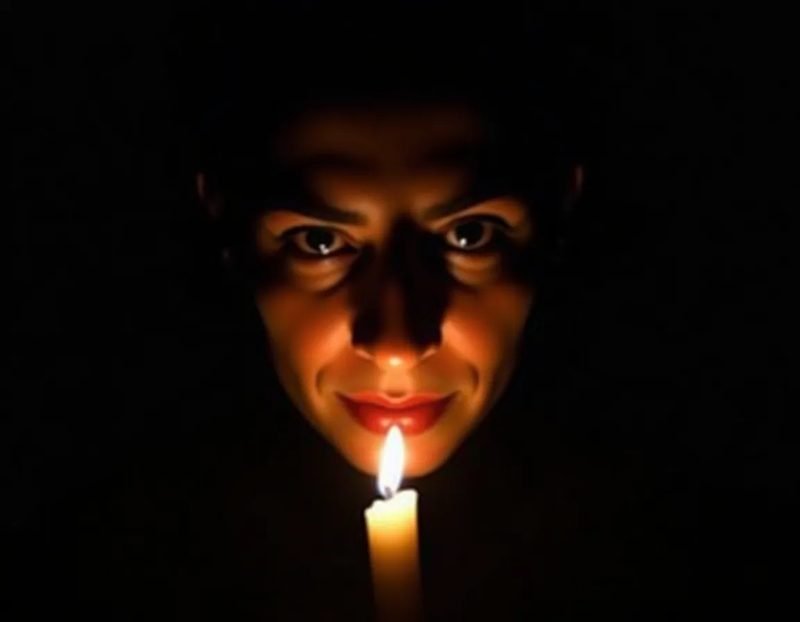
a performer's face lit from slightly below and to the side by a single candle flame, dramatic shadow rising across the u

Most stages and performance spaces are lit from above. It’s practical for the performers and comfortable for audiences. It’s also completely wrong for mentalism, bizarre magic, or any work that benefits from unease.

Overhead light flattens faces. It removes shadow from the eye sockets, the cheekbones, the jaw. The human brain reads a fully lit face as open, readable, safe. That’s the opposite of what you want when you’re asking an audience to believe you can read them.

Side lighting, at roughly eye level or slightly below, does something different. It throws one half of the face into partial shadow. It creates planes. It makes a familiar face look slightly unknowable, and that’s the register you’re trying to occupy before the first effect begins.

Light from below is gothic for a reason. We evolved reading danger in faces lit by firelight, which rises from the ground. A source below eye level, even a subtle one, triggers a low-level recognition of something old. You don’t need to be theatrical about it. A single flame on a low surface, casting upward light against your hands during a reading, does quiet, serious work on your audience’s nervous system without them knowing why.

The question worth asking: where does light come from in nature when something bad is about to happen? Not from above. Bring your sources down.

Contrast Ratio Is the Real Variable

Performers obsess over how dark to make a room. That’s almost always the wrong question.

What matters is the contrast ratio, the difference in brightness between the lightest and darkest areas in the space. A room that’s merely dim is just a dark room. A room with a single bright point and genuine shadow on everything else creates the conditions for suggestion and unease. The eye is drawn to the light, the imagination fills the dark.

In practice, this means you want almost nothing competing with your primary source. Exit signs, prop table work lights, phone screens glowing through pockets, they all bleed into the dark and flatten your contrast. Before you perform, walk the room and kill every ambient light source you can reach. That crack of light under the door matters more than you’d think. It anchors people to the ordinary world outside, which is exactly where you don’t want their attention.

A high contrast ratio makes small movements read large. A hand shifting position near a candle flame, a face turning slightly from the light, these register as significant in high-contrast environments in ways they simply don’t in a softly lit room. You’re not just managing atmosphere. You’re calibrating your audience’s sensitivity to your physical instrument.

Candlelight Is Not Decoration

I’ve watched performers use candles the way they use tablecloths. For aesthetic. One candle, centered, lit five minutes before showtime, burned for the duration.

That’s a waste of a tool that took our ancestors forty thousand years to associate with darkness, danger, and the boundary between the known and unknown.

Candlelight flickers. That’s the crucial thing. A static light source is background. A moving one keeps the eye tracking, keeps the brain slightly unsettled, unable to fully habituate to the environment. The slight, irregular movement of flame is enough to prevent the brain from fully relaxing its threat-monitoring. Not in a way that causes anxiety. In a way that keeps the room alive.

Multiple candles of different heights create overlapping shadow patterns that shift independently. The geometry of the room changes as flames move. This isn’t dramatic. It’s barely perceptible. That’s exactly why it works. Audiences don’t notice it consciously, they just feel that the room is different from ordinary rooms, which makes them different from ordinary audiences.

The container matters too. An amber glass holder reduces the color temperature further and softens the spread. A plain white candle in a clear holder throws cooler, harder light. Know which effect you’re building before you set the table.

The Pre-Show Window

The room is doing work before you walk in. That’s either working for you or against you.

If your audience assembles in full light and then you dim when you’re ready to begin, you’ve just made a dramatic gesture. That’s theater. What you actually want is for them to have arrived into atmosphere, to have sat down already inside the environment you’ve built. By the time you walk in, the room has been quietly working on them for ten minutes.

This means your lighting has to be set before the first person enters. Not just your primary performance sources, but the full environment. What do they see when they come through the door? What’s the first thing their eyes adjust to? That adjustment period, those first thirty seconds in a room, is when the framing happens. Make it count.

Don’t greet audiences in the full light of a normal room and then expect them to step into something stranger when you decide it’s time. Let them arrive already somewhere else.

The Mistakes That Undermine Everything Else

Blue-tinted LED candles. I understand the appeal. They’re safe, no fire marshal conversations, consistent burn. They’re also completely wrong in color temperature and their light doesn’t move. The flicker mode on most battery candles is a regular pulse, not the chaotic, living movement of real flame. Audiences don’t consciously know the difference. Their nervous systems do.

Overhead dimmed to thirty percent. This is the most common mistake in mentalism staging. Dimming overhead fixtures reduces intensity but doesn’t change directionality. You still have top-lit faces. You still have flat shadows. You’ve made the room darker, not stranger. Stranger requires a different source, not less of the same one.

Mixing color temperatures. If you bring warm practical lamps and leave the venue’s cool overheads on at low level, you get a muddy visual environment where nothing reads clearly. Cool and warm fight each other. Commit to one register and eliminate the other. This means being willing to ask the venue to kill circuits entirely, not just dim them.

Treating the light as static. Even with fixed sources, building in a moment of change, a second candle lit during a piece, a lamp extinguished at a specific beat, gives you timing control over the room’s emotional state. Light cues don’t need to be dramatic to be effective. The quietest changes read the deepest when the contrast ratio is doing its job. And that’s the whole game, honestly.

The performers who understand this aren’t working in darkness for mood. They’re working in precisely calibrated darkness because they know exactly what it does to a room of human nervous systems before a single effect begins. Your props can only work on an audience that’s already somewhere.

Your lighting decides where that somewhere is.

If you’re building a performance environment and want props and artifacts built to occupy that kind of space, you can see what we carry at Arcane Relics.