
Anna Eva Fay walked into a laboratory in London in 1874 and walked out with the endorsement of one of the most respected scientists in England. That’s not spin, that’s history. Sir William Crookes, a chemist who’d already discovered thallium and would go on to be knighted for his work, tested her under conditions he designed himself and came away convinced something genuine was happening in that room. He wasn’t a rube. He was exactly the kind of skeptic every performer dreads, and she got through him.
I’ve spent years collecting and studying the working methods behind bizarre magic and mentalism, and most of what gets written about performers like Fay treats them as method puzzles to be solved. How’d she do the cabinet? What was the code? Fine questions. But they miss the harder trick, the one that actually kept her working for close to five decades.
She built a business that survived exposure.
The Scientist Who Believed Her
Crookes wasn’t the only credentialed mind she got past, but he’s the one that mattered most, because his name carried weight in exactly the circles that could have ended her career before it started. Psychical research was a real academic pursuit in the 1870s and 1880s, not the fringe hobby it looks like from here. Serious scientists, some with Harvard and other university affiliations, treated the question of mediumship as an open empirical problem worth their careers to investigate.
Fay was tested more than once by exactly this kind of committee, men who had reputations to protect and no professional incentive to be fooled.
Here’s the part most method-history write-ups skip entirely: getting past one skeptical scientist is a magic trick. Getting invited back, repeatedly, by different investigators over years, is a business strategy. She understood that a favorable report from a credentialed skeptic was worth more than any newspaper advertisement she could buy. It was proof, or close enough to it, and it circulated for free.
The Man Who Tried to Ruin Her
Every working mentalist eventually meets their Washington Irving Bishop. He was a rival performer, a mind reader in his own right, and he made it his business to expose Fay’s methods publicly, in print, with diagrams, in the way exposers have done to every generation of mentalists since. It should have finished her.
It didn’t.
That’s the detail worth sitting with. An expose that would flatten most modern acts barely slowed her down. She kept touring, kept booking, kept building. I don’t think that was luck. I think it was because her value to an audience was never purely the secret. The secret was the entry fee. What she sold on top of it, the presence, the read of a room, the willingness to stand in front of scrutiny and hold her ground, that’s harder to expose because it isn’t a method at all.
I test this principle constantly in my own work. I did a reading for a small private gathering in Okolona a while back where someone in the room clearly knew, or suspected, roughly how a piece of the effect worked. Didn’t matter. The moment landed anyway, because the moment was never really about the mechanism. Fay figured that out in an era before anyone had language for it.
What the Committees Actually Proved
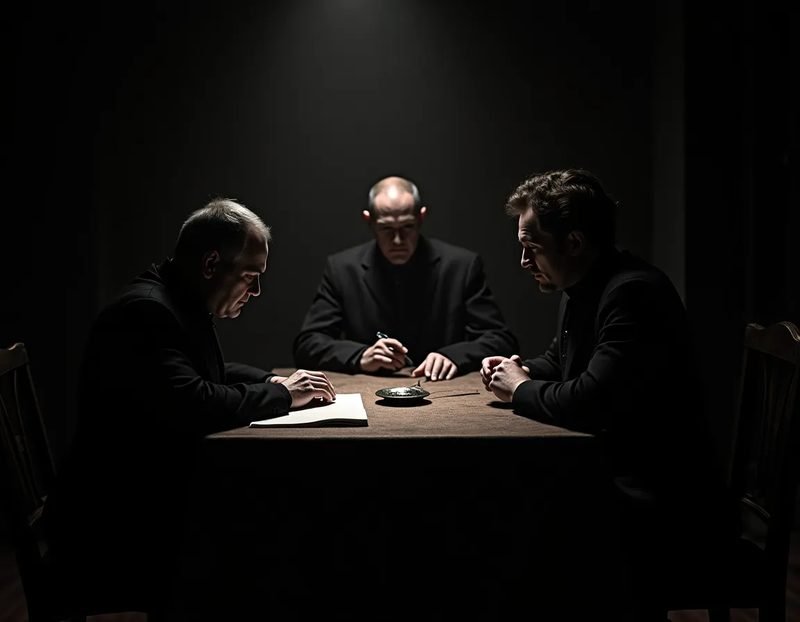
Nobody walked away from these investigations with airtight proof of anything supernatural. That’s not controversial, it’s just accurate. What the committees actually established, again and again, was narrower and in some ways more useful to a working performer: under the conditions these particular investigators were capable of designing, they could not catch her.
That is a completely different claim than “her powers are real,” and Fay, whatever she privately believed about her own gifts, was smart enough to let the ambiguity do its work. She never had to claim more than the evidence technically allowed. The committees did the overclaiming for her, in their own excited write-ups, and she let the public read whatever they wanted to into a report that actually just said “we couldn’t explain it.”
I don’t necessarily believe Fay was tapping into anything beyond a very well built act. I do believe she understood something most performers still get backwards today, which is that you don’t need the audience to believe in magic. You need them to run out of alternate explanations faster than their interest runs out.
The Brand Outlived the Performer
Here’s the business instinct that gets left out of nearly every method history I’ve read, and it’s the one that impresses me most. Anna Eva Fay didn’t just perform under a name. She built “Eva Fay” into something closer to a trademark, a persona sturdy enough that it could be worn by more than one performer across more than one generation and still draw a crowd.
That’s not a footnote. That’s a working mentalist thinking about her career the way a smart shop owner thinks about inventory, as an asset that has to outlast any single performance. Most mentalists of her era sold tickets. She built something closer to a franchise, decades before anyone in entertainment used that word on purpose.
Think about what that required. It meant the act itself had to be transferable, built on principles sturdy enough to hand to someone else, not just a bag of personal tricks that died with her. It meant protecting the name legally and publicly, treating imitators as a threat to be managed rather than a compliment to shrug off. Performers obsess over protecting their methods. Fay protected something bigger, her name’s earning power, and that decision is the reason “Eva Fay” was still filling seats long after the woman who built the character had every reason to have been forgotten.
What Her Instincts Teach a Working Performer Now
Three things stand out to me, and none of them are about method.
First, survivability matters more than secrecy. Fay’s methods, whatever they were exactly, are largely reconstructable now by anyone who wants to dig. Her career isn’t. That gap is the whole lesson. Build an act, and a public persona, that can take a hit and keep working, because someone, somewhere, is always going to try to take a hit at it.
Second, let credentialed skeptics do your marketing. Fay never needed the committees to declare her supernatural. She needed them to say “we tried, and we couldn’t catch her,” and then she needed to get out of the way and let that sentence travel. Working performers today have the same option in miniature, every time a sharp audience member walks away unable to reconstruct what happened. That reaction is worth more than a hundred glowing reviews you paid for.
Third, treat your name like property, because it is one. Fay understood her persona had value independent of her own physical presence on a stage. That’s a strange thing for a performer to grasp in the 1870s, and it’s still a strange thing for a lot of performers to grasp now.
I keep coming back to her because the method history is the easy part. Anyone can chase a diagram in an old exposure pamphlet. What’s harder, and what’s actually worth studying, is how a performer builds something that survives being caught.
By the way, I do believe some careers are built to last and some aren’t, and the difference usually isn’t talent.
Building Your Own Version of “Believed”
If you perform mentalism seriously, Fay’s real lesson isn’t a specific move you can lift and run. It’s a posture. Build effects sturdy enough to survive scrutiny from the smartest person in the room, not just the easiest. Protect your name and your presentation as deliberately as you protect your methods. And never let the trick be the whole show, because the trick is the one part of your act an exposer can actually take from you.
Everything else, the read of the room, the nerve to hold a pause, the willingness to stand there while someone tries to catch you and fails, that part’s yours. Nobody can publish a pamphlet that takes it away.
We build our own working pieces around exactly that principle, tools meant for performers who plan on being doing this for decades, not for one strong weekend. If that’s the kind of work you’re after, take a look through what we’ve got.