Somewhere in nearly every beginner’s mentalism course, there’s a paragraph warning you off the book test. Too fiddly, they say. Too transparent. A relic from an era when audiences hadn’t yet learned to smell a stacked deck or a marked page.
They’re wrong, and they’ve been wrong for about a hundred years.
I don’t think the book test is a beginner’s trap or a museum piece. I think it’s the single most misunderstood platform in mentalism, treated like a fixed trick when it’s actually a chassis you build a career on. The performers who dismissed it early never got past the Victorian version. The performers who kept digging found something else entirely.
Page-Fishing and the Original Sin
The earliest book tests weren’t tests at all. They were fishing expeditions dressed up as miracles, and the dressing wasn’t very good.
A performer would ask a spectator to think of a word on any page, then work the room with a string of guesses disguised as revelations. “I’m getting something that starts with a consonant… it’s a short word… it relates to travel.” Every wrong guess got quietly discarded. Every near-hit got amplified. Cold reading wearing a book jacket, essentially.
It worked, for a while, because the audiences of that period hadn’t built up immunity to the pattern. Then vaudeville closed, television arrived, and viewers started watching the same performer do the same bit twice. Fishing doesn’t survive a rewind button.
So the method had to change. Not the effect, the method.
The Force Enters the Room
The real evolution of the book test happened when performers stopped trying to divine a random page and started controlling which page got chosen in the first place. That’s the whole pivot, and it’s worth sitting with.
Duplicate editions, invisibly marked pagination, a switch executed while attention sat somewhere else entirely, these techniques turned an impossible cold read into a completely solved problem. Once the performer knows the page, the “reading” isn’t a reading anymore. It’s recitation dressed as clairvoyance.
This is where most working performers still live, by the way.
Mid-century force technique, elegant in its time, treated today as the ceiling of what a book test can do. I’d argue it’s the floor.
Why the Book Test Refused to Die
Here’s the part that should trouble anyone who thinks of the book test as old news: no other classical method has been reinvented this many times by this many independent minds. Not the classic force in cards, not the center tear, not billet work. The book test keeps getting rebuilt from scratch, decade after decade, by people who don’t seem to know about each other’s work.
Why does one method attract that much attention across a hundred years while others stagnate?
Because the book test solves a problem no other method solves as cleanly, it borrows the spectator’s own object. A shelf book, a paperback pulled from a bag, a hotel Bible. The prop isn’t yours. That single fact does more heavy lifting than any verbal convincer ever could, and performers have never stopped chasing better ways to exploit it.
The Multi-Layer Systems Nobody Talks About
What actually separates a contemporary book test from a mid-century one isn’t the force, it’s the layering underneath it.
A single-force book test gives you one hit and then you’re done, the book closes and the moment is spent. A layered system treats the book as a platform that can deliver a name in act one, a location in act three, and a date that ties the whole evening together at the end, all from the same object, all without repeating the method in a way the room can triangulate.
I’ve built pieces this way myself. A book test that only works once is a card trick wearing a costume. A book test built as infrastructure, seasonal cues, a bookmark that does more than mark a page, information staged across an entire piece rather than dumped in one breath, that’s a different animal. It survives repetition because the audience never sees the seam twice in the same place.
Most performers never build past the single reveal. That’s a choice, and it’s the wrong one if you’re doing paid work.
What a Modern Book Test Actually Requires
If you’re serious about running a book test as a centerpiece rather than a filler bit, a few things stop being optional.
The book has to earn its presence. A prop that looks planted kills the piece before the force even happens.
Your force needs a second method backing it up, for the night the first one doesn’t land clean.
The information you extract should feel personal, not generic. “A word” is weak. A memory, a name tied to grief or love, that’s the difference between polite applause and a room that goes quiet.
You need an exit. The piece that reveals and then just… stops, wastes the strongest object in the room.
Madness at the Castle is where I put all of this to the test. The book itself is old because it’s supposed to be, a handwritten volume pulled straight from the records of H.H. Holmes’ hotel. Nobody in the room questions why you’re holding it. It already has a story before you open it.
It’s a layered book test, so you’re not stuck revealing just a name. Push it further: describe a scene, name a location, walk someone through the details of a murder pulled right off the page. I ran a layered version at a private event in the Louisville area, a name, then a location, then a closing date, all pulled from the same battered hardcover. The reaction wasn’t the polite nod you get from a card trick. It was quiet. Somebody’s hands actually stopped moving.
That’s the tell you’re building the right kind of piece.
Treat It Like a Platform, Not a Trick
The mistake, and I mean this as a real opinion, not a hedge, is thinking of the book test as one effect you either own or don’t. It isn’t. It’s a delivery system, the same way a deck of cards is a delivery system and not a trick.
Once you stop asking “how do I do a book test” and start asking “what can a book carry across an evening,” the whole method opens up. Names, dates, locations, emotional beats, even structural transitions between other pieces in your set, a well-built book can hold all of it.
A hundred years in, the book test still has more headroom than almost anything else in the working mentalist’s kit.
Most performers won’t dig that far into it. You should.
Most performers reach for complexity when they want to feel impressive. That’s backwards, and it’s the reason so many “advanced” effects fall apart the moment a sharp spectator starts asking questions. The trick with three components, two possible transitions, and a hidden layer gives a skeptic three components, two possible transitions, and a hidden layer to suspect. Vertex does the opposite. It gives your spectator exactly what they need to see, nothing more, and that’s precisely why it survives contact with people who are actually looking for the trick.
The Problem With Complexity
I don’t necessarily believe more moving parts make an effect stronger. I used to think that way, honestly, back when I assumed a bigger apparatus meant a bigger reaction. It doesn’t work like that in a room full of engineers, doctors, or the one guy who watched a debunking video on his lunch break.
Every additional component in an effect is another surface a skeptic can press on, it’s another seam for their attention to catch. A trick with five suspicious elements only needs one of them to feel wrong, and the whole illusion collapses. A trick with just the essentials has to be examined completely differently, there’s nowhere else for the eye to wander.
This is the part most product descriptions get wrong when they talk about effects. They sell “features.” The performers who actually book return work know that fewer features, executed with total conviction, beat a feature list every time.
What Vertex Actually Does
Vertex strips an effect down to its bones. Your spectator makes a choice, something happens visibly and undeniably. The whole thing reads as simple from start to finish, and that simplicity is exactly what makes it work. Most people will tell you they couldn’t explain it, not because there’s some impossible magic involved, but because nothing happened the way they expected it to.
What matters is that the effect stays clean in handling. Performers who work close, where a spectator is standing right there watching, need something that reads as ordinary and direct. Vertex was built for that kind of scrutiny, not around it.
Why Smart Rooms Fall For It
Here’s the counterintuitive part. Most performers assume that giving a spectator more control over a prop makes the moment more convincing. Let them hold it, let them turn it over, let them run through the options. In practice, the opposite is often true.
When the effect is clean and direct, you’re not reducing the spectator’s engagement, you’re focusing it. Their attention knows what to follow. And a mind with something clear to watch is a mind that stops hunting for the seam and starts reacting to the effect itself.
I tested this principle at a private event near Louisville a while back, using a clean, direct effect with a small group standing close enough to watch every inch of my hands. What struck me wasn’t the size of the reaction, it was how fast it landed. There was no lag while people scanned for the trick. The moment the effect registered, the room reacted immediately, because there was nothing confusing competing for their attention.
That’s the real design lesson here, and it applies past this one prop. Simplicity isn’t the absence of sophistication. It’s sophistication with the padding removed.
How Working Performers Are Routining It Beyond the Manual
The included directions get you a clean, reliable effect out of the box. Fine for a first run. But the performers getting the most out of Vertex are the ones who stopped treating it as a standalone trick and started treating it as a beat inside a larger piece.
A few patterns keep showing up in how serious performers are actually using it:
As a confirmation, not a headliner. Some mentalists use Vertex as the physical proof point at the end of a longer psychological sequence, letting the spectator’s own choice “confirm” something the performer already claimed to know. The effect becomes evidence, not entertainment on its own.
Layered into a sitters’ reading. In a smaller sitting room format, the effect becomes almost ritualistic, something the sitter returns to more than once during a session, each time reading slightly differently depending on what’s been established.
As a silent beat. A surprising number of working performers have started using it with no verbal explanation at all, just a gesture and a pause. The less you explain a clean effect, the more your spectator’s own imagination fills in a method, and their imagination is always scarier than the truth.
The deck switch. A few performers switch the working deck for the actual deck spectators have been handling and shuffling all night. By the time Vertex happens, the deck in play is provably theirs, not a prop that appeared from the performer’s pocket.
Under a dome. Placing the deck under a glass dome before the reveal takes the performer’s hands out of the picture entirely. Nobody can point to a moment where anything could have been touched, because nothing was touched.
In another room, on camera. The boldest version: the deck sits in a separate room, and spectators watch it the whole time on a live video feed. No sleeves, no gimmicked table, no proximity to the performer at all. That distance is doing real work.
None of that comes printed in a manual, and it shouldn’t. A manual gives you the mechanism, not the meaning.
Where It Actually Has Limits
I won’t oversell this thing, because a prop this specific isn’t for every format. Vertex works best in close contact, parlor distance and closer. It’s also not a piece you rush. The effect only carries weight if your presentation gives it room to breathe. Performers who treat it as a quick gag lose most of its power. Performers who let the silence sit get the reaction the effect is actually built for.
So no, it’s not a fit for every act. It’s a fit for performers who trust a quiet moment to do real work.
Bringing Vertex Into Your Act
The lesson underneath all of this has nothing to do with any single prop, honestly. It’s about restraint. The more your spectator has to follow, the more chances they have to find the edge of the illusion. Give them one clear thing. Make that one thing count.
Vertex was built around that idea from the ground up, not as a gimmick with the extras trimmed off, but as an effect designed to be essential from the first sketch. That’s a harder thing to build than it sounds, and it’s a harder thing to fool a room with than most performers expect until they’ve actually used it.
If you’re the kind of performer who wants your effect’s simplicity to be a weapon instead of a limitation, you my friend, are home.
You can find Vertex, along with the rest of our current lineup, at arcanerelics.com/shop/.
Most performers think about lighting once, on the day of the show, when they walk into the room and realize the overheads are fluorescent and merciless. That is not lighting design. That is triage.
A séance room is not lit, it is built, and the light is one of the load-bearing walls. If you are still treating your lighting as something you adjust after you arrive, you are leaving half your effect on the table before you say a word.
Why Lighting Belongs in the Script, Not the Setup
Here is the part most guides get wrong. They talk about lighting like it is decoration, something you layer on top of a finished routine to make it feel spooky. That is backwards. Lighting is not a mood, it is a cue system, and every change in light should be doing a job: hiding a move, directing an eye, marking a beat, or telling the audience’s nervous system that something has shifted before their conscious mind catches up.
Think about how a good director uses a lighting cue in theater. The audience doesn’t consciously register that the light dimmed two stops when the villain entered, they just feel the room get colder. That is the effect you are after, and it only works if you decided on it in advance, wrote it into your blocking, and rehearsed it like any other piece of technique.
I don’t necessarily believe a candle has any power beyond wax and wick. I do, however, have a strong conviction that a flame at the right distance from a face changes what a room is willing to believe.
Candlelight: The Workhorse, Not the Prop
Candlelight gets treated as set dressing far too often. It is not set dressing, it is your primary light source, and it behaves nothing like a stage instrument. It flickers, it throws inconsistent shadow, it moves when someone breathes near it. Use that.
Place your candle low and off-center, never dead center on the table. A centered flame lights both hands evenly and kills the very shadow you need for cover. An off-center flame, six to ten inches to one side, throws a long shadow across your working hand while leaving your face lit enough to read. That asymmetry is the whole trick. Your audience reads the light on your face as sincerity. They never notice what the shadow is doing to your hands.
For revelations, the move is different. Bring the candle closer to your own face in the final second before the reveal, not before. The light climbing up under your chin does something primal to an audience, it reads as exposure, as a face suddenly seen too clearly. Save that proximity for the moment you want them leaning forward.
A word of caution, and I mean this one. Real flame in a working environment is a liability if you have not tested it. Wax pools unevenly on an uneven table, wicks gutter in air conditioning, and a nervous participant can knock a taper over faster than you’d think. If your venue won’t allow open flame, a well chosen flameless taper with a genuine flicker chip will get you eighty percent of the effect with none of the risk. Test it in the actual room, under the actual conditions, before you commit to it as a cue.
Colored Gels: Psychological Cueing, Not Halloween Decoration
Most bizarre magic performers reach for red or purple gel and call it done. That’s a mistake, it treats color as flavor when color is actually information.
Red reads as danger, heat, blood, urgency, your nervous system knows this before your brain does. Use it sparingly and only at the point of highest tension, a reveal, a name spoken aloud, a card turned face up. If red is on for the whole routine, it stops meaning anything, it’s just wallpaper.
Deep blue does the opposite work. It slows a room down, it reads as cold, as distance, as the space between the living and whatever you’re implying is not. Blue is your default atmosphere gel, the wash you sit in for most of the piece, because it lets the occasional warm light (a candle, an amber gel) feel like an intrusion when it appears.
Amber sits in between, and it’s underused. Amber over a low source reads as old light, gaslight, the glow of something that shouldn’t still be burning. If your routine has any element of an object with a history, a letter, a photograph, a “troubled possession” with a story attached, amber is the color that makes the audience believe the object predates the room they’re sitting in.
The rule I give performers who ask me about this: pick two colors for a routine, never three. One is your resting state, one is your alarm state. If you’re reaching for a third, you’re decorating instead of cueing, and the audience will feel the difference even if they can’t name it.
Shadow Placement: What You Hide Matters as Much as What You Show
Shadow is not the absence of light, it’s a tool with its own geography, and most performers only think about where the light falls, never about where it deliberately doesn’t.
Map your working area before you map your patter. Know exactly which six inches of table stay dark for the full routine, that’s your utility zone, the place a switch or a load can happen without needing a moment of misdirection to cover it because the misdirection is already built into the room. This is different from a magician’s servante or a table well, it’s slower and more permanent, and audiences never suspect a shadow the way they suspect a piece of furniture.
Face shadow does something different again. A light angled slightly below eye level, coming up rather than down, puts shadow in the eye sockets and under the brow. It’s an old technique, campfire storytellers have used it for longer than magic has existed as a formal art, and it works because it removes just enough of your expression that the audience has to fill in the rest themselves. They always fill it in as more unsettling than your actual face.
My pendulum work benefits from this constantly, it’s resting in low light with my face half in shadow, and the swing reads as more deliberate than it would under even light. The shadow isn’t hiding anything mechanical there. It’s doing something more interesting, it’s removing your certainty about what my face is telling you.
Building the Cue Sheet: Tying Light to the Effect, Not the Room
This is the step almost nobody takes, and it’s the one that separates a lit room from a designed one.
Write your routine out beat by beat. Next to every beat, write the light state, not “dim” or “spooky,” but a specific instruction. “Candle at eight inches left of center, no gel, full flame.” “Blue wash to 40 percent, amber spot rises on the box over four seconds.” “All light cut except the single candle, held at chin height.” Specific instructions are the only kind you can rehearse, and light you haven’t rehearsed is light you can’t rely on.
Once you have the sheet, look for the biggest single change in the whole routine and ask whether it lands on your biggest effect. If your most dramatic lighting shift happens during a transition nobody remembers, and your climax gets the same steady candle as everything before it, you’ve built your cue sheet backward. The light should peak where the effect peaks. That sounds obvious written down. It’s astonishing how rarely it happens in practice.
I ran an early version of this framework at a private event in the Louisville area, working a small room with nothing but two candles and a single practical lamp on a dimmer I’d wired myself. I didn’t have gels that night, just distance and angle. The shift, moving one candle four inches and cutting the lamp entirely for the final piece, produced a reaction in the room I hadn’t gotten from that same routine under flat light. Nobody could tell me what changed. They just went quiet in a different way.
That quality of quiet is the whole reason to do any of this.
Where Practical Lighting Fits Alongside Atmosphere
None of this requires a lighting rig or a theater budget. Most séance work happens in rooms you don’t control, living rooms, small venues downtown, a table set up an hour before the audience arrives. Your kit needs to be portable and needs to work with whatever fixed light already exists in that room.
A small battery dimmer, two or three gel swatches, a reliable candle source, and a flashlight with a warm filter will cover the overwhelming majority of rooms you’ll ever work in. What matters isn’t the gear, it’s that you’ve decided in advance what each piece is for and when it fires. A performer who shows up with expensive equipment and no cue sheet is worse off than one who shows up with a single candle and a plan.
Build the plan first. The gear follows.
If you want to put real hardware behind this framework, dimmers, gel sets, and the kind of practical light sources built for close work rather than a stage, take a look at what we carry.
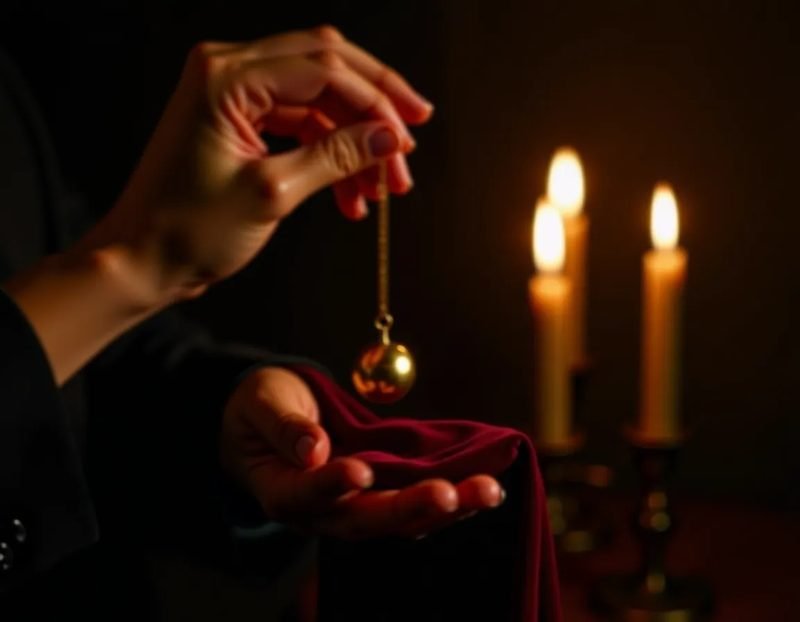
A small weight hangs from a chain between your fingers. Cold brass, maybe, or polished crystal. Dead still. Then, without any visible movement from your hand, it begins to turn. The audience tilts forward as one body, and for a moment nobody breathes. That’s the pendulum. It’s been pulling exactly that reaction for centuries, and it hasn’t gotten tired of it yet.
Pendulum divination sits at one of the strangest crossroads available to a performer: genuine folk practice, documented psychological phenomenon, and theatrical ritual, all converging in one object small enough to fit in a coat pocket. Dowsing and pendulum use appear in texts from the 16th century, but the roots go deeper. Rural Europe’s water-finders worked by touch and instinct, not theory. Cultures that left no written record built complete divination systems around suspended weight and the body’s barely perceptible, involuntary motion, passing the practice from hand to hand across generations with no agreed name for what they were measuring. By the 19th century, French physicians were using pendulums to diagnose illness, and spiritualists had made them the primary instrument for contact with the dead. So who was right about what they were doing? Houdini debunked the seance. Dunninger exposed the mediums. But neither of them could kill the pendulum, because the pendulum was never only a trick.
Why does that matter? Because for the mentalist and bizarre magic worker, the fact that nobody fully agrees on what the pendulum is doing, not even researchers with grant money and controlled conditions, is not a problem to explain away. It’s the whole performance. This guide covers the genuine practice, the psychology behind it, and how to build a pendulum presentation your audience won’t shake off on the drive home.
Choosing Your Performance Pendulum
The pendulum you use in private practice and the one you bring on stage aren’t always the same tool. That’s a distinction most performers underestimate. Get it wrong and you’re fighting your own props before the effect even starts, and the audience picks up on the friction even when they can’t name what feels off.
Visual Impact: Stage vs. Close-Up
At stage distance, ten feet or more, a pendulum has to read. A small crystal point on a fine silver chain simply vanishes. What survives at range is weight and contrast: a heavier bob in brass, iron, or deep-colored glass, suspended from a chain with enough mass to catch the light and hold the eye of someone sitting in the third row with no particular reason to believe in what they’re watching.
Close-up work is a different problem. Not just a smaller version of the same one. Here, delicacy wins. A slender crystal point, a Victorian fob weight, an antique brass plumb bob, these pull in the kind of close-hand scrutiny that rewards the prepared performer. Your spectator is near enough to examine the chain, near enough to cup their hand under yours. And that’s exactly when it lands, when they’ve been that close from the start and still can’t explain what just happened or where the movement came from.
Materials and What They Communicate
Material is character. Does the audience consciously analyze it? They don’t. But they absorb it. Every prop is making an argument before you open your mouth, and a pendulum makes it louder than most because the spectator is already staring at the thing.
Crystal (quartz, amethyst, obsidian): Signals tradition, spirituality, roots in older practice. The natural fit for seance-adjacent work or any presentation built around genuine divination history. A faceted crystal point catches light in a way brass simply can’t match, something almost restless in the way it behaves at the end of its chain.
Brass or bronze: Signals age, precision, the faintly scientific. Ideal for a mentalist framing, “instruments used by 19th-century researchers to measure the body’s unconscious signals.” Heavier and more reliable in its swing arc than crystal, though less atmospheric in close work.
Glass or resin: Versatile. Dark glass reads as opaque and strange; clear resin can be shown hollow, which matters in any presentation where the absence of a hidden mechanism is the point you’re making.
Found objects: Some of the most effective pendulums in bizarre work aren’t pendulums at all. A ring on thread. A pocket watch on its chain. A borrowed key. These moments carry a weight that purpose-built bobs rarely touch, and they cost nothing but the ask.
Chain Length and Weight
The physics aren’t complicated. A longer chain gives you a slow, deliberate arc. A shorter one produces faster, jumpier movement that’ll read as nervous rather than controlled. For most stage and parlor contexts, four to six inches is your range. But what do most performers get wrong here? They choose for appearance and ignore response. You want the lightest possible touch from your fingertips to start the swing without visible push or drag, because a pendulum that requires a deliberate nudge before it answers is working against you at the worst possible moment.
Arcane Relics carries a chosen selection of performance-grade pendulums, weighted and balanced for stage and parlor use, including antique-style brass bobs that have become quiet fixtures in bizarre magic circles. Hold one and you’ll understand right away what separates an instrument from a novelty.
Calibrating Your Pendulum: The Ideomotor Effect and the Scripted “Programming” Moment
Before you perform with a pendulum, you need to know what’s actually happening when it moves. Once you do, you’ll know how to talk about it in a way that works for your performance, no matter what your audience believes walking in.
The Ideomotor Response
In 1852, physiologist William Carpenter coined the term ideomotor to describe something specific: the body produces movement in response to thought or imagination, without conscious will. You think about a direction. Tiny, involuntary contractions in your fingers and wrist move the pendulum that way. You didn’t choose to move it. You weren’t aware of moving it.
And yet it moves.
This isn’t supernatural. It’s also not fraud. It’s a documented, measurable physiological response, the same mechanism behind the Ouija board, water dowsing, and muscle testing. When you tell an audience the pendulum “reads” something from the unconscious mind, you’re on solid ground. The unconscious does hold information the conscious mind doesn’t readily reach. Whether the swing reflects that information accurately is a separate question, but the mechanism is real. That matters more than most performers realize.
Establishing Your Signals
Before any performance, work out what signal system the pendulum will use. In private practice, this means sitting quietly, holding the cord between two fingers, and putting simple questions with known answers to it. Watch what happens. Most practitioners find a consistent pattern surfaces on its own: forward-and-back for yes, side-to-side for no, or a circular rotation for each. Your pattern may differ. What counts is consistency, not convention.
Why do so many performers skip this step? Most don’t treat it as training. They should.
Practice until the responses are reliable before you commit to any performance context. This isn’t superstition. It’s neuromuscular conditioning. You’re training your involuntary responses until they’re consistent enough to trust under pressure, in front of strangers, with a show riding on them.
Scripting the “Programming” Moment for an Audience
The calibration ritual is also a performance opportunity, and a good one. In genuine divination practice, “programming” the pendulum, that is, establishing its signal conventions, is done privately, before use. In performance, you can bring this ritual into the open. Done right, it deepens engagement and gives you cover for the calibration work you’ve already completed at home.
A sample script approach: “Before I use this, I want you to understand what you’re watching. The pendulum doesn’t know anything I don’t know. It responds to what I know but haven’t yet consciously examined. So first, let’s establish a language. I’m going to think of something true, something I’m certain of, and we’ll watch what happens…”
You hold the pendulum. You think of something certain, something with the weight of bedrock behind it. The pendulum swings into its yes pattern. You repeat for no. You’ve just performed the calibration ritual in full view of the audience, explained the mechanism honestly, established your signals, and appeared to share the process rather than direct it. That’s the trick inside the trick.
The Performance: Presenting Pendulum Divination for an Audience
The pendulum works best when you treat it as a process, not a trick. You’re not doing something to it. You’re doing something with it, and the audience is in on it too. That shared claim on the outcome is what separates pendulum work that actually connects from work that looks polished but leaves the room cold.
Setting the Scene
Context does heavy lifting. A pendulum pulled from a jacket pocket under house lights is a curiosity, at most. But what changes when you move it to a candlelit table, draw it from a velvet pouch, and ground it in the documented history of ideomotor research? It becomes an instrument with real weight behind it. The difference isn’t the object. It’s the room. Invest in it. A seance cloth, a few worn period objects, the waxy smell and amber throw of good candles, these aren’t decoration. They’re the first page your audience reads, the one that tells them whether you’re a performer with a prop or someone who takes these things seriously.
Structuring the Presentation
Frame the history. Establish briefly that pendulum use has a documented record across medical, military, and folk contexts. You’re not running a parlor stunt. You’re showing something that serious researchers spent real time with, and that distinction registers for your audience even when they can’t put their finger on why.
Demonstrate calibration. Show the signals clearly, using the scripted moment described above. Making the mechanism visible up front is, paradoxically, what gives the later responses their charge, because nothing feels stranger than a process that’s been explained and still doesn’t cooperate.
Invite participation. Ask the spectator to hold a question, either spoken or private, depending on whether you’re working in a mentalism context or something closer to a table seance. The private version runs stronger as mentalism. Spoken works better inside seance framing.
Work the questions. The pendulum grips hardest when it answers things no one in the room can easily account for. “Are you thinking of a living person?” hits differently than “Is your card the seven of spades?”
Interpret aloud. Don’t just read the swing. Talk through it. “It’s moving, but catching. As if the answer is yes, and something complicated is attached to that yes.”
Questions That Work
Yes/no questions with real emotional stakes produce the sharpest reactions. That’s the short version. What separates a useful question from a dead one? The pendulum should feel like it’s reaching into something that actually matters. The categories that hold up are questions about people (living or dead, present or absent), questions about decisions the spectator is actively sitting with, and questions about the past they know the answer to but haven’t spoken aloud. Don’t waste the moment on party games.
Advanced Techniques: Maps, Charts, and the Pendulum as Truth Detector
Pendulum Charts
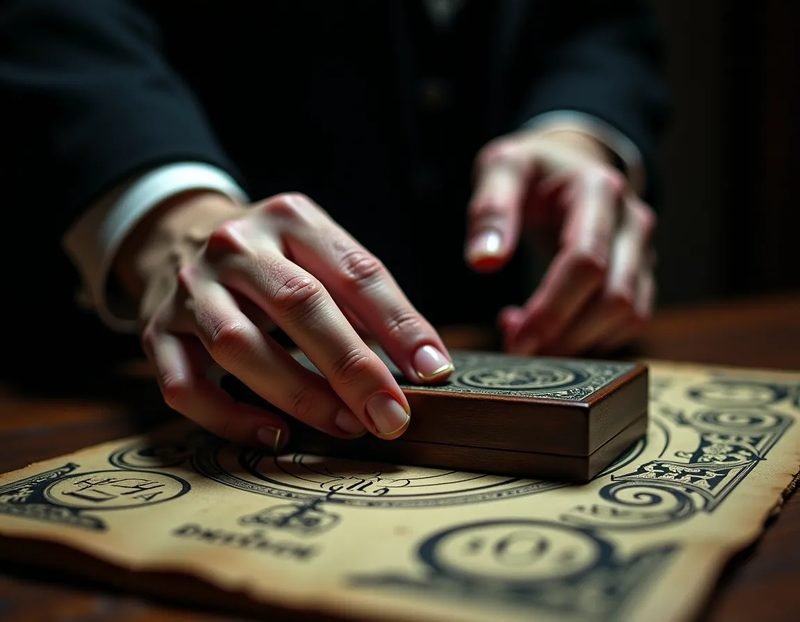
A pendulum chart is a printed arc or circle divided into labeled sections. That’s all it is. But it gives the pendulum a working vocabulary beyond yes or no. Letters. Numbers. Time periods. Why stop there? Any category you can name and print becomes a valid answer. In performance, a well-made chart on genuinely aged paper does double work: it’s a functional tool and a visual object the audience can’t stop reading. The slight roughness of old stock paper unfolding flat on the table, combined with the ink-darkened edges, anchors the whole premise with a physicality no digital prop can replicate.
Map Dowsing on Stage
This is the most theatrically complete pendulum presentation you can build. Hold it over a spread map, let it drift and circle, and watch the room go quiet while everyone waits for the swing that finally stops on a specific location. That silence is the whole show. A large physical map, the kind with visible texture and slight buckling in the paper, spread flat under a warm lamp, gives the audience something to physically lean into. Build it as a feature. It’s not a closer. It deserves a central slot in your set where the tension has room to develop, not shoved at the end when people are already reaching for their coats.
The Pendulum as Truth Detector
Here’s the frame that converts skeptics. Not a supernatural claim. Not mind reading. The premise is simpler: the body knows the truth even when the mouth doesn’t volunteer it, and the pendulum reads the involuntary physical response to deception. That’s it. No mysticism required. This plays especially well with audiences who’d fold their arms through a straight cold reading, because you’ve handed them a rational explanation to hold while the effect does its actual work underneath. Watch the room when you introduce this frame: shoulders drop, people uncross their arms. You’re not asking them to believe anything. Just asking them to watch their own hands.
Combining with Book Tests
The pendulum fits cleanly alongside a book test. Spectator selects a word. You work the pendulum over an alphabet chart and arrive at it one letter at a time. Slower than a direct reveal? Yes. But that accumulated weight is something a flash reveal can’t build. Each confirmed letter is another small commitment from the audience, another beat of held breath before the pendulum swings to the next. By the time the final letter settles into place, the room has been sitting with it for two solid minutes, everyone quietly counting along, the silence pressing in tighter with each pass. That kind of grip, built letter by letter until the audience is almost willing it to land, doesn’t fade the way a quick reveal does.
Troubleshooting: When the Swing Doesn’t Cooperate
Every working pendulum performer has been there. The thing goes muddy in front of an audience, and you’re standing with a string and a weight and a room full of people watching your hand. How you handle that moment matters more than every clean read you’ve ever done.
Inconsistent swings usually trace back to divided attention, tension sitting in the wrist, or genuine conflict in what the spectator believes versus what they’re hoping to hear, and any of those causes produces the same visible muddle. What do you do? Don’t force it. Name it. “It’s not committing. That happens when the question itself holds a contradiction, when what someone hopes for and what they actually believe are pulling against each other.” That line does real work. It explains what the room just saw, drops the ambiguity onto the spectator rather than your instrument, and usually shakes something true out of them. They’ll say more than they planned to.
Between shows, hold the pendulum while doing something else entirely. Read. Have a conversation. Listen to music with the volume turned low. Let the hand sit completely slack. A tightened grip is the enemy, and most performers don’t figure that out until the pendulum starts lying to them at the one moment it shouldn’t. But it does take time. There’s no shortcut.
The Arcane Work Continues
Centuries of debunking. Centuries of appropriation. The pendulum outlasted all of it, and it’s still here, still doing something real. Whether you call it ideomotor response, unconscious information processing, or genuine divination, watch a still weight begin to move and something specific happens to the room. That quality of attention, that collective held breath where no one wants to be the first to blink, is almost impossible to manufacture any other way.
Why does it still work? Because it doesn’t ask the audience to believe anything. It just moves. And the room reacts before the brain has time to build a defense. That’s the mechanism, and it’s available to any performer willing to take the object seriously.
That’s what you’re chasing in every performance. Not the swing. The stillness just before it. The pendulum produces that reliably, given the right context, the right script, and an instrument that visually belongs in the scene, one that earns the weight of what you’re about to say before you’ve said it. It’s one of the oldest tools in the bizarre repertoire. There’s a reason it hasn’t been replaced.
If you’re building a pendulum presentation for the first time, or reworking one you’ve been refining for years, the object in your hand matters more than most performers admit. How many performances have you seen quietly ruined by a cheap chain and a plated bob that looked like costume jewelry? A pendulum that’s correctly weighted, balanced, and visually right for your aesthetic is a working tool. Not decoration. At Arcane Relics, we carry pendulums, seance props, and performance accessories chosen for working performers, pieces with presence, with actual history, and with the kind of weight that tells an audience something is happening before you say a word.
There is a moment in every strong billet routine where the paper touches your hands and something happens that no camera in the room can catch. It doesn’t matter how good the phone in your pocket is. What happens in that half second between a spectator’s folded paper and your reveal is still, more than a hundred years after mentalists started doing it on purpose, the hardest thing in the craft to explain to someone who hasn’t done it.
I don’t think most laypeople could tell you what a center tear even is. Most performers can, but far fewer could tell you where it came from, and fewer still could tell you why it refuses to go extinct even as billet gimmicks get more elaborate every year. That’s worth fixing.
Paper Before the Move Had a Name
Long before anyone called it a “center tear,” audiences were handing folded paper to strangers and asking them to read minds with it. The spiritualist circuit of the mid to late 1800s ran on it. Billet tests, pellet reading, “psychic” question answering, these were staples of the séance parlor, and they worked on the same basic promise the modern mentalist still sells: write something private, seal it, and watch someone who never saw it read it back to you.
Bert Reese built an entire career on billet work, and he built it well enough that scientists took him seriously. He was reportedly examined by physicists and inventors trying to catch the trick, and by most accounts, they walked away without an answer. Reese never wrote a manual. He didn’t need to. His method traveled the way real secrets travel, by whispered lineage from performer to performer, refined a little each time it changed hands.
That’s the part people forget. The center tear wasn’t invented at a desk. It was worn smooth by decades of people who needed it to survive close scrutiny from folks who very much wanted to catch them.
The Method Gets Written Down
Magic literature is slow to catch up to what performers are actually doing in the field, it usually takes a generation before the working method makes it to print. By the time the center tear started showing up in manuscripts and pamphlets in the early 1900s, it had already been circulating as an insider’s secret for years.
Al Baker’s name comes up constantly in serious histories of the move, and Theodore Annemann’s periodical The Jinx did more than almost any single publication to push mentalism methods into the open literature during the 1930s. Annemann wasn’t precious about secrets the way some of his contemporaries were. He published fast, he published often, and he published technique that other performers had been sitting on for a decade.
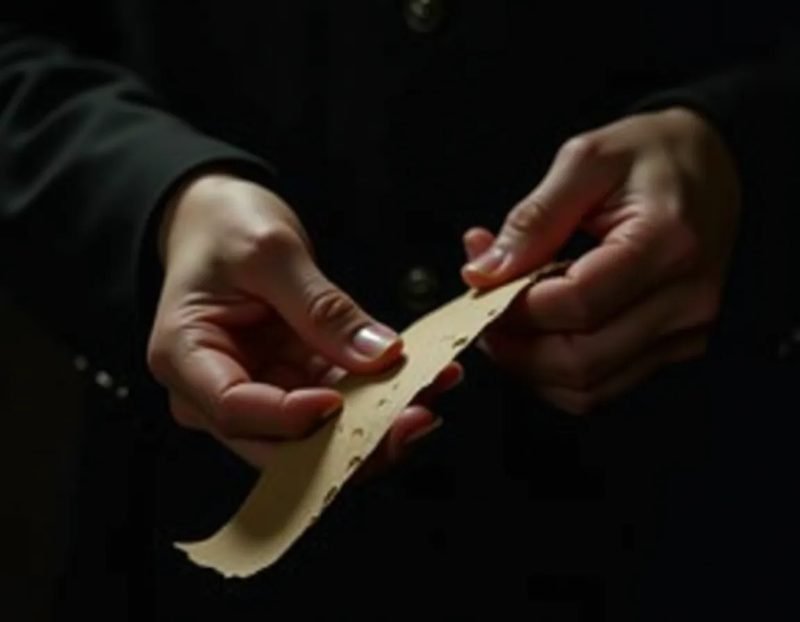
What changed in this period wasn’t the core mechanic. Tear a folded billet roughly in half, retain the piece with the information, appear to destroy the rest. What changed was the choreography around it, the patter that covered the moment, the angles that made it invisible from three sides of a room instead of just one.
Corinda Codifies the Craft
If you ask most working mentalists where they first learned the center tear properly, an enormous number will point to the same book. Tony Corinda’s 13 Steps to Mentalism, compiled from his lecture notes and published in 1968, did for the center tear what a good textbook does for a scattered field. It organized decades of whispered method into a single reference that a serious student could actually study.
Corinda didn’t invent the tear. He inherited it, the way everyone in this chapter of the story inherited it from someone else, and he had the discipline to write it down clearly enough that it could be taught without a personal apprenticeship. That’s a bigger contribution than it sounds like.
Before Corinda, learning this move meant finding someone willing to show you, usually after they’d decided you could be trusted with it. After Corinda, it meant sitting with a book and your own hands until the fold felt natural. The craft got more democratic. It did not get easier.
Why the Tear Still Fools a Room
Here’s the part most guides skip past. The center tear isn’t a paper trick, it’s an attention trick that happens to involve paper. The method works because it exploits something true about how people watch hands: a spectator tracks the object, not the fingers manipulating it, and the moment a visible action like tearing begins, the eye commits to following the torn pieces rather than auditing what each hand did a half second earlier.
I’ve run this move at a private event in the Louisville area more times than I can count, and the reaction is never about the paper. It’s the pause right before the reveal where a spectator’s face changes, some little muscle around the eyes lets go, and you can see them deciding whether to believe what just happened.
My hands go still in that pause. Not because I need them to. Because thirty years of performers before me figured out that stillness reads as honesty, and I’m just borrowing what they already proved.
What Modern Props Are Really Doing
This is the part that should make working mentalists sit up. Nearly every serious billet gimmick sold today, the double-sided pads, the switch envelopes, the peek wallets, exists to solve a problem the center tear already solved by hand: how do you get honest information from a spectator without ever appearing to look at it before your reveal.
Some of these tools are genuinely clever engineering. A few are worth owning. But none of them replace the psychological cover a well-executed manual tear provides, because a gimmick asks an audience to trust an object, while the tear asks them to trust a person who is visibly, audibly destroying the only evidence in the room. Those are not the same request, and audiences respond to them differently whether they can articulate why or not.
Most performers reach for a gimmick because the manual method feels risky. They’re not wrong that it’s risky. They’re wrong that the risk is the problem. The risk is the reason it still works after a century of audiences trying to catch it.
None of that means an envelope has no place in your show. It does, just not as a stand-in for the tear. A well-made envelope earns its keep for switches, for peeks you need mid-routine, for pre-show work done an hour before anyone walks in, for a production that has to look clean under a spectator’s nose a second later. That’s a different job than the one the tear does, and confusing the two is how a good tool ends up with a bad reputation.
This is actually why I worked with Joseph Daniels to build Janus, a mechanical envelope system built for exactly those jobs: switches, peeks, pre-show prep, and productions that stay clean under scrutiny. No batteries, no app, nothing that can die on you mid-show, just paper and mechanical ingenuity doing what an envelope is actually good at. It was never trying to be the tear. It doesn’t ask your audience to trust a person destroying the only evidence in the room, it asks them to trust an envelope, and for the moments where that’s exactly the trust you want, it earns it. If your act has a spot that calls for that kind of cover, it’s worth a look.
Carrying the Move Forward
Every serious mentalist eventually has to decide how much of this history they want in their hands versus in their toolbox. There’s no wrong answer, honestly, a well-built gimmick and a well-drilled manual tear can both fool the same room on the same night. But I do think something gets lost when a performer skips the manual version entirely and never learns why it was built the way it was.
The people who refined this move across a hundred years of spiritualist parlors, magic society lectures, and quiet backstage conversations weren’t trying to make your life easier. They were trying to survive scrutiny from people actively hunting for the seam.
Learn it the old way at least once. You’ll understand every modern billet tool on the market a great deal better once you do.
Explore the current collection of billets, mentalism tools, and troubled relics built for performers who take this craft seriously at Arcane Relics.
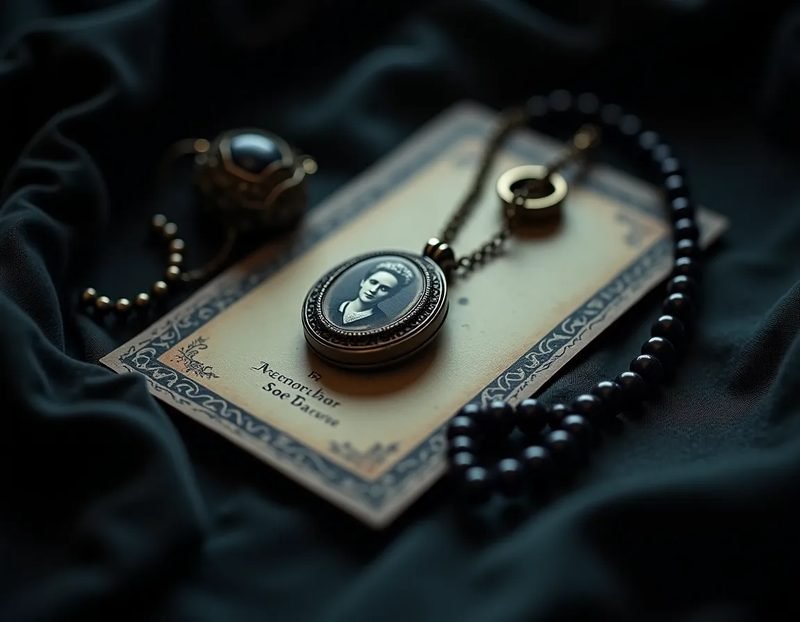
A locket doesn’t have to be haunted to make a room go quiet. It only has to be opened at the right moment, by the right hands, with a small braid of someone’s actual hair inside. I don’t claim these objects hold anything. I do, however, have a firm conviction that they do something to a crowd that a prop built last Tuesday never will.
Why the Victorians Made Grief Wearable
After Prince Albert died in December 1861, Queen Victoria wore black for the rest of her life, and an entire empire followed her lead into a mourning economy with rules about fabric, duration, and jewelry. Jet from Whitby became the fashionable stone of sorrow. Hair, though, was the intimate material, the one thing that didn’t fade, rot, or lie.
The logic was simple and a little brutal. A portrait shows how someone looked. Hair is a piece of them. It was cut at the deathbed or after, sorted, and turned by a professional hairworker or a patient relative into brooches, rings, watch chains, and bracelets.
Some of it was sentimental. Some of it was industrial. Catalogs sold hairwork by the ounce, and there was a trade in “hair” that never came off the head of the beloved at all.
That last detail matters. Hold onto it.
The Objects Worth Hunting
Not every piece is equal on stage or in a collection. Here’s what I’d chase, in rough order of storytelling power:
Locket with hair compartment. Usually a glass-backed cavity behind or beside a portrait. The hair is often coiled, sometimes seed-pearl bordered. Openable, which is the whole point.
Mourning rings. Black enamel bands, often engraved inside with initials, a death date, and an age. Older examples run back into the 1700s, and the inscriptions are gold for a performer.
Woven hair brooches. Table-work and palette-work hair under a domed crystal. Beautiful, static, and best as a set-dressing piece.
Memorial cards and funeral ephemera. Black-bordered, printed verses, a name and a date. Cheap, paper-light, and easy to handle repeatedly.
Jet jewelry. Carved, faceted, warm to the touch in a way glass imitations never are.
Post-mortem photographs and cased images get the most attention online, and they’re also the most overpriced and the most ethically tangled. I’d rather you start with a ring.
Spotting Reproductions Before They Cost You
The market is crowded with fakes and “inspired by” pieces, and the tells are physical. Learn them.
Weigh it. Real jet is light and slightly warm. Black glass, called French jet, is heavier and cold. Plastic is featherweight and often has a seam line you can find with a fingernail.
Read the hair. Antique hairwork uses fine, uneven strands that have aged in color, with visible tension in the weave. Modern synthetic fiber is too uniform and has a faint sheen under a loupe.
Check the backs. Old brooch pins have hand-cut catches and hinge wear. A crisp, machine-stamped pin on a “1860s” piece is a red flag.
Look inside rings. Genuine engraving has slight irregularity, and the wear on a band sits where a finger actually pressed it. Laser-perfect script is modern.
Distrust the story. A seller who gives you a full biography of “Eleanor, taken by fever” for a piece with no paper trail is selling fiction. Fine, if you know it.
And that hair I told you to remember? Ask if it’s real. Ask if it’s even human. A good dealer will tell you honestly, and a good performer can use either answer.
Let the Object Carry the Weight
Here’s where most performers go wrong. They buy a beautiful piece, set it on the table as decoration, and then run a standard routine around it. The object is wallpaper.
Flip that. If your effect works without the piece, the piece isn’t doing anything. Build it so the story cannot exist without the object in your hand.
I tried this at a private event in Anchorage with a plain black-enamel mourning ring and a sealed envelope. I didn’t announce a séance. I passed the ring to a woman near the front and asked her to read the inside of the band aloud. Initials, a date, an age of nineteen. Nothing else.
The room changed. My hands went still on the table, and I felt the quiet arrive before I understood it.
I hadn’t done anything yet.
That’s the lesson. A real inscription does the work of ten minutes of patter. Your job is to stay out of its way, then give it a reason to matter, a name that lands, an impression that matches, a revelation that feels like the object answered and you just listened.
Three Structures That Actually Work
You don’t need a new trick. You need a frame. These three work with almost any method you already own.
The Inscription Reading
Let a spectator discover the engraving themselves. Whatever you reveal afterward, a name, a date, a feeling, gets filtered through what they just read aloud. The lesson: the audience should touch the truth before you touch the mystery.
The Locket That Opens Twice
Load a small folded slip, a photograph, or a lock of hair, whatever your method calls for, so that the locket is opened once as a ritual and once as a payoff. The first opening establishes it as ordinary. The second is where the room stops breathing. Use your own gimmick or a hidden compartment, I won’t tell you which.
The Memorial Card as Billet
Funeral cards are the right size, the right tone, and the right kind of dull to handle without suspicion. Have someone write a name on the back, one they’ve lost, and don’t ask for more. It carries emotional weight that a blank business card never will, and it does so with a straight face.
A warning, though, and I mean it. Work with grief carefully. Someone in your audience has lost a person this year. Give them an exit, never push, and let the reveal comfort rather than pry. To be honest: the performers who forget this aren’t just tasteless, they’re bad at their job.
The Ethics of Handling Someone’s Hair
Real human hair from a real person who died is a strange thing to own, more so to perform with. Some collectors won’t touch it. Others treat it as history. I fall somewhere in the middle.
My rule: I will happily own and display it, and I’ll tell an audience what it is when they ask. I don’t invent a dead girl to make a piece scarier than it is. If the provenance is unknown, I say so. “I don’t know whose this was” is a stronger line than any fabricated name, and it leaves a gap the audience fills themselves…usually with something worse than I’d have written.
Handle pieces with clean, dry hands. Store hairwork away from light and humidity, in acid-free tissue, because the very thing that makes it valuable is fragile. And keep a written note of what you know and what you don’t. Future owners will thank you.
Start With One Piece
You don’t need a cabinet. You need one honest object with a real inscription, a modest budget, and the patience to learn what it does to a room. Buy the ring before the brooch. Read the band before you write the script.
The Victorians spent a century trying to keep the dead within arm’s reach. Your job is smaller, and stranger. Let a room feel, for ninety seconds, that they succeeded.
If you’re hunting for props that carry that kind of weight, you my friend, are home. Browse the collection at arcanerelics.com/shop.
Every working mentalist has heard the accusation at least once, usually from another magician who wants to sound clever at a bar. “That’s not real mentalism. You had a plant in the audience.” Sometimes they’re right. Sometimes they’re just guessing and got lucky. Either way, the accusation misses the point entirely.
A confederate isn’t a shortcut for performers who can’t do the real work. Used well, it’s one of the most demanding tools in the craft, because it requires you to manage two performances at once, the one the room sees and the one only you and your plant understand.
I don’t use confederates in most of my work. I do understand exactly why performers who are far better than me lean on them, and I think the conversation around the technique is dishonest in both directions. The people who dismiss it as cheating and the people who pretend it’s never used are both leaving out the interesting part.
What a Confederate Actually Does
Strip away the mystique and a confederate is simple: a person in the room who is secretly working with you, feeding information, confirming a selection, or setting up a later beat without the audience knowing they’re anything but a stranger who happened to raise their hand.
That’s the textbook version. The real version is more particular than that. A confederate isn’t just “someone who knows the secret.” A confederate has a job, often a small one, sometimes a single word passed at exactly the right second, and the entire effect depends on that word landing without a flicker of hesitation.
Most laypeople assume a confederate does something dramatic, that they’re secretly the mind reader’s cousin planted three rows back to blurt out a name. That’s the amateur version, and it gets caught constantly, because amateurs use confederates to replace skill instead of to extend it.
The professional version is quieter. A confederate might simply confirm which of three envelopes was chosen, using a signal so small it reads as nothing, a scratch of the nose, a particular way of crossing an arm. The mentalist still has to sell the reveal. The confederate just removes one variable that would otherwise require real method, real risk, or real luck.
Why the Technique Persists
Mentalism runs on the audience believing that what they’re watching couldn’t have been arranged in advance. A confederate directly threatens that premise, so you’d think the technique would have died out decades ago. It hasn’t. If anything, it’s more common in high-end work than most audiences realize.
Here’s the counterintuitive part. Confederates don’t just cover for weak method. They open up effects that no amount of skill can produce alone. Multi-person predictions, effects that require true randomness across dozens of spectators, routines that need a specific object to end up in a specific pocket without a single sleight, these live almost entirely in confederate territory. There’s no clever force that replaces a second human being willing to lie convincingly on your behalf.
Dai Vernon wrote about this obliquely, the idea that the strongest effects often come from removing yourself as the variable the audience is watching for. A confederate does exactly that. The audience is scanning the performer’s hands. Nobody’s scanning the guy in seat 14 who agreed, before the show, to nod once if the card is a heart.
I’ve built pieces of my own act around this same principle, minus the actual confederate. The goal is always to make the audience hunt in the wrong direction. A plant just makes that hunt permanently unsolvable, because there’s genuinely nothing to find in the method they’re suspicious of.
The Trust Problem
Here’s where it gets uncomfortable, and where I think most discussions of the technique go soft. Mentalism sells itself on a kind of trust that other magic doesn’t need. A card trick asks the audience to enjoy being fooled. Mentalism asks them to wonder, even briefly, whether something real just happened in the room.
A confederate, if exposed, doesn’t just ruin one effect, it can undo that wondering retroactively. Once a spectator learns that person “chosen at random” was in on it, they don’t just distrust that routine. They start rebuilding the whole show in their head, assigning secret allies to every prior moment, including the ones that had none.
That’s the real cost, and it’s steep enough that plenty of serious performers avoid the technique entirely, not because it doesn’t work, but because the downside asymmetry is brutal. A confederate that holds gets you one clean miracle. A confederate that’s exposed can cost you the credibility of an entire evening’s work, sometimes an entire reputation.
I know performers around Louisville who won’t touch the technique for exactly this reason. Not squeamishness, calculation. The math doesn’t favor it for their kind of intimate, close-up work, where a burned confederate is sitting eighteen inches from three other guests who will absolutely notice the tell.
Where the Risk Actually Lives
Most exposure doesn’t come from the confederate breaking character. It comes from the audience noticing behavior that doesn’t match a genuine stranger’s behavior. Real spectators hesitate. They second-guess their own choice. They glance at their neighbor for reassurance. A confederate who’s rehearsed too cleanly skips all of that, and skilled audiences, especially audiences that include other performers, pick up on the absence of friction faster than they’d ever catch a sleight.
This is the part most guides on the subject get wrong. They treat confederate work as a secrecy problem, keep the method hidden, don’t get caught. It’s actually an acting problem. Your plant has to perform uncertainty as convincingly as you perform certainty.
A confederate who answers too fast reads as rehearsed.
A confederate who makes eye contact with the performer at the wrong beat reads as a partner, not a stranger.
A confederate who is too cooperative, agreeing instantly to whatever’s asked, reads as planted before the audience even knows why it feels off.
The fix isn’t more secrecy. It’s better direction. Good confederate work looks, on rewatch, exactly like bad luck for the method, not like a second performance running underneath the first.
Deciding When It’s Worth It
Working mentalists I respect apply something close to a cost-benefit test before they’ll use a plant, and it usually comes down to three questions. Does the effect require it, meaning is there genuinely no other method that produces this exact impossibility? Is the exposure risk contained, meaning if this one confederate is somehow made, does it burn the whole show or just one routine? And is the venue right for it, because a corporate stage show with one plant among four hundred strangers carries almost none of the risk that a small private gathering does, where everyone already half-knows everyone else.
Fail any one of those questions and the smart move is to walk away from the technique, however tempting the effect might be.
I’ll say this plainly, because I think it needs saying. A performer who reaches for a confederate to cover for weak fundamentals is cutting a corner. A performer who reaches for one because the effect genuinely can’t exist without a second human being in on it is doing something closer to directing than deceiving. Those are not the same choice, even though they look identical from the outside.
The audience, by the way, is never actually asking “did they use a trick.” They already know the answer to that. What they’re really asking, whether they’d phrase it this way or not, is “did I get to feel something I can’t explain.” A confederate, handled with real discipline, can deliver that feeling in ways that pure sleight sometimes can’t reach.
What This Means for Your Own Work
If you’re building routines that could use a plant, treat the confederate as a performer you’re directing, not a secret you’re managing. Rehearse their hesitation as carefully as you’d rehearse your own patter. Give them an exit if something goes wrong mid-routine, a way to bail without drawing attention. And be honest with yourself about whether the effect actually needs the technique, or whether you’ve reached for it because a harder method felt like too much work this week.
Most performers won’t need a confederate for ninety percent of what they do. But the ten percent where it genuinely opens a door, multi-spectator predictions, book tests that need to feel impossibly specific, effects built around information no single method could gather honestly, that ten percent is worth understanding properly rather than dismissing on principle.
The performers who get burned by this technique aren’t the ones who use it. They’re the ones who use it carelessly, treating a human accomplice like a mechanical gimmick instead of the fragile, breathing variable they actually are.
If you’re serious about building routines that hold up to scrutiny, whether they use a plant or not, it starts with understanding method at a level most performers never bother reaching. That’s the whole reason Arcane Relics exists.
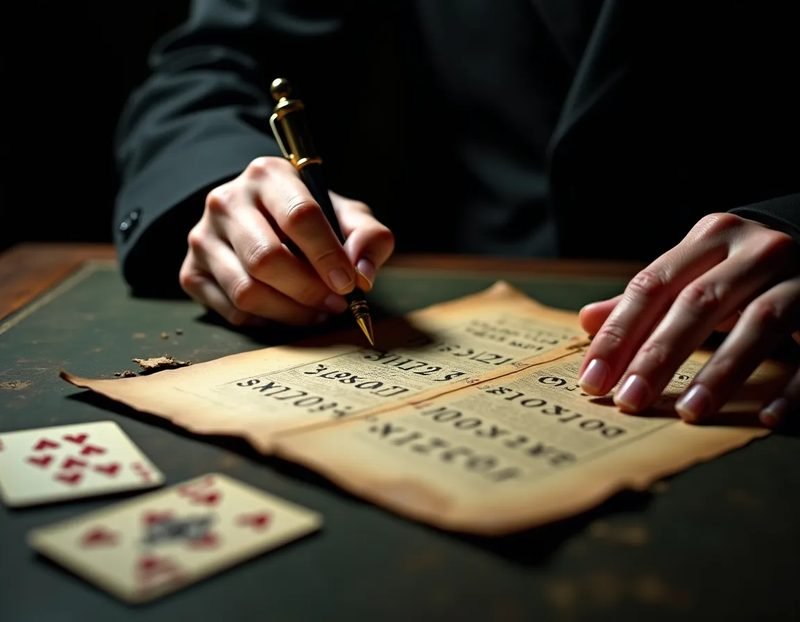
A woman’s hand starts moving before she tells it to. She isn’t trying to write anything, she says so herself, but the pen keeps dragging across the page in loops and jagged little peaks. Someone in the room whispers that it looks like a name. Nobody in that parlor in 1858 would have called it a magic trick. They called it proof.
The Séance Table Before the Cabinet
Automatic writing predates the rapping cabinets and the levitating trumpets by a good margin, and it did something those later effects couldn’t. It left behind a document. A ghost that raps twice for yes is gone the moment the séance ends, but a page covered in trembling script sits on the table afterward, ready to be read, copied, mailed to relatives, published in a spiritualist newspaper. That’s a different kind of evidence entirely, and the Victorians understood exactly what they were looking at.
The practice traces back through Andrew Jackson Davis and the early American spiritualist movement of the 1840s and 50s, though mediums claiming pen-guided revelation existed well before spiritualism had a name for itself. What changed in the mid nineteenth century wasn’t the phenomenon. It was the audience. A newly literate, newly skeptical, newly scientific public wanted something they could hold and examine, not just a knock in the dark.
By the 1870s automatic writing had mediums touring with it as a headline act. Reverend William Stainton Moses filled notebooks with material he claimed came from spirits identifying themselves by name and biography. Decades later, Pearl Curran, a St. Louis housewife with no formal education past eighth grade, produced hundreds of thousands of words of archaic English verse and prose she attributed to a seventeenth century spirit named Patience Worth, using a Ouija board and then, later, direct automatic writing. Scholars still argue about what was happening in Curran’s mind. Nobody argues that the material was strange, dense, and produced with a fluency she couldn’t reproduce in her own conscious writing style.
I don’t know what was moving Pearl Curran’s hand. I doubt anyone alive does.
The Mechanism Nobody Wanted to Believe
Here’s the part most performers skip past, and it’s the part that actually matters if you want to build a routine on this rather than just borrow its aesthetic. Automatic writing works because of something real, measurable, and not remotely supernatural, the ideomotor effect.
Michael Faraday investigated it in 1852, not with a pen but with a table. Sitters would rest their fingers lightly on a tabletop during a séance, and the table would rock, slide, tilt, seemingly guided by nothing. Faraday built an apparatus that could detect which direction force was actually being applied, and he found it every time. The sitters were moving the table. They weren’t lying about it and they weren’t tricking anyone on purpose. Their own small, unconscious muscle movements, driven by expectation and belief, were doing the work, and their conscious minds simply weren’t reporting it as their own action.
Automatic writing runs on the identical principle. A person holding a pen who expects, hopes, or fears that the pen will move without her intention is unconsciously supplying the tiny movements that make it move. The physiologist William Carpenter formalized the term “ideomotor action” a few years after Faraday’s table experiments, and it’s held up. It’s the same principle behind dowsing rods, behind a pendulum swinging over a name on a table, behind a planchette gliding to letters on a board.
I don’t necessarily believe the mind is capable of producing coherent narrative under full unconscious control, not the way Pearl Curran’s output suggests. I do have a strong conviction that the physical mechanism, the hand moving without the moving hand’s owner claiming credit, is completely real and completely explainable.
By the way, that’s what makes it useful to us. A real, documented psychological mechanism is a far better foundation for a bizarre magic piece than a prop that only works because the audience agrees not to look too closely.
When the Board Became a Toy
Somewhere in this history the automatic hand and the automatic board split into two different cultural objects, and it’s worth understanding why, because it shapes how a modern audience reacts to each.
The planchette, a small heart-shaped device on wheels with a pencil fitted through it, was patented in France in the 1850s specifically to make automatic writing easier for ordinary sitters to produce. It’s a direct ancestor of the Ouija board. When William Fuld and his business partners commercialized the talking board in the 1890s, they took the ideomotor mechanism and simplified it into a parlor game, and that simplification is exactly why the board reads as toyish today while a page of trembling handwritten script still reads as troubled.
A Ouija board announces itself as a game. Everyone at the table knows the rules and half of them are half performing their own belief. A handwritten page found in a drawer, or produced under conditions the sitter didn’t fully control, doesn’t announce anything. It just sits there, demanding an explanation nobody in the room wants to give it.
That distinction is the whole reason automatic writing survives as a serious tool in bizarre magic while the talking board mostly gets left to novelty shops.
Why a Modern Room Still Falls for It
Skepticism has gotten sharper since 1858, not weaker, and that actually helps this kind of work rather than hurting it. A contemporary audience has seen enough television psychics and enough debunking videos to distrust a floating trumpet on sight. Handwriting reads differently. Handwriting feels like biography, not performance.
Most performers dismiss this effect as dated. They’re wrong, and they’re wrong for a specific reason: they’re thinking about the Victorian trance medium version instead of the psychological one. You don’t need a costume or a fainting spell to make a page of script land. You need the spectator to believe, even briefly, that the movement producing it wasn’t fully theirs.
I tested a version of this at a private event in the Louisville area a while back, working with a folded note and a pen the sitter held herself. I watched her hand hesitate at the second letter, catch itself, then keep moving in a script that didn’t match her normal signature style at all. Her breath caught before she even looked down at what she’d written.
That reaction is the entire effect. Everything else is scaffolding around it.
Building It Without the Cliché
The trap most performers fall into with automatic writing is treating it as a prop instead of a psychological event. They buy a pre-written slate, reveal it with a flourish, and wonder why the room claps politely instead of going quiet.
A few things separate the pieces that actually unnerve a room from the ones that just decorate a table.
The handwriting itself needs to look wrong in a specific way, not generic spooky scrawl. Real automatic writing from the historical record tends to be cramped, inconsistently sized, sometimes angled steeply against the line, occasionally trailing off mid word. Genuine urgency looks different from a font choice.
The sitter’s own hand should be doing real work, or appearing to. A pre-written reveal is a magic trick. A pen that seems to move under a spectator’s own fingers is a psychological event, and those live in completely different parts of an audience’s memory.
Don’t explain the mechanism to the room. Explaining ideomotor action to your spectators kills the moment faster than any technical flaw would. Save that conversation for your fellow performers, not your audience.
Let the content stay a little unresolved. The historical cases that still get discussed, Curran’s Patience Worth material especially, are compelling partly because they were never fully solved. A message that answers every question feels written. A message that raises one more than it answers feels found.
The pieces that stay with a room are the ones that borrow the mechanism honestly and the atmosphere sparingly.
What the Page Leaves Behind
A rapping cabinet ends when the lights come back up. A page doesn’t. That’s still, more than a century and a half later, the real advantage automatic writing has over almost every other séance era effect, it produces an artifact your spectator can carry out of the room with them, fold into a pocket, find again at two in the morning when they can’t sleep.
I’ve collected more than a few handwritten pieces over the years, letters, journal fragments, notes tucked into books, some with histories I can trace and some I can’t. The ones that unsettle me most aren’t the ones with the most dramatic content. They’re the ones where the handwriting itself seems to be fighting something, strokes smeared, pressure uneven, a word crossed out and rewritten harder than it needed to be.
If you are building bizarre magic work around physical evidence, artifacts that carry weight because of what they appear to have witnessed rather than what a performer claims about them, automatic writing deserves a permanent place in your repertoire. It’s one of the few séance era techniques built on a mechanism that’s actually true.
We keep a working collection of handwritten and troubled pieces suited to exactly this kind of routine. If you are like me and find yourself drawn to objects that seem to carry their own history, take a look at what’s currently available.
A performer stands before a room of strangers. Someone calls out a word. Then another. Then thirty more, tossed out in no order at all, groceries and countries and the names of dead relatives. Five minutes later the performer recites all thirty back, in order, then backward, then names which number each word was. The room goes quiet in that particular way rooms go quiet when they’ve just watched something they can’t file under “trick I’ve seen before.”
I don’t believe this is supernatural. I never have. But I’ve built pieces of my own act on techniques that are, by any honest account, a few thousand years old, and I still watch audiences reach for the word “impossible” when a more accurate word would be “unpracticed.” Mnemonic systems aren’t a secret. They’re a skill most people simply never sat down to learn.
That gap, between “learnable” and “learned,” is where a mentalist lives.
The Trick Behind No Trick
The memory palace, or method of loci if you want the Latin, works because your brain is extraordinarily good at remembering places and shockingly bad at remembering lists. Ancient Greek and Roman orators used it to deliver hours-long speeches without notes, walking an imagined building in their mind and picking up an idea at each doorway, each windowsill, each chair.
Here’s the part most people get wrong when they first hear about it: you’re not memorizing the list. You’re memorizing a walk you already know, your childhood home, your morning commute, the route from your car to your front door, and then you’re hanging strange, vivid images on the furniture along the way.
Say the first word is “trumpet.” You don’t picture a trumpet sitting quietly on your porch. You picture it blasting so loud your porch light shatters, brass and glass raining down as you step through the door. The stranger and more absurd the image, the stickier it gets. Calm images vanish. Violent, funny, or sexual images stay, that’s not a performer’s opinion, that’s just how the associative memory built into your skull happens to work.
I use a version of this that runs through a location I’ve walked a thousand times, and when I need thirty items in order, I’m not doing math in my head. I’m just walking my hallway and reporting what I see. The audience is watching a magic trick. I’m watching a home movie.
Turning Numbers Into People, Places, Things
Memorizing a shuffled deck or a string of fifty digits called out by the crowd requires a different tool, because numbers themselves don’t hang on hallway furniture very well. This is where peg systems and the Major System come in, and if you’ve never built one, this single technique is worth more to a working mentalist than most props on the market.
The Major System assigns a consonant sound to each digit, 0 through 9, and lets you build any number into a word using vowels as filler. The digit 1 becomes T or D. The digit 2 becomes N. Put them together and 12 becomes “TN,” which with a vowel dropped in becomes “tin,” or “ton,” or “dawn.” Suddenly a boring number is a picture. String enough of these picture-words together into a scene, and a forty-digit number becomes a short, absurd story you can walk through exactly like a memory palace.
A peg system does the same job with a fixed list, one peg image for every number from one to a hundred, memorized once and reused forever. Once your pegs are locked in, you can drop any new list onto them instantly, because you already know what lives at “seventeen.” You’re not building new architecture every time. You’re just hanging new coats on hooks that were already on the wall.
This is the part serious performers underestimate. The palace gives you order. The number system gives you the numbers themselves, dates, phone numbers, deck positions, dollar amounts. Combine them and you can build routines that feel like they violate physics.
Building Your Palace for the Stage, Not Just the Study
A memory athlete competing for a title needs speed and raw capacity. A performer needs something else entirely, drama. Your palace has to survive interruption, hecklers, a dropped line, a phone ringing in the third row, without collapsing.
Build your palace slower than a competitive memorizer would, and build it with theatrical logic instead of pure efficiency. If your stations are also good story beats, a doorway, a mirror, a locked drawer, your recall doubles as narration. I run a private routine where each “stop” in my mental route corresponds to a beat in the story I’m telling out loud, so my performance patter and my private recall system are the same walk. The audience thinks they’re just enjoying a story.
Test your palace under pressure before you ever use it live. Have someone talk over you while you recall it. Have someone bump the table. A palace that only works in a quiet room isn’t ready for a stage, it’s ready for a diary.
I tested an early version of a long-form recall piece at a private event in the Louisville area, thirty-some items called out by a fairly loud room, and the thing that surprised me wasn’t that I remembered them. It was that a stumble two-thirds through didn’t sink the piece, because my palace was sturdy enough that I could skip a station, recover a beat later, and nobody in the room noticed the seam.
Why Memory Alone Doesn’t Sell the Effect
Here’s the counterintuitive part. A flawless recall, performed flatly, reads as a party trick, a curiosity, nothing more. The exact same recall, performed with the right pacing and the right pauses, reads as something the audience can’t explain and doesn’t want explained.
Psychologically, audiences don’t evaluate your memory. They evaluate your effort. If you rattle off fifty items instantly with no hesitation, some part of the room assumes a gimmick, a plant, a hidden earpiece. But if you close your eyes for a beat before item thirty, if your face shows the tiniest flicker of genuine searching, the room reads that struggle as proof of authenticity. A little friction sells more truth than a perfect, frictionless delivery ever will.
This is why the best memory performers build in small, honest stumbles or slow their pacing right where the audience expects a computer would speed up. You’re not faking difficulty. You’re letting the real difficulty, the part where you’re genuinely walking a mental hallway under real pressure, show through instead of hiding it.
One more thing worth saying plainly, because most guides skip it. The story you tell about your method matters as much as the method. I never claim a photographic memory. I let people believe what they want to believe, and what most people want to believe is stranger than any technique I could explain to them anyway.
Where Performers Break Their Own Illusion
The most common failure isn’t a forgotten item. It’s over-explaining. A performer gets nervous after a strong recall and starts narrating the method unprompted, “I use a memory palace technique,” and just like that, the room’s sense of wonder collapses into a classroom. You don’t owe anyone an explanation, and giving one for free is the fastest way to turn magic into homework.
The second failure is under-rehearsing the retrieval, not the memorization. Most performers drill getting information in and never drill getting it back out under performance conditions, with adrenaline, with a heckler, with house lights in their eyes. Practice recall in the exact conditions you’ll perform in, standing, moving, talking simultaneously, or your palace will fail you the one time it actually matters.
The third, and this one took me longer to learn than I’d like to admit, is choosing lists that are too clean. A random list generated by an app often isn’t random enough, it repeats patterns your brain quietly exploits, and audiences sense when something felt just a little too convenient. Real audience-shouted chaos is harder to memorize and far more convincing once you pull it off.
Starting Your Own System Tonight
You don’t need to memorize a deck of cards this week. Start smaller. Pick ten stops along a walk you already know cold, your route from bed to kitchen works fine, and assign one wildly specific image to each stop. Then memorize ten unrelated words using nothing but that walk. Do it again tomorrow with ten different words on the same walk. Within a week or two, you’ll notice the palace holding steady even as the contents change.
Build your peg list slowly too, one to twenty is plenty to start, and resist the urge to rush toward a hundred. A shaky peg system full of fifty half-remembered images is worth less onstage than twenty pegs you’d recognize in your sleep.
And here’s the truth most instruction manuals leave out. This work is quiet, unglamorous, and repetitive, and it will feel like nothing is happening for longer than you’d like. Then one night it clicks, and you’re standing in front of a room reciting back forty things a stranger just made up, and the room goes still.
By the way, I still find that stillness a little unnerving, even now, even knowing exactly how I got there.
If you want tools built for performers who take this work seriously, the kind of pieces that reward real study rather than a shortcut, take a look through what we carry at Arcane Relics.