Hellstromism: The Lost Art of Contact Mind Reading and the Performers Who Nearly Buried It

Hellstromism: The Lost Art of Contact Mind Reading and the Performers Who Nearly Buried It

I don’t necessarily believe that thought travels through skin. I do, however, have a strong conviction that something travels, something real, something the body broadcasts without permission, and that a trained performer can read it with accuracy that has no comfortable explanation for a watching audience. Contact mind reading “what came to be called Hellstromism” is the only technique I’m aware of in the performing arts where the method and the effect are genuinely the same thing. There’s no deck to stack, no force to disguise. You hold someone’s wrist, and you find what they’re thinking about. The line between method and miracle is thinner than most performers are willing to admit.

Stuart Cumberland and the Lineage Before the Name

Stuart Cumberland didn’t invent contact mind reading, he just made it undeniable. Born in 1857, he spent the final decades of the nineteenth century working thought-reading demonstrations across Britain and the Continent, holding spectators’ wrists and locating hidden objects with a consistency that unsettled audiences who prided themselves on clear thinking. He performed for the Prince of Wales. He performed for scientists who came specifically to expose him and left without their explanation.

Cumberland was candid about the mechanism, more candid than most would have been. In A Thought-Reader’s Thoughts, published in 1888, he wrote plainly that he wasn’t reading minds. He was reading bodies. The hand tells you things the mouth won’t say, the muscles tell you things the hand doesn’t know it’s saying. That’s not mysticism. That’s a precise technical claim, and it holds up.

What Cumberland gave the art was credibility through volume. Hundreds of performances, hostile conditions, skeptical observers, consistent results. His track record made the technique impossible to dismiss as a fluke or a stunt. But his work also had a ceiling, a theatrical one. He operated in an era before amplification, before cameras, before the performing context shifted enough that a man holding a stranger’s wrist and walking silently across a stage started to look merely strange instead of inexplicable. His audiences were predisposed to attend closely. That predisposition wouldn’t last.

The performer who understood how to build for the new century was someone else entirely.

Axel Hellstrom and the Art That Took His Name
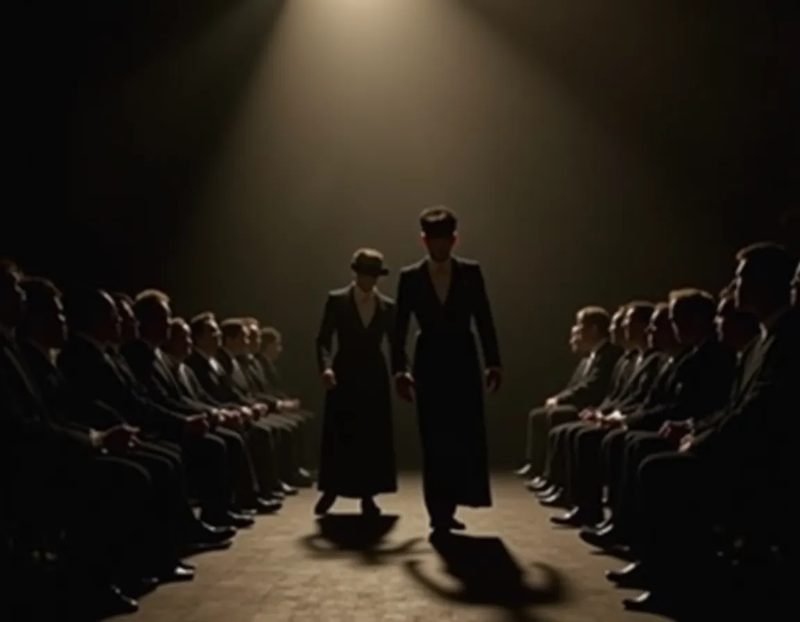
1920s stage photograph, a performer in evening dress leading a blindfolded subject through rows of seated spectators in

Hellstromism is named for a reason. Axel Hellstrom, a Norwegian-born performer working in the early twentieth century, didn’t merely demonstrate contact mind reading, he theatricalized it to the point where his name became the noun. He found hidden objects in large venues, duplicated drawings, identified numbers, all through skin contact, all in real time, in front of audiences who had no useful framework for what they were witnessing.

The genius wasn’t sensitivity. The genius was framing.

Hellstrom understood the single structural vulnerability of the method: the moment it looks like the performer is leading, the whole thing collapses into something mechanical. He spent enormous effort appearing passive, receptive, almost reluctant. He would pause. He would move in one direction, stop, correct. He would look uncertain at moments of actual certainty. All of this was calculated performance, but it read as genuine struggle. Audiences believed they were watching a man straining to catch something barely audible. They leaned in.

By the middle of the twentieth century, his name had become a category. If you were serious about the performing arts of the mind, you knew what Hellstromism was. If you didn’t, you weren’t serious.

What Is Actually Happening in Your Hands

Most accounts go vague here, and that vagueness is a disservice to any performer who might actually want to study this.

When you hold someone’s wrist and they know where the hidden object is, their body knows too. Not metaphysically. Physiologically. Moving toward the target, their forearm flexors tighten in increments too small to see but not too small to feel. Their breathing shortens. Their pulse shifts. Moving away, those signals reverse. The subject isn’t doing anything consciously, they’re not trying to guide you, but the information is present in the musculature. Your job is to read it.

Contact point matters. Wrist is better than hand, hand is better than elbow. You want access to involuntary movement at its most legible and least consciously controlled. Just below the palm, held with genuine lightness, the wrist gives you simultaneous access to flexor and extensor tension. You’re reading a dial, not listening for words.

The baseline pass is essential. Before committing to any direction, you move in several directions to calibrate the subject’s response pattern. Some people register strongly. Some barely. A few seem to generate no readable signal at all, and when you find one, you adjust your approach or acknowledge the limitation openly. Pushing through a dead signal produces bad work, it produces obvious work.

The real skill, the part that requires years and not weeks, is learning to accelerate toward resistance without telegraphing the acceleration. You’re using the subject’s muscular response as a guide while appearing to be guided. That inversion is the whole art, and you won’t find it in a book.

Why It Convinced Educated People

The structural misdirection in Hellstromism is unlike anything else in mentalism. In conventional mental effects, the performer conceals information, the audience knows information is being concealed, and the game is figuring out how. In contact mind reading, the mechanism is visible. The subject knows where the object is. The performer holds the subject. The performer finds the object. The chain of causation is transparent, the audience can observe every link, and they’re still left without an explanation they can use.

My spine chills when I think about that, even now.

The misdirection isn’t about hiding the mechanism. It’s about hiding which direction the mechanism runs. Audiences assume information flows from subject to performer through the contact point. They’re right that information travels. They have the direction reversed. The performer is pulling, testing, calibrating, and the subject is providing involuntary confirmation. The subject usually feels, afterward, that they helped make it work. That feeling is real. It’s just not the full story.

That’s what made Victorian scientists walk away unsettled. They couldn’t find the lie, because the lie wasn’t there. The redirection was in the framing, not the facts.

How It Nearly Disappeared

Television did serious damage. Contact mind reading depends on proximity. A live audience sees the physical connection, registers the subject’s honest uncertainty, watches the performer navigate in real time. The effect is immediate and visceral. On camera, the wrist grip looks like a prop. The subject’s face, which in a live performance reads as genuine concentration, compresses to a small square in the corner of a monitor. The primary evidence evaporates.

The postwar mentalism revival made things worse, though not intentionally. The generation of performers who rebuilt mental magic in the 1950s and 60s were rightly focused on no-touch methods, envelopes, cards, sealed predictions, effects that read as impossible precisely because there was no physical connection to explain them. That work was valuable and it was necessary. But it pushed contact reading to the edges, and once a technique loses its practitioners, it starts to lose its literature.

There’s also a practice problem that can’t be reasoned away. You cannot learn Hellstromism from a manuscript. The sensitivity required develops only through repetition on actual human beings, which means finding subjects, working privately, making errors, recalibrating from the ground up. Most performers, given the choice between a technique that demands that investment and a technique that works from a script, take the script. That’s not a criticism. It’s just honest about how scarce practice time really is.

The performers who stayed with it tended to stay quiet about it. Not from secrecy exactly, more from the difficulty of explaining it in an era when audiences assume any effect has a tutorial.

The Performers Who Are Bringing It Back

Something has been shifting in serious mentalism over the last decade, you can feel it if you’re paying attention. Performers building theatrical experiences rather than trick sequences. Work that moves slowly and lets a moment breathe. An appetite for effects that produce a specific kind of bewilderment, not the “how did you do that” of a card trick, but the quieter, harder-to-categorize feeling of watching something that doesn’t fit any available explanation.

Contact mind reading fits that world precisely.

It’s intimate. It’s slow. It puts the performer and subject in genuine physical connection, which creates a relational weight that no prediction envelope can match. For performers working in bizarre magic or theatrical mentalism, the theatrical framing writes itself. A practitioner who reads impressions through contact, who traces the emotional residue of an object through skin, isn’t performing a trick in any conventional sense. The technique becomes the performance, the method and the effect are genuinely the same thing, and the audience feels that truth even if they can’t articulate it.

The lineage running from Cumberland through Hellstrom to the present is a technical tradition that most contemporary performers have never seriously studied. The ones who have tend to produce work that doesn’t look like anyone else’s. That’s not an accident, it’s what happens when you develop a skill almost no one else is developing.

If you’re looking for the books, the resources, and the tools serious performers are working with right now, browse the Arcane Relics shop.

Continue reading: Part 2: The Hidden Object Hunt, Building a Contact Mind Reading Routine That Plays to a Full Theatre

The Gap Between Method and Moment: Time Misdirection in Mentalism

The Gap Between Method and Moment: Time Misdirection in Mentalism

Most mentalists perform their method in the moment the audience thinks matters. They force the card while everyone watches. They palm the stone in plain sight. They swap the envelope when attention fades. This is comfortable. This is conventional. This is backwards.

The strongest effects hide the method minutes, or even an hour, before the audience thinks anything matters at all. There’s a gap between when the work happens and when the reveal lands. That distance is where the real magic lives. Not magic magic, but something harder to undo once it’s done: genuine impossibility, at least in the spectator’s reconstruction of the moment.

The Gap That Saves You

Picture a room. Thirty people. You hand out five blank index cards and ask for predictions. Everyone writes something. You collect them. Nothing happens yet. You talk about memory, about how the mind plants false anchors, about how we reconstruct the past through emotion rather than fact. You’re not stalling. You’re building permission for what comes later.

An half hour passes. Someone volunteers to select a card from a shuffled deck. The card is revealed. It matches one of the five predictions from the beginning. Impossible, right? Except here’s the problem from the spectator’s angle: the prediction was written and collected before anything was in motion. They watched their friends write without interference. They held the cards the whole time.

The method, if there is one, must have happened during that half hour. But what were you doing then? Talking. Moving around. Handling their cards. Nothing stood out. Nothing triggered a red flag. That’s the gap working for you. That’s distance buying you freedom from suspicion.

Time Misdirection Is Stronger Than Sleight

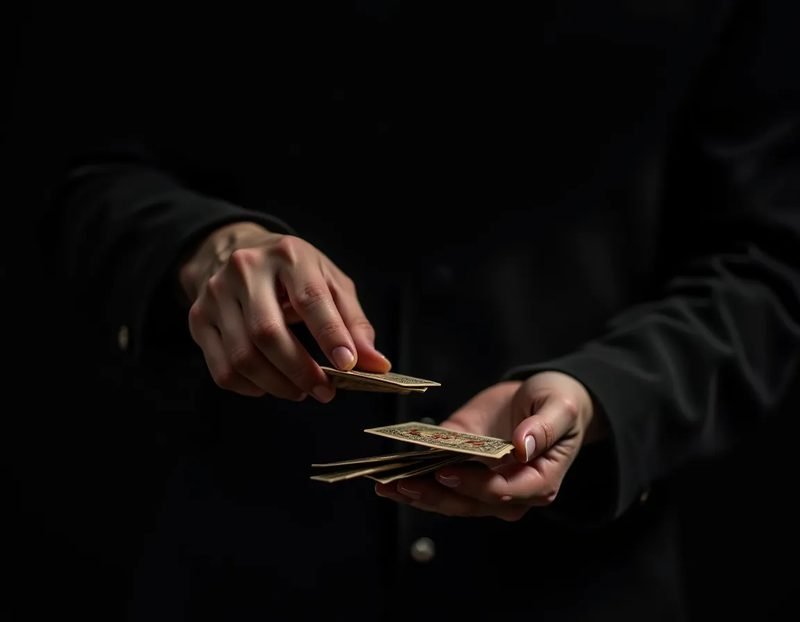
A performer's hands handling cards or objects, but the real method happened earlier

Sleight of hand is reactive. You palm something while everyone’s attention softens. You swap it when a look breaks the line of sight. You need the audience to not see something, and that means every moment of the action is under pressure. Palms fail. Moments of inattention are never guaranteed. Spectators are less predictable than they were five years ago, everyone’s trained now on how tricks work.

Time misdirection is preemptive. You do the work when nothing is at stake yet. The audience isn’t watching for a method because they don’t know what the effect is going to be. You’re not fighting their attention. You’re gathering permissions without them knowing they gave them. By the time the moment arrives, the work is already done and they have no frame of reference to examine it in.

That’s why it sticks harder.

Building the Distance on Purpose

A sequence of moments over time, with the key method happening early and unseen

Distance doesn’t happen by accident. You have to architect it. Here’s how.

First, separate the method moment from the reveal moment by at least ten minutes. Better is fifteen. Best is an thirty or more. The longer the gap, the weaker the spectator’s chance of backtracking their own memory. Human memory doesn’t record events sequentially like a video, it reconstructs them based on narrative landmarks. If you build a strong enough story between the method and the reveal, the spectator’s brain will have already filed away the method moment as irrelevant.

Second, make the method moment feel like it belongs to a different phase of the effect. If you’re doing a prediction effect, the method might happen during the initial setup while you’re just explaining the rules, handling cards without comment, organizing the space. It’s housekeeping. It’s not the thing yet.

Third, give the method moment a logical purpose that has nothing to do with the actual effect. You’re not manipulating their card to set up the force. You’re shuffling their cards because that’s what you do after a prediction. You’re spreading the deck to show it’s fair. You’re handling their writing because of course you are, you collected it. Every action feels like it’s serving one purpose while it’s actually serving another.

Filling the Empty Space So Nobody Rewinds

The gap is useless if the audience spends it wondering what you’re going to do next. Empty time makes people reconstruct. Filled time makes them forget.

Use that hour for something that pays for itself. Tell a story. Teach a principle about how memory works, or how the mind misconstructs the past. Ask personal questions. Involve the spectators in something that feels like participation, even if they’re not actually doing anything that moves the effect forward. Perform something else entirely, a small mind reading or prediction that builds momentum and fills the silence.

The key is that the filling needs to feel like it belongs to the show, not like you’re stalling. If they sense you’re killing time, the gap gets uncomfortable and they start thinking backward. If the material is strong and engaging, the gap disappears. They don’t think about the beginning anymore because the middle was worth their attention.

I tested this at a private event in Jeffersontown. Two of the spectators brought up the initial prediction collection during the debrief afterward, not as part of their reconstruction of how the effect worked, but as evidence that it was genuine. They remembered me being totally engaged with the group at that moment, asking questions, listening to what they wrote. They didn’t remember it as a setup moment because it didn’t feel like one. It was just part of the conversation. That distance saved the effect.

The Reconstruction Problem

Every mentalist knows that the dangerous moment comes after the effect lands. That’s when the audience starts retracing steps, rewinding, trying to figure out which moment held the key. Most performers manage this moment by choosing which moments to make look suspicious. Misdirection in space, we call it.

Time misdirection flips the problem. Instead of making the real method moment look normal and everything else look impossible, you make everything look normal. The method moment, the talking, the other effects, the final reveal. It all fits together. When they try to backtrack, they find no seam. They know something happened, but the whole experience has already been filed away as a coherent narrative. Trying to rewind it feels like trying to catch a specific word from a conversation they half-listened to an hour ago.

There’s no breakthrough moment. There’s just a feeling that something clever happened.

When Time Misdirection Beats Everything Else

This is the tool for effects where the method is invisible but the setup is visible. If you need people to write something genuine, to shuffle something fairly, to really choose something of their own free will, you can’t hide those actions. They’re watching. So you don’t hide them. You do the work somewhere else, somewhere nobody is looking for a method yet.

It’s also the tool for effects where the moment of selection or choice is the moment that needs to feel most impossible. Because the selection happens clean and genuine. The work happened before anyone started watching for work. The audience sees exactly what they want to see. The impossibility lands because there truly was nothing to catch.

And it’s the tool when you need to perform multiple effects in a single show, or when you want to layer effects so that the second impossibility makes the first one feel even stronger. Time misdirection lets you build effects that feed each other without the audience feeling the machinery of transition.

Practicing the Distance

The hardest part isn’t executing the method. It’s building a show that can carry the gap without the gap showing. Your opening needs to be strong enough to earn the time you’re asking for. Your middle needs to feel like material, not filler. Your close needs to land with conviction, not relief.

Write out where the method lives in your routine. Write out why that moment feels natural to the audience, what purpose it appears to serve. Write out what you’re doing in the gap, what story or principle or second effect is filling the time. Then perform it for someone and ask them to write down the moment they think the method happened. Ask them when they felt the impossibility land.

If they point to the real method moment, you don’t have enough distance. Add more time. Add better filling. Change when the method happens relative to the reveal. If they point to the reveal moment and say they have no idea how it happened, you’ve built it right. The gap is working. The time is doing the misdirection.

This is mentalism at its truest, I think. Not hidden, not sleight, not technical wizardry. Just a performance where the spectator experiences something impossible because you arranged the order of events in a way their mind can’t reconstruct. They saw everything they needed to see. They just saw it in a shape that adds up to something they can’t explain.

Visit arcanerelics.com/shop for books, tools, and artifacts built for performers who take the long view.

The Q&A Act Reconsidered: Billet Work, Switches, and the Power of the Written Confession

A broken wax seal on an antique billet envelope, candlelight, quill and ink beside old books

In Part 1: Annemann’s Shadow: How ‘Practical Mental Effects’ Quietly Rewired Modern Mentalism, we traced how Annemann’s foundational text quietly restructured the philosophy beneath the entire craft. That post was about the shape of the thing. This one is about the hands. It assumes you’ve already accepted the premise that Practical Mental Effects wasn’t a collection of parlor games. It was a technical manifesto. And nowhere is that manifesto more pressurized, more exposed to failure, and more capable of genuine astonishment than in the Q&A act.

Nobody finds their way into Q&A work by accident. Something calls you to it, or it doesn’t.

Why Writing Something Down Changes Everything

Here’s what I won’t claim: I don’t think a handwritten billet carries any mystical charge. I’ve handled thousands of them. Paper is paper.

What I do believe is that the spectator thinks it does. And that distinction is the entire foundation of the act.

When someone writes a question on a slip, they commit in a way that speech never quite forces. Writing is a declaration. It has weight. The spectator folds it, holds it, sometimes clutches it across their lap. Their handwriting is in there. Their actual question, the one they’d be embarrassed to say out loud, is sealed inside. They’ve locked the thought. And when you answer that question before they’ve handed it to you, their internal logic says: you can’t have seen that. I wrote it. I held it.

That’s the psychology Annemann was building around. Not the billet as a prop, but the billet as proof. The spectator carries their own evidence of impossibility in their hand. That’s what makes thought reading land differently when there’s a written word involved. The confession creates the miracle. The method almost doesn’t matter.

Almost.

The One-Ahead Structure, Honestly Explained

I’m not going to dress this up. If you’re reading this post, you already know the basic engine, or you should. You’re always one answer ahead of the billet you’re appearing to work from. You use the revelation of one question as cover for reading the next. You manage the cycle until it closes.

Simple to describe. Genuinely difficult to do well.

What most performers get wrong about the one-ahead isn’t the mechanics. It’s the pacing. They rush it. They’re so anxious about the handling that they burn through the reveal in under ten seconds, move on, and never let the audience absorb what just happened. Annemann’s Q&A work had a quality that’s easy to miss in the text: patience. He described working the room between revelations, asking follow-up questions, drawing the subject out. The handling happens inside that conversation, not before it.

The billet work is cover for the talking. The talking is not cover for the billet work.

Read that again. I mean it.

When you invert that relationship, when you treat conversation as a stall while your hands do the real work, audiences feel it. They can’t name what’s wrong. They just stop believing. The one-ahead only functions when the performance logic surrounding it is airtight. Annemann understood that the method and the presentation weren’t two separate things you bolted together. They were the same thing.

Billet Handling: The Part Nobody Teaches You

Your hands are always visible in Q&A work. You’re not a card man working under cover of a table. You’re standing in someone’s living room, on a small stage, or seated across from three people with nothing between you and them. Every gesture reads.

carry

The classic advice is “be natural.” That’s useless. Natural means nothing if you’ve never held a billet in performance conditions before. What you’re actually after is casual, and casual is a practiced thing.

Annemann favored a simple single fold in much of his early work, which gives you a thumbnail-width edge to work against during a peek. The four-fold, which became more standard later, creates additional handling complexity but gives the spectator more confidence in the seal. Know what fold you’re requesting before you hand out the slips. This isn’t a minor decision. The fold determines your peek options, your switch windows, and the psychological heat the billet carries when it comes back to you.

“Heat” is the part nobody explains directly. If the spectator watched you pick their billet up from the table directly in front of them, that slip is hot. You don’t switch a hot billet. You peek it, or you work around it. The switch belongs to billets that have made a small journey, passed through a hat, traveled via a third party. Know your heat levels before you start handling. If you don’t, you’ll make the wrong choice at the wrong moment, and something will feel off to someone in the room, and they won’t know why, and neither will you.

On Switches, and When Not to Use Them

A switch is not a solution to a handling problem. A switch is a commitment.

Once you’ve made an exchange, the original billet is out of the action. You’d better know exactly what you have in hand and where the original is going. Classic coat-pocket architecture is still the cleanest approach: switched billets go to one specific pocket, your dummy billets come from a different one, and you never cross those streams. It sounds obvious. Under performance pressure, with four people watching you, obvious has a way of evaporating.

Annemann’s approach to the switch was almost philosophical. He didn’t use it casually. He built conditions where the exchange was so well motivated, so embedded in handling that looked completely normal, that even a skeptic watching for it would struggle to name what happened. The lesson isn’t “learn the switch.” It’s “build the cover before you build the move.” The cover is the design. The move is just execution inside a design that’s already working.

The kiss switch, which Annemann described in various forms throughout Practical Mental Effects, is worth dedicated practice even if you never use it in its pure form in performance. Learning the mechanics of that exchange sharpens your overall handling economy. Your wasted motion disappears. Your hands get smaller.

Small hands are honest hands. In this work, at least.

The Psychological Architecture of a Full Act

A Q&A act isn’t a series of revelations. It’s a single sustained experience with a shape, and if you’re treating each answered billet as its own individual effect, you’re building a variety show, not a performance.

Annemann was explicit about this in structure, even when he didn’t say it directly in words. Look at how he sequenced revelations: an opener that felt strong but not impossible, a middle section that escalated and included at least one moment that stopped the room, and a close that was personal enough to make someone genuinely uncomfortable in the best way. That’s not a coincidence of method. That’s dramatic architecture.

Your opener establishes the premise. You’re receiving thoughts. Something is happening. Don’t open with your strongest moment, it’ll flatten everything after it. Open with something clean and confident, something that makes two or three people lean forward without making the skeptic in the back fold his arms.

Your middle is where you do your real work, including the riskiest handling. The audience is committed by now, their guard is partly down because they’ve already seen two correct answers, this is the window for your best moment. Use it.

Your close should be personal. Always. Find the question in the stack that belongs to someone who clearly cares about the answer, and close with that one. Let them feel found. A Q&A act that ends on a funny question is a comedy bit. That’s a different show entirely.

What Annemann Actually Left Behind

I don’t think Annemann invented thought reading as a performance form. The history of mentalism is littered with older examples, and he would have said the same.

What he did, and what gets missed in the reverence people carry for Practical Mental Effects, is codify the thinking behind it. Not just the methods. The reasoning. Why this fold. Why this sequence. Why you speak before you open the billet rather than after. He was documenting a performance logic that the best Q&A workers of his era carried in their heads and never bothered to write down, because they assumed it was obvious. He knew it wasn’t.

That logic is still sound. The envelopes are fancier now. The billets come pre-printed. The one-ahead gets redressed in new clothes every decade or so. The architecture underneath it is Annemann’s.

My spine chills a little, thinking about that. A man who died at thirty-six managed to document something that performers are still selling tickets to eighty years later.

That’s not a small thing.

If you’re building a Q&A act, or reconsidering one you’ve been running for years, the source material is still waiting for you. It’s old. It’s specific. And it holds up in ways that a lot of newer material doesn’t. Browse our full selection of billet work tools, Q&A supplies, and performance texts at Arcane Relics.

August 10, 2026 — Scribe Is Now Live

I have not been this excited about a new product in a while. I’ve seen too many “revolutionary” props that just move a problem somewhere else without solving it. Pre-show has always been exactly that kind of problem. You need the information before the show starts. The spectator can’t know you have it. And the moment you collect those billets, something already feels off.

That’s why Scribe will stop you cold.

It looks like a clipboard. A beautiful wooden one, sure, but a clipboard. The spectator writes on real paper with a real pen. They can examine everything. There is nothing strange about any of it, because there isn’t anything strange about any of it.

What they don’t know is that what they just wrote appeared on your phone the moment the pen touched the paper.

Bluetooth 5.0, 20 to 50 feet of range, 16 hours of battery on a wireless charge, 8192 levels of pressure sensitivity. It captures what they write with more accuracy than most people write with. The tech disappears because the prop is ordinary, it was designed to look like nothing but an old wooden clipboard.

I’ve been using it for pre-show, for billet work, for Q&A sessions. The moment I knew I’d buld them permanently was a show where a woman wrote three things on the paper and looked up expecting nothing. My mouth went dry. I already knew all three. The routine hadn’t even started yet.

Scribe is available now! A charger and a second clipboard with a recessed phone compartment are available as add-ons.

If you do real work with real people, this belongs in your kit.

The Ethics of Belief: Simulation, Responsibility, and Where the Line Actually Is

The Ethics of Belief: Simulation, Responsibility, and Where the Line Actually Is

I don’t claim to be psychic. I want to be clear about that up front. But I’ve watched people leave a performance room with something altered in them, something I put there deliberately, and I’ve had to sit with what that means. Not abstractly. Specifically. The woman who pulled me aside after a show to ask, quietly, if her mother was really still with her. The man who couldn’t look me in the eye. The teenager who started crying before I’d even finished.

The field of mentalism has mostly avoided talking about this directly. Bizarre magic talks about it in circles, usually while patting itself on the back for being “theatrical” and “artistic,” as though the label exonerates everyone operating underneath it.

It doesn’t.

The Contract Nobody Reads Aloud

Every performance operates on an implicit agreement. The audience agrees, at some level, to be entertained. The performer agrees, at some level, not to actually harm them. What almost nobody negotiates explicitly is the middle territory, the zone where a spectator genuinely isn’t sure whether what they witnessed was artifice or something else entirely.

Stage magic solved this problem generations ago by making impossibility so flagrant that literal belief is the only irrational response. Nobody walks out of a large-scale illusion show thinking the assistant was actually bisected. The sheer scale of the impossible protects the audience.

Mentalism doesn’t have that protection. Everything a skilled mentalist appears to do is, in theory, humanly possible. A person could read microexpressions that well. A person could have trained their observational faculties to that degree. A person could be perceptive enough to infer what you’re thinking without asking you directly. The veil between “incredible skill” and “something I can’t explain” is thin in this work. Sometimes it’s invisible.

Bizarre magic deliberately tears that veil. That’s the genre. You’re not presenting feats of mental skill. You’re presenting encounters. And encounters leave marks.

Why the Standard Defense Doesn’t Fully Hold

antique séance table set with candles and mysterious objects, period atmospheric photograph

The standard bizarre magic defense goes something like this: it’s theatrical. We frame it as folklore, as story, as ritual metaphor. Nobody really thinks we’re communicating with the dead.

I accepted this for years. I was wrong to accept it so easily.

The theatrical frame is real, and it does important work. When Eugene Burger performed, he understood that ritual and atmosphere created a shared artistic experience, something closer to theater than to fraud, and most of his audiences understood that too, on some operative level. The “gathering” frame signals to participants that they’ve entered a different kind of space, where different rules of interpretation apply.

But here’s what I’ve observed across twenty years of doing this: the theatrical frame is not equally available to every person in the room. Some people, a percentage you can’t predict from the outside, don’t fully receive it. They came to be entertained and found themselves genuinely disturbed. Or genuinely convinced. Or genuinely moved in a way that didn’t dissolve when they walked out into the parking lot. Their source monitoring, the cognitive system that tags experiences as real or imagined, filed the experience wrong.

This isn’t their failure. It’s a predictable consequence of what we do.

What’s Actually Happening in the Spectator’s Brain

Source monitoring errors are well-documented in cognitive psychology. The brain doesn’t store experiences with clean metadata about their origin. It stores emotional impressions, sensory fragments, narrative threads. Later, when you try to recall an event, you’re reconstructing it. Reconstruction is susceptible to contamination from what happened afterward, from what you felt in the moment, from the story you told yourself on the drive home.

A mentalist who builds genuine emotional resonance into a reading, who connects an apparently impossible revelation to something personally meaningful, isn’t just impressing the spectator. They’re doing something to the spectator’s memory architecture. The emotional weight of the experience makes it feel more real in retrospect, not less. Hindsight compounds this: if someone comes away thinking “how could he have known that,” they tend to underweight the alternatives and overweight the inexplicable. The mind reaches for the most satisfying narrative, and “I witnessed something genuinely unexplainable” is often more satisfying than “a skilled performer used observational technique and misdirection.”

We know this. Any performer who’s read the psychological literature knows this. The honest question is what we owe the people sitting across from us, knowing it.

Not weaker work. That’s not what I’m arguing for.

The Spectrum, Honestly Described

Most conversations about ethics in this field stay deliberately vague because nobody wants to draw a map that might put themselves on the wrong side of a line. Here’s the map anyway.

  • Clear theatrical frame, impossible or overtly stylized premise. You’re playing a character. The setting is unmistakably theatrical. Anyone paying attention understands they’re watching performance art. The midnight séance at a magic convention sits here. Risk of sincere induced belief is low.
  • Ambiguous frame, plausible premise. You’re performing as yourself, or a lightly fictionalized version of yourself. The abilities you appear to demonstrate are within the range of human possibility. The setting feels intimate rather than theatrical. Most working mentalists operate here most of the time.
  • Sincere deception. You’re actively claiming real abilities you don’t have, to people who have no reason to suspect performance. This is where psychic frauds operate. Nobody reading this should be anywhere near this territory.

The problem is category two. That’s where most of us live. And most of us have never clearly articulated to ourselves what we actually owe an audience when we’re working in that ambiguous, powerful, genuinely dangerous middle space.

Where the Line Actually Is

I don’t think there’s one universal answer that applies to every performer in every context. I do have a position, and I’ll give it plainly.

The line is not about whether you induce genuine belief. In the ambiguous middle, inducing a kind of suspended uncertainty is the whole point of the work. Inducing it without awareness of what you’re doing, or without any considered sense of what happens if the effect lands harder than intended, that’s where the ethical failure lives.

Tony Andruzzi understood something the broader mentalism community still hasn’t fully absorbed: the performance doesn’t end when the effect ends. The way you exit the frame matters. The way you bring someone back from wherever you’ve taken them, that’s not housekeeping. It’s the work. It might be the most important part of the work. And most performers have no protocol for it at all.

My spine chills a little when I see someone induce what looks like genuine terror in a spectator and then just…move on. No landing. No reset. No moment of actual human contact after the effect. That’s not artistic confidence. That’s an ethical failure wearing confidence as a disguise.

What This Looks Like in Practice

I can’t tell you what your ethic should look like. But I can tell you what mine actually looks like, and you can take whatever’s useful.

I read the room before I read anyone in it. A corporate event for skeptical professionals is a different ethical context than a spiritualist circle where someone brought their recently widowed mother. The population in the room changes what any given effect will do. Performing the same material in both contexts without adjustment isn’t artistic integrity. It’s laziness.

I build exit ramps into performances where the material is working at the intense end of the spectrum. Not disclaimers. Disclaimers break atmosphere and insult the work. Something more like a tonal landing, a grounding gesture, a way of signaling without announcing that we’ve traveled somewhere real together and are now returning.

I pay attention after performances. My mouth dries when I see someone standing alone in a corner after a show, clearly still processing. That person needs a moment of genuine human contact. Not another effect, not a business card, not to be left alone with whatever I put in their head. This isn’t optional. It’s part of the job.

And I’m honest with myself about the times I’ve gotten it wrong, because there have been times. The reading that went somewhere I didn’t anticipate and I didn’t handle the landing. The effect that hit someone who clearly wasn’t in a stable place. You accumulate these over a career. They’re part of what it means to do this work with any seriousness over time.

We’re not psychics. We’re something more interesting and more responsible than that. We understand, at a working level, how belief forms and how to shape it. That’s not a trivial capability. The only honest response to a serious capability is a serious ethic.

If this is the territory you work in, start with the performers who thought hardest about these questions. Read what Burger wrote on bizarre magic philosophy. Study what Andruzzi actually said about the performer’s relationship to the audience. Then come find the tools that match the practice you’re building, at Arcane Relics.

The tools matter. The framework you bring to them matters more.

Reading Cold in a Warm Room: Why Some Venues Kill Mentalism Before It Starts

Reading Cold in a Warm Room: Why Some Venues Kill Mentalism Before It Starts

The room beats you to it, every time. You haven’t spoken yet, your props are still packed, and the audience has already decided how much to trust you. Quietly. In the forty seconds between sitting down and watching you walk out. That’s not paranoia. It’s venue acoustics, ambient lighting, and chair placement doing their slow, sinister work while you’re still checking your pockets backstage. Most performers spend their energy thinking about the effect they’ll open with. The better question is what the room has already opened with.

When the Room Talks First

Dead rooms and live rooms do opposite things to a mentalist, and both will ruin your work if you don’t know which one you’re in.

A carpeted corporate banquet hall with low ceilings swallows your silences. That pause after a revelation, the one you’ve rehearsed until it lands at exactly four seconds, drops like a stone into cotton. Nothing returns. The audience fills the gap with a cough, a whisper, a shift in the chair. You lose the effect not because your technique failed but because the room ate the silence you needed it to hold.

A live room, bare floors and high ceilings and hard walls, bounces sound in ways that feel uncontrolled. Your whisper carries. A restless audience’s murmur carries more. You can lose authority in both situations, and the two experiences feel nothing alike.

What you’re managing is reverberation time. Theatres are typically designed for an RT60 between 1.2 and 1.8 seconds, the time it takes for a sound to decay by 60 decibels. Most corporate event spaces were designed for nobody in particular. Their acoustics reflect that indifference.

Learn to read a room before anyone’s in it. Clap once, hard, and count the decay. In a live room the slap comes back at you clearly. In a dead room you’ll barely hear your own hand. Both require different adjustments, and knowing which you’re walking into, before a single spectator sits down, is worth the ten minutes it takes to figure out.

Where Lighting Sends Attention

performer lit by a single warm spotlight with audience in soft low ambient light, strong contrast between stage and room

This is the part most performers get wrong.

They think about whether they can be seen. They should be thinking about what else can be seen.

A well-lit audience is a distracted audience. When house lights sit at 80%, every face in the room competes for attention with yours. People look around. They read the social temperature of the space, checking whether it’s acceptable to be moved by what they’re watching. That social triangulation is quietly chilling. A spectator who feels observed by their peers is a spectator who guards their reactions, sometimes quite deliberately.

I walked into a conservatory event once where the client had kept every overhead on full. My breath caught the moment I came through the door. The room felt like an operating theatre, there was nowhere for mystery to breathe. I knew within thirty seconds that I’d be working three times as hard for half the payoff that same material would earn in a properly-lit space. I was right.

Darkness is not your enemy. Directed light is your friend. A single warm fixture over your performing area, house lights dropped to 40%, is worth three additional effects in terms of audience commitment. It gives people permission to disappear into the experience without feeling watched by the person at the next table.

When you can’t control the lighting, at least know what you’re dealing with. Stand at your performing position during setup. Note where the light falls and where it doesn’t. Then build your running order around those fixed facts rather than pretending they don’t exist.

Seating Layouts and Who’s Already Checked Out

Cabaret seating. Theatre-style rows. Banquet rounds. Each creates a different psychological landscape, and each demands a different approach.

Theatre-style rows look ideal at first glance. Everyone faces front. But rows create anonymity, the spectator in row six, seat twelve is not a volunteer, she’s one face among forty-three. The emotional distance between you and her is as real as the physical one. Stand-up mentalism played to deep rows has to work considerably harder to manufacture intimacy than it ever should have to.

Banquet rounds are the most treacherous configuration in existence. At a table of eight, at least two people are facing away from you. Those two will disengage within five minutes. A disengaged spectator in a mentalism show doesn’t just sit quietly. They whisper to the person beside them. They rationalise your effects out loud. They open a quiet, dreadful hole in the room’s belief that spreads faster than anything you can patch from the front.

If you have any pull with the organiser, push for a horseshoe or a cabaret arrangement. If the tables are fixed, move yourself instead. Work the room rather than a fixed stage position, and find the turned-away spectators in your first ninety seconds. Get them looking at you directly before they’ve decided they don’t need to.

Cabaret seating, two or three to a small table angled toward the performance area, is genuinely the best configuration for close-up-adjacent mentalism. The proximity is intimate without feeling cornered, everyone can see you without contorting themselves into uncomfortable angles for forty-five minutes. So yes, push for cabaret if you can get it.

The Psychological Temperature of a Space

I don’t believe in vibes. I believe in causes.

When a room feels wrong before you start, something physical is producing that feeling. The space might be too large for the crowd, leaving cold dead air on all sides of a thin cluster of tables. Ambient noise from a kitchen might be setting the sonic baseline too high for any silence to register as meaningful. The chairs might be uncomfortable and the audience has been sitting in them for ninety minutes before you walk out.

Every one of these has a workaround.

A too-large room contracts around an audience if you move everyone to one end. Ask the event coordinator and frame it as a technical requirement. Most will accommodate you. Cold rooms, and I mean this literally, produce physically guarded postures. Crossed arms. Hunched shoulders. A room of people bracing against the temperature is a room of people who are not open to suggestion, and no prop or technique compensates for that. If the HVAC is losing the fight, layer your opening with energy and movement rather than stillness and silence. Get blood moving before you ask for quiet attention.

Ambient noise is trickier. A kitchen door that bangs every four minutes will interrupt your concentration at least once during something critical. Know this going in. Every venue has a rhythm, learn it before the event, and your show runs with that rhythm rather than against it.

The Pre-Show Audit

Get there early. This isn’t advice. It’s a requirement.

Walk the room alone. Clap in the corners. Sit in the seat that seems hardest to play to. Stand at your performing position and look at where the light falls, where the exits are, where the kitchen service door sits relative to your most delicate effects. Think about what this room will feel like in three hours, warm with fifty bodies and half a bottle of wine per table.

Then make two lists:

  • What you can change — lighting levels, chair positions, speaker placement, whether someone moves a table two feet to the left. Handle these before anyone arrives.
  • What you cannot change — low ceilings, a reflective back wall, a structural pillar between your performing position and twenty percent of the room. These are your constraints now. Build around them.

A performer who ignores a room’s fixed geometry is performing against the room. The room will win, it always does.

The most unnerving shows I’ve had weren’t technical disasters. They were beautiful venues with bad sight lines. Intimate events in rooms that hummed with fluorescent light and carried that peculiar, haunting pressure a low dropped ceiling creates when you’re trying to make someone believe something. You learn to recognise these rooms after enough of them. You start to appreciate them, not because they’re easy, but because you’ve prepared for exactly what they’re going to do to you and to your audience.

That preparation is the work nobody in the audience ever sees. It’s also the work that makes everything they do see feel inevitable rather than lucky. And that, honestly, is the whole game.

If you’re performing at this level and want props and effects built for performers who think this way, browse the Arcane Relics shop.

Forcing Belief: The Neuroscience Behind Why Mentalism Hits Harder Than Conjuring

Forcing Belief: The Neuroscience Behind Why Mentalism Hits Harder Than Conjuring

Forcing Belief: The Neuroscience Behind Why Mentalism Hits Harder Than Conjuring

The Difference Nobody Talks About

Show someone a card trick and they applaud. Read their mind and they go quiet. That silence is not politeness. It is a different cognitive process entirely, and understanding it separates performers who consistently destroy audiences from those who consistently impress them.

Visual magic and mentalism do not hit the brain the same way. The research is specific enough now that it has direct implications for how you construct a routine, what you say before the effect begins, and how long you wait after it ends. This post is not about the history of either discipline. It is about the machinery underneath both, and why one machine has more torque.

Cognitive Dissonance Is Your Best Prop

Cognitive Dissonance Is Your Best Prop

Leon Festinger’s dissonance research from the 1950s still holds. When a person holds two contradictory beliefs simultaneously, the brain works to resolve the tension. It does not sit comfortably with contradiction. It needs a winner.

In a card trick, the contradiction is simple: “I saw the card go into the middle, but now it is on top.” The brain resolves this quickly. It files it under “trick.” Clever, yes, but categorized. The mystery has a container.

Mentalism presents a different problem. The spectator knows, rationally, that you cannot read their mind. That is belief one. But you just described their mother’s name, the number they were thinking of, and the specific memory they chose. That is belief two. The brain cannot resolve this cleanly. There is no “trick” category that feels satisfying. The contradiction lingers.

Festinger found that unresolved dissonance intensifies when the person is publicly committed to one of the beliefs. If your spectator said out loud, in front of a group, “I’m thinking of a number,” and you name it, their discomfort is not just cognitive. It is social. That combination locks the experience in far more deeply than any visual surprise can.

Banachek understood this. Read Psychosomatic again with Festinger in mind. The script work is not just atmosphere. It is systematic commitment-extraction before the reveal.

The Compliance Window

Social compliance research, particularly Milgram’s obedience studies and Cialdini’s work on influence, outlines a consistent pattern: people follow authority signals, especially in ambiguous situations. A mentalism performance is an ambiguous situation by design.

The spectator does not know the rules. They do not know what is possible. In that uncertainty, they look for social cues. You are the person who has done this before. You are confident. You are not surprised by what is happening. Those signals read, neurologically, as evidence of legitimacy.

Visual magic undercuts this. The moment you produce a deck of cards or a silk, the spectator places you in a category: conjurer, entertainer, trickster. Useful categories, all of them, but they trigger skepticism as a reflex. The compliance window narrows before you have said a word.

Mentalism, framed correctly, delays categorization. The spectator cannot immediately file what you do. They stay in that open state longer. The compliance window stays wider longer. This is not theory. It is directly observable in how audiences behave during a cold reading versus a color-change sequence.

Corinda addressed this obliquely in Thirteen Steps. His notes on “creating the right atmosphere” are not decoration. They are instructions for managing the compliance window. The candles, the quiet room, the unhurried pace: all of it keeps the spectator in evaluative suspension, where social compliance sits at its highest.

The Pattern-Seeking Problem

The Pattern-Seeking Problem

The human brain is a prediction machine. That is not metaphor. Predictive processing is one of the more durable models in current cognitive neuroscience. The brain constantly generates predictions about incoming sensory data and updates when those predictions fail.

Visual magic produces prediction failures, but bounded ones. The coin disappears. The prediction fails. The brain flags the failure, notes it as entertainment, and moves on. The failure is in the external world, not in the self.

Mentalism attacks the prediction machine from inside. When you name what someone is thinking, the prediction failure is not “something outside me behaved unexpectedly.” It is “something inside me was accessed without my permission.” That is a categorically different disruption. The brain does not have a clean protocol for handling it.

Apophenia, the tendency to perceive meaningful connections in unrelated events, activates strongly in this state. After a successful mentalism piece, spectators regularly report noticing “signs” in the days that follow. They connect unrelated events to the experience. The effect propagates outward. A well-executed card trick does not do this.

Annemann built his entire performance persona around this gap. The dark suit, the direct gaze, the economy of movement: none of it was designed to entertain. It was designed to occupy the space left by a disrupted prediction machine. He left nothing cheerful to grab onto. The discomfort had nowhere to go except inward.

Verbal Structures That Activate Belief

Specific language patterns activate pattern-seeking more reliably than others. These are not “patter” in the old sense. They are structural tools, and treating them as such changes how you write material.

  • Present-tense framing. “You are thinking of something right now” is more disorienting than “Think of something.” The present tense implies access already in progress. The spectator is behind before they start.
  • Partial revelation with a pause. State part of the information, stop, let the spectator fill the gap mentally before you complete it. The brain’s completion reflex creates a sense of co-authorship. They feel like you pulled it from inside them, not from a system.
  • Specificity over generality. “A woman” lands differently than “someone close to you.” The Barnum effect works, but it works best as a warm-up, not a closer. Specific details that land produce the dissonance spike. Generalities produce mild assent. Mild assent is not what you are after.
  • Presuppositions over questions. “Is it the one on the left, or the other one?” assumes there is a “one.” It presupposes rather than asks. Presuppositions bypass the critical filter more cleanly than direct statements because the brain processes the assumed content before it evaluates the question.
  • Silence after the reveal. This is the most ignored tool in the set. The moment of impact is not the reveal. It is the three to five seconds after. Do not fill that silence. Let the brain work. What it does in those seconds is the actual effect.

These are drawn from the same compliance and cognitive literature that underlies NLP, therapeutic suggestion, and structured interviewing. They work in those fields because they are accurate descriptions of how language interfaces with belief formation. They work here for the same reason.

Framing and Pacing: Where the Real Work Is

Pacing in mentalism is not about timing in the comedic sense. It is about managing the spectator’s cognitive load.

When you move too quickly through a piece, the spectator’s brain is still processing the previous beat when you deliver the next. The compounding effect is lost. Each moment lands independently, which weakens the overall architecture. The effect becomes a series of small surprises rather than a single escalating disruption.

Slow down at the moments of commitment, not the moments of revelation. Ask your spectator to concentrate, to hold the thought, to confirm it silently. Give them time to reinforce their internal belief before you break it. The revelation hits harder because the belief it challenges is more firmly in place. You are not speeding toward the payoff. You are building the wall you are about to walk through.

On framing: the pre-frame determines how much cognitive resistance you face. “I want to try something” generates more resistance than “Something I’ve noticed is.” The first positions you as a performer attempting a trick. The second positions you as an observer reporting a discovery. One triggers the skepticism reflex. The other invites the spectator into a shared observation, which is an entirely different relationship to what follows.

Max Maven’s scripting consistently does this. The effect often begins before the spectator knows it has begun. By the time they realize they are a participant, they have already committed to the frame. Reversal at that point requires more social courage than most people have in front of a group.

What This Changes About How You Build Material

None of this replaces a strong method. Cognitive science does not make a weak effect strong. What it does is show you where the real gain is once the method is solid.

The suspension you are after is not achieved by the effect alone. It is achieved by the total architecture: the framing before, the language during, the silence after, and the pacing throughout. Get any one of those wrong and the effect underperforms regardless of how clean the method is.

Mentalism is not harder to perform than visual magic. It is harder to perform well, because the psychological scaffolding is visible in a way that a sleight is not. The psychology is the method. You cannot hide a weak pre-frame behind technical skill. There is nothing to hide it behind.

Learn the cognitive structure. Build your routines around it deliberately, not as an afterthought to the method. The audiences who go quiet in that particular way will confirm when the architecture is working.

For manuscripts, props, and tools built specifically for this kind of work, the Arcane Relics shop stocks material selected for performers who take the psychology as seriously as the method.

Spirit Trumpets, Slates, and Ectoplasm Cabinets: Collecting the Physical Artifacts of Fraudulent Mediumship

Spirit Trumpets, Slates, and Ectoplasm Cabinets: Collecting the Physical Artifacts of Fraudulent Mediumship

Spirit Trumpets, Slates, and Ectoplasm Cabinets: Collecting the Physical Artifacts of Fraudulent Mediumship

Why This Category Rewards Serious Attention

The physical apparatus of fraudulent mediumship is among the most historically specific, most misattributed, and most aggressively faked category of antique conjuring material in circulation today. That combination makes it interesting. It also makes it expensive to get wrong.

Between roughly 1870 and 1930, physical mediumship reached its commercial and theatrical peak. Practitioners like Eusapia Palladino, Mina Crandon (“Margery”), William Eglinton, and dozens of lesser-documented operators built working careers around apparatus that was, in nearly every documented case, mechanical contrivance dressed in spiritual theater. The SPR investigated them. Houdini exposed several. Harry Price made a career of it. And yet the props survived, scattered across estate sales, magic collections, and the occasional psychology department storage room where someone’s grandfather donated “evidence.”

What you’re collecting, when you pursue this material seriously, is not evidence of fraud. You’re collecting evidence of craft. These were working performers with working props. Understanding how they were built tells you everything about how the deceptions functioned, and that context is what separates a collector from someone who just owns old things.

Spirit Slates: Reading the Object Honestly

Spirit Slates: Reading the Object Honestly

The spirit slate is the most commonly encountered piece of genuine séance apparatus on the current market, and also the most frequently misrepresented. Let’s be direct about what you’re likely to find.

Genuine period slates (1870s through the early 1920s) were made from actual mineral slate, sourced primarily from Welsh quarries or, in American examples, from Peach Bottom slate in Pennsylvania and New York. The surface has a particular quality: a slight natural grain running in one direction, a tendency toward minor surface irregularity, and a matte texture that takes chalk well but never wipes perfectly clean. You will often see ghost impressions of old writing that no amount of cleaning fully removes. That’s not damage. That’s patina.

The frame construction is your first diagnostic. Period examples used simple cabinet joinery: mitered wood corners, typically oak or walnut, sometimes a painted pine. The hinge hardware on folding double slates was standard butt-hinge brass, often with a visible hand-filed fit. Machine-cut uniformity in the frame joinery is a red flag. So is any frame showing router work or an MDF core beneath paint.

Reproductions became a problem in two waves. The first came in the 1970s and 80s, when the market for spirit slates as stage magic apparatus grew. These were made for use, not deception, and most dealers were honest about them. The second wave is the current problem: estate sale finds where a 1980s reproduction slate has sat in a Victorian trunk long enough to acquire convincing dust and surface wear. Frame style, hinge hardware, and slate composition analysis will sort most of these out.

On condition grading: a spirit slate in genuinely usable performing condition, meaning both leaves intact, original hardware, minimal edge chipping, and legible ghost impressions, commands a real premium. Cracked or repaired slate surfaces reduce value significantly. Missing hardware, replaced hinges, and refinished frames all cut into price. A matched pair of double slates with documented provenance to a known medium’s collection is a rare find.

Authenticated period examples in good condition are currently appearing at auction between $800 and $3,500, depending on size, frame condition, and any paper trail. Reproductions without disclosure move for $40 to $200, which tells you something about the gap you’re navigating.

Spirit Trumpets: Aluminum, Luminous Paint, and What Survives

The aluminum folding spirit trumpet is probably the most visually striking object in this collecting category, and among the most straightforward to authenticate if you know what you’re examining.

Period trumpets were made in two basic formats: rigid single-piece cones and collapsible telescoping designs. The collapsible versions were favored by traveling mediums and by operations where props needed to vanish quickly. Photographs from SPR investigations of the Crandon sittings show specific models in use, which provides rare visual documentation for provenance cross-referencing.

The material is almost always aluminum, sometimes with a tin alloy, occasionally lacquered. Wall thickness on period examples is thin, often less than a millimeter, which gives them a distinctive lightweight feel and a characteristic ring when tapped. The luminous paint bands near the wide end were applied to make the trumpet visible in darkness, allowing sitters to track its “movement.” This paint, typically a zinc sulfide compound, has largely lost its charge capacity over a century, but under UV light you can still identify it clearly on authentic pieces. Some examples show brush application lines that are diagnostic.

Telescoping joint quality varies. Period examples show hand-fitted sections that slide with moderate resistance. Loose sections with significant play suggest heavy use or damage. Cracks at the joint transitions are common and reduce value but don’t necessarily compromise authenticity. Any modern aluminum alloy construction, recognizable by its bright surface finish, uniformly machined joints, and modern rivets, indicates a reproduction.

Market values for period trumpets in usable condition run from roughly $400 to $1,800. Matched pairs and examples with documented connection to specific practitioners carry premiums well above that range.

The Cabinet: What Actually Survives

The Cabinet: What Actually Survives

The physical cabinet presents the most complex collecting problem in this category, because the cabinet itself rarely survives as a unified object. What you find are components: curtains, frames, the occasional purpose-built box.

The standard arrangement was simple. A curtained alcove, either using a doorway with a hung rod or a freestanding wooden frame, enclosed the medium during physical phenomena demonstrations. The curtain material was almost always heavy and dark, typically black or very deep blue wool or velvet. This was functional. Heavy material deadens sound and resists light penetration. It also hides a great deal of work.

Original cabinet curtains from documented séance operations are genuinely rare. Most were destroyed, repurposed, or discarded when the medium’s operation ended. Without clear provenance, a length of period black wool is just a length of period black wool. The more collectible survivors are purpose-built spirit cabinets: wooden boxes with hinged or sliding doors, built for stage use rather than parlor operation. These appeared in vaudeville acts and entertainment contexts that borrowed Spiritualist theater for theatrical effect. Herrmann, Kellar, and others incorporated cabinet work into stage programs. These objects are better documented and more likely to have traceable histories.

When evaluating curtain material: look at fiber composition (period wools have a specific hand and weave), seam construction (machine-sewn but with period stitch characteristics), and metal hanging hardware. Brass rings and wooden-backed hooks are period-consistent. Any modern plastic hardware or nylon thread disqualifies the piece.

Provenance Red Flags, Stated Plainly

Provenance in this collecting category is compromised almost by definition. Practitioners of fraudulent mediumship were not keen on documentation. Their estates were often dispersed quietly. And the century between then and now has been long enough for oral histories to wander far from fact.

Here are the specific red flags worth taking seriously:

  • Undocumented “medium’s estate” claims. This phrase does more work than it should in auction catalog copy. Without a specific name, location, and at least some paper trail, it means nothing. Press for specifics. If specifics aren’t available, price accordingly.
  • Suspiciously clean condition. Genuine period apparatus was used. Used apparatus shows use. Slate edges chip. Trumpet joints loosen. Curtain fabric fades unevenly. Objects in pristine condition require explanation.
  • Perfectly matched sets sold together. A complete “séance kit” offered as a unified set is almost always a later assembly. Period practitioners gathered apparatus over time from multiple sources. Perfect matched sets are a modern assembly, not a historical reality.
  • SPR or Houdini association claims. These appear constantly and are almost never verifiable. Houdini’s collection was documented and dispersed through known channels. SPR investigation material is largely archived in London. Casual auction claims of association with either are nearly always romantic inflation.

None of this makes provenance documentation worthless. A letter, a photograph, a newspaper clipping, a probate record, anything that anchors the object to a specific person or event adds genuine value and authenticity weight. The absence of documentation doesn’t prove a reproduction. It just means you’re buying on object quality alone, which is legitimate as long as the price reflects it.

Identifying Reproductions: The Specific Tests

The reproduction market for séance apparatus exists because demand exists. That demand comes from theatrical prop buyers, from collectors who didn’t know better, and from a smaller market of performers who want period-aesthetic pieces for presentation work. Most reproductions were made honestly for those purposes. The problem is secondary market migration: pieces sold honestly in 1985 now appear in estate sales stripped of context.

For spirit slates, test the slate composition. Mineral slate has a specific gravity around 2.7 to 2.8 and a cold feel that composite board doesn’t replicate. A small magnet held near the surface will confirm no ferrous backing. The frame wood grain and joinery style, examined under good light, will usually confirm or deny period construction.

For spirit trumpets, examine the aluminum alloy. Pre-1940 aluminum has a slightly different surface character than modern alloys, tending toward a warmer, slightly grayer tone rather than the bright silver of contemporary material. UV light examination for luminous paint traces is close to definitive. Modern reproductions either have no luminous coating or carry modern glow-in-the-dark material that looks entirely different under UV than zinc sulfide compounds. The difference is not subtle.

For cabinet components, period-appropriate fiber testing, metal hardware dating, and seam construction analysis are your tools. None of this is fast. It rewards patience and punishes impatience.

Building a Collection That Means Something

The collectors who do this category well are almost always performers or researchers first and investors second. The material is too specialized, the market too thin, and the authentication challenges too significant for casual accumulation to pay off consistently.

A coherent collection in this area does one of several things well: it traces a specific medium’s documented apparatus, it illustrates a particular technique or methodology such as direct voice, billet work, or materialization, or it assembles the working toolkit of a specific era of practice. Any of those angles gives a collection shape and makes the provenance research meaningful rather than arbitrary.

The current market has more material in circulation than most collectors realize. Auction houses that don’t specialize in conjuring material routinely mislabel and underprice pieces. The spirit slates that appear in antique mall cases are more often than not genuine period objects offered without any understanding of what they are. That gap is where serious collectors find value.

Know the literature before you spend seriously. Houdini’s A Magician Among the Spirits. Harry Price’s Confessions of a Ghost-Hunter. The SPR’s published reports from the Palladino investigations. Massimo Polidoro’s forensic work on the Crandon case. Understanding the operating context makes every object you examine more legible, and puts you well ahead of most buyers in this space.

This material connects performing history, social history, and the history of organized deception in ways that few other antique categories match. Treated seriously, it gives back in proportion to what you put in.


Arcane Relics carries a rotating selection of authenticated antique séance apparatus, spirit slates, and bizarre magic props for serious collectors and performers. Visit the Arcane Relics shop to see what is currently available, and browse the full catalog for rare additions to your collection or performance work.

The Collector’s Eye: Authenticating, Sourcing, and Valuing Antique Occult Instruments

An antique wooden planchette, a worn Lenormand tarot deck, and a brass magnifying loupe on a dark wood table

Most collectors learn the hard way. They buy what looks right, trust a seller’s word on age, and discover six months later they’ve paid a premium for a 1970s reproduction dressed in convincing grime. The antique occult market rewards patience and punishes enthusiasm. If you’re serious about building a collection worth something, the authentication work begins before any money changes hands.

What You’re Actually Buying

The occult instrument market sits in an awkward position. It’s large enough to attract serious fakers but niche enough that most auction houses and antique dealers don’t know what they’re handling. That creates opportunity, and it creates risk in equal measure.

Period pieces fall into a few broad categories. Parlor instruments, such as planchettes, talking boards, and spirit writing devices, were produced commercially from the 1860s onward. Genuine Victorian examples aren’t always rare, but fine examples in original condition are a different matter. Professional apparatus, including slates, sealed envelopes, and letter-reading devices used by working mediums, is rarer because it was made in smaller quantities and often destroyed or heavily modified. Esoteric tools, astrology wheels, cartomancy decks, dowsing equipment, ritual objects, span a wider range of origin dates and are harder to authenticate because production was often cottage-scale.

Know which category you’re shopping in before you start. The criteria for authentication aren’t the same across all three.

Reading Provenance

aged handwritten estate sale receipt beside weathered wooden spirit slate, magnifying glass resting on paper surface, ov

Provenance is a chain of custody. You want to trace an object from its original owner to the current seller, with as few gaps as possible. In practice, most antique occult instruments arrive with thin or invented provenance. Your job is to distinguish thin from fabricated.

Legitimate provenance tends to be boring. Estate sale receipts, auction house catalogues, private correspondence mentioning the piece, period photographs showing the object in use. These documents rarely make dramatic claims. A planchette listed in a 1910 estate inventory as “parlor game, wooden” is more credible than one sold with a story about its former owner receiving messages from a famous spirit.

Research the seller, not just the piece. Established auction houses with esoterica departments, such as Sotheby’s or Heritage Auctions, have authenticators on staff. Small specialist dealers can also be trustworthy, but you need to verify that knowledge. Ask specific questions. A dealer who knows the difference between an automatic writing planchette and a pendulum board, and can explain why the construction differs, is worth dealing with. One who reaches for romantic backstory when you ask about construction dates is not.

Cross-reference against catalogues and period advertising. Many American and British manufacturers of occult parlor instruments ran advertisements in the spiritualist press from the 1870s through the 1910s. Publications like The Banner of Light and Light: A Journal of Psychical, Occult, and Mystical Research are digitized in several archives. If you can match a piece’s form to a documented manufacturer’s design, that’s a meaningful step toward confirmation.

Spotting Reproductions and Fakes

The reproduction market is not inherently dishonest. Plenty of quality reproductions are sold as exactly that, and they have their uses. The problem is when they migrate into the secondary market without that disclosure, intentionally or not.

Wood is the first thing to examine. Period pieces used whatever domestic hardwoods were standard for their region: walnut, oak, cherry, mahogany. Look at the grain structure, the cut, and the patina. Old wood develops a quality of color that’s difficult to fake convincingly in a short timeline. Artificial aging through vinegar washing and UV exposure creates surface color but doesn’t replicate the gradual compression of old wood grain. Under magnification, artificially aged wood often shows inconsistent surface oxidation.

Hardware is another tell. Pre-1900 screws were hand-cut, which means the threads are irregular and the slots aren’t perfectly centered. Machine-cut screws became standard in the early twentieth century. If you’re examining a piece claimed to be from the 1880s and find perfectly uniform machine screws, ask questions. Replacement hardware is common on working pieces, so screws alone aren’t damning, but they should prompt further investigation.

For printed materials, including cartomancy decks, astrological charts, and instructional inserts, examine the paper stock and printing method. Pre-1900 printing was letterpress. Lithographic printing dominated from the mid-nineteenth century through the early twentieth. Modern offset printing looks different at the edges of characters and illustrations. A loupe reveals this quickly. Period paper also foxes and yellows in characteristic patterns that are difficult to counterfeit at scale.

Felt and leather components on planchettes and similar instruments were replaced regularly with use. Don’t expect original material there. But examine the attachment methods. Period work tends to use animal-hide glues that behave differently over time than modern adhesives. Old glue joints have a characteristic dry brittleness that’s hard to reproduce.

Rarity, Context, and What Drives Value

Rarity alone doesn’t determine value. Context does. A planchette from a documented spiritualist circle with surviving correspondence describing its use is worth more than an identical planchette with no history. The first one is also a historical record.

Condition matters differently in this category than in general antiques. A piece in pristine, unplayed condition is sometimes worth less than one showing the specific wear patterns of actual use. A medium’s sealed-envelope reading stand with chalk residue in the grooves, with original felting compressed from decades of handling, tells a story a mint-condition example doesn’t. The performance context is part of the object’s value.

Regional production history also affects price. American parlor instruments from the height of the spiritualist movement, roughly 1870 to 1920, command premiums because the collector base is larger and the documentation is better. British seance apparatus from the same period is often rarer in the American market simply due to import history. Continental European items, particularly German and French ritual instruments, can be undervalued because fewer American collectors know how to research them.

Know when to pay for rarity and when to be skeptical of it. “One of a kind” is a claim that means nothing without supporting evidence. Conversely, items from documented limited production runs, specific manufacturers who operated for short periods, or instruments associated with notable figures in psychical research history, can carry legitimate premiums that casual buyers simply don’t recognize.

Display Piece or Working Prop

This question matters practically, not just philosophically. A display piece needs to survive handling, light, and occasional examination. A working prop needs to survive performance conditions, which are rougher than they look from the audience.

Antique wood is often more fragile than it appears. Genuine period planchettes can crack if humidity swings significantly. Inlay work loosens. Joints that have held for a century can fail suddenly under stress. If you’re planning to use a genuine antique in performance, understand its structural condition first, not just its aesthetic condition.

Spirit slates are a specific case. Original Victorian slates are made from actual slate: heavier and more brittle than modern substitutes. The writing surface requires specific chalk that won’t score the material. If you’re working slate work on stage, a period piece adds weight in both the literal and figurative sense. Annemann sourced his apparatus with care, and the distinction between a display piece and a performance instrument was one he took seriously. Know what you’re risking before you take something irreplaceable on the road.

Many working performers keep the genuine antique on display and commission a functional replica for stage use. This is a sensible approach, not a compromise. A replica built to period specifications from the same materials can be indistinguishable to an audience. The original stays intact and appreciates.

If you have a piece worth preserving, we can do this for you. Send it to us. We reproduce it to working specifications and return the original with a stage-ready copy built to match. The original stays in your cabinet. The replica takes the knocks.

Building a Collection That Holds

The collectors who end up with significant, valuable collections share a few habits.

They specialize early. A collection focused on American spiritualist parlor instruments from 1870 to 1910 is more coherent and more valuable than a general accumulation of “occult stuff.” Depth in a specific area makes you a better buyer and a more informed seller.

They document obsessively. Every piece gets a folder: purchase receipt, seller information, any provenance documents, condition notes at time of purchase, photographs from multiple angles. This documentation becomes the provenance for the next buyer. You are always creating the paper trail that will matter to someone else later.

They buy from primary sources when possible. Estate sales, specialist auctions, directly from other serious collectors. The further a piece has traveled through the general antique market, the more provenance has been lost or confused along the way.

And they’re patient. The right piece at the right price appears irregularly. Buying the wrong piece at a premium because you’re impatient is how collections stay mediocre.

If you’re looking for serious instruments, documented apparatus, and unusual occult objects sourced with an eye toward both historical integrity and performance utility, the Arcane Relics shop is a good place to start. We know what we’re selling, and we know who we’re selling it to.

Sound Design for the Séance: How Audio Architecture Shapes Belief and Sustains Atmosphere

A vintage spirit trumpet on a dark wood table lit by candlelight, with old sheet music in the background

In Part 1: The Architecture of Dread: Building Atmospheric Tension Before a Single Word Is Spoken, the focus was physical: room arrangement, sightlines, the deliberate placement of objects to shape expectation before anyone sits down. If you have not read it, start there. This post assumes the room is sorted. What it does not assume is that you have given any serious thought to what the room sounds like. Most performers have not. That is the gap we are filling here.

Why Performers Ignore Audio (And Why That Is a Mistake)

The auditory system processes threat faster than the visual system does. This is not theory; it is evolutionary biology. Your audience is already forming emotional responses to what they hear before they consciously register what they see. A room that looks right but sounds wrong creates low-level friction that stops people from fully committing to the experience. They cannot name the problem. They just feel slightly outside it.

Most performers spend hours on visual staging and almost nothing on audio. They queue up a “dark ambient” playlist on a phone, set the volume somewhere in the middle, and call it done. The result is not atmosphere. It is wallpaper.

Sound design, done properly, is not background. It is infrastructure. It holds the emotional temperature of the room while you work.

Music Selection: What Works and What Kills the Room

close-up of laptop screen displaying a multi-track audio session, waveform layers labeled, performer's hand resting on t

The wrong music choice can undo careful staging in under thirty seconds. Here is what you need to understand about selection.

Avoid anything with a recognizable melody. The moment an audience member thinks “I know this song,” they are no longer in your room. They are in a film they saw, a playlist they know, a memory that has nothing to do with you. Recognizable melody is an exit door. Keep it shut.

Avoid horror film clichés. Jump-scare stingers, standard minor-key orchestral swells, anything that sounds like a genre film trailer. These trigger a media-literate response in most audiences. They know they are being manipulated by a familiar technique, and that awareness is the opposite of belief.

What works: drone-based compositions and slowly evolving textures with no clear beginning or end. Microtonality, where instruments are tuned slightly off-standard, creates persistent low-grade unease without announcing itself. Study composers like Thomas Koner or early Robert Rich and understand why their work functions the way it does before using it. If you cannot articulate what the music is doing to the room, you are not controlling it.

Tempo matters more than most performers realize. Music in the 50 to 70 BPM range sits just below average resting heart rate. It creates a pull toward stillness and receptivity. Significantly slower than that and the effect becomes funereal in the wrong register. Faster and it elevates anxiety past the useful range. Know where you want the room emotionally, then choose tempo to put it there.

Volume is the other variable that rarely gets the attention it deserves. The piece should be audible without being noticeable. If anyone in your audience is consciously aware of the music, it is too loud. The goal is subliminal presence, not soundtrack.

Silence Is an Active Choice, Not an Absence

Silence is pressure. Used correctly, it is the most powerful audio tool in the room.

Corinda understood pacing. Annemann wrote about timing in ways that still hold up. But silence as a deliberately planned and executed technique rarely gets discussed in technical terms. It should.

A pause of four to six seconds after a significant moment feels, to an audience, like a much longer interval. During that silence, the audience fills the void. They generate their own explanation, their own emotional weight. They do the work for you. Your job in those seconds is to hold the stillness without breaking it through unnecessary movement or sound. That is harder than it sounds in practice.

Plan your silences the way you plan your words. Know exactly where you are dropping to nothing, how long you are holding it, and what you are doing physically during that time. Unplanned silence reads as hesitation. Planned silence reads as control. The difference is everything.

One practical note: if you are running background music, you need the ability to cut it instantly and completely. A fade is a signal, not a silence. It tells the audience something is transitioning. Sometimes that is useful. A hard cut to nothing, in the right moment, stops the room cold. These are different tools. Know which one you need and have the ability to execute it.

Layering: Building a Sonic Environment With Architecture

Think in three layers. Work from the bottom up.

The foundation layer is a continuous low-frequency tone or ambient room noise. This should be nearly inaudible. Its function is to fill the acoustic quality that empty rooms have, that particular dead-air quality that tells a nervous system something is absent. The foundation layer removes that absence and replaces it with something neutral. If your audience can identify it consciously, it is too present. This layer operates below perception.

The mid-layer is your primary music or soundscape. This is the drone composition, the textural piece, the slowly evolving ambient work. This layer carries the emotional temperature of the room. It changes when that temperature needs to change.

The surface layer is where specific, deliberate sounds appear and recede. A single bell tone. A particular frequency at a particular moment. A barely audible breath. These elements are your detail work. They are not decoration. They are punctuation.

Running all three layers requires technical setup and rehearsal time with your audio system before any performance. Arcane Audio was built with exactly this kind of work in mind: a performer-specific system designed to handle the precision cueing and multi-track management that a serious séance or theatrical mentalism set actually demands. If you are currently running audio from a phone or a basic playlist app, you are working with the wrong tools for this level of control. The system matters because the timing matters, and timing at this level is measured in single seconds.

Cue Points: Mapping Audio to Your Emotional Arc

Every performance has moments where the emotional temperature shifts. The first name. The reveal. The moment of apparent contact. These are your cue points, and each one deserves a deliberate audio decision made in advance.

Map your performance on paper. Write out the arc: where it builds, where it peaks, where it releases. Overlay audio changes onto that arc. Not every cue point requires a dramatic shift. Some moments are better served by the music dropping slightly in volume. Some want a surface-layer element introduced briefly. Some want silence. Some want no change at all. Know which is which before you walk into the room.

The mistake most performers make is treating audio as something that happens to their performance rather than something designed into it. The performers who get this right treat their audio script with the same seriousness as their spoken script. In practice, they are the same document.

Your Voice Is the Final Instrument

Everything covered so far is the environment. Your voice is the instrument working inside that environment, and it is the most precise audio tool you have access to.

Pitch variation is where most performers are weakest. A monotone delivery, even a dramatically intense one, stops working after about ninety seconds. The audience stops tracking it. Deliberate pitch movement, dropping at the end of a significant statement, rising slightly before a pause, keeps the auditory system engaged and the audience locked in.

Breathiness is a specific, deployable quality. A slight increase in breath in the voice, not gasping, just a loosening of the production, reads as intimacy and vulnerability. It signals that something real is happening. It is extraordinarily effective in close-up mentalism and séance settings where proximity amplifies everything.

The whisper is not simply reduced volume. A whisper delivered with intention is a concentration of attention. The room goes quiet to hear it. This is a physical response. The audience leans in. That lean is one of the most useful states you can produce.

Intonation was developed specifically for performers who want to work this level with precision. It addresses vocal delivery from the technical side: where to place pitch changes, how to build and release tension through breath control, how to use silence within your spoken delivery rather than simply around it. If you have been performing for more than a year and have never formally studied your own voice as an instrument, that is where to begin. Most of the work happens before the words.

A Working Process Before You Walk In

None of this functions if it is designed the night before. Audio architecture requires the same lead time as physical staging.

  1. Map your performance arc on paper. Identify five to eight key emotional moments.
  2. Assign an audio decision to each: volume shift, layer addition, hard cut, silence, or no change.
  3. Build your three-layer setup and rehearse the transitions until they are automatic and require no conscious attention during performance.
  4. Record a full rehearsal run and listen back through headphones. You will catch things you cannot hear while performing.
  5. Adjust. Rehearse again. Do this at least twice before any live performance.

The performers working at the highest level in bizarre magic and theatrical mentalism treat sound design as a craft with the same rigor they bring to technique. Audiences cannot name why the performance felt different. They will say things like “the room just had something to it” or “I felt like something was actually there.” That is not luck or talent. It is architecture, and it is learnable.

Browse the Arcane Relics shop for Arcane Audio, Intonation, and the full range of tools we stock for performers who take atmospheric work seriously.

The Séance Table as Mise-en-Scène: Designing Environments That Break Skeptics

A dark wood séance table lit by beeswax candles, set with a leather journal, a wax-sealed envelope, and an antique framed photograph

By the time your first participant sits down, the séance has already been running for twenty minutes. The work happened while they were in the hallway, at the dinner table, or standing in the cold outside the door. The environment was speaking. The question is whether you designed what it said.

Most performers think about effects. Better performers think about atmosphere. The best performers understand that atmosphere is an effect, and it should be engineered with the same precision you’d apply to a centre tear or a book test. This is not about candles and mood. It’s about ratios, angles, and the specific psychological pressure that well-chosen objects exert on an unprepared mind.

Why the Room Does Half the Work

Dariel Fitzkee wrote at length about the staging of mystery. The core idea is not complicated: what surrounds an effect changes how it lands. A sponge ball vanish in a fluorescent-lit kitchen is a trick. The same vanish in a room that smells of old paper and looks like a 19th-century parlor is something else entirely.

Skeptics are not broken by argument. They are softened by atmosphere. The rational mind has defenses, but those defenses were built for verbal debate, not for a well-staged room. When someone walks into a space that activates their nervous system’s ancient threat-assessment circuits, logic does not disappear. It slows. It gives ground.

Your job, before you utter a single word or touch a single prop, is to build a room that puts the skeptic in a slightly off-balance state. Not afraid. Not resistant. Just leaning slightly forward. That’s the condition you’re after. Everything you’ve planned to perform will land harder in that state than it would in any other.

Lighting: Ratios, Not Ambience

close-up of antique oil lamp casting warm amber pool of light on open leather-bound journal, dark wood surface, surround

Amateurs say “low light.” Professionals think in ratios.

The goal is not darkness for its own sake. It’s contrast. A single light source at roughly 40% of what you’d consider comfortable reading light creates shadows. Shadows create depth. Depth creates uncertainty. When a participant cannot fully read the room, they fill the gaps with imagination, and imagination is your most reliable collaborator.

Placement matters more than intensity. Light coming from below the table surface, or from a lamp at seated eye level, distorts familiar faces and objects in ways the unconscious registers before the conscious mind can explain it. A lamp positioned to backlight your silhouette slightly adds authority. It’s the same principle that makes a judge’s bench feel different from a dinner chair.

Color temperature is underused. Warm amber light, around 2700K if you’re working with adjustable LEDs, creates an older, slower feeling in the room. Cooler light reads as institutional and modern. You want warm. You want the room to feel like it belongs to a different century, or at least to a part of this century that most people don’t visit.

One candle is theater. Two is decoration. Five is ritual. If you use candles, commit. Arrange them in a pattern with internal logic, even if you never explain that logic. Participants will assume meaning. Let them.

The Table as the First Argument

Round tables are not a cliche. They are a functional choice based on sightlines, energy management, and group psychology.

A rectangular table creates a head. Someone sits at the head. That person leads. In a séance, you don’t want that dynamic visible. You want the appearance of an absence of hierarchy, the condition under which participants are most likely to surrender individual skepticism to the group. A round table says “we are all equal here.” That equality is what you’ll work against quietly, and precisely because it seems true, it will hold.

Surface texture and color matter. Dark wood, or a dark cloth over whatever you actually have, reduces contrast between objects placed on the table. This makes it harder to track exactly what’s there, in what position, and in what state. This is not deception. It’s environmental information management.

Table height matters. A surface that sits slightly lower than standard dining height makes participants lean forward. Leaning forward is an engaged, slightly vulnerable body posture. You want that posture before the first word.

Old tables work best, but it’s the character of oldness you’re after, not the antique price tag. A scratched, solid, dark wood table says “this has been used for things.” That suggestion costs nothing and gives you a great deal.

Prop Placement and Unconscious Reading

Every object in the room will be read. That is not an exaggeration. Participants scan unfamiliar environments compulsively, and they assign meaning to what they find. You are the author of that environment. Write carefully.

Props that suggest history are more valuable than props that suggest function. A sealed envelope on the table says “something is about to happen.” A leather journal, half-open, with handwritten notes visible from across the room, says “someone has been here before and left a record.” A small framed photograph of an unidentified person says “this concerns specific people.” These props don’t explain themselves. That’s the point. Explanation is the enemy of suggestion.

Placement should appear accidental. Objects arranged with obvious geometric precision look staged. Objects that look as though they were set down and not moved look inhabited. The technique: arrange with precision first, then displace each piece slightly. Two inches left. Three inches forward. Tilt one at an angle. Now it looks real.

Keep the center of the table clear. The center is where things will happen. If it’s cluttered before you begin, you’ve spent your budget early. Keep it open and let participants project into that empty space. Empty space in a charged environment is not nothing. It’s pressure.

The floor is part of your staging. A faded rug, a single book face-down near a leg of the table, something partially obscured by the tablecloth: these are not props for effects. They are texture. They say the room has a life beyond this evening.

Sound, Scent, and the Attending Senses

Performers forget two senses consistently. Don’t.

Sound: a completely silent room is not atmospheric. It’s oppressive. Oppression creates resistance. What you want is near-silence with occasional intrusion. A building settling. Distant traffic muffled by heavy curtains. If you can arrange it, a clock somewhere in the room, ticking, is extraordinary. Participants become aware of time passing. Time is what séances are about. The past intruding on the present. A clock makes that abstract idea concrete and audible, without you saying a word about it.

Avoid music at the table unless it’s barely audible and purely textural. Recognizable music pulls participants out of the room and into their own memory. You don’t want them in memory. You want them present, in this room, with you.

Scent: old books, cedar, very faint wood smoke if the space allows it. These are olfactory signals for “old,” “stored,” “still.” Avoid floral scents, which read as domestic. Avoid synthetic fragrances, which read as contemporary. What you want is the smell of things that have been in a room for a long time.

Beeswax candles do double work: light and a specific smell that reads as old-world and ceremonial. Worth the cost over paraffin, every time.

The Entry Protocol

The environment starts working before the door opens.

Where do participants wait before entering? What do they see, hear, and smell in that space? If you have any control over the pre-room, use it. A narrow hallway is better than a wide one. Something on the wall that doesn’t fully explain itself. A quiet exchange between you and someone else that stops when they approach. These are not tricks. They are environmental priming, and they work.

The moment of entry should be controlled. One person at a time, when possible. A participant who enters alone into a room they’ve never seen has a distinct experience from one who files in as part of a group still laughing from dinner. The entry is a threshold, and thresholds are psychologically loaded. Walk through a doorway and your brain categorizes the new room. You can guide what category it chooses.

Seat participants with direction. Don’t let them choose their own seats unless seating is genuinely arbitrary. Tell them where to sit with quiet authority. “Please, sit here” is sufficient. In complying, they’ve already yielded something. That’s the first act of the evening, and it happens before you’ve performed anything.

The Pause Before the First Word

Once everyone is seated and the room is set: wait. Not with a showman’s dramatic pause. Just wait. Ten seconds. Fifteen. Let the room fill itself. Participants will look at the table, at each other, at you. Their attention will have no anchor, so it floats. Floating attention is suggestible attention.

Then speak. Your first words should be plain and quiet. Not a preamble about the history of spiritualism. Not a disclaimer. Something simple and present: “Thank you for being here.” Or nothing at all. A look at each participant in turn, and then a small, deliberate gesture toward the table.

By now, the room has been working for twenty minutes. You haven’t performed anything yet. But you have already changed the people sitting in front of you. That’s what staging is for. The effects you run will land harder, read deeper, and stay longer in memory because of everything you built before this moment.

Annemann knew it. Corinda knew it. Hades knew it. The staging is not support for the magic. It is the first act of the magic. Design it accordingly.

The props, instruments, and atmospheric tools used by working bizarre magic performers are waiting at Arcane Relics. Browse the shop for séance staging props, spirit slates, mentalism instruments, and the complete library of bizarre magic texts that belong on a serious performer’s shelf.